Popular Posts

Showing posts with label USA. Show all posts

Friday, 19 August 2022

New York Chardonnay Show-Down

New York State Chardonnays vs the rest of the world

"Showtime!"

- Mr Incredible, The Incredibles (2004)


Crafted in New York, but inspired from everywhere, New York is a unique community of passionate producers who approach winemaking with a multitude of personalities and backgrounds—they’re not alike, and they like it that way.

Wine has been made in New York since the 17th century and its unique history of hybrid cultivars paired with an increasing amount of planted Vitis vinifera has positioned the region as one of the most diverse and resilient.

In New York wines you’ll find subtlety, depth and nuance; it’s no surprise that they’ve found a place on the global stage, alongside other great wine regions of the world.

These tasting took a look at New York’s star varieties side by side with other great wine regions of the world, exploring the common threads as well as the varied approaches to viticulture and winemaking.

New York wines

Chardonnay has a relatively long history in New York state, being one of the first grape varieties planted there and making a name for itself from the 1970s onwards, but today remains somewhat in the shadow of Riesling and Cabernet Franc.

Fox Run Vineyards, Doyle Family Chardonnay 2020 Finger Lakes, NY ($14, seeking distribution in the UK)

Founded in 1990, an hour's flight from the ocean, it has a continental climate; on the same latitude as Rioja and Tuscany, it suffers from spring frosts however bud-break is late. 8% Traminette in the blend for some "fruit salad" character; no oak or lees aging, made from purchased fruit that enjoys afternoon suns.

Easy-drinking and popular wine that does well in the restaurant trade.

citrus and orchard fruits; white stone fruits, green apple and pears; lean, sinewy, fresh and harmonious.

Well-made and thoroughly enjoyable.

Wolffer Estate, Perle Chardonnay 2019 Long Island NY ($32, Seeking distribution in the UK)

Based in The Hamptons, Long Island with a moderate maritime climate; milder winters, no spring frosts and cooler summers. On the same latitude as Madrid and Naples, giving plenty of sunshine for ripening and a long hang time for minerality and elegant fruit.

Small-cluster vines for even ripening, barrel fermented, canopy management and air flow reduce diseases and give long hang time. Hand picked and pressed immediately with 48 hours' skin contact, fermented in 90% new French oak with around 8 months on the lees and almost no battonage. 

bruised apple, white stone fruits and florality; orchard fruits, creamy-leesy roasted brazil nuts and oatmeal, saline minerality and orange peel; rich, complex and savoury, long and elegant.

Very Good.

Nathan Kendall, Chardonnay 2020 Finger Lakes, NY ($33, Master of Malt, Whisky Exchange, 9 Elms Wines)

West-side grapes with morning sun, 50yo vines; hand picked and foot-stomped for phenolic extraction, spontaneous fermentation in old barrels with 11m aging on lees and no stirring, partial malo

bruised orchard fruits, toastiness and florality; fresh with zippy lime, citrussy acidity and spice; saline-mineral with good texture, delicate finesse and elegance.

Very Good.

Chile

Errazuriz Wines, Aconcagua Costa Chardonnay 2019 Chile (£17.50, Ocado, Noel Young Wines, Hop Cellar)

Modern style, full-bodied with reductive winemaking, 45% malo, 100% old oak.

aromatic minty herbs, zippy lime and struck match; refreshing lime marmalade, gooseberries and greengage with minty vanilla, honeysuckle citrus, orchard fruits and nutty, leesy complexity.

Very Good.

New Zealand

Villa Maria Wines Taylors Pass Chardonnay 2019 (£15.99, nzhouseofwine)

Awatere Valley fruit, 100% barrel fermented, 50% wild ferment, full malo with 11 months on the lees.

struck match, fresh orchard fruits and bruised crab apple skins; fresh, linear and precise with green apple, lime zest, white stone fruits and broad savouriness

Very Good.

France, Chablis

Jean Durup, Chablis 2021 (€16, not currently available in the UK)

From the difficult 2021 vintage, no oak influence, cool climate, kimmeridgian soils.

citrus, lemongrass and rubbed sage; fresh and saline with honeydew melon, white stone fruits, lime zest and honeysuckle; broad and savoury with leesy oatmeal.

Very Good.

***

Image credits: Susana Kawai

Further reviews:

Susana Kawai: Food with Susi on Instagram: "Chardonnay Show Down - New York State of Wine Have you tried a Chardonnay from New York State? In a glance: The climate is continental…"

The Buyer: The_Buyer on Twitter: "Part 2 @TheBuyer11 importers debate with @NYWineGrapeFdn producers looks at the wine styles that buyers think have the most potential to do well in the UK and why the region has much to offer with cool climate, fresh, pure fruit forward, acid driven wines https://t.co/6gyKZZE5mF https://t.co/hbBn4u3RFJ" / Twitter

Tuesday, 28 June 2022

Big White And Big Red From Tesco

Two summer barbecue reds from Tesco

If your idea of summer drinking is light sippers for the garden, then look away now; these two wines from Tesco are designed to stand up to griddled foods with strong flavours.

With plenty of sun-ripened warmth, they have enough easy-drinking fruit to be crowd-pleasers - in the best sense of the phrase - but they also have the freshness and food-friendly complexity to impress even the most discerning of palates.

The white is a classic oaked Chardonnay from California's Monterey County; like much of the new World, California seems to have found the sweet spot for Chardonnay with a bit more fruit ripeness than Burgundy without the overoaked, monolithic pantechnicon thing.

Lirac in France's southern Rhône sits opposite the rather more famous Châteauneuf-du-Pape appellation, just the other side of the river; it has similar terroir in terms of soil type and sunshine hours, resulting in a bit more of everything in the wines.

Tesco is celebrating summer by adding over 40 new wines to its award-winning selection. These exciting new bottles are the perfect accompaniment to any summer get-together, from hanging out with friends in the sun or splashing out for a special occasion.

Whether you’re sipping on a refreshing white wine in the garden, celebrating with a bottle of rosé in the park, or looking for something special to serve with your Sunday barbecue, there are plenty of new wines at Tesco to explore this summer

Estancia Chardonnay, 13.5% abv, £15.00

From Monterey County in California, this creamy oaked Chardonnay is medium bodied with zesty citrus and grapefruit flavours and aromas of vanilla. 

ripe yellow stone fruits, blossom and honeysuckle with sweet, toasty spices; rich, full and apricotty with citrussy lemon-lime, honeydew melon and creamy-leesy brazil nut underpinnings; savoury, spicy and persistent.

Drinks nicely on first opening; can be cellared.

Good.

Match with barbecue herby pork sausages or griddled peppers.

Domaine d’Arbousset Lirac, 14.5% abv, £12.00 This delicious red from the Rhône is made from the highest quality Grenache, Cinsault, Mourvèdre and Syrah grapes. The result is a velvety smooth wine, with ripe dark fruits and spices, making it the perfect pairing for grilled steaks and miso aubergine.


baked red and black fruits, eucalyptus, dried herbs and roasted spices; fresh with baked berry fruits, full, supple and inky with rounded, harmonious and well-integrated tannins; savoury, long and persistent 

Drinks nicely on first pouring and opens up with air; can be cellared for a few years.

Good.

Match with lamb skewers or merguez sausages.

Sunday, 10 April 2022

Three California Wines for International Women's Day

Three iconic wines produced by some of California’s leading female winemakers, all part of the EJ Gallo family

The wine world has had something of a #MeToo phase with the CMS sexual harassment scandal. Joe Fattorini's crude, hateful and sexist #winebitch writings and a recent article by Helena Nicklin highlighting her experience of sexism in the industry.

So now we know the negative to eliminate, here is the positive to accentuate.

You don't have to wait for International Women's Day to try these three wines; any time is fine. There's a traditional method sparkling wine from Nicole Hitchcock’s J Vineyards & Winery, cool-climate Talbott Vineyard Chardonnay made by oenologist Ayca Revez, and world famous Napa Valley Cabernet Sauvignon from winemaker Jenn Barak of Louis M. Martini.

This being California, the wines are a little fuller, riper and , yes, pricier that European equivalents. They all drink nicely on first pouring, improve with aeration (if you rate complexity over primary fruit) and can be cellared for a couple of years for secondary aromas to develop.

From oenologists to vineyard managers, California's E.& J. Gallo Winery is devoted to championing the women who have pioneered to make wine more innovative and inclusive.

If you want to support female voices in wine at all levels and across all geographies, here is a very personal list of some amazing women to listen to:


J Vineyards California Cuvée NV By Nicole Hitchcock, Head Winemaker at J Vineyards & Winery (£23 from Tesco)


Nicole joined E. & J. Gallo Winery as a winemaker in 2004 and is now head winemaker for J Vineyards and Winery, where she oversees all aspects of winemaking from vineyard to bottle to produce some of the finest cool climate and traditional method sparkling wines from California and the Russian River Valley.

Her wines are widely recognised by some of the wine world’s top writers and judging panels.

vibrant with tart pineapple and orange blossom; lively and rich with orchard fruits, honeysuckle, fresh mandarin peel and marzipan with leesy-creamy brioche and a zesty, focused finish.

Good.

Serve as an aperitif or match hors d'oeuvres, such as goat’s cheese tartlets .

Talbott 'Kali Hart' Chardonnay 2019, Santa Lucia Highlands By Ayca Revaz, Oenologist at Talbott Vineyards (£24.99 or £19.99 as a mix of 6 from Majestic)


Ayca fell in love with winemaking while working as an intern in Cappadocia, a wine producing region two hours from where she grew up in Turkey. After completing a Bachelor of Science degree in Food Engineering from the Middle East Technical University, and subsequently UC Davis Viticulture and Oenology Master’s program, Ayca seized the “opportunity of a lifetime” to work at Talbott Vineyards, making cool-climate Chardonnay and Pinot Noir.

Today, she works closely with Talbott head winemaker David Coventry, creating barrel selections and monitoring the vines. For Talbott Vineyards’ Kali Hart Chardonnay fruit is sourced from the idyllic Santa Lucia Highlands in Central Coast. With a long, cool growing season, the grapes develop character, intensity and depth for which the vineyard has become famous, conditions that facilitate Chardonnay to express wonderfully bright acidity and fresh, concentrated flavours, that other regions struggle to emulate.

ripe stone fruit, juicy tropical notes with vanilla and butterscotch; complex, savoury and full bodied, yet crisp and refreshing.

Very Good.

A versatile food wine, match with pork, chicken or creamy mushroom dishes.

Louis M. Martini Cabernet Sauvignon 2018, Napa Valley by Jenn Barak, Winemaking Assistant at Louis M.Martini (£35.99 or £31.99 as a mix of 6 from Majestic)


Barak found a passion for winemaking and the beautiful Sonoma County early. Jenn holds a BS in Oenology and MS in Viticulture and Oenology, focusing on tannin chemistry, from Fresno State. After completing school and internships she landed at E & J Gallo Winery; where she started as the associate winemaker focusing on Bordeaux varietals at Frei Brother’s Winery.

Today she is the Winemaking Assistant at Louis M. Martini, the home of iconic Cabernet Sauvignon. Grapes for Louis M. Martini Napa Cabernet Sauvignon 2018 were selected from several premium Napa vineyards, including Cypress Ranch Vineyard, Sun Lake, William Hill and Sage Canyon, allowing Louis M. Martini to craft a complex Cabernet Sauvignon in a beautifully balanced blend.


black cherry blackberry and plum with cedar and spice; black olives and liquorice with an inky texture and plush, rounded tannins.

Very Good.

Match with red meats, such as pan-fried duck breast.

Friday, 11 February 2022

New York State of Wine: The Cabernet Franc-Off

A NY State vs the World Cab Franc-Off, hosted by Oz Clarke

I'm from the Empire State

- Empire State of Mind: Jay-Z ft Alicia Keys (2009)

Part two of a series of tastings, pitting varietal wines from New York State against classics from the rest of the world.

The first NY State tasting of Rieslings from the Finger Lakes was enough to put New York wines properly on my radar.

The three Rieslings from New York State more than held their own against examples from Western Australia, Alsace and Rheinhessen.

Think of US wines and mostly what we see in this country is warm-climate, fruit-forward Cali-juice. But with pretty much all US states making wine, the potential for variety and nuance is much greater.

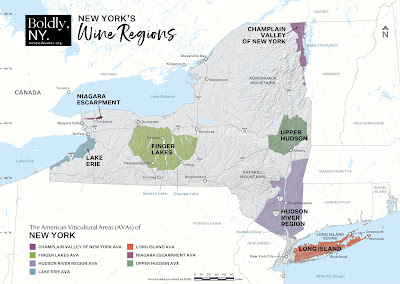
The wines here were from two sub-regions within the state:

Finger Lakes: on the same latitude as Spain, but without the moderating effects of the Gulf Stream, it has a cold winter and short, hot summer. Large diurnal temperature variation preserves acidity and vintage variation is significant.


Long Island:
 a wine region for just 40 years, it has a maritime climate with a much longer growing season and is home to mostly Bordeaux grapes.

Cabernet Franc

Cabernet Franc is something of an ancient grape with a new look; its origins are uncertain, but the general consensus is Atlantic France, where it is still grown in the Loire, Bordeaux and further south.

It is a parent of both Cabernet Sauvignon and Merlot, but sits somewhere between the two in flavour profile. It does well in cooler climates, but also preserves freshness and varietal character in the heat.

Dark and juicy, you might say that it has the freshness of a white wine yet with the colour and fruit flavours of a red.

Deeper dive: Finger Lakes

144 Wineries

90-120 Day Growing Season

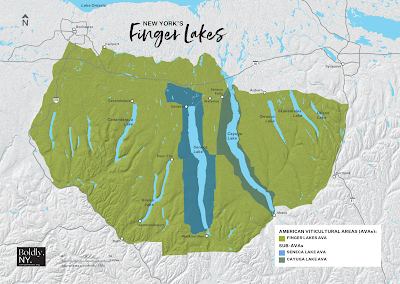
Located in the heart of New York’s scenic Finger Lakes region, the Finger Lakes wine country is centred around four main lakes with Native American names:

- Canandaigua (“The Chosen Spot” or “The Chosen Place”)
- Keuka (“Canoe Landing” or “Crooked Lake”)
- Seneca (“Place of the Stone”)
- Cayuga (“Boat Landing”) 

Cayuga Lake and Seneca Lake are also recognized as separate AVA’s within the Finger Lakes AVA due to their unique grape-growing conditions.

Some of the newest growth in this region is coming around the “Little Lakes”:

– Conesus (“Always Beautiful”)
- Hemlock (the only lake named for European settlers) found in the west.

The smaller lakes in the east – Owasco (“Floating Bridge” or “Crossing Place”), Cazenovia (“Lake of the yellow perch “), and Skaneateles (“Long Lake”) are also seeing wineries open in their vicinity. This region specializes in Sparkling Wines, Riesling, Pinot Noir and Ice Wine, and is also known for its Chardonnay and Cabernet Franc, as well as several French-American and Native American varietals. 

Deeper dive: Long Island

82 Wineries

215-233 Day Growing Season

New York’s maritime influenced region, dating back about 40 years, Long Island, with its sandy soil and moderate climate, is best known for its superb reds – classic Bordeaux blends (called “Meritage” wines in the U.S.), Cabernet Sauvignon and Merlot.

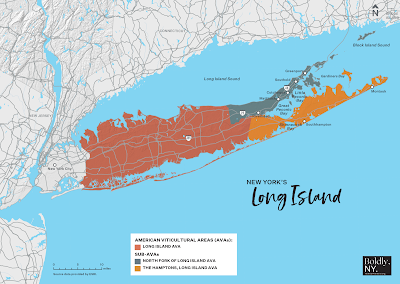
At the city of Riverhead, Long Island splits into two forks, separated by Great Peconic Bay. These two regions have their own AVA recognition as North Fork, Long Island, where most of the region’s wineries are located, and The Hamptons, Long Island, (or the south fork) where a few more wineries in the overall AVA reside.

Moderating influences include: Long Island Sound, Peconic Bay, and the Atlantic Ocean.

The wines

Lamoreaux Landing – T23 Cabernet Franc 2020, FINGER LAKES (£19.99, Daniel Lambert Wines)

Fruited and elegant

juicy and berry-fruited with herbal notes, savouriness and come coffee grounds; fresh, elegant and harmonious; concentrated and long.

Very Good.

Couly Dutheil, Clos de L’Echo 2018, CHINON, LOIRE, FRANCE (not currently available in the UK)

15.5% monster from the Loire

baked, jammy fruit aromas with pine leaves, dried herbs and raspberry leaves; inky, viscous and concentrated with stewed, jammy berry fruits pepper and roasted spices; just about retains freshness. More solidly impressive than juicily enjoyable.

Good.

Element Winery, Cabernet Franc 2014, FINGER LAKES (not currently available in the UK)

Mature, savoury and slightly dried-out

complex and evolved with dried red berries, mushrooms, old leather and earthy sous bois; fresh and supple with sweet, ripe rosehip, licorice and bruised apple fruit

Good.

Zuccardi, Apelación Cabernet Franc 2018, UCO VALLEY, ARGENTINA (£17.75,  The Oxford Wine Company, The Vineking, Wimbledon Wine Cellars, The Wine Reserve)

Spiced blueberry pie

aromatic berries and raspberry leaf with nutmeg and cinnamon; plush yet fresh with gentle tannins; supple and long.

Good.

Journey’s End, V5 Cabernet Franc 2019, STELLENBOSCH, SOUTH AFRICA (£15.50, Tanners)

Savoury and scrubby

savoury, scrubby fynbos nose with roasted spices; fresh and juicy with berry fruits, spices, coffee grounds and fine tannins.

Very Good.

RG|NY, RG|NY Cabernet Franc 2019, NORTH FORK, LONG ISLAND (not currently available in the UK)

spiced cherries and cream

herbal raspberry leaf, fresh red berries - juicy raspberries, strawberries and cranberries - with sweet spices; creamy, fresh and concentrated; elegant savoury and long with fine tannins and a dense, muscular core.

Very Good.

Other reviews:

Tom Cannavan: Franc from New York vs The Rest - wine-pages

Susy Atkins: Susy Atkins on Twitter: "Fascinating cabernet franc zoom tasting just now with ever-engaging @ozclarke - opened my eyes much wider to CF. New York State CFs very impressive indeed - watch out for ‘em! @rgnywine @LamoreauxWine @elementwinery @NYWineGrapeFdn @RandRDrinkers" / Twitter

Sunday, 21 November 2021

New York State of Wine

A NY State vs the World Riesling-Off, hosted by Jamie Goode

New York
Isn't New York
Without You, Love

- New York, St Vincent (2017)


If, like me, you have barely tried New York state wines before, your main take away from this should be that they are high-end and at least as good as anything else from more illustrious regions.

The rest, in a sense, is just details - and whilst there are stories of regions, terroir and varieties, simply tasting a few (more) New York wines is the obvious next step.

This tasting, hosted by Jamie Goode, pitted three New York Rieslings from the Finger Lakes area against the same variety from around the world at similar price points.

Once you get into mid-teens pricing and beyond, it's not unreasonable to expect a wine to be competently made from good fruit; Big Name regions will always have a few duds trading on the general reputation, but emerging regions have to start with pioneers who overdeliver for the price and who will make a Name for the region on the back of great wines at relatively moderate prices.

Details on New York State wines from the Finger Lakes areas:

Finger Lakes is one of six major wine growing regions in New York State.

Vines have grown here for many hundreds of years, with the first record of plantings by the Dutch settlers in the late 17th century. For some years, the area was dominated solely by Native American varieties and hybrids, and it was only in the late 1950s that the Ukrainian Dr. Konstantin Frank began experimenting with high quality European vinifera, particularly in the Finger Lakes.

The Finger Lakes are eleven deep and narrow lakes, stretching south to north, moderating the climate by either warming or cooling the surrounding atmosphere, rendering viticulture possible; the two largest Finger Lakes, Seneca and Cayuga, almost never freeze.

This was recognized by German, Swiss and French settlers in the late 19th century who spotted the freshwater orchard potential. The Finger Lakes AVA is one part of a triangle that represents North America’s premier fresh- water lake viticulture areas.


Riesling Battle Royal - tasted in ascending price order

Hosted by wine writer, Jamie Goode and sommelier Caroline Furstoss with producers:

- Kelby Russell, Red Newt Cellars
- Nova Cadamatre MW, Trestle 31
- Oskar Bynke, Hermann J. Wiemer

Robert Oatley Signature Series Riesling 2020 , Western Australia (£13.95, Cambridge Wines, Solent Wine Cellar)

lemon blossom, passion fruit, some diesel; grapefruit, zingy lemon, and lime, sherbet, yellow stone fruit with sweet spices and fresh green apple and pea shoots; steely, pebbly, slatey minerality. 

Good.

Schatzel, Riesling 2018 QBA, Rheinhessen (£19.99, Master of Malt, 9 Elms, Vida, Whisky Exchange)

diesel, struck match, stone fruits and blossom; pure, focused and linear-mineral with sherbet, citrus, white stone fruits and refreshing green apple.

Good.

Trestle 31, 2019 Riesling, Finger Lakes (£21, not currently available in UK)

white flowers, white pepper and struck match; white stone fruits with cool mint and creamy brazil nut.; textured, broad and leesy-savoury.

Good.

Red Newt Cellars, The Knoll 2016, Finger Lakes (£30.50, The Wine Treasury)

complex late-harvest, yellow fruits and aged diesel; ripe, buttery, roasted peaches and apricots, honey and mango with sweet spices; mouthfilling, long and complex.

Very Good Indeed.

Hermann J. Wiemer, HJW Bio Riesling 2019, Finger Lakes (£32.50, Wanderlust Wines)

stone fruits, citrus, blossom and minerality; fresh sweet-and-sour citrus, yellow fruits, sherbet and honeysuckle; saline with a refreshing slatey-mineral backbone, complex and very long. Mosel-esque.

Very Good.

M. Chapoutier, Schieferkopf Lieu-Dit Fels Riesling 2018 Selection Parecellaire, Alsace (£36.50, Uncorked)

complex wild herbs, cidery bruised fruit and menthol; full, supple and leesy-savoury with creamy brazil nut, oatmeal, citrus, stone and orchard fruits and mintiness; very long, broad and adept.

Very Good.

Results

The final results here are of less importance than the fact that three wines from NY state can hold their own against wines from classic Riesling regions.

That said, my favourite was the Red Newt Cellars, The Knoll for its aged complexity and late-harvest richness whilst remaining fully dry.

Technically, the best wine was the Chapoutier, but it is 1) the most expensive and 2) somewhat atypical for a Riesling.

Monday, 15 November 2021

Marimar Estate Tasting

Three new vintages from the Marimar Estate's Don Miguel Vineyard in California

Marimar Torres and her daughter Cristina are, respectively, the 4th and 5th generation of Spain's Torres family; Marimar moved from her native land and founded Marimar Estate Vineyards and Winery in California's Sonoma County in the 1980s at the behest of her father, Don Miguel Torres.

The Estate features a Catalan-style farmhouse from Marimar's homeland and she brings a European sensitivity to her wines; the vineyards are in some of California's coolest sites, vineyard management is based on European methods, adapted the the Californian climate, the oak used is French and the wines are made to be refreshing and food-friendly.

Marimar's destiny was set when, after much searching, she found an old apple orchard in California. Here, she planted the 56-acre Don Miguel Vineyard with high density planting in the Green Valley, the coolest and foggiest region of the Russian River Valley, only ten miles from the Pacific.

She made her first wine, a barrel-fermented Chardonnay, and took it back to Spain for the now elderly and bed-ridden Don Miguel to sample; with uncharacteristic enthusiasm, he declared it to be the best white wine he had tried and instructed Marimar to build a winery in California.

The second wine, an Albariño, was originally planted on the Sonoma Coast, but struggled to ripen, so was grafted onto vines in the slightly warmer Don Miguel Vineyard.

The final wine is named after Marimar's daughter Cristina and is a testament to the challenges of establishing a winery in a foreign country many thousands of miles from her homeland with a small child.


Timeline and climate

The vineyard was purchased in 1983 and planted in 1986 initially with Chardonnay (Cali Pinot and other reds had not yet become A Thing at that time); in those days, this was not wine country at all, it was all fruit orchards.

Named after Don Miguel Torres, father of Marima, the vineyard is in the Green Valley, just north of San Francisco, part of the Russian River Valley within Sonoma; morning fogs and cooling afternoon breezes support cool-climate varieties.

The fog blows in off the Pacific through the Petaluma Gap keeping the area much cooler than Napa, which is sheltered on the other side of the mountains and can grow warmer-climate varieties such as Cabernet and Zinfandel.

The soils are relatively young compared to Europe - 8 million years vs 60 - 100 million years. Historically underwater, the soils of this area are sandy with great drainage, with some clay in the subsoil of Don Miguel.

Background on the wines and tasting notes from Marimar Torres.

Marimar Estate, Albariño, 2019 (Vivino, £29.99)

Albariño has been known to produce outstanding wines in the cool, rainy climate of Galicia, in Northwest Spain. Marimar first planted the variety in her Sonoma Coast vineyard, but it proved too cold for ripening even a cool-climate variety like this. After four years, she gave up and grafted the budwood from those vines onto slightly warmer Russian River Valley estate and it is now thriving in the Don Miguel Vineyard.

white peach, tangerine and honeysuckle; luscious, ripe fruit with more fullness, lower acidity and slightly less salinity compared to a Galician Albariño from Rias Baixas; a crowd-pleaser and very popular at the cellar door

Match with raw or grilled seafood, smoked salmon, sushi or tapas.

Marimar Estate, La Masia Chardonnay, 2018 (VINMN, Vivino, Amazon, Fareham Wine Cellar, £34.99)

La Masía means The Farmhouse in Catalonia, Marimar’s home region, and her winery is designed to resemble a classic Catalan farmhouse. The vineyards 30 acres of Chardonnay are planted with three different clones with high density of over 2,000 vines/acre. The yields are low, and labour is intensive, but the vines live longer, and the grapes acquire better balance and greater concentration, as well as more elegance and finesse.

delicate and very focused, with aromas of jasmine and white peach, ripe-yet-taut apples, pineapple, well-integrated oak, acidity and minerality; rich and savoury yet crisp and mouthfilling, reminiscent of baked apple and lemon custard; long and perfectly balanced


Marimar Estate, Cristina Pinot Noir, 2017 (Vinimus, Farenham Wine Cellar, Amazon, Wine Direct, £49.99)

Named after Marimar’s daughter, Cristina, this wine is a barrel selection from a unique blend of different Pinot Noir clones that best represent the terroir and personality of the Don Miguel Vineyard and show the most potential for aging. The vineyard’s 30 acres of Pinot Noir are planted with several clones, which yield wines with complex layers of flavours.

black fruits, ripe cherries and a hint of pomegranate, with savoury notes of bay leaf and anise; red cherry and cranberry fruit, not too ripe, good acidity; great balance and silky tannins; the complexity and acidity, perfectly integrated oak and fruit augur a long life; still very youthful and primary, drinking nicely now but will gain complexity with age

Drinking nicely now, will age at least another 15-20 years.

Monday, 8 November 2021

California's Central Coast: J Lohr and Oz Clarke

A Three Wine Men tasting of J. Lohr wines with Oz Clarke

J. Lohr's story

Founded five decades ago and still family-owned and operated today, J. Lohr Vineyards & Wines has established itself as one of the industry’s most respected wine brands.

At the time, the California Central Coast had not yet emerged as one of North America’s world-class winegrowing regions. With little history or viticultural precedent, planting on the Central Coast was a gamble.

One of a handful of early pioneers, Jerry Lohr was among the first to realize the inherent potential of Monterey and Paso Robles for producing high quality grapes and superb wines.


The Central Coast’s emergence as a world class winegrowing region runs parallel with the establishment and growth of J. Lohr Vineyards & Winery.

Founder Jerry Lohr is one of the region’s pioneers and has played a larger-than-life role in bringing the area to prominence.


Jerry’s instincts led him to two regions located about 75 miles apart. In the early 1970s, he chose Monterey County’s Arroyo Seco district for its cool, windy climate and rocky soils as ideal for Chardonnay.

In the 1980s, he recognized the potential of Paso Robles for growing Bordeaux varietals, especially Cabernet Sauvignon – given the area’s rich soils and dramatic diurnal temperature swings between warm days and cool nights.

Monterey County’s Arroyo Seco appellation has proved ideal for growing layered, complex Chardonnay and Pinot Noir. Brisk winds and fog off Monterey Bay, stony, well-drained soils, and a lack of damaging fall rains all combine to produce grapes with trademark fruit intensity and balancing acidity. In 1974, Jerry unveiled the first J. Lohr winery in San Jose.

In the early 1980s, Jerry Lohr saw the potential for great Cabernet Sauvignon further south. Borrowing a lesson from the French—that great Chardonnay and Cabernet Sauvignon excel in very different growing conditions—Jerry began planting Cabernet Sauvignon and other red varieties in San Luis Obispo County’s little-known Paso Robles region in 1986.

With the hands-on devotion of an artisan farmer, Jerry tended to the vines while diligently working toward the creation and development of an adjacent winery and barreling cellars; J. Lohr’s Paso Robles production facility was opened in 1988.


J. Lohr Vineyards & Wines now includes more than 1,400 acres of cool-climate estate vineyards in the Arroyo Seco and Santa Lucia Highlands regions of Monterey County, with an emphasis on Chardonnay, Riesling, Valdiguié and Pinot Noir.

J. Lohr farms over 2,700 acres of vineyards in Paso Robles, now recognized as one of the world’s best spots for Cabernet Sauvignon and other Bordeaux and Rhone varietals. Nearly all the red wines in the J. Lohr portfolio come from here, affirming the foresight of Jerry’s original vision.

The winery also owns over 30 acres in Napa Valley at Carol’s Vineyard, planted to Cabernet Sauvignon and Petit Verdot.

An MW's Assessment

For more on California generally, this post by Nicolas Quillé, MW provides an excellent overview: Post | Feed | LinkedIn

My take

My own take is that I have historically often thought of Californian wines as warm-climate, over-extracted, Parker-esque points-chasers.

This tasting showed that California does cool-climate elegance, moderate climate plushness and warm-climate monsters, so there's something for everyone.

The Wines

2019 J. Lohr Riverstone Chardonnay 

very cool-climate wine; 7-9 months in American Hungarian and French oak, from new to fifth-fill oak, weekly battonage; oatmealy like Meursault, but the fruit is more vibrant

Food match from Lohr: www.jlohr.com

pear and apple fruit with honeysuckle and sweet vanilla; stone fruits, tropical melon and pineapple; 
creamy-oatmealy toastiness with some gentle oak on the finish; very elegant, sleek and harmonious, very clean and pure

Good.

2018 J. Lohr Estates South Ridge Syrah

Syrah is not as well liked in America as in Europe, but Paso Robles is Rhone Central.

fresh, elegant, harmonious - dark fruits, blackberry, black plum, dark chocolate with herbaceous eucalyptus and some toasty-oaky spice

Good.

2018 J. Lohr Hilltop Cabernet Sauvignon Paso Robles

Hilltop is their reserve wine; French oak is used with 5% PV for lifted florality; this wine is over 15% alcohol.

Blackberry, cassis, oaky spice, warming and slightly porty; concentrated and alcoholic. Technically impressive but quite hard work and, stylistically, not my thing at all.

Good.

Thursday, 9 September 2021

J Vineyards ‘J California Cuvée NV’ - Californian Fizz

A New World, Traditional Method fizz from California's J Vineyards and Winery

Until relatively recently, if offered the choice of a fizz from a warm-climate New World country, I would have most likely politely declined.

An MW-led Champagne tasting at the now-defunct Alimentum a decade ago taught me that California simply cannot do the sort of elegance that Europeans take for granted

But that was then.

Times change and so do wine regions; elegance, nuance, complexity, freshness and a sense of place are now the watchwords in many New World regions instead of mere heft and fruit.

These days, California is less Metallica's well-produced, technically-sophisticated but full-on Thrash Metal with its twin lead guitars, multiple solos and 8-minute songs


And more Jeff Buckley's sensitive, considered singer-songwriter-guitarist vibe, with nuance, subtlety and sensitivity, deploying a broader range of styles and a more adaptable approach:


For a more formal analysis of California and West Coast wines, see this much more considered piece by Nicolas Quillé, MW https://www.linkedin.com/posts/nicolasquille_the-vast-majority-of-north-american-wines-activity-6843165050430193664-sT3c

J Vineyards ‘J California Cuvée NV’ (£23, Tesco) 

California's J Vineyards was founded in the cool-climate Russian River Valley of Sonoma by Judy Jordan in 1994; the vineyards offer the ideal climate for growing expressive, world-class sparkling wines. Marked 96 points at the Decanter World Wine Awards, J Cuvée 20 Brut NV has an elegant mousse and a complex palate.

It is a blend of J’s best cool-climate vineyard sites, notably from the Russian River Valley, Santa Lucia Highlands and Mendocino County. A non-vintage blend of Chardonnay, Pinot Noir and Pinot Meunier, using 7% reserve wine, the grapes were hand-harvested and placed as whole clusters, without destemming, into the press.

As is customary for traditional method sparkling wine production, the second fermentation occurred in bottle. The wine was aged on the yeast for a minimum of 24 months, developing deeper complexity as it aged.

The wine has the elegance, finesse and complexity of a European fizz, but just a little more ripe fruit, making it an easier, earlier drinker.

ripe orchard fruit, biscuity brioche and florality; lemon curd, yellow stone fruit, ginger snaps and sherbet. Full, generous and supple with a fine mousse. Ripe fruit and easy-drinking.

Good.

Match with pork belly or king prawns.

****

Sunday, 1 August 2021

The CWB International Chardonnay-Off

Five Chardonnays from different climates, terroirs and countries

Chardonnay is arguably one of the greatest, most versatile grapes there is.

Easy to grow in a wide range of conditions, its inherent elegance and relative neutrality mean it can match with a wide range of foods; it can also take a large amount of wine-making, from aging on the lees or in bottle to the addition of old or new oak and secondary fermentation.

There are very few wine-making regions that don't or can't grow Chardonnay, so the range of styles is very wide.

You will pay a few pounds more for a well-known region, such as Burgundy or California; lesser-known / up-and-coming regions such as Languedoc and Spain can represent better value for money if you are prepared to go off the beaten track.

Here are five to look out for:

The Classic - White Burgundy

Louis Latour 2019 Montagny 1er Cru La Grande Roche (£25 / £21, Majestic)

Montagny is the appellation for four villages at the southern end of the Côte Chalonnaise; Premier Cru wines are made from classified vineyards representing around 2/3rds of plantings.

This single-vineyard Chardonnay sees no oak at all. 

delicate florality with hints of sweet spices; peach, yellow plums, pear and hazelnut with lime marmalade, melon, pineapple and some vanilla; full, supple and rounded with a hint of salinity. Sophisticated, elegant and flawless.

Very Good.

An accomplished wine, match with rich Burgundian foods such as asparagus, rabbit galantine, trout with almonds or sheep's cheese

The Minor Classic - Maconnais

Domaine de la Creuze Noire Macon Fuisse 2020 (£14, Cheers, Flagship)

Mâcon-Fuissé is a region of southern Burgundy around the village of Fuissé in the centre of a natural green amphitheatre, near the limestone-rich hills of the rock of Solutré.

The limestone soils are very similar to that of Chablis but, being further south, the climate is much warmer giving more fruit and richness in the wines. Aromas and flavours of tropical fruit, hazelnut, and lemon, backed with slatey minerality.

restrained nose; ripe lemon curd with peach and some zippy lime; full and supple with perfectly ripe and rounded fruit. Very adept and elegant, technically flawless. Initially correct-but-reserved, like a shy accountant at a dinner party; with extensive aeration it transforms into something much more rounded and adept with more personality.

Good; improves with aeration and will repay some cellaring.

Highly versatile, will match with - and not overpower - a wide range of foods; white fish, creamy mushroom sauces, white meats, medium cheeses.

The Modern Classic- Languedoc

Calmel & Joseph Villa Blanche Chardonnay 2020 (£10.95, Cheers)

I have long been a fan of Languedoc in general and Calmel & Joseph in particular; well-made, technically adept wines that are complex enough to to be serious yet also easy to enjoy. For years Europe's "wine lake", Languedoc has successfully reinvented itself as a go-ahead region of innovation and quality.

The climate is typically Mediterranean, warm and sunny with low rainfall; the grapes are picked at night, in two passes. The first harvest is done at a relatively early stage in maturity, to keep freshness in the wine. Then 15 days later a second harvest is done, for concentration and varietal aromas.

The wine is aged for 3 months in oak before bottling; it has a Mundus Vini Gold Medal.

expressive, complex and toasty with honeysuckle and sweet spices; ripe orchard fruits, apricot and white peach, aniseed and vanilla; savoury toasted notes and touches of grilled hazelnut; elegant freshness and a touch of salinity. Full, supple and rich.

Very Good; drinks nicely on first pouring and will age. Good Value.

Match with roast pork or meaty white fish.

A bit of Yee Haw - California

Frei Brothers Chardonnay 2019, Russian River Valley (Waitrose, £17.99)

From the cooler (by Cali standards), foggy Russian River Valley in California's Sonoma, this Chardonnay has plenty of New World fruit and substance with sweet oaky spice - it's a serious and sophisticated crowd-pleaser.

ripe orchard fruits, citrus, honeydew melon and pineapple with creamy, oatmealy leesiness. Lush and rich; very adept and harmonious. Easy-to-enjoy Burgundian style, albeit turned up to 11.

Good.

A versatile wine; drink as an aperitif or match with seafood or white meats.

The Unusual One

Enate Chardonnay 234, Somontano, Spain (£12 - £14, Daniel Lambert, indies)

An area in the foothills of the Pyrenees, Jancis Robinson describes Somontano as "another Spanish wine region worthy of international attention". More specifically, she characterises it as a small and growing region, potentially one of Spain's most exciting, even if much of its produce tends to be fashioned in the image of international classics.

She singles out producer Enate, saying that they make some fine reds and whites from imported grape varieties. Tasted blind, you'd be forgiven for having no idea where this wine comes from; it has a warm-climate topicality and breadth, but with a European complexity and elegance. It hints at the perfumed richness of Alsace with the waxiness of the Rhône.

Floral and aromatic with tropical citrus fruits and toasty leesiness; pineapple, melon and passionfruit with fennel, ginger and warming sweet spices; savoury, leesy and waxy with just enough freshness to hold everything together.

Very clean, pure and long.

Good.

Match with rich, Alsace-style dishes such as pork with creamy sauce or mature hard cheeses.

Miquel Hudin writes about Somontano here (£): The state of DO Somontano for 2021 · Hudin.com

Liz Gabay contributor Ben Bernheim writes about assessing French regional styles of Chardonnay here: Chardonnay - Limoux to Chablis regional styles - Elizabeth Gabay MW

Sunday, 18 July 2021

Fourth of July Wines

Four Wines for the Fourth of July

And I can remember the fourth of July / 
Runnin' through the backwoods bare./
And I can still hear my old hound dog barkin',/
Chasin' down a hoodoo there,/
Chasin' down a hoodoo there.

Creedence Clearwater Revival, Born on the Bayou (1969)


J Vineyards ‘J Cuvée 20 Brut’ Russian River Valley (£24.99 or £19.99 as a mix of 6 from Majestic )

Located in the Russian River Valley of Sonoma County, J’s vineyards offer the ideal climate for growing expressive, world-class sparkling wines. Marked 96 points at the Decanter World Wine Awards, J Cuvée 20 Brut NV has an elegant mousse and a complex palate.

ripe orchard fruit, biscuity brioche and florality; lemon curd, yellow stone fruit, ginger snaps and sherbet. Full, generous and supple with a fine mousse. Ripe fruit and easy-drinking.

Good.

Match with pork belly or king prawns.

Bearflag Zinfandel 2017, Sonoma County ( £24.99 or £22.49 mix of 6 from Majestic)

Sonoma County native Aaron Piotter harnesses the wild, untamed Zinfandel vines to create this bold, powerful red that's a tribute to the Bear Flag revolt of 1846.

Sweet, ripe baked black cherries, blueberries and plums with vanilla spice, minty eucalyptus and a custardy texture. Juicy acidity and gentle, well-integrated tannins; very balanced and harmonious.

Good.

Match with smokey barbecue meats, lamb with rosemary and garlic or an indulgent cottage pie.


Louis M. Martini Cabernet Sauvignon 2017, Napa Valley (£36.42 from Vivino, soon to be available through Majestic)

Made with fruit from several Napa Valley vineyards, both high elevation and valley floor. Includes some Petite Syrah in the blend; aged in French and American oak, around 1/3rd new; 15% alcohol.

lifted blackcurrants, bramble fruits, complex spices and dried herbs with some aged character; baked dark fruits and cherries, leather, tobacco and cedarwood, oaky spice with hints of caramel and sweet coconut; dense and concentrated with ripe harmonious tannins. Long, complex, warming finish.

Very Good.

Match with rosemary-and-garlic lamb or herby wild boar sausages.

Klinker Brick 2017 Old Ghost Old Vine Zinfandel (Lodi) 

From Mokelumne River, alcohol 15.9%, this is the top Zinfandel from Klinker Brick's range made from vineyard blocks up to 120 years old

Lifted black fruits and dark berries, complex spices, porty eucalyptus, liquorice and botanical florality; juicy, mouth-watering baked blueberry and black cherry fruit with dried herbs, tobacco leaf and cocoa; complex and savoury with roasted spices and old-vine concentration. Dense, supple and very harmonious with gentle, very fine tannins.

Very Good.

Match with a well seasoned steak.


******

Further reviews 

Louis M. Martini Cabernet Sauvignon

92 PTS

"A fruity red with currants, blueberries, black olives and a hint of dark chocolate. Medium to full body, creamy tannins and a flavorful finish. Drink or hold."

- James Suckling, Jan 2020

Thursday, 5 November 2020

Two Bonterra Wines


Two wines from California's Bonterra - via Waitrose

Bonterra is a quintessential Californian winery - think squeaky-clean, organic varietal wines from international grapes with plenty of Californian sunshine.

These two bottles are from Mendocino County in the north of the state; it is large, diverse region and a leading area for organic winemaking where the main grapes are Chardonnay and Cabernet Sauvignon.

California's key stylistic "tell" is typically ripeness and alcohol; the wines just can't help being bigger, often oakier and certainly more fruit-forward than Bordeaux and Burgundy.

But there is an increasing trend in California to dial down the heft, finding cooler sites and making wines with the freshness to match Bresse chicken, say, rather than burger and fries; European structure with New World fruit.

The Chardonnay is fermented in a mixture of old oak for complexity, stainless steel for freshness and 15% new oak for subtle toasty spiciness.

The Cabernet Sauvignon includes Petite Sirah, Merlot and Syrah in the blend and is fermented in stainless steel (to preserve the fruit), with 12 months' aging in oak for complexity (and 40% new oak for spiciness).

Of these two wines, I rather prefer the white, for a number of reasons: oaky Chardonnay is somewhat out of fashion these days and I like it; it's expressive and engaging, almost in the manner of a kiwi Sauvignon with its ripe tropical fruits, substance and structure.

However, if the Chardonnay can't help announcing its presence, the Cabernet seems to be trying a bit too hard to disappear, or at least avoid upsetting the other guests - it's big but well-groomed and plays everything very safe with lots of pleasing fruit, hiding its more assertive side.

Bonterra Estate Collection Chardonnay, Mendocino, 2019 (£15, Waitrose) floral, toasty nose leading to ripe lemon curd, topical citrus, baked apple, ripe pears and creamy-oatmealy, buttery, spicy oak; complex, fresh and linear, long and well-structured.

Still young and sealed under screwcap, improves with aeration and will repay some cellaring.

Good.

Match with white meats or mushrooms with cream and pasta.

Bonterra Estate Collection Cabernet Sauvignon, Mendocino, 2018 (£15, Waitrose) baked red and black fruits, coffee grounds, oaky spice, some leather and tobacco with gentle, well-integrated tannins. Dense and concentrated with a warming finish; could be fresher.

Good.

Match with slow-cooked beef casserole - or burgers.

Wednesday, 3 June 2020

The CWB Chardonnay Off: Burgundy vs California

A tale of Two Chardonnays - Burgundy and California

Pernot Belicard Bourgogne 2012
Talbott Chardonnay, Sleepy Hollow, 2016

Winebird Helena Nicklin characterises Chardonnay as the "Kate" of wine; a highly versatile grape with many personas from lean and steely "supermodel Kate" (Moss) Chablis to oaky "buxom centrefold Katie" (Price) sunshine-in-a-glass.

Easy to grow and easy to say, Chardonnay was everyone's favourite white in the '90s; until we all went off it and moved on to kiwi Sauvignon.

These two Chardonnays are classy, sophisticated "Oscar-winning Katharine" (Hepburn). One is an actual white Burgundy, from a winemaker based in Puligny-Montrachet; the other a fair impression of it, in a Beaune style, from California. With its warmer climate, the Californian is the bigger of the two at 14.1% alcohol, but it doesn't feel blowsy.

Being a few years younger, the American is also more primary and fruited; this apparently appeals more to US palates in general who consider a mature wine to be past its best, but being European I rather like the more complex, secondary flavours that develop with evolution.

Pernot Belicard Bourgogne 2012 (£15, Cambridge Wine Merchants) evolved nose of old leather and cellar mustiness with dried orchard and stone fruits, savoury roasted nuts and beurre noisette. Focused and mineral.

Fully mature and drinking nicely now.

Good.

Needs food due to its savouriness; match with lighter game, such as partridge, monkfish with beurre noisette or hard cheeses.

Talbott Chardonnay, Sleepy Hollow, 2016 (£35.99, Wine Rack) ripe orchard fruits, melon and creamy-buttery oatmeal flecked with vanilla, brioche and linear minerality. Concentrated, intense and adept.

Improves with aeration and will repay cellaring.

Very Good.

An easy sipper with plenty of fruit as well as a versatile food wine; match with plain roast white meats or creamy mushroom pasta.

Wednesday, 27 May 2020

The CWB Pinot-Off: Burgundy vs California

Two Pinots: Burgundy vs California

Domaine Ragot, "Teppe des Cheneves" Rouge, Givry
Talbot Kali Hart Pinot Noir, Monterey

I've said it before, I'm a bit "meh" about Pinot; I like it well enough, but I never quite see what the fuss is about. Low tannins, medium-high acidity and high-to-stratospheric prices don't do it for me, it seems.

Wine enthusiasts often talk about getting "bitten by the Pinot bug", so with Cambridge Wine Merchants selling off various mature Burgundies at below-market prices, I decided to have another go at trying to acquire an expensive habit.

Givry is a village in the Côte Chalonnaise; reliable and affordable, it makes good-value wines that tend to be lighter and ready to drink at a younger age; the peak is between 5 and 12 years from vintage.

Kali Hart is a blend (across two different vineyards) from the Santa Lucia Highlands, one of California's cooler regions.

Both wines are equally well-made and cost about the same; the New Worlder is bigger and more fruited, an easier drinker and perhaps a better introduction to Pinot for anyone who is used to younger, riper, more fruit-forward wines.

The Burgundy is more savoury and, given its age, more complex; less immediately obvious, it is a more cerebral proposition.

Domaine Ragot, "Teppe des Cheneves" Rouge, Givry, 2013 (£17.99, Cambridge Wine Merchants) cherry, redcurrant and raspberry fruit with some evolved complexity; delicate, gentle and very well-made.

Improves with some aeration.

Good.

Talbot Kali Hart Pinot Noir, Monterey, 2017 (£23 - £25, Majestic) red fruits, boysenberry and spice; warming with ripe fruits and balanced freshness. Gentle extraction and very deft.

Good.

Saturday, 16 May 2020

Gallo Fine Wine Virtual Tasting with Edouard Baijot

A tasting of Gallo's premium wines from California with Edouard Baijot

- I like them big, I like them plumpy (Plumpy)
Moto Moto, Madagascar: Escape to Africa (2008)


There's no getting away from it, California is a warm place, so the wines are inevitably bigger than classic European styles.

Warm-climate conditions give more fruit, substance and plumpness, so there's plenty to like as long the wines are also harmonious and balanced.

These Gallo Fine Wines wines are, rather like a former Governor of California, big, classy and crowd-pleasing.
The Talbott range was founded in 1972 by the owners of a fashion label who had spent time in France for work and fallen in love with Burgundy.

They now grow Chardonnay and Pinot Noir in the Santa Lucia Highlands, one of California's cooler regions, producing Kali Hart (a blend) and the single-vineyard Sleepy Hollow. We finished with a distinctively packaged Zinfandel which at 15% is considered light by Cali standards.

Talbott Kali Hart Chardonnay, Monterey, 2015 (£23 - £25) tropical fruit, ripe apple and butterscotch tarte tatin flavours; rounded and spicy with a little judicious new oak. Concentrated and intense; textbook New World chardie from a good year.

Good.

For me, this wine is just ready for drinking now and will improve with further aging; Edouard noted, however, that traditional American palates prefer more primary fruit and less secondary savouriness, so would consider this already past its best.

Talbott Sleepy Hollow Chardonnay, Santa Lucia Highlands, 2016 (£36) more intensity and higher acidity than the Kali Hart; floral and vibrant, complex and structured with a mineral-saline finish.

Very Good, will age for 10 years+ from vintage.

Edouard described this as a Côte de Beaune-style Chardonnay with European austerity and elegance.

Talbot Kali Hart Pinot Noir, Monterey, 2017 (£23 - £25) red fruits, boysenberry and spice; warming with ripe fruits and balanced freshness. Gentle extraction and very deft.

Good.

Talbott Sleepy Hollow Pinot Noir, Santa Lucia Highlands, 2017 (£36) cherry and plum fruit, with some toasty oak, sweet spices and florality; structured and concentrated. At 14%, it feels big, warming and fruit-forward but not in a clumsy way.

Very Good.

Bear Flag Zinfandel 2017 (£25) mostly Zin with a dash of Petite Sirah with fruit from Dry Creek Valley and Sonoma Valley; ripe, jammy fruits with smoky-spicy toastiness and the impression of sweetness; juicy and fruit-forward with old vine concentration. A cowboy that wipes its feet before asking "Excuse me, ma'am, did I leave my boots under your bed?"

Good.

All the wines will be available in Wine Rack and / or Majestic from June 2020.

Edouard Baijot MW on redefining E&J Gallo’s super premium range: http://www.the-buyer.net/people/edouard-baijot-mw-on-how-ej-gallo-has-redefined-its-super-premium-wine-range/

Saturday, 21 March 2020

Top Selection Portfolio Tasting

A portfolio tasting of Top Selection's wines

Top Selection is not a great name for a wine merchant; it has something of a budget supermarket's premium own brand about it. Which is a pity because the wines themselves are superb.

From traditional classics, to emerging regions and some really off-piste wines, if you are prepared to start buying in low double-digits and move up from there, there is a huge breadth to explore.

I liked every wine I tried and scored all of them at least a Good, so here are my highlights:

- more Hungarian dry Furmint, especially Szepsy, and Heimann's red Kekfrankos

- Styrian Sauvignon from Tement; it is lovely to see these wines back in the UK, steely, precise and mineral, they are some of my favourite Sauvignons

- elegant Swiss wines; they're not cheap, they're not good value but they are unique, pure and sometimes so silent that it takes time to hear them

- Nathan Kendall New York whites; fresh and distinctive

- Anton Bauer Austrian Gruener, a long-time favourite, plus his Blaufraenkisch and superb sweet wines from Burgenland's Kracher

- Moroccan wines from Meknes; a first for me

- aged Italian wines are really quite amazing; Campaperi, Ca' la Bionda, Terenzi

- really outstanding Cahors wines from Lagrezette; at £80 the Paragon is pricy but still exceptional value for the quality

- Yves Cuilleron Condrieu; not cheap but lovely

- 100yo solera sherries from Bodegas Yuste

- Canadian aged ice cider is a thing; Leduc -Piedemonte 2011

- Frederiksdal Kirsebaervin's Danish cherry wine; complex and savoury from long fermentations

- German Riesling beer; a "personal project" blend of 1/3rd Riesling with 2/3rds beer to give fruit-pickers something refreshing after a long day in the vineyard

Saturday, 5 January 2019

MacMurray Estate Vineyards Pinot Noir

A Pinot from California

Pinot is a thin-skinned grape that needs a cool climate, such a Burgundy or New Zealand. In the US, it does best in Orgeon, but cooler parts of California also have a go, some successfully.

This wine has come from a distinctly warm climate and I don't find it benefits from that.

Fruit quality is good enough and the winemaking technique is deft. But it feels like damage limitation - the fruit is overripe, lacking freshness and complexity. Overbaked and overpriced.

MacMurray Estate Vineyards Pinot Noir 2015, Russian River Valley (Great Western Wine, £27.50) farmyardy nose, baked dark berry and bramble fruits, oaky spice and glycerol. Porty and alcoholic; soft texture and warming finish with slightly drying tannins.

The wine does has its supporters, however; the 2012 won Gold at LA International Wine Competition, the 2011 won Gold at the SF Chronicle Wine Competition and wine-searcher.com gives it an aggregated critics' score of 90.

Monday, 31 December 2018

Christmas Afternoon Tea At The Old Bridge Huntingdon

Afternoon tea at the Old Bridge in Huntingdon

Once every few years, we make the short trek up to Huntingdon from Cambridge and visit The Old Bridge, owned and run by MW John Hoskins.

Whilst other places wax and wane, the standard at The Old Bridge never seems to vary. The food is always well-made, the wines excellent chosen and the ambiance varies by seating area.
The most traditional part is the pubby bar, the edgiest is the wine shop with stripped floors and an oenomatic machine dispensing wines in taster, small and medium sizes.

A bit like London buses, I had occasion to visit The Old Bridge twice on either side of the same weekend. First to catch up with a contact and then for Afternoon Tea with colleagues.

For the catch-up, we sat in the Wine Shop and tasted our way through a few whites and reds whilst comparing notes on business issues.
The 2017 ‘Wild Ferment’ Assyrtiko from Gaia's Santorini was mineral, linear and precise; the 2015 Chardonnay from Richard Kershaw in Elgin, South Africa was adept and complex.

Moving on to the reds, a 2015 Lemberger from Simonroth, Schnaitmann in Württemberg, Germany was bright, juicy and cherry fruited. The only bum note was a 2013 Cab Franc from Seneca Lake, by Red Hook Winery in Finger Lakes, USA. This was the most expensive of the wines and for me the least impressive.

A few days later saw a return visit for afternoon tea - a couple in the party opted for a glass of Prosecco while I returned to the wine shop for another hit of the Assyrtiko.

We started a choice of  tea or coffee  and were then served delicious finger sandwiches (smoked salmon and cream cheese; spicy chicken Egg mayonnaise; Beef, watercress and horseradish), scones with Jersey cream, strawberry jam and butter plus three mini cakes.