Popular Posts

Showing posts with label Burgundy. Show all posts

Friday, 19 August 2022

New York Chardonnay Show-Down

New York State Chardonnays vs the rest of the world

"Showtime!"

- Mr Incredible, The Incredibles (2004)


Crafted in New York, but inspired from everywhere, New York is a unique community of passionate producers who approach winemaking with a multitude of personalities and backgrounds—they’re not alike, and they like it that way.

Wine has been made in New York since the 17th century and its unique history of hybrid cultivars paired with an increasing amount of planted Vitis vinifera has positioned the region as one of the most diverse and resilient.

In New York wines you’ll find subtlety, depth and nuance; it’s no surprise that they’ve found a place on the global stage, alongside other great wine regions of the world.

These tasting took a look at New York’s star varieties side by side with other great wine regions of the world, exploring the common threads as well as the varied approaches to viticulture and winemaking.

New York wines

Chardonnay has a relatively long history in New York state, being one of the first grape varieties planted there and making a name for itself from the 1970s onwards, but today remains somewhat in the shadow of Riesling and Cabernet Franc.

Fox Run Vineyards, Doyle Family Chardonnay 2020 Finger Lakes, NY ($14, seeking distribution in the UK)

Founded in 1990, an hour's flight from the ocean, it has a continental climate; on the same latitude as Rioja and Tuscany, it suffers from spring frosts however bud-break is late. 8% Traminette in the blend for some "fruit salad" character; no oak or lees aging, made from purchased fruit that enjoys afternoon suns.

Easy-drinking and popular wine that does well in the restaurant trade.

citrus and orchard fruits; white stone fruits, green apple and pears; lean, sinewy, fresh and harmonious.

Well-made and thoroughly enjoyable.

Wolffer Estate, Perle Chardonnay 2019 Long Island NY ($32, Seeking distribution in the UK)

Based in The Hamptons, Long Island with a moderate maritime climate; milder winters, no spring frosts and cooler summers. On the same latitude as Madrid and Naples, giving plenty of sunshine for ripening and a long hang time for minerality and elegant fruit.

Small-cluster vines for even ripening, barrel fermented, canopy management and air flow reduce diseases and give long hang time. Hand picked and pressed immediately with 48 hours' skin contact, fermented in 90% new French oak with around 8 months on the lees and almost no battonage. 

bruised apple, white stone fruits and florality; orchard fruits, creamy-leesy roasted brazil nuts and oatmeal, saline minerality and orange peel; rich, complex and savoury, long and elegant.

Very Good.

Nathan Kendall, Chardonnay 2020 Finger Lakes, NY ($33, Master of Malt, Whisky Exchange, 9 Elms Wines)

West-side grapes with morning sun, 50yo vines; hand picked and foot-stomped for phenolic extraction, spontaneous fermentation in old barrels with 11m aging on lees and no stirring, partial malo

bruised orchard fruits, toastiness and florality; fresh with zippy lime, citrussy acidity and spice; saline-mineral with good texture, delicate finesse and elegance.

Very Good.

Chile

Errazuriz Wines, Aconcagua Costa Chardonnay 2019 Chile (£17.50, Ocado, Noel Young Wines, Hop Cellar)

Modern style, full-bodied with reductive winemaking, 45% malo, 100% old oak.

aromatic minty herbs, zippy lime and struck match; refreshing lime marmalade, gooseberries and greengage with minty vanilla, honeysuckle citrus, orchard fruits and nutty, leesy complexity.

Very Good.

New Zealand

Villa Maria Wines Taylors Pass Chardonnay 2019 (£15.99, nzhouseofwine)

Awatere Valley fruit, 100% barrel fermented, 50% wild ferment, full malo with 11 months on the lees.

struck match, fresh orchard fruits and bruised crab apple skins; fresh, linear and precise with green apple, lime zest, white stone fruits and broad savouriness

Very Good.

France, Chablis

Jean Durup, Chablis 2021 (€16, not currently available in the UK)

From the difficult 2021 vintage, no oak influence, cool climate, kimmeridgian soils.

citrus, lemongrass and rubbed sage; fresh and saline with honeydew melon, white stone fruits, lime zest and honeysuckle; broad and savoury with leesy oatmeal.

Very Good.

***

Image credits: Susana Kawai

Further reviews:

Susana Kawai: Food with Susi on Instagram: "Chardonnay Show Down - New York State of Wine Have you tried a Chardonnay from New York State? In a glance: The climate is continental…"

The Buyer: The_Buyer on Twitter: "Part 2 @TheBuyer11 importers debate with @NYWineGrapeFdn producers looks at the wine styles that buyers think have the most potential to do well in the UK and why the region has much to offer with cool climate, fresh, pure fruit forward, acid driven wines https://t.co/6gyKZZE5mF https://t.co/hbBn4u3RFJ" / Twitter

Tuesday, 2 August 2022

The Regional Wines of Louis Latour

Four regional Burgundies from Louis Latour

Maison Louis Latour is a family-owned business, one of the most highly regarded in Burgundy. They have been making excellent value wines in a similar style from their vineyards in regional appellations very successfully for many years.

While prices for top Burgundies have increased steadily for many years now, these regional wines are more affordable.

The Ardèche Chardonnay and Bourgogne Gamay have plenty of easy-drinking ripe fruit; the Macon-Lugny and Terrasses Pinot Noir are more classically elegant.

Louis Latour Ardèche Chardonnay 2019 (from £12, Ocado, Bon Coeur Fine Wines)

Louis Latour arrived in the Ardèche in the late 1970s, as they looked outside of Burgundy to find alternative sources of high quality, everyday priced Chardonnay. They pioneered the planting of Chardonnay vines here, in what at the time was a relatively unknown area. Attracted by the hillside clay limestone rich soils, a consistent climate, abundant sunshine to perfectly ripen the grapes and a drying Mistral wind eliminating the risk of rot, all proved Ardèche to be the perfect place. Today, they have 350 hectares of vines under contract to local growers.

The grapes for Ardèche Chardonnay are treated as if they were grown in the prestigious vineyards of the Côte d’Or and vinified Latour’s winery in Alba. Louis Latour Ardèche Chardonnay 2019 is a fresh and appealing wine with considerable depth of flavour.

stone fruits and florality; orchard fruit, apricots, honeysuckle and sweet, slightly toasty spices; leesy brazil nut and good savoury underpinnings. Adept and harmonious

Good.

Serves as an aperitif; match with poultry, fish, and charcuterie.

Macon-Lugny Les Genievres 2020 (£17.99, Bon Coeur Fine Wines, Hennings Wine, House of Townend, North and South)

Mâcon-Lugny Les Genièvres, one of Louis Latour's best-selling wines, is from the top vineyards in the Mâconnais region. Mâcon-Lugny was introduced by Louis Latour, with the support of the successful Lugny cooperative, offering a very respectable alternative for a white Burgundy. Lugny is in the most southerly part of the Mâconnais where it borders Beaujolais, on land at 235-380m elevation, with limestone soils and the advantage of warmer days which gives the wine a refreshing, but riper fruit profile.

This is 100% Chardonnay, made without the use of oak, and produced from grapes grown in Les Genièvres vineyard on the northeast side of the village.

stone fruits, melon and honeysuckle; ripe pears, white peaches and melon with creamy-leesy oatmeal and spice; complex, broad and saline; very elegant.

Good.

Perfect with smoked salmon or simple grilled fish but with enough depth to work with a delicious plate of charcuterie or a simple pasta dish.

Louis Latour Bourgogne Gamay 2020 (From £16, Ocado, Majestic, North and South Wines, TheDrinkShop.com)

Bourgogne Gamay became a new regional appellation in 2011, a place that sits between the northern heartland of Burgundy and the sprawling Beaujolais vineyards to the south. Whilst technically part of Burgundy, the lighter, fruitier Gamay used in the wine must come exclusively from the best ‘Cru’ villages of Beaujolais Crus, which are situated on the granite hillsides in Northern Beaujolais. Louis Latour’s approach is to produce a wine which focusses on fruit and freshness with consistent quality, whilst still possessing the attractive characteristics of Burgundy.

On the nose this wine is more immediately fruity than a traditional pinot noir. Its light, crisp juiciness also makes it and a fine chillable red.

red and black cherries, violets and roasted spices; supple and inky with ripe cherry fruit, savouriness; good underpinnings and rounded, very fine tannins.

Good.

Match with charcuterie or grilled / roasted red meats.

Louis Latour Les Terrasses Pinot Noir 2019, (£15 Ocado)

Louis Latour have been growing Pinot Noir in the Var for over 30 years, creating, and producing wonderful reds from clones and rootstock imported from Burgundy. The conditions in the South of France are acceptable for this difficult grape variety with plenty of warm sunny days during the summer months and cooler temperatures at night.

The vineyards, at 500 metres above sea level, are a similar altitude to the finest Grand Crus and their southern exposure gives the grapes perfect maturity at the same time as the Grands Crus of Corton.

lifted red berry fruits, spices and mushroomy woodsiness; red and black cherries with savouriness, peppery spice, minty dried herbs and very fine tannins.

Good.

Match with ham or turkey, grilled red meats such as lamb, or salmon.

Friday, 8 July 2022

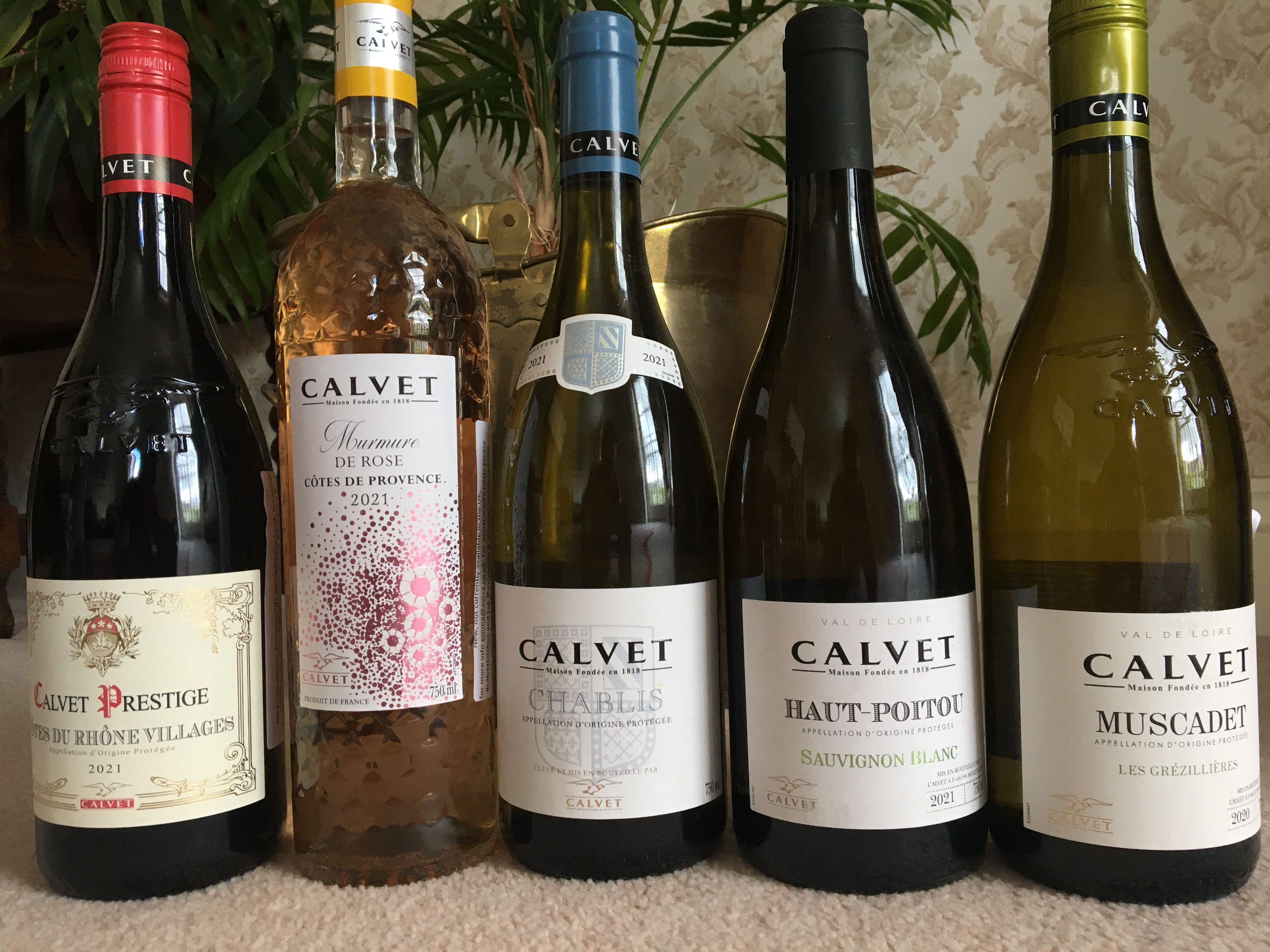
Calvet Kitchen

Six wines from France's Calvet - and the Calvet Kitchen experience

If you know Calvet's wines, it is probably for their range of easy-drinking and inexpensive Bordeaux. And if you don't, you probably should, as they are the largest French wine brand in the UK and the UK is Calvet's largest market.

But Calvet turns out to be a lot more than just Bordeaux; established over 200 years ago, the company makes wine in almost all of France's major regions.

Calvet Kitchen is a food-and-wine matching initiative to pair regional French dishes with Calvet wines; which is, after all, when French wine is all about.

With 64 winemakers in 7 regions, Calvet is a diverse business and yet all the wines here had a family resemblance that reflects Calvet's aims - an elegance and easy-drinking freshness with plenty of food-friendly mid-palate.

These wines all drink well on first pouring, but also open with aeration and have the body and complexity to stand up to food.

Loire-based winemaker Pierre-Jean Sauvion explained his approach:

- quality of fruit

- balance of fruit and freshness

- food-friendly salinity

The wines were all of broadly similar quality and, the Chablis aside, price, so preferences come down largely to personal taste.

Of the whites, I enjoyed the Chablis most, but given the price difference, the Muscadet makes a good value alternative.

Of the other colours, the CdRV was the most substantial and interesting.

The Calvet Kitchen playlist archive is here:

Calvet Kitchen | Meet Guillaume Lassevils, chef in the Bordeaux region - YouTube


Calvet Muscadet 2020, abv 12%, (£5.95-7 Sainsbury’s, Tesco, Co-op)

Grown on warmer sandy soils, resulting in more ripeness in the wine.

minty and floral with tropical fruit; fresh, rounded and saline with pear and white stone fruits

Thoroughly enjoyable.

Match with seafood and freshwater fish.


Calvet Haut Poitou 2021, abv 11.5%, (£10.99 Waitrose)

A new appellation to the south of the Loire around an hour from Saumur, it was created in 2011 but has a long history dating back to the 14th century. The soils are part of the same chalk limestone that runs under Champagne and moderates the water table which is key to the condition of the grapes.

Loire Sauvignon with a new world nose, but old world palate.

expressive and exuberant; gooseberries, exotic fruits and mintiness; juicy citrus, ripe green fruits and herbaceous, minty, zippy lime,

Thoroughly enjoyable.

Matches well with fresh tomato-based dishes.


Calvet Chablis 2021, abv 12%, (£20 Ocado)

Grown on chalk soils with 80% fermented in stainless steel for freshness and 20% in barrel for complexity.

stone fruits, peaches an dapricot; green apple and grapefruit, with lemon zest, fresh coriander and salinity.

Thoroughly enjoyable.

A versatile food wine, serve as an aperitif or match with starters and lighter mains.


Calvet Murmure de Rose Côtes de Provence 2021, abv 12.5% (new)

Newly-launched in the UK; night-picked for freshness with a short maceration; fermented in stainless steel for freshness.

red fruits, mint and spice; fresh, fruited and textured with red berries and salinity.

Sip as an aperitif or match with picnic foods.

Calvet Prestige Bordeaux Red 2020, abv 14%, (£7.50-£8.50 Sainsburys, Ocado, Co-op, Tesco)

80% Merlot with 20% Cabernet

red and dark berry fruits with vanilla spice; fresh with juicy, ripe and fleshy berry fruits; fine tannins and leafy, savoury, mushroomy flavours

Thoroughly enjoyable.

Match with red meats, such as bbq burgers or char-grilled steak.

Calvet Prestige Côtes du Rhône Villages 2021, abv 14%, (£7.50 Tesco)

Classic Rhône GSM blend

dark fruits and spices with garrigue herbs; substantial, fresh and supple with gentle tannins; harmonious and adept

Thoroughly enjoyable.

Match the freshness to meaty fish, such as salmon or rare tuna steaks.

Saturday, 7 May 2022

A(nother) CWB Chardonnay-Off

Three very different Chardonnays

This is not my first Chardonnay-Off rodeo; far from it, in fact.

There has been the Southern Hemisphere one, the International one, the Southern French Oaky one and the Adelaide Hills one.

Chardonnay is The Beatles of wine grapes; among both the most accomplished and most popular performers, it is the one that inspired so many others and remains the standard against which many are judged.

This Chardonnay-Off highlights the variety that this grape can show - different countries, different price points and different ages.

It is also a great food wine; match with starters, white meats, meaty white fish and creamy mushroom pasta.

Entry-level Chardonnay is a great picnic wine; with more age and complexity, match with lighter game.

All three wines here drink nicely on first pouring, but open up and improve with some aeration.

Australian Limestone Coast Chardonnay, 2021 (£5.99 / £4.49 on offer, Lidl)

Australia's Limestone Coast is a catch-all appellation for several regions within South Australia; it was once underwater and as a result, the soil is fossil-rich, hence the name.

Lidl wines are generally priced extremely keenly, so special offers like this are a good excuse to stock up, not just for immediate drinking, but also for laying down, provided you have space and can wait.

restrained citrus and stone fruit aromas with some florality; ripe yellow stone fruits, melon and zippy lime with sweet spices and creamy brazil nut

Thoroughly enjoyable and Good Value.

Can be aged for a few years.


Petaluma Chardonnay, 2020 (£16.00, Tesco)

Based in the cool-climate region of Adelaide Hills, Petaluma is one of the great names of Australian wine, producing Burgundian-style Chardonnays.

citrus, white flowers, stone fruits and complex oaky spice; fresh, elegant and poised with preserved lemons, melon fruit, pineapple pieces, sweet spices and zippy lime marmalade; broad complex and generous with saline minerality. Poised and precise.

Very Good.

Can be aged for many years.

Pernot-Belicard Bourgogne Chardonnay 2012 (£17, Cambridge Wine Merchants)

Philippe Pernot and his wife (from the Belicard side) launched their own domaine in 2009, with just six hectares of vines in Puligny. They pick quite early, all by hand, with hand sorting at the cellar.

This wine was a fire-sale bargain picked up by Cambridge Wine and sold at a discount to market price.

sandy yellow with roasted spices, stone fruits, florality, and evolved musty leather; savoury-creamy toasted brazil nut, almonds and macadamia with citrus, orchard fruits and stone fruits; complex, oaky, roasted spices; fresh, complex, broad and generous.

Very Good.

Fully mature, but will remain at a peak for several more years.

Friday, 18 March 2022

The CWB Eastern France-Off - A Deeper Dive

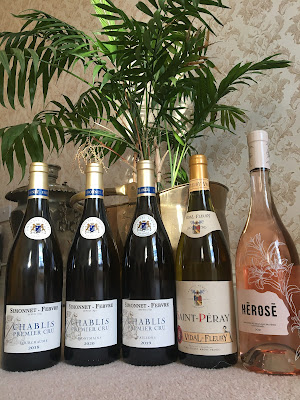
Five wines from Eastern France

Draw a straight line down the Eastern side of France from the English Channel to the Mediterranean and you will pass through three great wine regions; Champagne, Burgundy and the Rhône.

It is around 800 miles end-to-end, and can be a pleasant drive to sunnier climes if you add in a stop-over - lunch in Reims, dinner somewhere between Dijon and Macon then an onward drive the following day to the Rhône, Provence or Côte d'Azur for a week of R&R.

We have done it many times over the years with the children and like to mix up the journey with various scenic detours, including, on one occasion, a side-trip to Chablis.

Visiting a wine region and spending time there is the best way I have found to understand its geography, terroir, history, gastronomy as well as the sources of its diversity.

So, in anticipation of a long European summer drive south to sun-kissed beaches and shimmering seas, here is a deeper dive in to a few regions along the way.

Chablis

At the the far north of Burgundy, Chablis is perhaps better understood as a southerly outpost of Champagne.

Chablis has four levels of classification from Petit up to Grand Cru. Premier Cru is, somewhat confusingly, the second rank of wines, tending to be well structured and long, but needing 5-10 years of ageing to show their best.

There are 40 Premier Cru sites scattered across the appellation, with 17 main ‘Climats’.

Chardonnay is the only permitted grape across the region so there is a distinct Chablis flavour profile - lean and steely in its youth, golden and complex with age.

Vintage aside, the differences are more about quality as a result of location, aspect and soil type - and prices charged will reflect this, of course.

At Premier Cru level, a key distinction is Left Bank vs Right Bank; the Left Bank of the Serein River is cooler giving steelier wines that benefit more from ageing, whereas the Right Bank tends to produce fuller, richer, more powerful wines that are more expressive and approachable when younger.

Here, we have two younger left bankers and a right bank Premier Cru Chablis with more age.

The age vs bank dynamic accentuates the differences in the wines; the older Right Bank wine is showing better right now and for immediate drinking would be my recommendation.

However, with an eye on the future, you should also consider the two Left Bankers and tuck them away somewhere dark and cool, then dig them out in several years and consider what an excellent investment you made.

Simonnet-Febvre Chablis Premier Cru Montmains 2020 (WaitroseCellar.com: £25.49, Great Grog: £32.29, FL Dickins, Thedrinkshop.com: £28.54) 

This is from the left bank which faces southeast, enjoying the morning sun, but it is colder and windier throughout the day, meaning the wines are often more restrained and emphasising classic minerality.

Wines from Montmains are more mineral than fruit driven, because of the stony minerality from the chalk soils.

This has a mineral touch and is powerful with predominant aromas of flowers. It is a supple and rounded wine which has a real sense of its terroir.

restrained orchard fruits and citrus; orchard and white stone fruits, delicate florality and hints of honeysuckle with saline minerality; fresh, supple and pure.

Drinks well on first opening, but better to aerate and also preferably cellar for several years to allow it to develop and show its best.

Very Good.

Match with fish in sauce or white meats.

Simonnet-Febvre Premier Cru Vaillons 2019 (WaitroseCellar.com (£28.99), Small Beer, Whole Foods Market, Thedrinkshop.com (£28.91))

This wine enjoys soils on the left bank that are less clay-like than those on the right bank. Vaillons is one of the largest and well-known of the Chablis Premiers Crus and this wine is an excellent example of a highly rated left bank Chablis.

Pure and focused, it has aromas of delicate white flowers and fruit. Well-rounded and charming this wine has a note of minerality on the palate and a good balance between acidity and fruit.

A generous, beautifully balanced wine with good length and very typical of Chablis.

fresh zippy citrus and delicate florality; orchard and white stone fruits with saline minerality, white pepper and a savoury leesiness; elegant, precise and poised.

Drinks nicely on first opening, but will improve with cellaring and some aeration.

Very Good.

Drink with seafood, grilled fish and white meats in sauce.

Simonnet-Febvre Premier Cru Fourchaume 2018 (Tesco: £25-£30, Thedrinkshop.com: £31.99) 

This is from the Right Bank which tends to produce richer and more powerful wines.

The Fourchaume vineyard borders the northern limits of the town of Chablis and is one of the most well-known and highly respected crus, with a reputation for generosity of flavours. Exposed to the west and southwest, the area sees many hours of sunshine and being downstream, it benefits from the rich terroir created from the alluvium carried by the river. The grapes from the vines here have an average age of 30 years. 

Aged on lees, in stainless steel, for 10-12 months, this is classically elegant, powerful, and round with lovely aromas of citrus fruit, fresh mint and spicy notes alongside ripe fruits and honey flavours.

honeysuckle and yellow stone fruits with white pepper and herbaceous mint; full and supple with saline minerality; stone fruits, honey and savoury, creamy brazil nut leesiness.

Very Good.

Match with fruits de mer, lobster, oysters, clams, prawns, or pork medallions in a cream-and-mushroom sauce.

Northern Rhône

Drive past Lyon and out of Burgundy and, as the mercury rises, you start heading head towards the dusty, rocky, lavender-scented region of Provence via the Rhône valley.

The Northern Rhône is Syrah's spiritual home and predominantly a red-wine area.

Saint-Péray, then, is something of an anomaly; small and little-known, it is an exclusively white region, producing mainly sparkling wines that were once more highly-regarded than Champagne.

Oenologically, it dates back to Roman times, grows mainly Roussanne and was apparently Napoleon's first taste of wine as a Cadet in nearby Valence.

UK Rhône expert Matt Walls says of the region: stylistically, it is most similar to St. Joseph. It has both granite and limestone soils, so the specific wine style depends on where the vines are planted, but it’s usually marginally softer than a typical St Joseph. It can be lovely

US-based Jeb Dunnuck adds: it's more limestone soils as opposed to granite soils; the wines rarely seem to have the density of a top Hermitage or Saint Joseph, but always seem to shows a terrific sense of minerality as well as salinity. Most great Hermitage Blancs come from the more limestone and loess soils on the eastern part of the hill, so there are some similarities from a soil standpoint, but Saint-Péray is more east-facing, so it doesn't have the incredible exposure of Hermitage.

This wine is an anomaly within an anomaly; neither sparkling nor made from Roussanne. It is also very impressive.

Saint-Péray 2020, Vidal-Fleury 

Made from 100% Marsanne grown on granitic soil covered with silt, lœss and limestone debris. The wine is fermented in stainless steel tanks and and aged 30% in oak barrels and 70% in stainless steel on the lees with some batonnage.

bright yellow and green with white flowers, lemon zest and subtle hawthorn, violet, and acacia with hints of honey; sweet lemon, apricot, pear and creamy-leesy almond with aromatic fennel, white pepper and aniseed;  rounded, decadent and long yet fresh.

Very Good

Match with fish, white meat or regional cheese.

Southern Rhône

Hedonistic where the North can be haughty, the Southern Rhône is home to a wider range of grapes, colours and styles of wine. 

I've been very impressed with Cellier des Princes previously; the wines are not only consistently well-made and at least enjoyable, if not generally rather better than that, they have a characteristic, atypical vibrant freshness.

The winery dates back to 1925 and is the first and only cooperative in Châteauneuf-du-Pape, overseeing production from vine to the bottle. 

Hérosé, IGP Méditerranée, 2021

Grown on clay and silicious soils, a blend of 70% Grenache, 15% Syrah and 15% Cinsault; fermented at low temperature in stainless steel for freshness and aromatics. 

bright and aromatic with citrus flowers and red fruits; soft red fruits and berries with citrus freshness; elegant and well-made with good, savoury underpinnings.

Good.

Serve as an aperitif or match with fish dishes, summer salads, grilled meats and Provence-style dished.

Saturday, 13 November 2021

Three Wines From Abbotts & Delaunay

Three wines from France's Abbotts & Delaunay

The Septembre wines are the entry-level for the Edouard Delaunay range and both have been made by Head Winemaker, Christophe Briotet who won IWC red winemaker of the year in 2020 and IWC white wine maker of the year in 2021.

Christmas isn’t complete without some Burgundy and these two elegant, well-made wines offer typical Burgundy character at exceptionally good value for money prices.

The Languedoc red would also be perfect with a Christmas roast.

Edouard Delaunay Septembre Chardonnay 2020, Burgundy (Majestic £14.99 or £10.99 mix six)


Made by Laurent Delaunay in Burgundy at his family's winemaking estate; barrel-aged and stirred on texture-building lees, resulting in a gloriously indulgent wine that stands with some of the finest oaked whites.

Grapes from the Côte d’Or are complemented by a selection from the heights of the Mâconnais adding roundness and fruitiness to the blend. 65% are vinified in the style of great white Burgundies and barrel aged, the rest from the Mâconnais in steel tanks.

Citrus, lemon, orange blossom and floral honeysuckle; elegant lemon barley sugar, melted butter, frangipane and hazelnut; saline-mineral with leesy complexity and breadth. Very adept, pure and elegant.

Drinks nicely on first pouring, opens up with aeration and will become more savoury with some cellaring.

Very Good.

Match with seafood starters or roasted white meats such as pork belly or chicken.

Edouard Delaunay Septembre Pinot Noir 2019,  Burgundy (12.5% Majestic £16.99 or £12.99 mix six)


The Edouard Delaunay estate's history dates back to 1893; the wines were the choice of The Orient Express and the finest restaurants in France. A century later, it fell out of family hands, until Laurent Delaunay bought it back in 2017 and re-established his deep-rooted family connections with the best local grape-growers.

With the help of award-winning winemaker Christophe Briotet, he’s making a huge success story of what is now Burgundy’s fastest up-and-coming producer. This Pinot Noir is made mainly from grapes from Côte de Beaune and Côte de Nuits.

A contemporary, complex Pinot Noir. More than 80% of the mostly handpicked grapes come from the Côte de Beaune and Côte de Nuits with half aged in oak barrels and half in stainless steel tanks. 

cherry and redcurrant fruit with raspberry leaf, blueberry tart and marzipan; fresh and vibrant with red and dark berry fruits, fresh green herbs, clove and cigar and some mushroomy sous bois; well-integrated oak and spices. 

Good.

Match with gamey dishes, such as venison or wild salmon, as well as mushroom-based foods.

Abbotts & Delaunay Cumulo Nimbus Minervois 2017, (The Oxford Wine Company £22.99)


Also part of Badet Clément’s Abbotts & Delaunay Collection made in the Languedoc, this stylish Minervois is a blend of handpicked Syrah and Grenache grapes, the Syrah from vineyards by the Canal du Midi, the Grenache from cooler higher altitude vineyards in the Causses.

60% of the blend is aged for 9 months in oak resulting in elegant tannins, complexity and a long, silky finish.

dark fruits, spice, liquorice, herbal eucalyptus and sous bois; forest fruits, pepper and plummy juicy black cherry and acassis; fresh and harmonious with supple, very fine, well-integrated tannins. Elegant and complex.

Drinks nicely on first pouring; will also repay some cellaring.

Very Good.

Match with roasted red meats such as beef, lamb or venison.

Saturday, 30 October 2021

Three Département Wines - And A Masterclass

Three new wines from Liam Steevenson MW's Département Wines, presented by Mark Pygott MW

I'll be honest, a Muscadet, white Bordeaux and Beaujolais have me thinking more of the '70s than of a new and innovative winemaker or region.

But as MW Mark Pygott explains, form is temporary, class is permanent. 

He goes on: the problem is that fame encourages the less scrupulous to cut corners that can damage the reputation (form) of the region. These wines highlight what made these AOPs famous in the first place - Quality, Distinctiveness & Drinkability.

The wines are part of the Vineyard Productions portfolio which I reviewed previously, here, and here and found to be very well made and sophisticated - as you would expect from a company founded and run by two Masters of Wine.

The intention for Département Wines is to show the best of what each region can do, not so much to be a benchmark but more of a benchmark-plus.

Département Wines follows the process established by Vineyard Productions in working with existing winemakers to make enhanced versions of existing wines in small-ish quantities initially, increasing volume over the years.

This allows Liam Steevenson to make wine across the globe without needing the capital to buy a winery; the winery gains an additional customer and access to an MW's technical input in a risk-free experiment.

Mark picks up the story on each wine.


No. 44 – Muscadet Sèvre et Maine sur lie, 2019

For many years, much of what was produced in this cool coastal region of Northern France was viewed as a poor person’s Chablis, but thankfully times have changed.

What was once cheap and occasionally cheerful has become a consistently reliable source of inexpensive refreshment, and one that deserves to accompany the briny oysters that are the signature entrée to any meal served at the Atlantic end of the Loire valley.

‘Reliable’ is fine for the majority, but we prefer to deal in the realm of ‘excellence’ and so have worked with a wine grower and winemaker who try very hard to push the level achievable with Muscadet to the limit.

Here we have texture, a result of the seven months our wine sat undisturbed above the lees. There is concentration, a reflection of these organically farmed old vines’ (planted in 1950 and 1987) habit of producing less quantity but increased quality.

And we also have a little bottle age, only a couple of years perhaps, but this has allowed the wine to grow into itself and become a benchmark for this Département.

white flowers, white stone fruits and vanilla; fresh and citrussy with orchard fruits, stone fruits, honeysuckle, herby fennel-and-dill and some sweet spices; savoury breadth and good underpinnings with mid-palate texture from lees aging.

Very Good.

Drinking nicely now; will age for another year or so.

Match with seafood, creamy white cheese or light starters.

No. 33 – Bordeaux Blanc, 2020

Brilliant and affordable red wines from Bordeaux…that was always going to be a challenge, but an outstanding white Bordeaux that doesn’t break the bank?

We knew we could do that. Bordeaux grows a lot of Sauvignon Blanc and as we have had plenty of experience with making world class Sauvignon in New Zealand, we were very keen to do the same here.

The minority partner to our Sauvignon is old vine Semillon, a variety which buffs the edges off Sauvignon’s angularity to give a wine rich in texture as well as aroma.

Our goal was to make a Bordeaux Blanc that performed like a fine wine but whose price tag was much less intimidating.

We believe we have done that; we hope you do too.

2 parts SB to 1 part Semillon from the Entre Deux Mers region; several hours' skin contact, fermented with a "Marlborough-style" yeast for lifted aromatics and aged in 100% new oak, the result is a Graves / Pessac-Leognan lookalike.

expressive and aromatic with classic lifted kiwi / grapefruity thiols; yellow stone fruits and tropical guava and pineapple; rich, broad and savoury with brazil-nut creaminess and some sweet, minty spice; good underpinnings, very long and harmonious.

Very Good.

Drinks nicely on first pouring, gains complexity with aeration; will age for several years.

Match with herby pork terrine, white fish with herbs or roast chicken.

No.69 Fleurie, Beaujolais

When people hear the word ‘Beaujolais’, the style of wine that springs to mind is generally one that is lithe and light, a quaffer or ‘vin de soif’ as the French would say.

Even when the famous villages are highlighted on the label, there remains the expectation that what you will taste might well be delicious, but it could also be rather simple. Well, we wanted something more than this.

Of course, ‘deliciousness’ was not something that we were prepared to sacrifice but we also wanted some scale and depth to our Fleurie to show the complexity possible from this famous ‘cru’.

By using fruit from the high slopes above the hamlet of Poncié, we have ensured that the fruit style is one rich in red fruit (due to perfect exposure to sunlight) but also framed by finesse (a result of the cool nights achieved at this altitude that allows the grapes to retain their perfume).

A period of ageing in some of the very best barrels and wooden vats was not done to add any obvious flavour or aroma but to add silkiness of texture.

This instantly creates the impression that you are in the presence of a Fleurie of the very finest kind, and therefore a rather regal representative of Département 69.

from a warm year giving 14% alcohol, lifted dark fruits, musky sous bois and spice; ripe, juicy dark cherries and elderberries with menthol-eucalyptus, sweet vanilla and a custardy-inky texture; vibrant, fresh and harmonious, complex and savoury with a slightly warming finish.

Very Good.

Match with roasted red meats, including venison, rosemary-and-garlic lamb or peppery roast beef.

Drinks nicely on first pouring and will age for five - 10 years.

Friday, 22 October 2021

Mid-priced Latour Burgundies At Tesco

Two mid-priced Burgundies from Tesco

Burgundy is one of the great wine regions of France and therefore of the world.

Small and northerly, whites are fresh, the reds pale and nothing is cheap.

Lovers of Burgundy will tell you that the wines have an elegance, delicacy and food-friendly hedonism that nowhere else quite achieves.

I have always rather preferred white Burgundy to red and whenever I have mentioned this to those whose opinions I truly respect, the answer usually comes back that I'm not spending enough.

For Burgundy is expensive and red Burgundy even more so than white.

But if you want to find out what the fuss is all about, Maison Louis Latour have two wines at Tesco that punch above their weight (for Burgundy).

Details

Maison Louis Latour produce some of the finest wines of Burgundy and these two are a complete steal for the quality. A delicious Chardonnay and a tasty Pinot Noir, made from France’s most legendary grapes that have earned Burgundy its reputation.

The wines take their name from La Chanfleure, an old word for a pipette used by the cellarmaster to take wine from the barrel to taste during vinification.

Louis Latour La Chanfleure Bourgogne Chardonnay 2020 (Tesco, £15)

This is the ultimate expression of what the Chardonnay grape is capable of on the region’s rolling slopes and clay-limestone soils.

Made from handpicked grapes grown on 30-year-old vines and fermented and aged in stainless steel for 8-10 months.

floral with white peach and almond; fresh green apple and citrus with a refreshing minerality; well-made and elegant.

Thoroughly enjoyable.

Drinks nicely on first pouring and will improve with aging.

Serve as an aperitif or match with seafood, roasted vegetables, white meats including lighter game or creamy / white cheeses.

Louis Latour La Chanfleure Bourgogne Pinot Noir 2020 (Tesco, £15)

Pinot Noir has been made and grown in the limestone soils of burgundy since the twelfth century and being a sensitive grape, it picks up terroir variation and carries this through to the wine.

Made from handpicked grapes from 25-year-old vines and traditional fermentation in open vats followed by ageing in stainless steel.

floral, fresh and spicily darkly-fruited; bright, fresh, and savoury with intense cherry, juicy, fresh blackcurrants, black cherries and woodsy-earthy savouriness with soft tannins.

Thoroughly enjoyable.

Drinks nicely on first pouring and has some aging potential.

Match with rack of lamb, darker game, or wild mushroom dishes.

Post-script:

We re-sampled the wines a couple of days later, having driven the length and breadth of England to visit various family members. With an ambient temperature of around +12C, we pulled the wines out of the boot and had them with dinner slightly chilled.

Both had improved significantly:

- the white was more saline and nuanced

Good.

- the red had become more rounded and harmonious

Good.

Saturday, 4 September 2021

Four Late-Summer Wines

Four late-summer wines from France

Four wines for a later-summer garden party, barbecue or just an expansive meal with friends.

All of these wines are easy-drinking yet sophisticated and will match with a range of foods.

On arrival

La Maison du Crémant Prestige Brut, (£14, Sainsbury’s)

Made by respected Burgundian producer François Martenot, this Crémant de Bourgogne, a blend of Chardonnay, Pinot Noir, Gamay and Aligoté, was featured in Decanter’s Top 25 Crémants with 91/100 points.

aromatic and floral, with white flowers, orange blossom and fresh; fresh citrus, crisp apples-and-pears, white stone fruit and leesy brazil-nut creaminess; elegant and complex

Good.

Serve as an aperitif or match with canapés; the freshness will also stand up to roast chicken or fish and chips.

Amuse bouche

Ormarine Conchylia Picpoul de Pinet 2020, (£9, Marks & Spencer)

Ormarine, in partnership with Maison Jeanjean, is the leading producer of Picpoul de Pinet which is the perfect match with oysters, and it happens to be the start of the wild native oyster season on 1 September so a great time to enjoy a dozen with a glass of this Picpoul: 

aromatic with white flowers and sherbetty citrus; lemon-lime, stone fruits and passion fruit with a supple, saline zing; harmonious and adept with good underpinnings.

Good.

Match with seafood, especially oysters, white fish or white meat, such as pork.


To start

La Belle Angèle Sauvignon Blanc 2020, (£9.99/bottle or £8.99 mix six, Majestic)

La Belle Angele was the muse of many Impressionist painters in the Belle Epoque. This Vin de France from Badet Clément is made from 100% Sauvignon Blanc, aged on the lees for about a month.

expressive with fresh gooseberry and grapefruit; ripe tropical fruits, florality, zippy lime and gooseberry, leesy minerality and expressive aromatics. Rounded with good underpinnings.

Thoroughly enjoyable.

Match with pork and herb terrine or carbonara with generous parsley and ground pepper.

It will shortly be the first ever bag in box white win available at Majestic as part of their new BIB range £24.99/2.5litres and £19.99 mix six.

Mains

Les Jamelles Syrah 2019 (£7.25, Co-op)

Another wine from Badet Clément and their best selling brand, this Pays d’Oc wine is made from 100% Syrah grapes grown on 20 year old vines.

wild berries, dark fruits and spices; fresh dark berry fruits, spice and grilled flavours; inky, supple and juicy with rounded tannins and a touch of cool mint.

Good.

Match with roasted red meats, char-grilled steak or barbeque foods

Saturday, 7 August 2021

Two Tesco Wines for International Pinot Noir Day


International Pinot Noir Day is on 18th August.

Yes, it is A Thing.

Until relatively recently, Pinot was synonymous with Burgundy - with only one or two other contenders.

These days, Pinot seems to have followed Chardonnay around the world so, whilst the prices of top Burgundies rise ever higher, new entrants at the entry level to the market allow the Pinot-curious to see what all the fuss is about.

Pinot is famously thin-skinned and difficult to grow in anything but a cool climate; however, a riper, darker, spicier style of Pinot seems to have emerged that is decidedly un-Burgundian but better value for money and no less enjoyable.

The first of these Pinots - from New Zealand's Otago, the most southerly wine region in the world - is in the riper and darker style and is an easier quaffer; the Burgundy, from the reliable producer Louis Latour, is fresher and positively demands a food accompaniment.

Tesco Finest Central Otago Pinot Noir, (£13.00)

dark cherries, spice, florality and toasty oak; black cherry and elderberry fruit, toasty-oaky spice and savouriness with earthy-truffley sous bois, cocoa and cinnamon; fresh with a good backbone and fine well-integrated tannins

Good.

A versatile food wine; match with red meat, such as rib eye steak

Louis Latour Bourgogne Pinot Noir, (£15.00)

dried red fruits, raspberry leaf and spice; fresh strawberries, raspberries and cranberries, savoury earthiness, some liquorice and spice; rounded and gentle, very fine tannins.

Thoroughly enjoyable.

A versatile food wine, match with beef stew, steak with garlic butter or any roast meat.

Sunday, 1 August 2021

The CWB International Chardonnay-Off

Five Chardonnays from different climates, terroirs and countries

Chardonnay is arguably one of the greatest, most versatile grapes there is.

Easy to grow in a wide range of conditions, its inherent elegance and relative neutrality mean it can match with a wide range of foods; it can also take a large amount of wine-making, from aging on the lees or in bottle to the addition of old or new oak and secondary fermentation.

There are very few wine-making regions that don't or can't grow Chardonnay, so the range of styles is very wide.

You will pay a few pounds more for a well-known region, such as Burgundy or California; lesser-known / up-and-coming regions such as Languedoc and Spain can represent better value for money if you are prepared to go off the beaten track.

Here are five to look out for:

The Classic - White Burgundy

Louis Latour 2019 Montagny 1er Cru La Grande Roche (£25 / £21, Majestic)

Montagny is the appellation for four villages at the southern end of the Côte Chalonnaise; Premier Cru wines are made from classified vineyards representing around 2/3rds of plantings.

This single-vineyard Chardonnay sees no oak at all. 

delicate florality with hints of sweet spices; peach, yellow plums, pear and hazelnut with lime marmalade, melon, pineapple and some vanilla; full, supple and rounded with a hint of salinity. Sophisticated, elegant and flawless.

Very Good.

An accomplished wine, match with rich Burgundian foods such as asparagus, rabbit galantine, trout with almonds or sheep's cheese

The Minor Classic - Maconnais

Domaine de la Creuze Noire Macon Fuisse 2020 (£14, Cheers, Flagship)

Mâcon-Fuissé is a region of southern Burgundy around the village of Fuissé in the centre of a natural green amphitheatre, near the limestone-rich hills of the rock of Solutré.

The limestone soils are very similar to that of Chablis but, being further south, the climate is much warmer giving more fruit and richness in the wines. Aromas and flavours of tropical fruit, hazelnut, and lemon, backed with slatey minerality.

restrained nose; ripe lemon curd with peach and some zippy lime; full and supple with perfectly ripe and rounded fruit. Very adept and elegant, technically flawless. Initially correct-but-reserved, like a shy accountant at a dinner party; with extensive aeration it transforms into something much more rounded and adept with more personality.

Good; improves with aeration and will repay some cellaring.

Highly versatile, will match with - and not overpower - a wide range of foods; white fish, creamy mushroom sauces, white meats, medium cheeses.

The Modern Classic- Languedoc

Calmel & Joseph Villa Blanche Chardonnay 2020 (£10.95, Cheers)

I have long been a fan of Languedoc in general and Calmel & Joseph in particular; well-made, technically adept wines that are complex enough to to be serious yet also easy to enjoy. For years Europe's "wine lake", Languedoc has successfully reinvented itself as a go-ahead region of innovation and quality.

The climate is typically Mediterranean, warm and sunny with low rainfall; the grapes are picked at night, in two passes. The first harvest is done at a relatively early stage in maturity, to keep freshness in the wine. Then 15 days later a second harvest is done, for concentration and varietal aromas.

The wine is aged for 3 months in oak before bottling; it has a Mundus Vini Gold Medal.

expressive, complex and toasty with honeysuckle and sweet spices; ripe orchard fruits, apricot and white peach, aniseed and vanilla; savoury toasted notes and touches of grilled hazelnut; elegant freshness and a touch of salinity. Full, supple and rich.

Very Good; drinks nicely on first pouring and will age. Good Value.

Match with roast pork or meaty white fish.

A bit of Yee Haw - California

Frei Brothers Chardonnay 2019, Russian River Valley (Waitrose, £17.99)

From the cooler (by Cali standards), foggy Russian River Valley in California's Sonoma, this Chardonnay has plenty of New World fruit and substance with sweet oaky spice - it's a serious and sophisticated crowd-pleaser.

ripe orchard fruits, citrus, honeydew melon and pineapple with creamy, oatmealy leesiness. Lush and rich; very adept and harmonious. Easy-to-enjoy Burgundian style, albeit turned up to 11.

Good.

A versatile wine; drink as an aperitif or match with seafood or white meats.

The Unusual One

Enate Chardonnay 234, Somontano, Spain (£12 - £14, Daniel Lambert, indies)

An area in the foothills of the Pyrenees, Jancis Robinson describes Somontano as "another Spanish wine region worthy of international attention". More specifically, she characterises it as a small and growing region, potentially one of Spain's most exciting, even if much of its produce tends to be fashioned in the image of international classics.

She singles out producer Enate, saying that they make some fine reds and whites from imported grape varieties. Tasted blind, you'd be forgiven for having no idea where this wine comes from; it has a warm-climate topicality and breadth, but with a European complexity and elegance. It hints at the perfumed richness of Alsace with the waxiness of the Rhône.

Floral and aromatic with tropical citrus fruits and toasty leesiness; pineapple, melon and passionfruit with fennel, ginger and warming sweet spices; savoury, leesy and waxy with just enough freshness to hold everything together.

Very clean, pure and long.

Good.

Match with rich, Alsace-style dishes such as pork with creamy sauce or mature hard cheeses.

Miquel Hudin writes about Somontano here (£): The state of DO Somontano for 2021 · Hudin.com

Liz Gabay contributor Ben Bernheim writes about assessing French regional styles of Chardonnay here: Chardonnay - Limoux to Chablis regional styles - Elizabeth Gabay MW

Friday, 25 June 2021

Three Summer Wines From Tesco


Three summer wines from Tesco

Summer has taken a long time arriving in the UK. But at some point, we will want to meet up again with others in the fresh air and do summery stuff.

Summer drinking is all about freshness - wines that refresh and cut through barbecue foods, such as hot dogs and burgers or quiches and chicken drumsticks. Wines that are easy to drink, that you can sip in a deck chair.

Here are three refreshing summery wines from Tesco that don't have to be consumed at a garden party - but it helps.

The Loire is a great source of inexpensive lively wines with great freshness; a pink fizz from other parts of France could cost a lot more than this.

Spanish Albariño from Rias Baixas is the next step on from kiwi Sauvignon Blanc; grown in Spain's cool, damp north west, it has all the same aromatic zingy freshness.

Beaujolais is technically part of Burgundy, but grows different grapes on different soils right in the south; juicy, easy-drinking dark-berry fruits are the hallmark of Beaujolais which makes it a great wine for food.

Gratien & Meyer Crémant De Loire Rosé NV - £12

Founded in 1864, Gratien & Meyer are one of the leading producers of Cremant (traditional method sparkling wines) in the Loire. These are produced in the same way as Champagne, but sell for much less, making them a great value alternative for celebrations and special occasions.

A blend of Pinot Noir, Chardonnay, Chenin, Cabernet Franc; yeasty, biscuity brioche, creamy oatmeal and white pepper with citrus, florality and red berry fruits. Adept, with complex, savoury underpinnings.

Good.

Serve as an aperitif or match with shellfish, lighter curries and picnic foods such as hams, quiches and chicken drumsticks.


Paco & Lola Albariño - £12

From the O Rosal Valley is in the south of Rías Baixas; the climate is mild, due to the Miño River and Atlantic ocean, with mineral-rich soils.

aromatic zesty citrus, acacia, cut grass and musky melonskin; fresh stone fruit, lychees and honeysuckle with zingy grapefruit and lime; intense, mineral and persistent.

Good; thoroughly pleasant on first pouring but improves noticeably with some aeration.

Match with strongly flavoured seafood, such as prawns and calamari with garlic, ginger and herbs, cod in a herby broth or herby-garlic cream cheese on crusty bread.

Tesco Beaujolais Rouge, 2020 - £5 (vegetarian) 

floral and aromatic with dark berries and earthiness; juicy cherry, redcurrant and elderberry fruit, with spices and rubbed sage; vibrant, supple and fresh.

Thoroughly enjoyable and Good Value

Serve slightly chilled with barbecue or picnic foods, such as burgers and hot dogs.

******

Further reviews

Paco & Lola Albariño

Decanter World Wine Awards 2020 Platinum Medal - 97pts

'Scintillating. Stone-fresh, crunchy, vivid and pungent: everything you want on the palate, and more. An outstanding effort with beguiling and satisfying lime oil, pith and pounded rock to finish. Exquisite wine with a long appetising finish.'

Wednesday, 26 May 2021

The CWB Burgundian Chardonnay-Off

Two Chardonnays - Burgundy and Western Australia

Easy to grow, easy to vinify, easy to pronounce and easy to drink; Chardonnay is one of the world's most widely grown grapes and arguably the most versatile.

From cool-climate fizz, to oaky sunshine-in-a-glass, it is made into a range of styles; its spiritual home is Burgundy where it makes complex, elegant food-friendly wines with, at most, moderate oaking.

Western Australia has been called the new New World, but has something of an Old World restraint and balance, with sea breezes on two sides. Its Chardonnays are distinctly Burgundian.

Mâcon Uchizy, Mallory & Benjamin Talmard 2019 (£14.85)

At the south of Burgundy, Macon is the George Harrison of the region, often overshadowed by more northerly appellations and therefore proving excellent value compared to the Côte de Beaune and Côte de Nuits. 2019 was a great year for wines giving more concentration and intensity.

Floral with acacia and orchard fruits; ripe white stone fruit, ripe and supple yet fresh with sweet spices and savouriness and white pepper on the finish; saline-mineral; full, concentrated and supple;  Lively and adept.

Very Good.

Match with roast white meats, cheese or seafood.

2019 Vasse Felix Filius Chardonnay (£14.99–17.99 Majestic, Specialist Cellars, Aus Wines Online)

The natural freshness of Margaret River stands out. Ample sunshine and strong daily sea breezes preserve the vibrant fruit notes and acidity. The fruit for Filius Chardonnay is selected from multiple clones and sites that produce elegant, lighter fruit flavours and it’s this style of fruit from these patches of the vineyard that makes the finesse of this wine harmonious. The result is a fine Chardonnay with a clean bright palate, gently softened texture and delicate balanced creaminess.

Orchard fruits, honeysuckle and and complex toasty-oaky spices; beeswax, pineapple, lemon sherbet and ginger with citrussy freshness and lime marmalade zest plus savoury-buttery-oatmealy leesiness. Ripe yet taut, full yet linear.

Very Good.

Enjoy with or without food. Pair with summer salads, white fish, seafood, creamy pasta and roast chicken. Perfect for summer grazing and al fresco dining.

---xxx---

Further notes from Vasse Felix:

All Vasse Felix wines, from vine to bottle, are controlled within the estate. The fruit is chosen from Vasse Felix’s four vineyards where each site is planted with the best suited grape variety and clone to correspond with the unique topography and micro-climates of each block. Virginia Willcock, one of the most awarded winemakers in Australia, adopts a 'hands-off' approach in order to capture the flavours and qualities found in the vineyards. The grapes are harvested, fermented and matured in small, separate parcels before each barrel is graded and blended for the final wine. The land is farmed using traditional and organic (NASAA Organic Certified) and by nurturing the soils, achieve better health and balance and ultimately higher quality fruit.


Further notes from Private Cellar:

With all 30 hectares planted out to Chardonnay, it would be easy to imagine that Mallory and Benjamin Talmard might become a touch habituated to one style of wine but, instead, they celebrate the differences between their crus, which perfectly illustrate the importance of soil. Their Mâcon Uchizy comes from limestone rich soils, giving it immense poise and elegance with a lovely lovely citrus thread running through it. Superb in magnum as well.

Pale gold with an intense, citrus-infused nose and creamily rich palate, this is racy and young and always impresses. A great wine for parties, weddings and events. "The Finest white I have tried this year." A glowing customer review in The Field, following our first Field Wine Club offer. 

Monday, 26 April 2021

The CWB Non-Burgundy French Pinot-Off

Two French Pinots that are not Burgundies

Burgundy will tell you that Pinot Noir is fickle, pale, elegant and expensive.

While all of this is true to a greater or lesser extent, other parts of France will invite you try Pinot's charms more reliably and more affordably.

There was a time when it was only Burgundy's white grape, Chardonnay, that had successfully gone around the world and become everyone's favourite "glass of white".

Now, increasingly, the red Pinot Noir is finding more areas to its liking - even if, being thin-skinned, prone to disease, and liking only cooler climates, it is never an easy grape to grow.

Its thin skin means paler, softer wines and this perhaps explains its popularity; with low colour and tannins, it occupies something of a middle ground between red wines and white in much the same way as other popular styles, such as rosé or kiwi Sauvignon.

Food-friendly yet easy-drinking, approachable in youth but with the potential to age, Pinot seemingly has it all.

These two Pinots are both from non-Burgundy France, and specifically from warmer climates than the Côte-d'Or.

They have more alcohol, colour and depth than many a red Burgundy - and a much lower price tag.

Calmel & Joseph Le Domaine Le Sentier 2019, Pays d’Oc, France (£14) ripe black cherry fruit with raspberry, spice and something slightly herbaceous; fresh and savoury with very fine but persistent tannins. Well-made, precise and elegant.

Improves with some aeration.

Good.

Match with tuna tartare or roast duck.

Calmel & Joseph say of their wine: An appealingly cherry red. Aromas of red and black fruit and pomegranate seeds announce a wine of great freshness and superb tension. An impression confirmed in the mouth that opens with fresh summer fruits such as wild cherry and finishes on more spicy, peppery and floral notes. A poised and magnificently balanced wine.


Louis Latour Pinot Noir Les Pierres Dorée (£20-22, Whitebridge Wines, Bakers and Larners of Holt, Mr Wheeler, La Zouch and The Drink Shop.com)

Les Pierres Dorées, (‘golden stones’) is a small sub-region of Beaujolais about 40km north west of Lyon, often referred to as ‘Little Tuscany’ thanks to its steep hills and landscape dotted with golden stone buildings.

The soils here are clay and limestone, very similar to those found in Burgundy. The vineyards are planted at the same altitude as Burgundy, so the grapes can ripen, yet retain their critical, natural acidity. This very specific terroir, coupled with ample sunshine, a warm climate and cool night-time temperatures give the wine its incredible aromatic complexity when vinified with Maison Louis Latour’s signature elegance.

Dark for a Pinot, with a complex, toasty nose of roasted spices and dark fruits; elderberry and dark plum with oaky spice and mint; cassis and cherry fruit; grippy and persistent. Savoury and complex with a full mid-palate.

Good.

Improves significantly with aeration and will repay some cellaring.

Match with slow-cooked breast of lamb - recipe here: The Cambridge Wine Blogger: Slow Cooked Breast of Lamb - And a Pinot Noir

Louis Latour says of this wine: The calcareous soil rich in iron oxide which confers him a very particular ochre color, as well as altitude, contribute to produce this surprising wine which associates richness and freshness with a beautiful aromatic complexity. Bright and intense red colour with red-garnet lights.

On the nose, we discover a gourmet blend of flowers, red berries and soft spices. On the palate, it is crunchy, round and ample. The Pinot Noir from the Pierres Dorées terroir off ers a wine with a great freshness, underlined by concentrated black fruits aromas with a superb length. 

Vinification notes This region offers beautiful argilo-calcareous soils, the plots selected by Maison Louis Latour form two islands and are situated on the villages of Morancé and Theizé. With a continental moderate climate, vineyards benefit from an ideal period of sunshine but the temperatures are relatively fresh between 280 and 400 meters in altitude. Traditional vinification. 10 to 12 months ageing stainless steel vats and oak barrels  

Pro reviews of  Les Pierres Dorées:

JancisRobinson.com (2016) - 16 pts Sweet red fruit and a good herby note – great flavour definition here, and it finishes with fragrant floral character. Light and short, but satisfies the Pinot flavour criteria. (RH)

Wine Spectator (2015) - 88 pts Balanced and fresh, with cherry, ground spice and currant notes, this medium-bodied red shows undertones of mineral and herb through the tangy, lightly tannic finish. Drink now through 2020

James Suckling (2016) - 89 pts An attractively light and charming pinot noir with some nice, warm and dry tannins. There is also friendly acidity for this often-tart category. Drink now or in 2019. 

Pro reviews of  Le Sentier

Jancis Robinson  (18/03/2020) Certified organic. Single vineyard. From their own property. Smells like cherry pie and stick cinnamon. Dry but ripe. Tannins like a comfortable cup of proper builder’s tea. Neither too much nor too little. Touch of green in the flavour (not the texture). Light-bodied, neat, pointed on the finish. Exceptionally good for a Pays d'Oc Pinot. Tamlyn Currin 16.0 / 20

Jamie Goode: Organically farmed Pinot Noir. Aromatic cherry fruit nose with some cedar and spice notes. The palate is supple and sweetly fruited with plums and berries, a touch of raspberry, and some savoury cedar spice notes. It’s nicely balanced with some savoury grip on the finish. Amazing to have a Pinot Noir this fresh and balanced from a warm climate. Lovely weight, finishing dry and grippy. 91/100 (£14 UK retail)

Highlights: high-end wines from Calmel & Joseph – wineanorak.com

Friday, 8 January 2021

The CWB Lidl Beaujolais-Off

Two Beaujolais from Lidl

Beaujolais is one of my favourite wines; I rather prefer it to red Burgundy, from just up the road, which costs many times more.

Beaujolais is based at the southern end of Burgundy and grows mainly thin-skinned Gamay on schisty or sandy soils. The wines are fresh, juicy and light.

As you move up the Villages to the Crus, they gain complexity and substance.

Say Beaujolais and many people will automatically think of Nouveau, the overhyped, oversold, over here current-vintage wine released in the November after the harvest.

Away from this somewhat discredited style, top Beaujolais can be a serious wine with substance and aging potential. And all points in between.

Although Beaujolais has become unfashionable due to Nouveau shenanigans, it remains popular in nearby Switzerland. As a result, prices at the bottom tend to be relatively high (due to well-heeled demand) so the best price / quality value is to be found nearer the top, where it does not command the premiums of Burgundy.

The hierarchy is:

- Beaujolais

- Beaujolais-Villages

- Cru Beaujolais from a named village

Both wines here were bought on discount.


L'Escarpe Beaujolais 2018 (Lidl, £5.99 - £3.50 on special offer) soft red fruits of strawberry, red cherry and red plum with some spice and herbaceousness. Juicy, fresh and well made with nothing not to like.

Thoroughly pleasant, if a little straightforward.

Fresh enough for a winter aperitif, match with pizza, salamis or parma ham.

Juliénas Collin-Bourisset, 2018 (Lidl, £7.99 - £4 bin-end) there's an extra degree of alcohol and so much more going on here - more tension, and concentration; dark berry fruits, black cherries, elderberries and blueberries, florality and vibrant juiciness; complexity and firm-but-gentle tannins.

Good.

Match with toad-in-the-hole or roast chicken.

Sunday, 27 December 2020

Bouchard Père et Fils Beaune du Chateau Premier Cru Blanc + Rouge 2017


Bouchard Père & Fils - the history

Founded in 1731 in Beaune by Michel Bouchard, Bouchard Père & Fils, is one of the oldest wine estates in Burgundy and one of the largest landowners in the Côtes d’Or.

In 1775, Joseph Bouchard acquired his first vineyards in Volnay in the famous 'Les Caillerets' climat and from there started to develop the family's vineyard holdings.

Today, Bouchard Pere et Fils have a 132-hectare estate, which is split in 200 different plots, including 12 hectares of Grand Cru and 74 hectares of Premier Cru vineyards in some of the best sites across 74 appellations.

In 1995 Bouchard Père et Fils was bought by Joseph Henriot, whose family have been growers and producers in Champagne for over 200 years. Today, Bouchard Père & Fils is the largest landowner in the Côte d'Or, with 130-hectares of vineyards in total.

Château de Beaune - the history

2020 marks 200 years since the purchase of Château de Beaune by Bouchard Père & Fils. The Chateau, a former royal fortress, has quite a history:

- built in the 15th century by King Louis XI
- confiscated during the French Revolution
- sold in 1820 to Bernard Bouchard

It is now home to thousands of bottles of fine Burgundy vintages and forms the heart of one of the oldest wine estates in Burgundy.

The Bouchard family have converted the underground galleries and bastion chambers into 10-metre-deep wine cellars which run underground beneath the property providing the best storage conditions - dark and naturally temperature controlled - allowing Bouchard’s fine wines to develop and age undisturbed.

These include a unique collection of over 2,000 bottles from the 19th century. A priceless historical legacy with, as its icon, the oldest wine – a Meursault Charmes 1846 which still retains its lustre. 

Bouchard have been producing Beaune du Château cuvées, an exclusivity of the house, every year since 1907. The wines are blend of several Premier Cru parcels, each of which has its own individual character and undergoes customised vinification.

The wines:

Bouchard Père et Fils Beaune du Chateau Premier Cru Blanc 2017 (£30 Cambridge Wine Merchants, The Wright Wine Company, Bubbles & Wine)

This wonderfully rich and polished Beaune du Château white comes from 5 Beaune Premier Cru parcels, selected for their complementary qualities: Aigrots, Sizies, Sur les Grèves, Teurons and Tuvilains.

Before being blended, the grapes from each Climat are vinified separately to preserve the typical characteristics of the different terroirs with each component spending around nine months in French oak in the cellars of the Château de Beaune before being blended to make the final wine.

Floral honeysuckle, spicy-toasty oak and ripe white fruits with lime marmalade and savoury-leesy saline minerality. Poised, precise and elegant with a tense, rich, complex concentration.

Drinking very nicely now but will only improve with age.

Very Good.

Match with poultry, meat pies, pâté, light game, pork dishes and snails. 

Bouchard Père et Fils Beaune du Chateau Premier Cru Rouge 2017 (£32-35 Waitrose Cellar, North & South Wines)

A blend of several Premier Cru parcels selected for their complementary qualities: Aigrots, Avaux, Bas des Teurons, Belissand, Boucherottes, Bressandes, Cent Vignes, Champs Pimonts, Clos du Roi, A l’Ecu, En Genêt, Grèves, Pertuisots, Reversées, Seurey, Sizies and Toussaints.

Dark garnet, complex aromas of red fruits, morello cherries, dried green herbs, spices and violets; red and black cherry fruit, cocoa and dense, very fine tannins. Fresh, harmonious, elegant and well-structured.

Drinking very nicely now but will only improve with age.

Very Good.

Match with ham, poultry or game