Popular Posts

Showing posts with label fizz. Show all posts

Tuesday, 30 August 2022

The CWB Fizz-Off

Three non-Champagne fizzes

Let's get fizzical, fizzical*

- Physical, Olivia Newton-John (1981)

Cambridge-born Olivia, like the Bee Gees before her, went off to Australia then made it big in the US in the late '70s.

I'd like to think she would have approved of this fizzical line-up.

Nozeco (£3.25 - £4.00, Tesco, Sainsbury’s, Asda, Morrison and Co-op)

An alcohol-free Prosecco lookalike, it is made from flavoured de-alcoholised wine from Spain; it is vegan and has fewer calories than regular wine. It costs less, too.

It sits somewhere between a sophisticated elderflower lemonade and a decent entry-level Prosecco, albeit without the alcohol, and has an IWSC Silver medal.

foams enthusiastically; elderflower, orange blossom and citrussy bergamot; crisp and refreshing with lemon-lime, sherbet and florality

Well-balanced and thoroughly pleasant.


Tesco Finest Prosecco DOC (£8.50, Tesco)

Made by Cantine Maschio using selected yeasts and aged for around one month at a controlled temperature of 12-15°C to preserves the fruit aromas.

Frothy, floral and citrussy; orchard and white stone fruits, sherbet, refreshing citrus and salinity. Crisp, clean and elegant

Well-made and thoroughly enjoyable.

Serve as an easy-drinking, crowd pleasing aperitif or with the lightest of canapés.


Gratien & Meyer Crémant De Loire Rosé NV (£12 , Tesco)

Founded in 1864, Gratien & Meyer are one of the leading producers of Cremant (traditional method sparkling wines) in the Loire. These are produced in the same way as Champagne, but sell for much less, making them a great value alternative for celebrations and special occasions.

A blend of Pinot Noir, Chardonnay, Chenin, Cabernet Franc.

yeasty, biscuity brioche, creamy oatmeal and white pepper with citrus, florality and red berry fruits. Adept, with complex, savoury underpinnings.

Good.

Serve as an aperitif or match with shellfish, lighter curries and picnic foods such as hams, quiches and chicken drumsticks.


*lyrics may not be 100% correct.

***

Other reviews:


Saturday, 23 July 2022

The CWB Franco-Spanish Production-Method-Off

Four production-method wines from France and Spain, via Co-op and M&S

A friend recently asked me for some advice on arranging a wine-tasting; beyond the usual basics, I suggested it might be interesting to have a theme, such as a grape, region or other feature of the wine.

I have done themed tastings around aged Bordeaux, Iberia and the Americas as well as production method wines (i.e. wines whose character derives more from the they they are produced than from grape varieties).

For this line-up, I pulled out one of my own purchases to compare fizzes from France and Spain as well as two different types of sherry.

With a few exceptions, production method wines tend to be from either very cool climates (Champagne or England) or very hot climates (Andalusia, Douro, Madeira).

When asked about my favourite wines, my standard answer is: mature wines, production method wines and cool-climate wines. Essentially, I really like older, cool-climate wines that taste of something more than mere primary fruits.

All of the wines in this line-up are defined by their production method - for the fizz, it is secondary fermentation in bottle on the lees, which provides a food-friendly leesy complexity (as well as the bubbles).

For the sherries, it is the blending across years and growth of flor in the barrel which imparts a tangy dryness; in the case of Manzanilla, the flor character is more evident due to the cooler conditions where it is produced. For Amontillado, the flor is allowed to die away and the wine ages oxidatively acquiring complex roasted flavours of nuts and spices.

We started with the sherries as pretty much the perfect aperitif, matched to simple, tapas-style starters of chorizo, roasted almonds, manchego, olives and bread with home-made mayonnaise.

The fizzes were opened with a continent-hopping main course of chicken Thai green curry.

The sherries

Barbadillo Solear Manzanilla (£10.99, Waitrose, £9.50 Ocado - also in half-bottles, see footnote)

Made in Sanlucar de Barrameda, using both cooling ocean breezes and cool air current from a bend in the Guadalquivir river to grow the flor to optimum thickness and impart more flavour to the wine, Barbadillo is a family company and one of the great names of sherry.

pungent with pastry shop, camomile, almonds and hazelnuts; fresh and savoury with oatmealy leesiness, saline minerality, white fruits and white pepper; elegant and adept with very good underpinnings.

Good.

A versatile food wine, match with Andalusian tapas or any salty foods such as salamis, olives and hard cheese.

Very Rare Amontillado Sherry (£9, marked down to £1,79, 37.5cl, Marks & Spencer)

deep brown, with nuts, coffee, nutmeg, old leather roasted almonds and dried apple, apricot and prunes; charred cedarwood, toasted hazelnuts and exotic citrus peel with fresh acidity. Complex and adept. 

Good.

Match with roasted almonds or roasted / char-grilled beef.

Fizz

Champagne is the benchmark style of sparkling wine and it commands a hefty premium for the name; Spain's cava, by contrast, is working hard to match its pricing to the improved quality and cost of production.

Cava Sumarroca Gran Reserva 2017

Good cava is one of the wine world's great bargains; this one is made using the Traditional Method with three years' lees ageing for complexity by a family-owned house .

lemon peel, roasted hazelnuts, white flowers and leesiness; fresh, citrussy and poised with lemons and limes, creamy-nutty leesiness and saline minerality. Harmonious and long, very adept and elegant.

Good.

A versatile wines. serve as an aperitif, match with mixed starters or mains such as fish and chips or green Thai curry.

Les Pionniers Vintage Champagne 2013 (£27, The Co-op)

Made only in the best years, Vintage Champagne should be left at least 10 years before opening. On that basis, this one is a little young, but is showing well now and has plenty of life ahead of it.

golden sandy yellow with complex orchard fruits, bruised apple, citrus fruits, melonskin and toasted brioche; dense, concentrated and fresh with a fine mousse, citrussy lemon curd and lime marmalade, orchard fruits with red berries and savoury-leesy oatmeal, creamy brazil nut and saline minerality. Complex and long.

Very Good.

Match with lighter game or seafood-and-pastry such as prawn vol-au-vents or salmon-en-croute.

***

Half-bottle of the Barbadillo Manzanilla:

- Wine Society £5.95

- Loki Wine Merchants £7.99,

- Banstead Vintners £6.99

- Latitude Wine Merchants £7.50,

- Rannoch Scott £6.19

- Sandham Wines £6.20

- Vintage Cellars £6.50

- Gusto Wines £6.60

- The Whisky Exchange £6.76

- Mumbles Fine Wines £6.95

- Oxford Wine Co £7.25 

plus many other good independents.

Sunday, 10 April 2022

Three California Wines for International Women's Day

Three iconic wines produced by some of California’s leading female winemakers, all part of the EJ Gallo family

The wine world has had something of a #MeToo phase with the CMS sexual harassment scandal. Joe Fattorini's crude, hateful and sexist #winebitch writings and a recent article by Helena Nicklin highlighting her experience of sexism in the industry.

So now we know the negative to eliminate, here is the positive to accentuate.

You don't have to wait for International Women's Day to try these three wines; any time is fine. There's a traditional method sparkling wine from Nicole Hitchcock’s J Vineyards & Winery, cool-climate Talbott Vineyard Chardonnay made by oenologist Ayca Revez, and world famous Napa Valley Cabernet Sauvignon from winemaker Jenn Barak of Louis M. Martini.

This being California, the wines are a little fuller, riper and , yes, pricier that European equivalents. They all drink nicely on first pouring, improve with aeration (if you rate complexity over primary fruit) and can be cellared for a couple of years for secondary aromas to develop.

From oenologists to vineyard managers, California's E.& J. Gallo Winery is devoted to championing the women who have pioneered to make wine more innovative and inclusive.

If you want to support female voices in wine at all levels and across all geographies, here is a very personal list of some amazing women to listen to:


J Vineyards California Cuvée NV By Nicole Hitchcock, Head Winemaker at J Vineyards & Winery (£23 from Tesco)


Nicole joined E. & J. Gallo Winery as a winemaker in 2004 and is now head winemaker for J Vineyards and Winery, where she oversees all aspects of winemaking from vineyard to bottle to produce some of the finest cool climate and traditional method sparkling wines from California and the Russian River Valley.

Her wines are widely recognised by some of the wine world’s top writers and judging panels.

vibrant with tart pineapple and orange blossom; lively and rich with orchard fruits, honeysuckle, fresh mandarin peel and marzipan with leesy-creamy brioche and a zesty, focused finish.

Good.

Serve as an aperitif or match hors d'oeuvres, such as goat’s cheese tartlets .

Talbott 'Kali Hart' Chardonnay 2019, Santa Lucia Highlands By Ayca Revaz, Oenologist at Talbott Vineyards (£24.99 or £19.99 as a mix of 6 from Majestic)


Ayca fell in love with winemaking while working as an intern in Cappadocia, a wine producing region two hours from where she grew up in Turkey. After completing a Bachelor of Science degree in Food Engineering from the Middle East Technical University, and subsequently UC Davis Viticulture and Oenology Master’s program, Ayca seized the “opportunity of a lifetime” to work at Talbott Vineyards, making cool-climate Chardonnay and Pinot Noir.

Today, she works closely with Talbott head winemaker David Coventry, creating barrel selections and monitoring the vines. For Talbott Vineyards’ Kali Hart Chardonnay fruit is sourced from the idyllic Santa Lucia Highlands in Central Coast. With a long, cool growing season, the grapes develop character, intensity and depth for which the vineyard has become famous, conditions that facilitate Chardonnay to express wonderfully bright acidity and fresh, concentrated flavours, that other regions struggle to emulate.

ripe stone fruit, juicy tropical notes with vanilla and butterscotch; complex, savoury and full bodied, yet crisp and refreshing.

Very Good.

A versatile food wine, match with pork, chicken or creamy mushroom dishes.

Louis M. Martini Cabernet Sauvignon 2018, Napa Valley by Jenn Barak, Winemaking Assistant at Louis M.Martini (£35.99 or £31.99 as a mix of 6 from Majestic)


Barak found a passion for winemaking and the beautiful Sonoma County early. Jenn holds a BS in Oenology and MS in Viticulture and Oenology, focusing on tannin chemistry, from Fresno State. After completing school and internships she landed at E & J Gallo Winery; where she started as the associate winemaker focusing on Bordeaux varietals at Frei Brother’s Winery.

Today she is the Winemaking Assistant at Louis M. Martini, the home of iconic Cabernet Sauvignon. Grapes for Louis M. Martini Napa Cabernet Sauvignon 2018 were selected from several premium Napa vineyards, including Cypress Ranch Vineyard, Sun Lake, William Hill and Sage Canyon, allowing Louis M. Martini to craft a complex Cabernet Sauvignon in a beautifully balanced blend.


black cherry blackberry and plum with cedar and spice; black olives and liquorice with an inky texture and plush, rounded tannins.

Very Good.

Match with red meats, such as pan-fried duck breast.

Friday, 7 January 2022

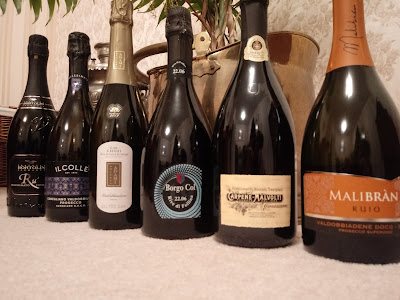
Prosecco Conegliano Valdobbiadene - The OG

Six wines from Conegliano Valdobbiadene DOCG

#1 child returned from university and announced she was interested in learning a bit about wine, so we started with some Prosecco lessons.

Prosecco DOC is the basic stuff, whereas the DOCG region of Conegliano Valdobbiadene is higher up the quality scale.

What is the difference between DOC and DOCG? The extra "G" stands for garantita, as if somehow the DOC classification is not quite as reliable.

In practice, it's not so much the words used as the hierarchy that matters; the DOCG is higher than DOC in the same way that an A** is higher than an A*.

Within the Conegliano Valdobbiadene DOCG classification, there are further distinctions and sub-divisions, but if you only remember one thing, it's this: look for the "G".

Pretty much all Prosecco is made by the Charmat method of fermentation in tank - this is quicker than in-bottle fermentation, meaning that the wine is less expensive to produce (and buy).

Whilst a shorter second fermentation gives less savoury complexity to the wine, the fresher flavours match better with the local cichetti.

Moreover, the second fermentation is only part of the equation, the part that makes the bubbles. Fruit selection and ripeness, blending and the initial vinification all play a part in the overall quality of the final wine.

However, it seems not everyone has gotten the DOCG memo; expat winemaker Jonathan Hesford wondered what there is to learn in a Prosecco lesson, while wine-writer Jamie Goode referred to Prosecco as "cheap plonk", albeit later explaining he was joking and had actually recommended one in his newspaper column.

BORGO COL Valdobbiadene Prosecco Superiore DOCG Extra Brut Rive di Follina 2020 (Looking for importer)

a steely rive wine: extra Brut

very small producer, just 9ha biscuity with citrus, white stone fruits and brioche; supple, rounded and elegant with orchard fruits

Good.

ADAMI Valdobbiadene Prosecco Superiore DOCG Extra Brut Rive di Farra di Soligo “Col Credas” 2019 (Astrum Wine Cellars)

extra Brut rive wine

family producer, from a stony, breezy area white flowers with brioche, gingerbread and sea-spray; sappy white stone fruit, conference pear and green apple; fresh and tangy with persistent saline-minerality.

Good.

CARPENÉ MALVOLTI Conegliano Valdobbiadene Prosecco Superiore DOCG Brut Rive di San Pietro di Barbozza 2020

delicate, floral and herbal; green apple and orchard fruits with fresh citrus and some brioche complexity; subtle and sensitive with a gentle mousse and acidity

Good.

These four wines were all non-rive assemblages with a soft broadness

MALIBRAN Conegliano Valdobbiadene Prosecco Superiore DOCG Brut “Ruio” 2020 (Vinhuset Nofra)

from gentle, rolling hills, single-vineyard wine

broad with an almost exotic fruit character, almost peachy roundedness, salty; a classic Conegliano style, plumper and more mouthfilling

IL COLLE Conegliano Valdobbiadene Prosecco Superiore DOCG Brut Millesimato 2020 (Looking for importer)

family company dating back to Venetian traders, organically-farmed and uses a cut-the-cordon method for on-the-vine passito character

orchard fruit and melonskin; plush, broad and peachy with tropical citrussy freshness; aromatic, floral and tropical with pear fruit; clean, precise and very elegant.

Good.

BORTOLIN FRATELLI Valdobbiadene Prosecco Superiore DOCG Extra Dry “Rù” Millesimato 2020

18g/l of residual sugar with fruit from both Conegliano and Valdobbiadene

delicately floral with camomile; white stone fruits and orchard fruit; weighty and saline, fresh and citrussy; finishes dry and mineral

Good.

Will match with slightly richer foods than the lighter, drier wines; think creamy risotto, soft white cheeses or mushroom-and-cream pasta.

Sunday, 5 December 2021

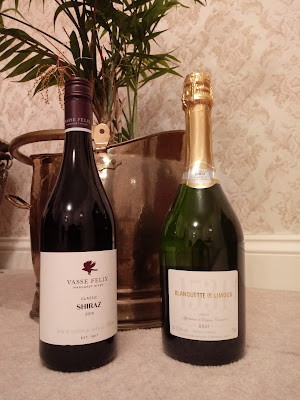
Languedoc Fizz and Aussie Red from Tesco

Languedoc fizz and Aussie red from Tesco

Crisp fizz and Big Red is a classic combination for any meal.

Fizz always creates a sense of occasion and this Blanquette de Limoux is ripe enough to work with a starter.

Western Australia's Vasse Felix is a pioneer of elegant, complex, food-friendly, European style wines in a corner of Australia cooled by three oceans.

Tesco Finest 1531 Blanquette De Limoux (£9.50)

Blanquette de Limoux was first created in 1531 in Languedoc-Roussillon by Benedictine monks; Mauzac and Chenin grapes are blended and aged in bottle for 12 months to produce complex flavours of peach, green apples and a toasted brioche finish.

The Limoux Vineyard covers 2000 hectares and is located in the Pyrenean foothills 20km from Carcassonne.

12.5%, vegan, hand harvested grapes, aged for 12 months. Decanter Commended.

orchard fruits and toasty brioche; ripe white stone fruits, green apples and pears, citrus, florality and Brazil nut; fresh and savoury.

Thoroughly pleasant.

Serve as an aperitif, with as seafood starter or with light mains such as monkfish or plain roast white meats.

Vasse Felix Classic Shiraz (£12)

Shiraz (aka Syrah) with some Malbec in the blend; estate-grown fruit from Vasse Felix's four Margaret River vineyards, matured in barriques for 12 months imparting balance, complexity and softness,.

Each vineyard farmed sustainably using traditional and organic practices, nurturing the soils to achieve better plant health and balance resulting in higher-quality fruit.

Established in 1967 by regional Pioneer Dr Tom Cullity, Vasse Felix is Margaret River's founding wine estate. Since day one Vasse Felix has always strived to explore and express the very best of the Margaret River region and to share it globally. 

damson, spice, florality and inky pencil shavings; sweet, ripe cassis, prunes and juicy black cherries with sweet vanilla spice, wild raspberry, loganberry, and white pepper; rounded and perfectly ripe tannins; fresh and savoury.

Good.

Match with roasted red meats, beefy pasta dishes, cold cuts or a plate of salami and cheese.

Thursday, 11 November 2021

Prosecco - A Deeper Dive into Conegliano Valdobbiadene


A deeper dive into the "rive" of Conegliano Valdobbiadene

The story of Prosecco is, to some extent, that of a country wine that suddenly found itself in the world's spotlight.

The rise and rise of Prosecco has been pretty much universally A Good Thing; consumers have taken to it and increasing demand has allowed the winemakers of the area to experiment, take risks and generally show what the wine can do.

After last year's introduction to Conegliano Valdobbiadene DOCG, this masterclass looked in more detail at the terroir and the rive, the slopes that make some of the top Prosecco wines in the area.

Conegliano Valdobbiadene is a mountainous area of "hogsbacks" in the pre-Alps / Dolomites; the hills run, unusually, east-west giving a north-south aspect. Distinctive, beautiful and ancient, they are a patchwork of bio-cultural heritage that has been recognised by UNESCO.

The UK buys mostly DOC Prosecco, with sales of DOCG making up under 10% by volume; however, that amount is also the top 10% by quality.

Rive wines are an even smaller proportion, meaning that this is a specialist and limited area. However, with export markets growing, and wines that were historically consumed locally finding new audiences abroad, the UK is a key market.

Located in the Veneto region of Italy, between Venice and the Dolomites, this is a rich land where the aristocrats of the Venetian republic lived, bringing the wealth and power of La Serenissima. It is a land rich in history and culture as well as natural wealth.

The rive are the slopes of the region, rising sharply from around 50m to 500m above sea level; there are 43 named rive which vary in size and have stricture regulations, including lower yields. They are cool, bright and breezy with steep terrain.

The constant breezes with cool nights and mornings moderate the temperature, resulting in higher acidity and lower alcohol and endless geological variation.

The wines of Conegliano are from clay soils, giving structure and fruity aromas.

Valdobbiadene's ancient mixed soils give finesse, fruit and florality.


With high rain comes high vigour, so natural growth and plantings are used to maintain the ciglione terraces which are grassed rather than stony, requiring hand-harvesting and needing around 10 times the amount of labour to maintain vs the lower-lying, flatter DOC vineyards where large estates are able to use mechanised processes.

The UNESCO protection of Conegliano Valdobbiadene's hogsback terraces helps to preserve the artisan, small-producer approach against the incursion of Big Money from outside; this will always be a high-cost areas, so the wines are moving away from cellar-door sales to tourists from Austria and northern Italy to competing on a larger stage on quality, rather than on price.

The wines must be minimum 85% Glera, with up to 15% of other varieties allowed; local varieties are increasing, with international varieties declining.

Glyphosate was banned in 2019 further adding to the region's sustainable and artisan credentials..

This being Italy, Dry is in fact the sweetest style. Next comes Extra Dry which is the most common style, with the drier styles of Brut and Extra Brut growing the fastest.

Unlike dosage for Champagne, sweetness levels for Prosecco are set prior to secondary fermentation; the drier styles undergo a longer Charmat-method fermentation and are more food friendly as a result.

Drier styles also require, and are therefore reserved for, top-quality fruit to give more concentration, extract, balance and complexity.

Within the "quality pyramid" of  Prosecco, Cartizze sits at the very top and is Grand Cru-level; the oldest sites date back to the 1600s and it forms a beautiful natural amphitheatre with stony soils, high acidity and higher ripeness.

The wines were presented in flights and the tasting notes are from Sarah Abbott MW.

Flight #1 - steely rive wines: all extra Brut

These wines had more precision; Glera is an aromatic variety and expresses its terroir when handled carefully with high levels of attention to the base wine, using site selection, natural yeasts and clarification methods and lees aging after initial fermentation for extra complexity. In some cases, this aging can be for up to a year after fermentation; this gives texture to the wine rather than the biscuity autolytic character.

BORGO COL Valdobbiadene Prosecco Superiore DOCG Extra Brut Rive di Follina 2020 (Looking for importer)

very small producer, just 9ha, gentle with delicate fruit

ADAMI Valdobbiadene Prosecco Superiore DOCG Extra Brut Rive di Farra di Soligo “Col Credas” 2019 (Astrum Wine Cellars)

bracing with striking acidity, family producer, tangy and uncompromising from a stony, breezy area with delicate stony freshness

BORTOLOTTI Valdobbiadene Prosecco Superiore DOCG Extra Brut Rive di Santo Stefano “Vigna Montagnole” 2019 (Ellis of Richmond)

aged on the fine lees for 4 months, then a very slow, 7-month secondary fermentation; from a steep, tiny vineyard of extreme, rugged slopes; racy and crisp with green apple, a gentle saltiness and pumice minerality

CANEVEL Valdobbiadene Prosecco Superiore DOCG Extra Brut “Terre Del Faè” 2020 (Berkmann Wine Cellars)

from Refrontolo, nicknamed "a postcard from God" for its outstanding beauty; a larger 26ha site where sheep graze in the vineyards for vegetation management and the wines can be served throughout the meal, not just as an aperitif; a long 2nd fermentation with lots of work on the base wine to create texture, reduced clarification to maintain proteins, use of natural yeasts, lower sulphites and higher natural anti-oxidants


All these wines were very elegant, but there was a feeling that their subtlety could prove to be the greatest market challenge, as it could prove too easy simply to overlook their delicacy.

All these Extra Brut wines will match with local foods such as risotto; they open up and gain complexity even as the fizz decreases, and prove popular in the local upmarket on-trade as a food-friendly, fine-dining wine.


Flight #2 - cuvees: all Brut

These wines are all non-rive assemblages with a soft broadness 

CARPENÉ MALVOLTI Conegliano Valdobbiadene Prosecco Superiore DOCG Brut Rive di San Pietro di Barbozza 2020

delicate, floral, herbal and fresh; subtle and sensitive with a gentle mousse and acidity

MALIBRAN Conegliano Valdobbiadene Prosecco Superiore DOCG Brut “Ruio” 2020 (Vinhuset Nofra)

from gentle, rolling hills, a single-vineyard wine, even if not from the rive; broader with an almost exotic fruit character, almost peachy roundedness, salty; a classic Conegliano style, plumper and more mouthfilling

SOMMARIVA Conegliano Valdobbiadene Prosecco Superiore DOCG Brut 2020 (Symposium Wines)

complex, from a lower altitude and drier area; spends just 30 days on the lees for second fermentation; again has Conegliano's characteristic rounder, plusher richness

IL COLLE Conegliano Valdobbiadene Prosecco Superiore DOCG Brut Millesimato 2020 (Looking for importer)

family company dating back to Venetian traders, organically-farmed and uses a cut-the-cordon method for on-the-vine passito character; peachy and aromatic, floral and tropical with pear fruit; 

LE COLTURE Valdobbiadene Prosecco Superiore DOCG Brut “Fagher” 2020 (Corney & Barrow) 

from 45yo vines; archetypal Valdobbiadene; vibrant, floral, aromatic with fine mousse, pretty and juicy with alluring fruit; overall, more refined


Flight #3 - cuvees with higher RS levels

These wines are not from the rive, but are cuvees sourced from within Valdobbiadene; their higher residual sugar content gives them a floral, cherry-blossom / Gardenia character; perfumed and aromatic, they are classy fun

BORTOLIN FRATELLI Valdobbiadene Prosecco Superiore DOCG Extra Dry “Rù” Millesimato 2020

18g/l  of residual sugar with fruit from both Conegliano and Valdobbiadene

RICCARDO Valdobbiadene Prosecco Superiore DOCG Dry Millesimato (Looking for importer)

21.5 g/l with fruit only from Valdobbiadene

Wednesday, 20 October 2021

Top 5 Bordeaux Wines for National Curry Week


Another week, another curry-and-wine matching exercise.

This time it was Bordeaux wines.

I had something of an advantage this time round, having carried out an extensive curry and wine matching recently.

Plus there were suggested food matches from Bordeaux Wines UK.


Fresh, full-bodied whites are perhaps the easiest match to curry; any traditional-method fizz will also have the neutral acidity and mid-palate weight not to be overwhelmed by curry.

Pink wines and seafood is a natural match, just add a moderate amount of spice here.

Reds are perhaps the trickiest match with curry, but red-meat-based stews with not too much heat work best.

Finally, a new idea to me; dessert wines with a paneer-based dish.

Bordeaux wines has this to say about matching wine to curry:

With National Curry Week kicking off October, it is the perfect time to cook up some hearty, warming dishes as the weather gets cooler. With bold flavours, spice and chilli heat notoriously difficult to pair, curry lovers can find it hard to match with wine.

However, the right bottle of wine can really upgrade your curry night. From dry fruit-forward rosés ideal for traditional Thai curries, to characterful Crémants perfectly placed to lift Keralan fish dishes, Bordeaux wines have the diversity, affordability and quality to get the most out of your favourite curry dishes, whatever the style.

Here are five Bordeaux wine and curry matches for autumn.


Calvet, Crémant de Bordeaux Brut Rosé with Keralan Monkfish and Prawn Curry (£12.99, Ocado)


Rich seafood in a creamy, coconuty sauce, this South-Indian style curry is ideally matched with a fresh, zippy Crémant de Bordeaux rosé

Calvet Crémant de Bordeaux Rosé has a bright and racy palate presenting notes of raspberry, cherry blossom and toasted baking spices that harmonise well with the fragrance of the dish.

With a creamy mousse, and attractive palate, this traditional method sparkling rosé can happily be served before, during and after the meal.

fresh, elegant redcurrant fruits, a leesy-creamy texture, fresh red summer berries, florality and some pastry notes. The bubbles are fine and the finish is long and complex.

Thoroughly enjoyable.

Fresh enough for an aperitif, when not matching with curry, it also has the savoury versatility to work with a range of lighter foods, such as chicken or ham salads and mixed antipasti.

Château de Rochemorin 2017, Pessac-Leognan With Butter Chicken (£27, Waitrose)


A favourite for those who like a rich Indian dish without a significant kick of heat, butter chicken is nutty, aromatic and creamy which is a wonderful match for a Sauvignon Blanc from Bordeaux with plenty of structure.

Château de Rochermorin is complex and textured with notes of grapefruit, lime and a toasty savoury undertone, which cuts through the richness of this hearty meal.

aromatic and herbaceous with lime and grapefruit; fresh, precise and mineral with white stone fruit, honeysuckle, gooseberry and nettles; savoury, concentrated and sappy with good underpinnings.

Good.

Alternatives to curry include roast white meat, lighter game and white cheeses.

Clarendelle Bordeaux Rosé 2020 With Prawn Red Thai Curry (£15.20 from Hedonism)


Clarendelle Bordeaux Rosé is biodynamically produced with elegant notes of crunchy cranberry, pink grapefruit and cherry blossom.

There’s nothing better on a cold evening than a delicious, and nourishing Thai red curry, and Bordeaux rosé makes for a wonderful match.

Far from being just for summer, Bordeaux Rosés have the acidity and lively fruit flavours to cut through the richness of the coconut milk in this dish, yet are not tannic, making them the classic choice to stand up to spice.

ripe, red berries, stone fruit and leesy mineral; long, substantial and clean. A very classy and adept wine.

Good.

An alternative match for the Clarendelle is cold cuts.

Esprit de Puisseguin 2019, Puisseguin Saint-Émilion With Laal Maans - Rajasthani lamb curry (£13.49 from Waitrose)


Red wine is usually overlooked as a curry pairing as high tannins can clash with chilli heat. However, with many modern, fruit forward reds ready to drink young emerging from Bordeaux, there’s a great breadth of reds that harmonize well with richer, meatier curries.

Esprit de Puisseguin is a smooth, rounded Merlot blend which has wonderful fruit definition showing flavours of red plum, cherry and cinnamon that has the strength and complexity to stand up to this flavourful lamb curry. 

cherry and red plum fruit with spice and some coffee grounds; fresh and juicy with bramble fruit and herbaceous raspberry leaf; savoury, with fine-grained, slightly drying tannins.

Thoroughly enjoyable.

Match with any red meats, curried or otherwise.

Château Gravas 2016, Sauternes with Shahi Paneer (£12.99 from Virgin Wines)


Sweet Bordeaux wines are far from only being suited to serve with desserts, in fact the sweetness and succulent fruit flavours make for an ideal match for spicy, creamy curries.

Château Gravas has a beautiful palate of sweet apricot, honey, cinnamon and hints of ginger, which harmonises well with the spices of this dish while the racy acidity perfectly cuts through the creaminess of the paneer.

floral with candied fruit and sweet spices; fresh, sweet and viscous with overripe yellow stone fruits, pineapple, sweet vanilla and butterscotch and a whiff of beeswax.

Thoroughly enjoyable.

Other than curries, match with blue cheese.


Thursday, 9 September 2021

J Vineyards ‘J California Cuvée NV’ - Californian Fizz

A New World, Traditional Method fizz from California's J Vineyards and Winery

Until relatively recently, if offered the choice of a fizz from a warm-climate New World country, I would have most likely politely declined.

An MW-led Champagne tasting at the now-defunct Alimentum a decade ago taught me that California simply cannot do the sort of elegance that Europeans take for granted

But that was then.

Times change and so do wine regions; elegance, nuance, complexity, freshness and a sense of place are now the watchwords in many New World regions instead of mere heft and fruit.

These days, California is less Metallica's well-produced, technically-sophisticated but full-on Thrash Metal with its twin lead guitars, multiple solos and 8-minute songs


And more Jeff Buckley's sensitive, considered singer-songwriter-guitarist vibe, with nuance, subtlety and sensitivity, deploying a broader range of styles and a more adaptable approach:


For a more formal analysis of California and West Coast wines, see this much more considered piece by Nicolas Quillé, MW https://www.linkedin.com/posts/nicolasquille_the-vast-majority-of-north-american-wines-activity-6843165050430193664-sT3c

J Vineyards ‘J California Cuvée NV’ (£23, Tesco) 

California's J Vineyards was founded in the cool-climate Russian River Valley of Sonoma by Judy Jordan in 1994; the vineyards offer the ideal climate for growing expressive, world-class sparkling wines. Marked 96 points at the Decanter World Wine Awards, J Cuvée 20 Brut NV has an elegant mousse and a complex palate.

It is a blend of J’s best cool-climate vineyard sites, notably from the Russian River Valley, Santa Lucia Highlands and Mendocino County. A non-vintage blend of Chardonnay, Pinot Noir and Pinot Meunier, using 7% reserve wine, the grapes were hand-harvested and placed as whole clusters, without destemming, into the press.

As is customary for traditional method sparkling wine production, the second fermentation occurred in bottle. The wine was aged on the yeast for a minimum of 24 months, developing deeper complexity as it aged.

The wine has the elegance, finesse and complexity of a European fizz, but just a little more ripe fruit, making it an easier, earlier drinker.

ripe orchard fruit, biscuity brioche and florality; lemon curd, yellow stone fruit, ginger snaps and sherbet. Full, generous and supple with a fine mousse. Ripe fruit and easy-drinking.

Good.

Match with pork belly or king prawns.

****

Thursday, 2 September 2021

The CWB Tesco Pink-Off

A Tesco Pink-Off between England and France

Think pink and chances are, neither England nor the Loire is what first springs to mind.

But, with the popularity of rosé rising, everyone is keen to get in on the act. Even northerly climates.

If you reckon England is all about traditional method fizz and Sancerre is just flinty Sauvignon, get with the program!

Both regions now do pink wines - and do them very well.

Tesco Finest English Sparkling Rose Brut (£21)

Made by award-winning Hush Heath Estate, this refreshing pink sparkling wine is produced in the traditional method, hand harvesting grapes to make a pale coral coloured wine, with wild strawberry and citrus flavours, balanced with a vibrant acidity.

A blend of Chardonnay, Pinot Blanc, Pinot Noir and Pinot Meunier, cool fermented and aged on the lees for over a year to give a toasty, brioche note. 

white flowers and marzipan with brioche; fresh and sherbetty, citrussy with delicate redcurrants, alpine strawberries and red cherries; fine mousse and minerality; clean and harmonious with good underpinnings.

Good.

Serve as a garden-party aperitif or match with creamy cheeses, oily fish or seafood canapés.

Sancerre Rose (£12)

Made from Pinot Noir, picking is done early in the morning, when the temperature is low, to protect all the Pinot Noir aromas. The grapes are gently pressed and the juices are then fermented at low temperature to preserve all the aromas revealing the subtlety of the terroir. It is bottled in the Spring following the harvest to keep the flavours.

white pepper, red plum and cherry fruit; citrus, tropical fruits, florality and aromatic lemongrass; stone fruits and red berries with zippy gooseberry and grapefruit; good savoury concentration, underpinnings and length.

Very Good.

Match with seafood starters or picnic foods such as quiche and cold cuts.

*****

Further details:

English Fizz - History

Hush Heath Estate, situated in Kent, dates back to 1503. At the heart of the property is a Tudor manor surrounded by 162 hectares of perfectly manicured gardens, vineyards and apple orchards. Forward thinking Richard Balfour-Lynn planted first planted vineyards on the property in 2002.

Today, Hush Heath's 15 hectares of vineyards and 8 hectares of apple trees are meticulously and sustainably managed by a family of viticulturists.

Nestled among the rolling hills, within The Garden of England, the Hush Heath vineyards enjoy quiet serenity and a favourable microclimate supporting optimal ripening conditions for our prized grapes.

Our vines and wines benefit from our outstanding soil; deep Wealden clay, unique to our corner of Kent, which provides dense structure in our wines and vibrant, lively acidity.

Sancerre Pink

Nestled in the heart of the Sancerre appellation, the Domaine Fournier Père et Fils winery goes back generations of winemakers since 1926. The Finest Sancerre Rosé comes from Pinot Noir vines aged between 10 to 30 years.

Sancerre, in the Loire Valley, is incredibly well known for its Sauvignon Blanc wines, but Pinot Noir is also grown here and made into delicate rose wines like this Finest Sancerre Rose.

Tuesday, 17 August 2021

Warm Weather Wines from Familia Torres. And Some Spanish Food

Summer wines from Spanish producer (with vineyards in Chile) Torres

Here are some wines to have on standby this summer from Familia Torres; bubbles, crisp white, aromatic white, barbecue reds, rosé and something sweet.

The  accompanying food was from Brindisa, my "winnings" from a world cup sweepstake in which I drew Euro champions Italy. It consisted of tapas foods, such as olives, almonds, chorizo, cheeses, breadsticks and jamon.

A perfect set of simple but delicious tapas-style food for matching with a range of wines.

Everything here was very enjoyable indeed and good value.

Estelado Rosé, Chile (£13.99 Thedrinkshop.com, VINVM, Vivino, Soho Wines)

Miguel Torres Estelado Rosé is one of Chile’s most innovative sparkling wines. Made entirely from Pais, Chile’s oldest grape variety. Planted by many small farmers, the variety was long forgotten, and undervalued until Torres rediscovered it for making quality wines.

Made using the traditional method with second fermentation in the bottle.

pale pink with fresh wild strawberries, redcurrants and yeasty brioche; elegant and mineral; very pure and clean.

Good.

Serve as an aperitif or match with light starters such as shellfish.


Vina Sol 2020 (£7.50 Tesco, Waitrose, Sainsburys, Morrisons, Asda and Co-op)

Made from Parellada (with a touch of Garnacha Blanca), the white grape traditionally used to make sparkling Cava wines, here it shows beautifully as a still wine.

The grapes are cool fermented in stainless steel for fresh fruitiness.

aromatic and citrussy with white pepper and lime zest; fresh and lemony with white stone fruit and a persistent minerality. Very harmonious and adept.

Good.

Light enough for a summer sipper, match with fish and chips, sushi, soft white cheeses or even spicy Thai. 

Also available in an environmentally friendly 2.25-litre bag-in-box, which will fit easily in a fridge – the perfect format for summer months.


Vina Esmeralda 2020 (£9, Tesco)

Made from a blend of Moscatel and Gewürztraminer, off-dry with expressive floral characters and tropical fruit aromas.

orchard fruits, white stone fruits, orange blossom and pear drops with tropical melon, pineapple and lychees; lime marmalade and honeysuckle; crisp, refreshing and light.

Good.

Serve well-chilled as an aperitif or with appetisers such as avocado and shellfish or melon with ham or with grilled fish.


Vina Sol Rosé 2020 (£7.99, Waitrose, Ocado)

Vina Sol Rosé 2020 is the pale raspberry pink sibling to the classic Vina Sol. Made mainly with Garnacha and Carinena, it’s fragrant and sensual, with notes of redcurrant and a lovely spicy, pink peppercorn finish.

strawberries and white pepper; delicate red berries, crunchy orchard fruits and fresh, crisp citrus; concentrated and long with good underpinnings. Fresh, delicate and balanced.

Good.

Light enough for impromptu sunny alfresco lunches; match with charcuterie and tapas, cold chicken and pasta salads.


Sangre de Toro 2019 (£7.50 Tesco, Sainsburys, Asda)

First made in 1954, this red is all about the Spanish way of life. It’s the one with a eco-friendly bull on the bottle, representing Spain’s culture. Made from native Spanish grapes, Garnacha Tinta and Carinena, selected from vineyards throughout the region, gives this red its spicy notes and delicious fruit.

black fruits, dried prunes, cherry and toasty-oaky spice with some liquorice, dried herbs and cocoa; good structure with juicy fresh acidity and very gentle tannins. Some aged complexity and savouriness. 

Thoroughly enjoyable.

Match with barbecue and picnic foods, duck liver pate or roasted red meats, smoky cheese, or any tomato-based dishes.


Floralis Moscatel Oro (£8.99 Waitrose, Ocado, Morrisons)

Floralis Moscatel Oro is one of the Mediterranean’s most characteristic dessert wines made since 1946. Luscious, clean and crisp, with lovely honeyed and acacia flavours and naturally sweet and an unmistakable floral perfume of roses, geranium, lemon and verbena.

Floral and aromatic with raisiny cooked mixed fruits, sweetness and lemony ginger beer and verbena.

Good.

Serve well-chilled and match with almond tart, or a flaky pastry Pastels de Natas with its rich custard filling served warm or anything chocolatey to finish of a perfect summer night dinner under the stars.

*****

Tom Cannavan makes the Floralis Moscatel Oro his wine of the week, here: Review of Torres Floralis Moscatel Oro wine - YouTube

Sunday, 18 July 2021

Fourth of July Wines

Four Wines for the Fourth of July

And I can remember the fourth of July / 
Runnin' through the backwoods bare./
And I can still hear my old hound dog barkin',/
Chasin' down a hoodoo there,/
Chasin' down a hoodoo there.

Creedence Clearwater Revival, Born on the Bayou (1969)


J Vineyards ‘J Cuvée 20 Brut’ Russian River Valley (£24.99 or £19.99 as a mix of 6 from Majestic )

Located in the Russian River Valley of Sonoma County, J’s vineyards offer the ideal climate for growing expressive, world-class sparkling wines. Marked 96 points at the Decanter World Wine Awards, J Cuvée 20 Brut NV has an elegant mousse and a complex palate.

ripe orchard fruit, biscuity brioche and florality; lemon curd, yellow stone fruit, ginger snaps and sherbet. Full, generous and supple with a fine mousse. Ripe fruit and easy-drinking.

Good.

Match with pork belly or king prawns.

Bearflag Zinfandel 2017, Sonoma County ( £24.99 or £22.49 mix of 6 from Majestic)

Sonoma County native Aaron Piotter harnesses the wild, untamed Zinfandel vines to create this bold, powerful red that's a tribute to the Bear Flag revolt of 1846.

Sweet, ripe baked black cherries, blueberries and plums with vanilla spice, minty eucalyptus and a custardy texture. Juicy acidity and gentle, well-integrated tannins; very balanced and harmonious.

Good.

Match with smokey barbecue meats, lamb with rosemary and garlic or an indulgent cottage pie.


Louis M. Martini Cabernet Sauvignon 2017, Napa Valley (£36.42 from Vivino, soon to be available through Majestic)

Made with fruit from several Napa Valley vineyards, both high elevation and valley floor. Includes some Petite Syrah in the blend; aged in French and American oak, around 1/3rd new; 15% alcohol.

lifted blackcurrants, bramble fruits, complex spices and dried herbs with some aged character; baked dark fruits and cherries, leather, tobacco and cedarwood, oaky spice with hints of caramel and sweet coconut; dense and concentrated with ripe harmonious tannins. Long, complex, warming finish.

Very Good.

Match with rosemary-and-garlic lamb or herby wild boar sausages.

Klinker Brick 2017 Old Ghost Old Vine Zinfandel (Lodi) 

From Mokelumne River, alcohol 15.9%, this is the top Zinfandel from Klinker Brick's range made from vineyard blocks up to 120 years old

Lifted black fruits and dark berries, complex spices, porty eucalyptus, liquorice and botanical florality; juicy, mouth-watering baked blueberry and black cherry fruit with dried herbs, tobacco leaf and cocoa; complex and savoury with roasted spices and old-vine concentration. Dense, supple and very harmonious with gentle, very fine tannins.

Very Good.

Match with a well seasoned steak.


******

Further reviews 

Louis M. Martini Cabernet Sauvignon

92 PTS

"A fruity red with currants, blueberries, black olives and a hint of dark chocolate. Medium to full body, creamy tannins and a flavorful finish. Drink or hold."

- James Suckling, Jan 2020

Sunday, 11 July 2021

Versatile, Varied and Multi-Coloured - Bordeaux

Five Bordeaux Wines

Bordeaux was pretty much the first wine area I realised I liked. I'd had wine previously, of course, but I'd never really got to know and understand a region; it was just "wine".

A long weekend break in Bruges via northern France found us stopping off on the return home to buy a bootful of wines from a local supermarket, all chosen pretty much at random.

It set a pattern that I have repeated for decades ever since: go to France and buy lots of lovely inexpensive wines based on what looks best from the local the area of wherever we happen to be.

The northern Pas-de-Calais region is not a wine-producing area, so the supermarket shelves there were mostly full of plentiful wines from the larger, better-known regions regions.

I had previously regarded Bordeaux as being all about exorbitantly-priced reds. What I found once I started opening up the various bottles we brought back was something completely different; inexpensive wines that were vibrant and fresh with plenty of stuffing. Sophisticated, yet accessible and easy to enjoy.

And Bordeaux is not just red wines, either; these days, there's rosé and fizz as well as whites, both dry and sweet. Far from monolithic, Bordeaux is pretty much all things to all occasions; there are very few situations it cannot cater for.

If the region's wines share a common trait, it is that they go well with food and have an ability to age, meaning that they often improve with a bit of air.

If you are used to ripe, fruit-forward New World wines that drink easily on first opening, you will find the fruit on  Bordeaux often emerges more noticeably after an hour or two in the decanter.

Here are five mid-range Bordeaux wines that showcase the variety and versatility of the region.

Comtesse de Saint-Pey Brut NV, Crémant de Bordeaux (£14, L’ami Jac)

Bordeaux fizz has the complexity of traditional method sparklers with the ripe fruit of a warmer, more southerly region; a price tag somewhere below Champagne just makes it better value.

Sémillon / Cabernet Franc blend.

orchard fruits, fresh citrus, florality and white pepper; ripe pear, white peach and honeysuckle with some biscuity leesiness; fine mousse and a savoury persistence.

Good.

Serve as an aperitif or match with sushi, seafood or other light starters.

Château Haut Rian, 2019 Bordeaux Rosé (£13, Harvey Nichols)

Merlot / Cabernet Sauvignon blend.

red fruits, cranberry and wild strawberry with fresh mint, grapefruit zest, white pepper and minerality. Pure and adept with good savoury underpinnings.

Good.

Match with picnic foods, salmon or shellfish.

L'Emigré Blanc 2020, Graves (£14.99, Virgin Wines)

From the Graves sub-region south east of Bordeaux, named for its gravelly soils; the wine is organic and sees a little of oak.

aromatic with white pepper and tropical fruits; intensely mineral and leesy with grapefruit, elderflower, lime kaffir and racy acidity; weighty, concentrated and long.

Very Good.

Demands food; match with salmon carpaccio or baked goat's cheese tarts.

Château Monconseil-Gazin 2018, Blaye Côtes de Bordeaux (£9.75, The Wine Society)

Merlot / Cabernet Sauvignon / Malbec blend from Blaye, just across the river from the Médoc.

forest fruits, plums, cherries and raspberries with sous bois earthiness and spice; fruit-forward and approachable; fresh, supple and easy-drinking with ripe, gentle-yet-firm tannins.

Good.

An easy-drinker, match with pizza, herby sausages, burgers or roast chicken.

SO Sauternes, Bastor-Lamontagne (£9.99, 37.5cl, Waitrose)

Botrytised dessert wine from Sauternes.

roasted buttery peaches with vanilla sugar, honeysuckle, beeswax and orange blossom; sweet, waxy and viscous with apricotty-peachy sweetness, sweet spices, ginger and tropical citrus freshness. Long, savoury and complex. And utterly delicious.

Very Good and Good Value.

Pour as an apéritif with tapas, or later in the meal with cheese and sweet puddings.

******

Further reviews:

Finding value-for-money in Bordeaux 2020 by Liz Gabay: Finding value-for-money in Bordeaux 2020 - Elizabeth Gabay MW


Monday, 5 July 2021

Three Summer Wines From Virgin Wines

Three summer wines from Virgin Wines

More than halfway through the year and summer has still not yet fully arrived in the UK.

If you dream of rocking up to a friend's for a weekend afternoon of outdoor eating-and-drinking, here are three wines to take with you.

- an Italian pink fizz with style and elegance

- a sophisticated Saffer white

- a fruit-forward, crowd-pleasing, sophisticated easy-drinking Big Red to go with burgers and relish

Solpiantez Spumante Brut Rose Millesimato 2019 (£9.99)

The son of a Tuscan winemaker, Umberto grew up with vines in the blood. His 40-year career in the wine industry has seen him making wine for some of the most famous producers in Italy, as well as specialising in, and lecturing on,

Organic methods of production and, most recently, working as an international consultant to some of the most well known producers in the Veneto, Puglia and beyond. His hallmark is precision, both in terms of varietal expression and balance as well as vineyard typicity.

A blend of Trebbiano, Garganega and Sangiovese.

Delicate red-berry fruits, watermelon, citrus freshness and sea-shell minerality; very textured and linear with a precise, muscular core. Fine mousse and no rough edges.

Good and Good Value

Serve as a crisp aperitif or match with shellfish.

Wildeberg Terroir Sauvignon Blanc 2018 (£16.99)

This wine is made from older vines that cling to Simonsberg in the tiny, mountainous ward of Banhoek within Stellenbosch. Dry grown vines grow thin and weedy on these vertiginous slopes, but produce an excellent crop of grapes. These are then hand-picked, crushed and fermented at the Wildeberg winery. Location, location, location. That is the magic. Difficult soils and a difficult site produce an interesting wine.

Tim Atkin gives this 91pts 

Hand-picked and naturally-fermented Sauvignon Blanc, with only 2926 bottles of this vintage made. A wave of rich tropical, leafy notes on the nose sway to a broad palate of tight lime-leaf, bay and silky texture with a super-bright, naturally acid finish. Delicious with brightly-flavoured seafood dishes, Thai salads, citrus dressings or indeed by the glass on its own!

Aromatic, floral and zesty-pungent with lemongrass, grapefruit, white pepper and some quinine bitterness; full and supple with melon, stone fruit and pineapple plus zippy lemon-and-lime and sweet spices; concentrated and long with very good underpinnings.

Very Good.

Black Flag Winemakers Limestone Coast Shiraz Cabernet 2018  (£12.99)

This bespoke ripper is made from premium parcels of Padthaway and Limestone Coast fruit. The oak is present but far from prominent, beautiful and finely tuned ensuring the sweet red fruits, which first poke their heads up in the aromatics, carry through to the front palate and lead seamlessly into the soft, vanilla infused mid palate.

The final element of this wine is the most intriguing: it has a really strong presence yet remains inviting and warm. There are typical varietal flavours of chocolate and malt, which counters the regional hallmarks of mint and fresh herbs, and a lovely crisp tannin profile.

Lifted super-ripe, juicy plums and dark berry fruit with oaky spice, rubbed sage, sous bois and earthy-mushroominess; juicy cassis, vanilla and morello cherries; full and supple with an inky texture, and a slap of cocoa, leather and liquorice.

Thoroughly enjoyable.

Match with charred meaty or veggie delights from the barbecue. 

Saturday, 3 July 2021

Cava Tasting - Meeting the Winemakers

A transatlantic tasting of Cava with David Kermode, Katherine Cole and three winemakers

Cava has something of a Van Westendorp problem; a traditional-method fizz, it is costly to make, yet is often priced so inexpensively that it arouses suspicion: at this price, how can it be any good?

Cava's response has been to re-focus on quality and standards with a new hierarchy pyramid, instantly satirised by Fake Booze.

I can't help feeling that Cava's challenge is not so much around its inherent qualityas actually having some kind of identity and emotional connection with potential buyers.

Neither Prosecco, nor Champagne, it uses the Traditional (aka Champagne) Method but with, mostly, indigenous grapes; it is almost defined by what it is not rather than what it is. It needs to stand for something easily understandable.

MW Rose Murray Brown suggested that Cava is a logical next step for Prosecco drinkers and she may have a point; Cava is more complex than Prosecco but riper and less expensive than Champagne.

The wines we tried had around 10 g/l dosage, giving them an easy-drinking generosity, while retaining freshness.

I prefer more dryness, so chilling the wines for longer to increase perceived acidity is the solution for that.

The history

Winemaking in Catalonia dates back to Roman times; the anti-oxidant properties of indigenous grape Xarel-lo preserved it on long sea-and-river journeys to supply the norther parts of the Roman empire.

Unlike much of southern Spain, Catalonia has an almost uninterrupted history of winemaking and in the 1860s, wines were sent north to France to replace production destroyed by phylloxera; Once again, the the wines were able to survive the journey north without fortification.

By the 20th Century the name cava was coined, referencing the caves in which the wine is matured and aged on the lees in bottle.

The new quality pyramid specifies a minimum aging of 9 months for entry-level Cava de Guarda, up to 36 months for Cavas de Paraje Calificado (which must also be from a special plot)

The winemakers - and the wines

Mireia Pujol-Busquets Guillén, Deputy Director of Alta Alella

Mireia is a second generation winemaker from a famliy owned company.

The appellation is very small and very old; just 10km up the coast from Barcelonait benefits from sea breezes. Farming has been organic from the beginning in 1991 and sulphite-free since 2006.

Eva Plazas Torné, Head Winemaker, Vilarnau 

Vilarnau is based in Penedès at altitude and surrounded by mountains; the company is owned by Gonzalez-Byass and increasingly uses later-ripening non-native grapes, such as Pinot Noir due to climate change.

Vilarnau Brut Reserva Organic (£10, Ocado and Amazon)

golden sandy yellow, primary orchard fruit and citrus with brioche and buttery shortbread.

Thoroughly enjoyable.

Serve as an aperitif or match with pintxos.

Andrea Cerezo, UK e-Commerce and On-Trade Manager, Codorniu 

Raventós Codorníu is a large producer with a significant market share; they maintain standards by simply by focusing on quality throughout the production process.

The name of the Anna BdB comes from Anna Codorníu, an ancestor of the company.

Anna Blanc de Blancs Brut Reserva (£13, The Champagne Company, The Fine Wine Co, Taurus Wines, VINVM Ltd, Beviqua Ltd, GP Brands)

70% Chardonnay with Parrellada and Macabeo; golden delicious apple, pear and white peach fruit; creamy-almondy with florality and freshness.

Thoroughly pleasant.

Serve as an aperitif, a summer sipper or with picnic food such as cold cuts, chicken drumsticks or quiche.

To learn more about cava, check out: CAVA ACADEMY

Friday, 25 June 2021

Three Summer Wines From Tesco


Three summer wines from Tesco

Summer has taken a long time arriving in the UK. But at some point, we will want to meet up again with others in the fresh air and do summery stuff.

Summer drinking is all about freshness - wines that refresh and cut through barbecue foods, such as hot dogs and burgers or quiches and chicken drumsticks. Wines that are easy to drink, that you can sip in a deck chair.

Here are three refreshing summery wines from Tesco that don't have to be consumed at a garden party - but it helps.

The Loire is a great source of inexpensive lively wines with great freshness; a pink fizz from other parts of France could cost a lot more than this.

Spanish Albariño from Rias Baixas is the next step on from kiwi Sauvignon Blanc; grown in Spain's cool, damp north west, it has all the same aromatic zingy freshness.

Beaujolais is technically part of Burgundy, but grows different grapes on different soils right in the south; juicy, easy-drinking dark-berry fruits are the hallmark of Beaujolais which makes it a great wine for food.

Gratien & Meyer Crémant De Loire Rosé NV - £12

Founded in 1864, Gratien & Meyer are one of the leading producers of Cremant (traditional method sparkling wines) in the Loire. These are produced in the same way as Champagne, but sell for much less, making them a great value alternative for celebrations and special occasions.

A blend of Pinot Noir, Chardonnay, Chenin, Cabernet Franc; yeasty, biscuity brioche, creamy oatmeal and white pepper with citrus, florality and red berry fruits. Adept, with complex, savoury underpinnings.

Good.

Serve as an aperitif or match with shellfish, lighter curries and picnic foods such as hams, quiches and chicken drumsticks.


Paco & Lola Albariño - £12

From the O Rosal Valley is in the south of Rías Baixas; the climate is mild, due to the Miño River and Atlantic ocean, with mineral-rich soils.

aromatic zesty citrus, acacia, cut grass and musky melonskin; fresh stone fruit, lychees and honeysuckle with zingy grapefruit and lime; intense, mineral and persistent.

Good; thoroughly pleasant on first pouring but improves noticeably with some aeration.

Match with strongly flavoured seafood, such as prawns and calamari with garlic, ginger and herbs, cod in a herby broth or herby-garlic cream cheese on crusty bread.

Tesco Beaujolais Rouge, 2020 - £5 (vegetarian) 

floral and aromatic with dark berries and earthiness; juicy cherry, redcurrant and elderberry fruit, with spices and rubbed sage; vibrant, supple and fresh.

Thoroughly enjoyable and Good Value

Serve slightly chilled with barbecue or picnic foods, such as burgers and hot dogs.

******

Further reviews

Paco & Lola Albariño

Decanter World Wine Awards 2020 Platinum Medal - 97pts

'Scintillating. Stone-fresh, crunchy, vivid and pungent: everything you want on the palate, and more. An outstanding effort with beguiling and satisfying lime oil, pith and pounded rock to finish. Exquisite wine with a long appetising finish.'