Popular Posts

Showing posts with label Languedoc. Show all posts

Sunday, 12 June 2022

Two Supermarket Whites

Two supermarket whites

A slightly random pairing of two whites that I've had in my makeshift cellar for a while and which I felt needed drinking up.

In practice, both showed nicely and, for my palate, were in no rush to be consumed.

The Languedoc Sauvignon from Gerard Bertrand was a gift / leftover from one of #1 child's 6th form friends after we were ushered out of the house for her to have a summer pre-university party.

I'll be honest, I didn't have especially high expectations, but she turns out to have sophisticated friends.

The Soave was from one of Richard Bampfield's Lidl Wine Tour, bought at some point during lockdown; I doubt I paid full list price - but I might have done. It's actually not dissimilar to an entry-level Chablis in a warmer year. Just at a fraction of the price.

Corte Allodola Soave Classico, 2018 (£6.99)

orchard fruits with delicate hints of white flower and brazil nut; greengage and white stone fruits with melon and pear, honeysuckle and citrus; full, broad and supple. Starting to show a little evolution, in a good way. Well made.

Thoroughly pleasant.

Drinks nicely on first opening and can be further aged.

A versatile food wine, match with cheeses, white meats and creamy pasta dishes.


Gerard Bertrand Sauvignon Blanc, 2017 (£8.75, Morrison's)

Neither Loire nor kiwi in style; the best reference point is perhaps Bordeaux. The aromatics are restrained in favour of depth and breadth.

orchard fruits and pineapple with zippy grapefruit and sherbet; adept and well-made.

Thoroughly pleasant.

Does not show its age and improves significantly with aeration.

Match with monkfish in a herby broth, saltimbocca or pork with sage.

***

Further reviews:

Sunday, 29 May 2022

Four French Rosés For Summer

Four rosés for summer

Some people make the mistake of having rosé in the summer.

Others know better and drink it all year round.

Either way, summer is rosé season and International Rosé Day is on 11 June.

Here are four well-made and inexpensive rosés from France - look away now, label snobs; there is nothing from Provence here, but that just makes these wines better value.


La Belle Angèle rosé 2021 (£8.99 / £6.99 mix six, Majestic)

A Vin de France made with a blend of grapes including Grenache and Cinsault from both the Languedoc and the Gers in the South of France. Aged for just a few months in vats means this wine is fresh and full of strawberry bon bon flavours and floral aromas, as well as being a pretty, delicate pink colour.

La Belle Angèle was a famous muse for many of the French Impressionist painters in the Belle Epoque renowned for her beauty and joie de vivre. 

raspberry and redcurrant fruit, white pepper, saline minerality and good underpinnings. Rounded and elegant.

Thoroughly enjoyable.

Match with barbecues, salads or just sip outside in the garden.


Abbotts & Delaunay, Fleurs Sauvages, Pays d’Oc, Grenache rosé 2021 (£9.99 / £8.99 mix six, Majestic)

A new wine from the Abbotts & Delaunay Collection. Thanks to the work in the vineyards that respect the soils and the vines, healthy, concentrated grapes can be harvested whilst respecting the wild flowers (fleurs sauvages) and other wild life that surrounds them.

Made from 100% grenache grapes coming from the Hérault plain and the Aude to create a wine which is fresh, pale Provence pink and bursting with strawberry and raspberry aromas with a touch of minerality.

delicate red berries and florality; crisp, fresh and saline-mineral with soft red fruits; elegant, harmonious and refreshing.

Thoroughly enjoyable.

Serve as an aperitif on a sunny day in the garden or match with sushi or a warm chicken salad.


Calvet rosé d’Anjou 2021 (£8, Ocado)

Lower in alcohol at 11% making it good for summer drinking, this rich salmon coloured rosé comes from the Anjou region of the Loire Valley and is made from a blend of Cabernet Franc, Grolleau and Gamay grapes grown on clay/schist and clay/limestone soils.

expressive strawberry, raspberry and redcurrant flavours with watermelon, green apples, white peach and fresh citrus; hints of hazelnut and mint.

Thoroughly enjoyable.

Refreshing and light enough for an aperitif, a great barbeque wine, match with seafood or quiche.

Fleurs de Prairies, AOP Luberon, 2021, £8, Morrisons - or £2.25 for a 1/4 bottle)

Made from a blend of 45% Syrah, 46% Grenache, 5% Vermentino, 4% Ugni Blanc grown in clay and limestone soils on the slopes of the Luberon in the southern Rhône Valley which is becoming increasingly popular for its rosés.

This pale pink wine comes in a pretty bottle decorated with the fleurs de prairies or the wild flowers; lavender, poppies and sunflowers which carpet the Luberon in the South of France.

sweet strawberries, rose petals, citrus and tropical fruits with white pepper and mint; saline and mineral.

Thoroughly enjoyable.

Ideal as an aperitif accompanied by a platter of Proscuitto and Mozzarella.

Friday, 20 May 2022

The CWB Languedoc Rosé-Off

Three rosés from reliable and innovative Languedoc producer Foncalieu

Languedoc's Foncalieu is a southern French co-operative making characterful wines in handsome bottles.

I have been a fan of their wines for a long time; they are always well-made and expressive but sophisticated.

With southern warmth, nuance and attention to detail, these are crowd-pleasing wines in the best sense; you can serve them to a wide range of people and be confident that everyone will enjoy them.

These three rosés are better value than anything you will get from next-door Provence and while they are all good on their own merits, the niche Piquepoul Noir gets a special mention for being an extremely rare grape variety that will give you extra bragging rights at the dinner table.

Le Versant Grenache Rosé, 2021 (£12, independents)

soft red fruits, delicate florality and orange blossom; red fruits, citrus, zippy lime pith and saline minerality with good underpinnings; dense, linear, concentrated and precise.

Good.

A versatile food wine, match with picnics, mezze or tapas.

Piquepoul Noir Rosé, 2021 (£11 - £15, Fine Wine Direct)

delicate red fruits; dense and concentrated with good, savoury underpinnings; citrus, lime pith, red fruits and creamy-leesy-oatmealy almond and brazil nut.

Good.

Demands food; match with seafood, quiche, tapas, antipasti or mezze.

Domaine Haut Gléon, Vallée Du Paradis, 2021 (£16.95)

lime, honeysuckle, mint and rubbed sage with citrussy, grapefruit freshness; taut, linear acidity with redcurrant fruit and saline minerality; very focused, textured and precise. 

Good.

Match with Mediterranean starters: bread with olive oil. anchovies and tapenade.

Saturday, 23 April 2022

Two Languedoc Whites from Foncalieu

Two vibrant and refreshing Languedoc whites from Foncalieu

Foncalieu make lovely, inexpensive wines in France's Languedoc with as much attention to detail to the presentation as there is in the winemaking.

These two wines are no exception.

I have tasted earlier vintages of the Iberian-grape-in-France, Albariño Sillages, and worked my way through the Versant range with the rosé (which I liked a lot) and a Pinot (which I thought was OK, but nothing special).

Before the wines themselves. first a bit of history from the company's website

Backstory

Les Vignobles Foncalieu are a union of cooperatives anchored in the heart of Languedoc.

Our territory stretches from the Corbières massif to the banks of the Mediterranean, from the Mistral- swept hillsides to the sun-caressed plains between Carcassonne and Béziers. It is in the heart of these landscapes, situated between ocean and mountains, that all our wine- growers tend to our 4,000 hectares of vines every day in order to offer

Foncalieu the high-quality grapes used to produce exceptional wines.

A cooperative with strong values since 1967, our 650 winegrowers cultivate team spirit, authenticity, innovation and a shared passion, all of which have led Foncalieu to be named as one of the 50 most well-known brands of wine in the world by the trade magazine Drinks International in 2017.

Les Vignobles Foncalieu stretch across 4,000 hectares between the Cité de Carcassonne and the Canal du Midi, two UNESCO World Heritage Sites. This vast territory characterised by a mosaic of terroirs and denominations has enabled the development of a wide range of wines, most of which are labelled PDO and PGI of Languedoc.

The largest and oldest wine-making region in the world is also a land of culture, art and gastronomy, characterised by mild winters and hot summers. Its multitude of terroirs swept by the Tramontane and the sea wind stretches from the Pyrenees to the Mediterranean, offering a wide palette of grape varieties from Carignan to Malbec, and Roussanne to Sauvignon.

The colour, nose and mouthfeel of a Languedoc vary considerably according to its terroir, the varieties used in the blend, the yields practised, the quality of the soil and the climate of the preceding year. By mastering our terroir and selecting plots that we believe extraordinary, we produce fine Languedoc wines, including the Atelier Prestige collection and the Château Haut-Gléon wines labelled PDO Corbières and PGI Vallée du Paradis owned by Foncalieu since 2012.

We owe our know-how to all these people, who, thanks to their attentiveness and human qualities, have been developing Foncalieu for more than 50 years and have demonstrated their wine-growing spirit. 

From generation to generation, our passion for the vine remains strong. Passing on this passion to the younger generations is at the heart of our concerns so that our wonderful territories endure. The strength of Vignobles Foncalieu lies in the combination of skills brought by all our wine-growers and the various French and international specialist centres.

And so, our teams of agronomists and oenologists work hand in hand with the wine-growers to unveil the potential of each terroir in order to express the immense diversity of wine-growing identities. Enhancing the best plots, mastering the wine cellar and orchestrating the most wonderful blend ensures a noble quality, from the vine to the glass.

This work, aided by cutting-edge technology, is first and foremost a matter of talent. Our many expressions have been rewarded by a host of medals and distinctions and also recognised by the greatest international wine tasters such as Robert Parker.


Foncalieu Pays d'Oc Extraordinaires Sillages Albariño 2021 (£8 - £10, indpendents)

pear drops, citrus, sea-spray and lemon curd; stone fruits, honeysuckle and beeswax with sweet spices and some southern warmth. Saline, mineral and elegant.

Drinks nicely on first pouring; will repay a few more months' bottle age.

Good.

Fresh enough for an aperitif, it will work with a range of starters, such as seafood, white fish and pork rillettes.

Foncalieu Pays d'Oc, Le Versant Sauvignon Bio 2021 (£11, Hennings)

herbaceous, aromatic with lime and kiwi with orchard fruits and exotic passionfruit; fresh and mineral with citrus, lemongrass, blackcurrant leaf and minerality.

Drinks nicely on first pouring; will repay a few more months' bottle age.

Good.

Match with grilled fish with lemon, sushi or asparagus gratin.

Sunday, 17 April 2022

Three Wines from Abbotts & Delaunay

Three wines from French producer Badet Clément

It's a pretty safe bet that anything by Badet Clément will be well-made and enjoyable.

The website explains:

Badet Clément is the story of two winemakers, passionate about the diversity of wines and vineyards, possessed by a love for the earth and a penchant for well-executed work… 

With our feet rooted in tradition, and our hands reaching out to innovation, our company has participated in the revival of wines from Burgundy, the Languedoc, and the Rhône Valley for over 20 years now.

By staying on top of market needs and being attentive to our environment, we consider our cuvées as moments of pleasure for those who taste them. The harmony between the wine, the context, and the people who share in its enjoyment represents our vision of the perfect accord.

With increasingly demanding expectations and requirements, Badet Clément offers wines whose unique character tells the story of their terroirs and the open-mindedness of the professionals who conceive of them, each in its own way.

Keeping an open mind always, means maintaining an unrestricted and creative outlook, interconnecting points of view and ideas, encountering different terroirs and allowing for the expression of different grape varieties.

It is also the starting point for stimulating discussion, lasting partnerships, and innovation. Respectful of the know-how that has been passed on to us and supported by the richness and diversity of our vineyards, it is with integrity and altruism that we instil open-mindedness into each stage of the evolution of wine.

From our corporate culture to the first sip from the glass, our motto is OPEN WINEDED

The two Abbotts & Delaunay wines are both new and will be in-store from Easter 2022 at Majestic 

Abbotts & Delaunay, Fleurs Sauvages, Pays d’Oc, Chardonnay 2020 (£9.99 or £8.99 mix six @ Majestic)

A new wine from Abbotts & Delaunay, which will be landing in Majestic just before Easter and well in time for International Chardonnay Day coming up in May.

Made from a blend of grapes coming from four different regions in the Languedoc; Limoux, the Aude Valley, the Hérault plain and the slopes of the Cévennes mountains to create a wine which is fresh, balanced and complex. 

white flowers, tropical citrus, honeysuckle and sweet spices; melon, pineapple and yellow stone fruit with pear, green apple, some toasty spice with buttery hazelnut; fresh, savoury and long .

Good.

Drinks nicely on first pouring; improves with aeration. Will gain complexity with some cellaring.

A versatile food wine, match salmon fishcakes, pork or chicken dishes or a mild curry, such as chicken Makhani.


La Belle Angèle Pinot Noir 2020, Vin de France (£10.99 or £8.99 mix six @ Majestic)

From the Languedoc in the South of France; the grapes are grown on clay and limestone soils in the plains of the Hérault not far from the sea, between Beziers and Valras-Plage and also from the Minervois.

Subtle and soft, this wine’s juicy flavours of Morello cherry and strawberry mingle with herbs and spices from the region’s Garrigue vegetation.

La Belle Angèle was a famous muse for many of the French Impressionist painters in the Belle Epoque renowned for her beauty and joie de vivre.

red and black cherry fruit, spice and a supple texture; textbook warmer-climate Pinot; fresh, well-made and harmonious

Thoroughly enjoyable

A versatile wine, drink lightly chilled on its own or match with salamis, pates or herby pork rillettes.


Abbotts & Delaunay, Fleurs Sauvages, Pays d’Oc, Malbec 2020 (£10.99 or £8.99 mix six @ Majestic)

30 year old vines grown on the slopes of the Orb Valley in the Hérault, vineyards in the west of the Aude and in the dry salt marsh in Marseillette, each bringing different characteristics to the wine.

Thanks to the work in the vineyards that respect the soils and the vines, healthy, concentrated grapes can be harvested whilst respecting the wild flowers (Fleurs Sauvages) and other wild life that surrounds them.

plummy dark berry fruit and spice; fresh and supple with inky graphite; violets, liquorice, red and black fruits with spicy notes; well-structured and elegant with a persistent finish. Opens up with some aeration and can be cellared.

Good.

Match with charcuterie or rare red meats

Thursday, 14 April 2022

Two Malbecs for #MalbecWorldDay

Two Malbecs - Languedoc (Abbotts & Delaunay) and Argentina (Argento)

France is Languedoc's original home and Argentina its new home; a heat-loving grape, it was once grown in over 30 departements, but is now mainly associated with the South Western Cahors region.

That said, it appears pretty much all the way down the Atlantic seaboard from the Loire to Languedoc via Bordeaux, where it was once a major grape, but has since been replaced by the more reliable Merlot.

It was introduced to Argentina in the late 1800s, possibly as a clone that is now extinct in France. Given the Andes rise very gradually, it can be grown at very high altitude, allowing for long slow ripening with plenty of sunlight for flavour and cool nights to preserve freshness.

Malbec's appeal is easy to understand; Big Fruit with plentiful colour and an inky texture. World Malbec Day is on 17th April

Abbotts & Delaunay, Fleurs Sauvages, Pays d’Oc, Malbec 2020 (£10.99 or £8.99 mix six @ Majestic)

30 year old vines grown on the slopes of the Orb Valley in the Hérault, vineyards in the west of the Aude and in the dry salt marsh in Marseillette, each bringing different characteristics to the wine. 

Thanks to the work in the vineyards that respect the soils and the vines, healthy, concentrated grapes can be harvested whilst respecting the wild flowers (Fleurs Sauvages) and other wild life that surrounds them.

plummy dark berry fruit and spice; fresh and supple with inky graphite; violets, liquorice, red and black fruits with spicy notes; well-structured and elegant with a persistent finish.

Opens up with some aeration and can be cellared.

Good.

Match with charcuterie or rare red meats.

Argento Single Vineyard Altamira Organic Malbec (£13.99, www.allaboutwine.com)

Single-vineyard wine from Altamira in Mendoza's Uco Valley; 100% Malbec grown at almost 1,100m above sea level; the 22.5-hectare plot is certified both organic and Fairtrade.

dark fruits, blackcurrant pastilles and complex oaky spices with leather and mushrooms; supple, dense and inky with cassis, dark berries, black olives, graphite and mouth-watering freshness; savoury with very good underpinnings.

Drinks nicely on first pouring but improves with aeration and can be cellared.

Very Good.

Match with jamon or rare roast beef or tuna steak

Further reviews


Saturday, 5 February 2022

Three Languedoc Wines

Three Pays d'Oc wines - plus tasting notes from Master of Wine, Liz Gabay

When the Pays d’Oc label was created in 1987, it was the inspiration of California and the freedom of expression its many permitted single varieties offered that inspired many winegrowers at the time throughout the Languedoc and Roussillon regions.

This was an outlet for their New World style wines towards export markets – 35 years on, it’s one of the region’s hugest success stories.

The character of Pays d'Oc IGP varietal wines is closely linked to the sunny, Mediterranean climate. Like an amphitheatre open to the Mediterranean Sea, it extends in an arc along the 200km of coastline formed by the Gulf of Lion, from Nîmes through the Camargue, and the Côte Vermeille to the Spanish border.

To the south, the mountain ranges formed by the Pyrenees, to the east the foothills of the Cévennes, delimit its territory. Spread over 120,000 hectares, the vineyard is divided into three zones of influence: the maritime plains in its coastal part, the first slopes and limestone soils, and finally the high-altitude vineyards.

The extent of the Pays d’Oc vineyard explains the extraordinary diversity of soils found there: they alternate between sandy soils along the sea, limestones, schists, clays or stony gravel on the plains and hillsides.

This mosaic of terroirs is the field of expression of varieties authorized by the label. The wines of Pays d’Oc IGP are made up of 45% red wines, 25% white and 30% rosé. Currently, fifty-eight varieties are permissible under the Pays d’Oc IGP denomination.

Varieties range from old traditional varieties to varieties normally found elsewhere to modern crosses either presented on their own as a single variety or in traditional or unusual blends.

While most emphasis is on the single varieties, it is important not to forget the varied styles of winemaking and enormous range of styles, from fresh, fruit forward wines to fuller bodied wines aged on the lees or in barrel, from dry through lightly moelleux to fuller sweetness, which make so many of these wines exciting choices for a range of festive occasions.

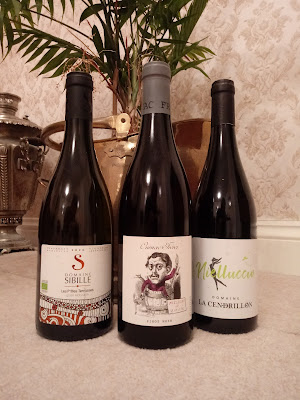
Ournac Frères, Mélasse 1ère qualité Pinot Noir 2020, Domaine Coudoulet

While politics is generally avoided at festive meals, this wine allows you to enjoy the political cartoon of the winemaker's great-great grandfather!

And every bottle is numbered.

This wine also surprises, showing the fine quality of a Burgundian-style Pinot Noir from the Languedoc.

Liz says: Cherry fruit compote with a hint of eucalyptus and menthol aromas. On the palate vibrant sour cherries, crunchy red currants and mineral fruit. Really delicious, silky tannins with fresh mouth-watering acidity. Benchmark Pinot that would partner a roast leg of lamb.

My note: Burgundian nose; juicy ripe-yet-fresh berry fruits, red plums and cherries with some oaky spice and green herbs; supple and fresh with savoury minerality.

Good.

Drinks nicely on first opening; can be cellared.

Cellar price in France: 18€ / Not Retailed in the UK

Nielluccio 2020, Domaine la Cendrillon - organic

Nielluccio, the Corsican name for Sangiovese, is relatively new to the region and is loved for its freshness even in the hottest of years.

Liz says: Juicy perfumed compote with a touch of violets on the nose. On the palate, rich bitter chocolate, black cherries, coffee and violets (think Chianti).

Velvety, rich black fruit with smooth supple ripe tannins - enough to give structure and weight but ready to drink, with long, fresh crisp acidity.

My note: black cherries, dried green herbs and complex roasted spices; plummy fruit, dark berries and cassis with coffee grounds, oaky spice, leather and herbs; complex, fresh and concentrated with supple, firm and perfectly ripe tannins.

Very Good.

Match with roasted darker game, pasta ragù or wild mushroom dishes.

Cellar price in France: 10€ / Not Retailed in the UK

Les P’tites Terrasses 2020, Domaine Sibille - organic 

This delicately sweet blend of 50% Viognier and 50% Roussanne gives a lovely opportunity to make a meal festive as aperitif or with dessert.

Dried grapes give the sweet intensity with none of the weightiness of added alcohol found in a VDN. 

Liz says: Delicate tinned peach aromas. Silky creamy richness with notes of Seville oranges, grapefruit and candied citrus peel and pears.

A pleasure to sip with the citrus freshness acidity, and an edgy minerality hidden on the finish, lifting to delicate prettiness.

My note: delicate and floral with tropical fruits and musky melonskin; sweet-sour freshness with honey, beeswax and dried pineapple pieces; complex sweet spices and white-pepper savouriness.

Very Good.

Neither dry nor a full-on dessert wine, it makes a refreshingly sweet after-dinner sipper or will go nicely with a creme brulee.

Twitter came up with various savoury suggestions for food matches:

Cheeses

Charles Hardcastle of Joseph Barnes Wines suggests blue cheese.

Guardian columnists Fiona Beckett suggests mature goats cheese, mild creamy blue cheese

Joni Karanka suggests cheese fondue.

Pork

Northerly Boy went with Vietnamese Thit Kho Tau (pork belly)

Tim Butler suggests roasted pork belly with the wine substituting for apple sauce.

Seafood

Jim-Bike/food/wine suggests seared scallops or salad nicoise.

Asian

Tim Needham suggested nasi goreng and James Hubbard offered Sichuan chicken stir-fry, Malay rendang, Moroccan-spiced fish or a smoked fish pie.

Cellar price in France: 12,20€ / Not Retailed in the UK.

Saturday, 18 December 2021

Three Christmas Wines - Retro, Old Classic, New Classic

Three Christmas wines - Retro, Old Classic, New Classic

I've long argued that Christmas is not a time for wild experimentation or straying too far out of your comfort zone.

With multi-generational family gatherings, lots of cooking and the general weight of expectation, I prefer to reduce the stress levels by keeping wine choices fairly simple.

The most straightforward approach can be simply to have slightly better versions of what you normally drink - with plenty of it to go round.

Here are three wines for Christmas that meet that requirement and should keep all-but-the-fussiest of drinkers happy.

The retro choice - pale cream sherry

Sherry has been enjoying something of a revival, but pale cream remains an anomaly.

Stuck in something of a time-warp, pale cream was only created as a category in the late 20th century but remains something that only one's parents or even grandparents drink.

Essentially a sweetened fino, it is an easier sipper than bone-dry sherries, but like its darker, more complex sibling Cream Sherry, it has not quite managed to shake off its "Maiden Aunt" image, which is a pity as it is a lovely accompaniment to all sorts of slightly sweeter foods.

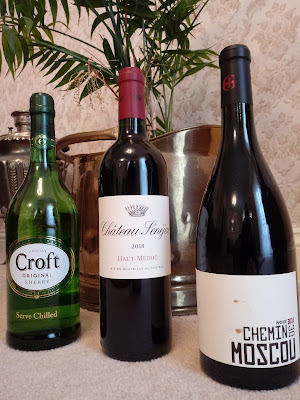
Croft Original Sherry (£12, The Co-op)

yeasty flor, blossom, white pepper and baked white stone fruits; honey, baked apples with sweet spice, white flowers and candied pineapple; warming, substantial, unctuous and complex, yet also mellow and harmonious.

Good.

Serve as a strong-sweet aperitif or match with blue cheese, roasted nuts such as Brazils, melon and parma ham or rich pâté, such as goose liver.

Also consider:

- spicy chorizo or in a Martini in lieu of Vermouth


The Old-School Classic - Bordeaux

Red Bordeaux was my first oenological love and it's a wine I just keep coming back to for its food-friendly, savoury freshness, complexity and aging potential.

Crus Bourgeois are the better wines of the Médoc sub-region of the Left Bank before you get into the stratospheric prices of the Classed Growths; expect just a bit more of everything but without the trophy-wine price tag.

These wine rub shoulders with some of the greatest and most expensive wines you can buy - and it shows.

Chateau Senejac Cru Bourgeois, Bordeaux, 2018 (£17.50, The Co-op)

Vintage matters in Bordeaux perhaps more than anywhere else apart from Burgundy; 2018 is generally considered an exceptional year that favoured the red wines with plenty of warmth.

black cherry and dark plum fruit with complex spice and woodsy sous bois; ripe bramble fruits, raspberry, blackcurrant and plum with minty liquorice and peppery spice; fresh, savoury and supple; long and complex with perfect ripe, very well-integrated tannins

Very Good.

Drinks nicely with plenty of fruit to the fore on first pouring; improves with aeration and has the ability to age.

Match with plain roast red meats or toad-in-the-hole.

The New Classic - Languedoc

From Europe's wine lake to perhaps France's most exciting and innovative region. And almost certainly once of its best-value areas, also scoring well for reliability given its plentiful sunshine.

Languedoc just keeps getting better and better.

Domaine Gayda's first vintage was less than 20 years ago; this 2019 is two-thirds Syrah with one-third Grenache plus some Cinsault making up the balance.

The wine is aged for 21 months in oak in a range of sizes and ages.

Domaine Gayda Chemin de Moscou 2019 (£25, Cambridge Wine Merchants and other independents)

dark purple with complex dark fruits, scrubby garrigue herbs, spice and leathery sous bois; full, supple and fresh with an inky texture, red and black fruits, violets, complex spices and cool mint; plush yet firm; harmonious with well-rounded tannins. Very long.

Very Good.

Drinks nicely with plenty of fruit to the fore on first pouring; improves with aeration and has the ability to age.

Match with garlic-and-rosemary lamb or chicken with a sage-and-sausagemeat stuffing.

***
The first two wines are currently on special offer at The Co-op until January 4th, 2022 :

Croft Original Sherry - reduced to £10.50 
Chateau Senejac Cru Bourgeois, Bordeaux, 2018 - reduced to £16.50

Sunday, 5 December 2021

Languedoc Fizz and Aussie Red from Tesco

Languedoc fizz and Aussie red from Tesco

Crisp fizz and Big Red is a classic combination for any meal.

Fizz always creates a sense of occasion and this Blanquette de Limoux is ripe enough to work with a starter.

Western Australia's Vasse Felix is a pioneer of elegant, complex, food-friendly, European style wines in a corner of Australia cooled by three oceans.

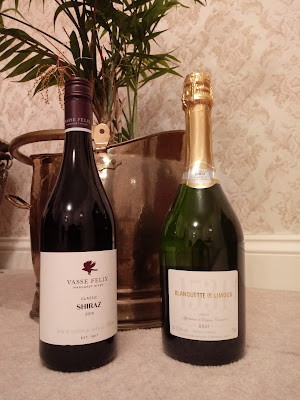
Tesco Finest 1531 Blanquette De Limoux (£9.50)

Blanquette de Limoux was first created in 1531 in Languedoc-Roussillon by Benedictine monks; Mauzac and Chenin grapes are blended and aged in bottle for 12 months to produce complex flavours of peach, green apples and a toasted brioche finish.

The Limoux Vineyard covers 2000 hectares and is located in the Pyrenean foothills 20km from Carcassonne.

12.5%, vegan, hand harvested grapes, aged for 12 months. Decanter Commended.

orchard fruits and toasty brioche; ripe white stone fruits, green apples and pears, citrus, florality and Brazil nut; fresh and savoury.

Thoroughly pleasant.

Serve as an aperitif, with as seafood starter or with light mains such as monkfish or plain roast white meats.

Vasse Felix Classic Shiraz (£12)

Shiraz (aka Syrah) with some Malbec in the blend; estate-grown fruit from Vasse Felix's four Margaret River vineyards, matured in barriques for 12 months imparting balance, complexity and softness,.

Each vineyard farmed sustainably using traditional and organic practices, nurturing the soils to achieve better plant health and balance resulting in higher-quality fruit.

Established in 1967 by regional Pioneer Dr Tom Cullity, Vasse Felix is Margaret River's founding wine estate. Since day one Vasse Felix has always strived to explore and express the very best of the Margaret River region and to share it globally. 

damson, spice, florality and inky pencil shavings; sweet, ripe cassis, prunes and juicy black cherries with sweet vanilla spice, wild raspberry, loganberry, and white pepper; rounded and perfectly ripe tannins; fresh and savoury.

Good.

Match with roasted red meats, beefy pasta dishes, cold cuts or a plate of salami and cheese.

Saturday, 13 November 2021

Three Wines From Abbotts & Delaunay

Three wines from France's Abbotts & Delaunay

The Septembre wines are the entry-level for the Edouard Delaunay range and both have been made by Head Winemaker, Christophe Briotet who won IWC red winemaker of the year in 2020 and IWC white wine maker of the year in 2021.

Christmas isn’t complete without some Burgundy and these two elegant, well-made wines offer typical Burgundy character at exceptionally good value for money prices.

The Languedoc red would also be perfect with a Christmas roast.

Edouard Delaunay Septembre Chardonnay 2020, Burgundy (Majestic £14.99 or £10.99 mix six)


Made by Laurent Delaunay in Burgundy at his family's winemaking estate; barrel-aged and stirred on texture-building lees, resulting in a gloriously indulgent wine that stands with some of the finest oaked whites.

Grapes from the Côte d’Or are complemented by a selection from the heights of the Mâconnais adding roundness and fruitiness to the blend. 65% are vinified in the style of great white Burgundies and barrel aged, the rest from the Mâconnais in steel tanks.

Citrus, lemon, orange blossom and floral honeysuckle; elegant lemon barley sugar, melted butter, frangipane and hazelnut; saline-mineral with leesy complexity and breadth. Very adept, pure and elegant.

Drinks nicely on first pouring, opens up with aeration and will become more savoury with some cellaring.

Very Good.

Match with seafood starters or roasted white meats such as pork belly or chicken.

Edouard Delaunay Septembre Pinot Noir 2019,  Burgundy (12.5% Majestic £16.99 or £12.99 mix six)


The Edouard Delaunay estate's history dates back to 1893; the wines were the choice of The Orient Express and the finest restaurants in France. A century later, it fell out of family hands, until Laurent Delaunay bought it back in 2017 and re-established his deep-rooted family connections with the best local grape-growers.

With the help of award-winning winemaker Christophe Briotet, he’s making a huge success story of what is now Burgundy’s fastest up-and-coming producer. This Pinot Noir is made mainly from grapes from Côte de Beaune and Côte de Nuits.

A contemporary, complex Pinot Noir. More than 80% of the mostly handpicked grapes come from the Côte de Beaune and Côte de Nuits with half aged in oak barrels and half in stainless steel tanks. 

cherry and redcurrant fruit with raspberry leaf, blueberry tart and marzipan; fresh and vibrant with red and dark berry fruits, fresh green herbs, clove and cigar and some mushroomy sous bois; well-integrated oak and spices. 

Good.

Match with gamey dishes, such as venison or wild salmon, as well as mushroom-based foods.

Abbotts & Delaunay Cumulo Nimbus Minervois 2017, (The Oxford Wine Company £22.99)


Also part of Badet Clément’s Abbotts & Delaunay Collection made in the Languedoc, this stylish Minervois is a blend of handpicked Syrah and Grenache grapes, the Syrah from vineyards by the Canal du Midi, the Grenache from cooler higher altitude vineyards in the Causses.

60% of the blend is aged for 9 months in oak resulting in elegant tannins, complexity and a long, silky finish.

dark fruits, spice, liquorice, herbal eucalyptus and sous bois; forest fruits, pepper and plummy juicy black cherry and acassis; fresh and harmonious with supple, very fine, well-integrated tannins. Elegant and complex.

Drinks nicely on first pouring; will also repay some cellaring.

Very Good.

Match with roasted red meats such as beef, lamb or venison.

Thursday, 14 October 2021

The CWB Beer vs Wine Curry Off

Does beer or wine go better with curry?

I recently reviewed two Tesco wines with a curry for National Curry Week and was pleasantly surprised at how well they went together.

Gewurz with curry is a go-to much-cited match that I have never been really convinced about, but it worked rather well here.

Red wine and curry is a much tougher ask, in my opinion, but a chilled Carménère was a surprisingly successful match with rogan josh.

A bit of discussion on Twitter about the food and wine combinations led me to the following conclusions:

- curry works best with high acidity, relatively neutral wines with a good mid-palate;

- traditional method fizzes meet all these criteria, so don't be afraid to try Cava and curry; it's generally quite inexpensive, so a more affordable starting point for experimentation than vintage Grand Marque Champagne

- crisp, citrussy and bubbly, Cava is also not dissimilar to a good lager; the traditional match for a curry

- if you want other inexpensive refreshing bubbles with curry, I would advise that you avoid Prosecco; with its shorter fermentation and more floral profile, it does not really stand up to the spicy bitter-umami of Indian foods

- chilling reds enhances the freshness and suppresses the flavours; this works with curry and is most suitable for simply, juicy wines rather than anything too high-end, tannic or complex

- bear in mind that chilled reds become a different wine, albeit chilling does not quite turn them into white wines; they retain a texture that is still red, even if they lose their "red wine" flavours

- you can chill expensive Cali Zinfandel if you want and it will then match with a curry; but why? It is something akin to a Monster Truck - Big, Expensive, Pointless, Blue-Collar Dumb Fun.

Beer and Curry - the curry

For this experiment, we started with poppadoms and sauces; mango and lime chutneys are a complete palate-killer so, unsurprisingly, the beers won out here.

For mains, I made a (version of) coconut and tamarind chicken curry from a Meera Sodha recipe: Coconut and tamarind chicken curry | Meera Sodha

It's similar to a European stew, slightly sweet from the coconut and not too spicy with exotic flavours of ginger and cinnamon.


Beer and Curry - the beers

I tried two traditional "curry beers" from Tesco; unsurprisingly, they both worked well.

Kingfisher Lager - £2.00/650ml bottle, Tesco

Kingfisher is an Indian lager brewed in the UK, but crucially to the same recipe as the original. It is India's best-selling lager and dates back to 1978.

hoppy and aromatic; crisp, citrussy and expressively hoppy with zippy grapefruit zest and a food-friendly bitter-sweetness.

Matches well with the curry and stands up to the strong flavours - unanimously agreed as the popular favourite.

Good.

Cobra Indian Premium Lager - £2.00/620ml bottle, Tesco

Cobra is brewed in the UK from barley, rice, maize wheat and four varieties of hops; the company was founded in 1989 by Karan Bilimoria who wanted to create a beer with the refreshment of a lager, but with the smoothness of an ale.

malty and savoury with subtle aromatics; rich, smooth and refreshing with an easy-drinking sweetness; very well-made, well-balanced and harmonious if a little neutral and unassuming.

Works well with the curry, but very much in a supporting role; lacks the immediate appeal of the Kingfisher.

Good.

Alternatives and rejects

I tried a couple of other wines I had on the go to see how they went with curry - in general they did not work, so the advice here is: approach with caution.


A lovely wine, but the "red wine" fruit flavours clash with the curry; interestingly, the acidity and tannins work well with the food, so chilled down, it might be a much better match.

Copper Crew Discovers Sauvignon Blanc (around £4 per can)

A WIGIG limited-edition from Copper Crew that I had on the go, this works well with the curry on most, but not quite all fronts. With plenty of acidity and a bit of lees aging, it has the freshness and the savouriness not to be overpowered by the food.

The acidity works well on the front palate and the leesy savouriness carries it through to the back palate; but the mid-palate sweetness and spices of the curry are just too much.

Surprisingly successful with the curry, it also just-about stands up to poppadums and onion salsa. If you drink mainly Sauvignon and must have wine with your curry, this is about as close as it gets.


This had worked well with a savoury rogan josh when chilled, but like the Negly, failed completely with a sweeter, coconut-based curry when at room temperature.

Sunday, 3 October 2021

Chateau La Negly, La Clape, Languedoc - The Co-op

A red blend from Languedoc's La Negly based in La Clape - at The Co-op

Stop sniggering at the back.

La Clape is a nature park just outside Narbonne overlooking the Mediterranean; a harsh, dry, rocky hillside covered in garrigue scrub, it covers the 10 miles from Narbonne to the Mediterranean and rises to over 200m.

An AOC since 2015, La Clape is one of the sunniest places in France but is cooled by sea breezes; this gives the wines a ripeness and a freshness. 

Unsurprisingly given the conditions, the vast majority of the wine produced here is red; the area traces a history back to Roman times and is now home to 25 estates and three co-operatives.

Chateau La Negly La Clape, Languedoc, 2019 (£12, The Co-op)

A blend of Grenache, Mourvedre, Carignan and Syrah, it comes in a handsome, heavy bottle.

While Languedoc wines are fairly common in the UK, wines from the sub-region of La Clape are little seen, so this is a somewhat unusual find.

lifted floral nose of lavender, violets and aromatic dried herbs with plum and cherry fruit; juicy black and red fruits, wild strawberries and a hint of gaminess, some spice and gentle, very fine tannins; very well-made and harmonious with good length.

A little closed up at first, improves with extensive aeration and will repay some cellaring.

Good.

A fresh and versatile wine; match with bread-meat-cheese starters, any roast fowl or red meat such as peppered roast beef.

*****

Further details from La Clape's website:


 A CLASSIFIED ENVIRONMENT

Characterized by small, winding, steep-sided, marly valleys ending abruptly in cliffs on the Mediterranean side, the landscape of La Clape is in stark contrast to the surrounding plains. It has been a state-classified site since 1973, for its outstanding natural beauty and its exceptional fauna and flora. 

Situated in the Narbonne regional natural park, it has also been recognized as a Natura 2000 site by the European Union for its natural habitats and remarkable species, a Sensitive Natural Space by the Aude department and is partly owned by the Coastal Conservatory.

In addition to exceptional environmental challenges, here vines act as natural firebreaks and certain parts of the vineyard have been especially planted with this in mind, as part of a concerted effort. A 

CONDUCIVE CLIMATE

The La Clape massif benefits from a harsh, dry climate. The sun and wind together beat down and sweep across the bare rocks. If it is one of the sunniest places in France (up to 3000 hours of sunshine a year) it is due to the thirteen different winds that sweep across it and chase the clouds away. 

Occasionally Mediterranean storms hit, as violent as they are rare and La Clape becomes a tropical isle. A network of ravines forms and the pines and reeds are bent over by the force of the elements. The vines are strengthened by this triple effect: the rain waters and cleans them, the wind dries and airs them and the sun nourishes them and swells the grapes with sugar. The harshness of the climate ensures a high-quality wine-producing area.

AGRO-ECOLOGICAL INITIATIVES

With the support of the Narbonne Regional Natural Park, several agro-environmental initiatives have been taken in the AOC La Clape vineyard. The wine-makers signed the Natura 2000 charter, thus undertaking to sustain the environment and maintain the wealth of natural habitats that characterize the massif.

The program imposes such measures as reducing the use of phytosanitary products. Some estates even practice agro-pastoralism, which is set to develop more widely in the coming years. Since 2015, a herd of 400 sheep nibble the grass between the vines during the 4 months of winter, thus naturally enriching the soil.

Furthermore, research and training programs will be increased in order to encourage responsible agriculture. More than a quarter of the estates are practicing organic agriculture or are in the process of converting.

Saturday, 4 September 2021

Four Late-Summer Wines

Four late-summer wines from France

Four wines for a later-summer garden party, barbecue or just an expansive meal with friends.

All of these wines are easy-drinking yet sophisticated and will match with a range of foods.

On arrival

La Maison du Crémant Prestige Brut, (£14, Sainsbury’s)

Made by respected Burgundian producer François Martenot, this Crémant de Bourgogne, a blend of Chardonnay, Pinot Noir, Gamay and Aligoté, was featured in Decanter’s Top 25 Crémants with 91/100 points.

aromatic and floral, with white flowers, orange blossom and fresh; fresh citrus, crisp apples-and-pears, white stone fruit and leesy brazil-nut creaminess; elegant and complex

Good.

Serve as an aperitif or match with canapés; the freshness will also stand up to roast chicken or fish and chips.

Amuse bouche

Ormarine Conchylia Picpoul de Pinet 2020, (£9, Marks & Spencer)

Ormarine, in partnership with Maison Jeanjean, is the leading producer of Picpoul de Pinet which is the perfect match with oysters, and it happens to be the start of the wild native oyster season on 1 September so a great time to enjoy a dozen with a glass of this Picpoul: 

aromatic with white flowers and sherbetty citrus; lemon-lime, stone fruits and passion fruit with a supple, saline zing; harmonious and adept with good underpinnings.

Good.

Match with seafood, especially oysters, white fish or white meat, such as pork.


To start

La Belle Angèle Sauvignon Blanc 2020, (£9.99/bottle or £8.99 mix six, Majestic)

La Belle Angele was the muse of many Impressionist painters in the Belle Epoque. This Vin de France from Badet Clément is made from 100% Sauvignon Blanc, aged on the lees for about a month.

expressive with fresh gooseberry and grapefruit; ripe tropical fruits, florality, zippy lime and gooseberry, leesy minerality and expressive aromatics. Rounded with good underpinnings.

Thoroughly enjoyable.

Match with pork and herb terrine or carbonara with generous parsley and ground pepper.

It will shortly be the first ever bag in box white win available at Majestic as part of their new BIB range £24.99/2.5litres and £19.99 mix six.

Mains

Les Jamelles Syrah 2019 (£7.25, Co-op)

Another wine from Badet Clément and their best selling brand, this Pays d’Oc wine is made from 100% Syrah grapes grown on 20 year old vines.

wild berries, dark fruits and spices; fresh dark berry fruits, spice and grilled flavours; inky, supple and juicy with rounded tannins and a touch of cool mint.

Good.

Match with roasted red meats, char-grilled steak or barbeque foods

Monday, 2 August 2021

Tuffers' Tipples - Phil Tufnell's wine collection

A new range of wines from former cricketer Phil Tufnell, via Virgin Wines

A wine's presentation should make a promise that the liquid in the bottle keeps.

Tuffers' Tipples do exactly that.

You will probably be able to decide everything you need to know about the wines from how you feel about the presentation - in the most general sense.

If you like the look and sound of them, you will, on balance, probably enjoy them - and vice versa.

The wines come as a range of six from different countries: the whites are two Sauvignons and an English Bacchus; the reds include a French GSM blend, Spanish Tempranillo and an Aussie Shiraz.

Each bottle has a different picture of Phil and you'll pay quite a premium for the celebrity association.

The basics are mostly present and correct; freshness, aroma, fruit and a bit of savouriness. The whites have some lees aging to make them more food-friendly so they generally score better for winemaking effort than for the underlying quality of the fruit.

They are probably best served to a general audience with the whites well chilled; they will match with party foods, such as pizzas, barbecues with plenty of strong sauces or chips-and-dips.

Detailed tasting notes are below; for my money the Bacchus is the most interesting of the lot.

The whites

Sauvignon Blanc, Côtes de Gascogne, France (£11.99)

zesty and aromatic; fresh white stone fruits, melon and pineapple with pea shoots and zippy lime, some savoury leesiness.

Match with lighter curries, such as prawns with red lentils.

Sauvignon Blanc, Margaret River, Australia (£18.99)

floral and tropical with white peppery spice; melon, tropical fruits and stone fruit with citrus and zippy lime zest, gooseberry and grapefruit; savoury, leesy underpinnings.

Thoroughly pleasant.

Match with white meat and herbs, such as roast pork with sage or monkfish with a herby broth.

Bacchus, Essex, England (£15.99)

floral hedgerow and delicate aromatics; citrussy sherbet, lemongrass and fresh green herbs with some complex savoury leesiness; light and fresh with some persistence.

Thoroughly pleasant.

Match with light, aromatic starters, such as mozzarella with parsley or herby cream cheese on ciabatta.

The reds

All three reds would work well at an outdoor summer party; match with smoky grilled meats and plenty of barbecue relish. The Shiraz demands robust and strong-flavoured foods.

GSM, Pays d'Oc, France, 2020 (£12.99)

overripe plums, figs and prunes with spice and menthol; freshness with baked bramble fruits, raisins and coconut-caramel.

Tempranillo, Castilla-la-Mancha, Spain, 2019 (£12.99)

spice, bramble fruits, dried herbs and damp earth; mouthwatering freshness with pastille fruits and dusty, dried cherries.

Shiraz, Margaret River, Australia, 2019 (£18.99)

spicy dark berry fruit with inky graphite; fresh and generously extracted with blueberries, milk chocolate, oaky vanilla and caramel.

*****

Notes from Phil Tufnell and Virgin Wines:


Phil Tufnell fell in love with wine over 30 years ago, on his first Ashes trip to Australia with England and has delighted in creating his own collection of bespoke tipples.

His aim? To produce game-changing wines, that leave even the most discerning of wine drinkers stumped for choice.

Phil says: “I’ve always loved wine, with a passion that goes beyond just drinking it! The whole winemaking process fascinates me, and I’ve been privileged enough to learn about everything from provenance to pressing to most importantly tasting, while working on this collection. It’s been incredibly exciting to get to know the winemakers involved, I can’t wait to continue on this journey with Virgin Wines and have everyone try this cracking selection of wines. Happy Days.”

To start the collection, a delectable Tempranillo from Castilla-la-Mancha in Spain is joined by a flavourful French duo of a Sauvignon Blanc and GSM (Grenache, Syrah, and Mourvèdre) blend.

These premium-level editions are perfect for everyday drinking and work nicely alongside the collection’s super-premium bottles: a new world Shiraz and Sauvignon Blanc.

Carefully selected from Australia; these special tipples are a nod to Phil’s cricketing heritage and 2003 I’m A Celebrity Get Me Out Of Here win.

Topping off the range is something a little closer to home; a luxurious English Bacchus expertly made in New Hall Vineyard in Chelmsford.

Echoing the same sentiments as Phil, the team at Virgin Wines are delighted to be bringing out this strong portfolio of wines with ties to Phil’s remarkable playing career.

Virgin Wines’ Head Buyer and all-round wine guru Andrew Baker says: “Phil is a cricketing legend who has genuine interest in wonderful wines but wants to have fun along the way, which is what we’re all about.

The wines we’ve sourced for this collection are made in collaboration with extremely talented, independent winemakers across the globe who have absolutely mastered their craft. We cannot wait for our customers to try them.”

Sunday, 1 August 2021

The CWB International Chardonnay-Off

Five Chardonnays from different climates, terroirs and countries

Chardonnay is arguably one of the greatest, most versatile grapes there is.

Easy to grow in a wide range of conditions, its inherent elegance and relative neutrality mean it can match with a wide range of foods; it can also take a large amount of wine-making, from aging on the lees or in bottle to the addition of old or new oak and secondary fermentation.

There are very few wine-making regions that don't or can't grow Chardonnay, so the range of styles is very wide.

You will pay a few pounds more for a well-known region, such as Burgundy or California; lesser-known / up-and-coming regions such as Languedoc and Spain can represent better value for money if you are prepared to go off the beaten track.

Here are five to look out for:

The Classic - White Burgundy

Louis Latour 2019 Montagny 1er Cru La Grande Roche (£25 / £21, Majestic)

Montagny is the appellation for four villages at the southern end of the Côte Chalonnaise; Premier Cru wines are made from classified vineyards representing around 2/3rds of plantings.

This single-vineyard Chardonnay sees no oak at all. 

delicate florality with hints of sweet spices; peach, yellow plums, pear and hazelnut with lime marmalade, melon, pineapple and some vanilla; full, supple and rounded with a hint of salinity. Sophisticated, elegant and flawless.

Very Good.

An accomplished wine, match with rich Burgundian foods such as asparagus, rabbit galantine, trout with almonds or sheep's cheese

The Minor Classic - Maconnais

Domaine de la Creuze Noire Macon Fuisse 2020 (£14, Cheers, Flagship)

Mâcon-Fuissé is a region of southern Burgundy around the village of Fuissé in the centre of a natural green amphitheatre, near the limestone-rich hills of the rock of Solutré.

The limestone soils are very similar to that of Chablis but, being further south, the climate is much warmer giving more fruit and richness in the wines. Aromas and flavours of tropical fruit, hazelnut, and lemon, backed with slatey minerality.

restrained nose; ripe lemon curd with peach and some zippy lime; full and supple with perfectly ripe and rounded fruit. Very adept and elegant, technically flawless. Initially correct-but-reserved, like a shy accountant at a dinner party; with extensive aeration it transforms into something much more rounded and adept with more personality.

Good; improves with aeration and will repay some cellaring.

Highly versatile, will match with - and not overpower - a wide range of foods; white fish, creamy mushroom sauces, white meats, medium cheeses.

The Modern Classic- Languedoc

Calmel & Joseph Villa Blanche Chardonnay 2020 (£10.95, Cheers)

I have long been a fan of Languedoc in general and Calmel & Joseph in particular; well-made, technically adept wines that are complex enough to to be serious yet also easy to enjoy. For years Europe's "wine lake", Languedoc has successfully reinvented itself as a go-ahead region of innovation and quality.

The climate is typically Mediterranean, warm and sunny with low rainfall; the grapes are picked at night, in two passes. The first harvest is done at a relatively early stage in maturity, to keep freshness in the wine. Then 15 days later a second harvest is done, for concentration and varietal aromas.

The wine is aged for 3 months in oak before bottling; it has a Mundus Vini Gold Medal.

expressive, complex and toasty with honeysuckle and sweet spices; ripe orchard fruits, apricot and white peach, aniseed and vanilla; savoury toasted notes and touches of grilled hazelnut; elegant freshness and a touch of salinity. Full, supple and rich.

Very Good; drinks nicely on first pouring and will age. Good Value.

Match with roast pork or meaty white fish.

A bit of Yee Haw - California

Frei Brothers Chardonnay 2019, Russian River Valley (Waitrose, £17.99)

From the cooler (by Cali standards), foggy Russian River Valley in California's Sonoma, this Chardonnay has plenty of New World fruit and substance with sweet oaky spice - it's a serious and sophisticated crowd-pleaser.

ripe orchard fruits, citrus, honeydew melon and pineapple with creamy, oatmealy leesiness. Lush and rich; very adept and harmonious. Easy-to-enjoy Burgundian style, albeit turned up to 11.

Good.

A versatile wine; drink as an aperitif or match with seafood or white meats.

The Unusual One

Enate Chardonnay 234, Somontano, Spain (£12 - £14, Daniel Lambert, indies)

An area in the foothills of the Pyrenees, Jancis Robinson describes Somontano as "another Spanish wine region worthy of international attention". More specifically, she characterises it as a small and growing region, potentially one of Spain's most exciting, even if much of its produce tends to be fashioned in the image of international classics.

She singles out producer Enate, saying that they make some fine reds and whites from imported grape varieties. Tasted blind, you'd be forgiven for having no idea where this wine comes from; it has a warm-climate topicality and breadth, but with a European complexity and elegance. It hints at the perfumed richness of Alsace with the waxiness of the Rhône.

Floral and aromatic with tropical citrus fruits and toasty leesiness; pineapple, melon and passionfruit with fennel, ginger and warming sweet spices; savoury, leesy and waxy with just enough freshness to hold everything together.

Very clean, pure and long.

Good.

Match with rich, Alsace-style dishes such as pork with creamy sauce or mature hard cheeses.

Miquel Hudin writes about Somontano here (£): The state of DO Somontano for 2021 · Hudin.com

Liz Gabay contributor Ben Bernheim writes about assessing French regional styles of Chardonnay here: Chardonnay - Limoux to Chablis regional styles - Elizabeth Gabay MW

Saturday, 22 May 2021

Paul Mas Picpoul de Pinet 2020

A Languedoc Picpoul from Paul Mas

The only thing worse than Lockdown is Lockdown plus Bad Weather. 

All. Year.

From January to late May.

At least last year's summer-long heatwave meant that you could sit in the garden or enjoy going for a walk without having to pile on the layers.

The second year of Lockdown is proving even more of a drag than the first not least because the weather seems permanently stuck in late-winter mode; cold and wet.

But, with under a month until the longest day of the year, the weather must turn good soon, shouldn't it?

If you are still on the Big Reds, there's hope that things will improve and we can move onto summery whites soon.

Picpoul, from Languedoc, is a classic summer sipper that matches well with seafood, such as oysters.

It is light, refreshing and zippy; a southern alternative to Muscadet.

Vignobles Paul Mas Picpoul de Pinet, 2020 (£7.50, Co-op)

Green apple, pear  and white peach with tropical lemon-and-lime fruit, acacia and and hawthorn blossom; herbaceous, mineral and refreshing, mouth-filling green apple; balanced and structured.

Good.

Drink as an aperitif, summer sipper or with seafood. Or take on a picnic.


Midweek Wines' Brian Elliot makes it his runner-up for Best Picpoul in 202: 


Wednesday, 5 May 2021

Calmel & Joseph Languedoc Reds from Daniel Lambert


Two Calmel & Joseph reds from Daniel Lambert

I've long been a fan of Languedoc in general and Calmel & Joseph in particular; I've also been impressed with pretty much everything I have tried from Daniel Lambert's range of well-made, technically adept wines that are complex enough to to be serious yet also easy to enjoy.

For years Europe's "wine lake", Languedoc has successfully reinvented itself as a go-ahead region of innovation and quality.

Much like indie or punk rock (in the very broadest sense), Languedoc wines combine stylish innovation with an edgy urgency over something very pleasing indeed.


Languedoc is, then, in the process of becoming a modern classic wine region.

This focus on quality and innovation but without the long-standing heritage is something of an advantage for the buyer; at its simplest, it means lower prices for the same if not better quality when compared to more established regions such as Bordeaux, Burgundy or the Rhône which can charge more of a premium for the name on the label regardless of what is in the bottle.

Calmel & Joseph Le Domaine Le Sentier 2019, Pays d’Oc, France (£14, independents) ripe black cherry fruit with raspberry, spice and something slightly herbaceous; fresh and savoury with very fine but persistent tannins. Well-made, precise and elegant.

Improves with some aeration.

Good. Match with tuna tartare or roast duck.

Calmel & Joseph say of their wine: An appealingly cherry red. Aromas of red and black fruit and pomegranate seeds announce a wine of great freshness and superb tension. An impression confirmed in the mouth that opens with fresh summer fruits such as wild cherry and finishes on more spicy, peppery and floral notes. A poised and magnificently balanced wine.


Calmel & Joseph Les Terroirs Vieux Carignan, IGP Côtes du Brian 2019 (£14, independents)

100% Carignan from vines planted in 1890 with a long growing season in 2019.

Ripe red and black cherries, dried blueberries and cinnamon spice with dried green herbs; rich, full and supple with very ripe tannins.

Good.

Match with robust dishes such as wild boar sausages.

Other reviews:

Calmel & Joseph Le Domaine Le Sentier 2019

Jancis Robinson.com (18/03/2020) Certified organic. Single vineyard. From their own property. Smells like cherry pie and stick cinnamon. Dry but ripe. Tannins like a comfortable cup of proper builder’s tea. Neither too much nor too little. Touch of green in the flavour (not the texture). Light-bodied, neat, pointed on the finish. Exceptionally good for a Pays d'Oc Pinot. Tamlyn Currin 16.0 / 20

Monday, 26 April 2021

The CWB Non-Burgundy French Pinot-Off

Two French Pinots that are not Burgundies

Burgundy will tell you that Pinot Noir is fickle, pale, elegant and expensive.

While all of this is true to a greater or lesser extent, other parts of France will invite you try Pinot's charms more reliably and more affordably.

There was a time when it was only Burgundy's white grape, Chardonnay, that had successfully gone around the world and become everyone's favourite "glass of white".

Now, increasingly, the red Pinot Noir is finding more areas to its liking - even if, being thin-skinned, prone to disease, and liking only cooler climates, it is never an easy grape to grow.

Its thin skin means paler, softer wines and this perhaps explains its popularity; with low colour and tannins, it occupies something of a middle ground between red wines and white in much the same way as other popular styles, such as rosé or kiwi Sauvignon.

Food-friendly yet easy-drinking, approachable in youth but with the potential to age, Pinot seemingly has it all.

These two Pinots are both from non-Burgundy France, and specifically from warmer climates than the Côte-d'Or.

They have more alcohol, colour and depth than many a red Burgundy - and a much lower price tag.

Calmel & Joseph Le Domaine Le Sentier 2019, Pays d’Oc, France (£14) ripe black cherry fruit with raspberry, spice and something slightly herbaceous; fresh and savoury with very fine but persistent tannins. Well-made, precise and elegant.

Improves with some aeration.

Good.

Match with tuna tartare or roast duck.

Calmel & Joseph say of their wine: An appealingly cherry red. Aromas of red and black fruit and pomegranate seeds announce a wine of great freshness and superb tension. An impression confirmed in the mouth that opens with fresh summer fruits such as wild cherry and finishes on more spicy, peppery and floral notes. A poised and magnificently balanced wine.


Louis Latour Pinot Noir Les Pierres Dorée (£20-22, Whitebridge Wines, Bakers and Larners of Holt, Mr Wheeler, La Zouch and The Drink Shop.com)

Les Pierres Dorées, (‘golden stones’) is a small sub-region of Beaujolais about 40km north west of Lyon, often referred to as ‘Little Tuscany’ thanks to its steep hills and landscape dotted with golden stone buildings.

The soils here are clay and limestone, very similar to those found in Burgundy. The vineyards are planted at the same altitude as Burgundy, so the grapes can ripen, yet retain their critical, natural acidity. This very specific terroir, coupled with ample sunshine, a warm climate and cool night-time temperatures give the wine its incredible aromatic complexity when vinified with Maison Louis Latour’s signature elegance.

Dark for a Pinot, with a complex, toasty nose of roasted spices and dark fruits; elderberry and dark plum with oaky spice and mint; cassis and cherry fruit; grippy and persistent. Savoury and complex with a full mid-palate.

Good.

Improves significantly with aeration and will repay some cellaring.

Match with slow-cooked breast of lamb - recipe here: The Cambridge Wine Blogger: Slow Cooked Breast of Lamb - And a Pinot Noir

Louis Latour says of this wine: The calcareous soil rich in iron oxide which confers him a very particular ochre color, as well as altitude, contribute to produce this surprising wine which associates richness and freshness with a beautiful aromatic complexity. Bright and intense red colour with red-garnet lights.

On the nose, we discover a gourmet blend of flowers, red berries and soft spices. On the palate, it is crunchy, round and ample. The Pinot Noir from the Pierres Dorées terroir off ers a wine with a great freshness, underlined by concentrated black fruits aromas with a superb length. 

Vinification notes This region offers beautiful argilo-calcareous soils, the plots selected by Maison Louis Latour form two islands and are situated on the villages of Morancé and Theizé. With a continental moderate climate, vineyards benefit from an ideal period of sunshine but the temperatures are relatively fresh between 280 and 400 meters in altitude. Traditional vinification. 10 to 12 months ageing stainless steel vats and oak barrels  

Pro reviews of  Les Pierres Dorées:

JancisRobinson.com (2016) - 16 pts Sweet red fruit and a good herby note – great flavour definition here, and it finishes with fragrant floral character. Light and short, but satisfies the Pinot flavour criteria. (RH)

Wine Spectator (2015) - 88 pts Balanced and fresh, with cherry, ground spice and currant notes, this medium-bodied red shows undertones of mineral and herb through the tangy, lightly tannic finish. Drink now through 2020

James Suckling (2016) - 89 pts An attractively light and charming pinot noir with some nice, warm and dry tannins. There is also friendly acidity for this often-tart category. Drink now or in 2019. 

Pro reviews of  Le Sentier

Jancis Robinson  (18/03/2020) Certified organic. Single vineyard. From their own property. Smells like cherry pie and stick cinnamon. Dry but ripe. Tannins like a comfortable cup of proper builder’s tea. Neither too much nor too little. Touch of green in the flavour (not the texture). Light-bodied, neat, pointed on the finish. Exceptionally good for a Pays d'Oc Pinot. Tamlyn Currin 16.0 / 20

Jamie Goode: Organically farmed Pinot Noir. Aromatic cherry fruit nose with some cedar and spice notes. The palate is supple and sweetly fruited with plums and berries, a touch of raspberry, and some savoury cedar spice notes. It’s nicely balanced with some savoury grip on the finish. Amazing to have a Pinot Noir this fresh and balanced from a warm climate. Lovely weight, finishing dry and grippy. 91/100 (£14 UK retail)

Highlights: high-end wines from Calmel & Joseph – wineanorak.com