Popular Posts

Showing posts with label sherry. Show all posts

Saturday, 23 July 2022

The CWB Franco-Spanish Production-Method-Off

Four production-method wines from France and Spain, via Co-op and M&S

A friend recently asked me for some advice on arranging a wine-tasting; beyond the usual basics, I suggested it might be interesting to have a theme, such as a grape, region or other feature of the wine.

I have done themed tastings around aged Bordeaux, Iberia and the Americas as well as production method wines (i.e. wines whose character derives more from the they they are produced than from grape varieties).

For this line-up, I pulled out one of my own purchases to compare fizzes from France and Spain as well as two different types of sherry.

With a few exceptions, production method wines tend to be from either very cool climates (Champagne or England) or very hot climates (Andalusia, Douro, Madeira).

When asked about my favourite wines, my standard answer is: mature wines, production method wines and cool-climate wines. Essentially, I really like older, cool-climate wines that taste of something more than mere primary fruits.

All of the wines in this line-up are defined by their production method - for the fizz, it is secondary fermentation in bottle on the lees, which provides a food-friendly leesy complexity (as well as the bubbles).

For the sherries, it is the blending across years and growth of flor in the barrel which imparts a tangy dryness; in the case of Manzanilla, the flor character is more evident due to the cooler conditions where it is produced. For Amontillado, the flor is allowed to die away and the wine ages oxidatively acquiring complex roasted flavours of nuts and spices.

We started with the sherries as pretty much the perfect aperitif, matched to simple, tapas-style starters of chorizo, roasted almonds, manchego, olives and bread with home-made mayonnaise.

The fizzes were opened with a continent-hopping main course of chicken Thai green curry.

The sherries

Barbadillo Solear Manzanilla (£10.99, Waitrose, £9.50 Ocado - also in half-bottles, see footnote)

Made in Sanlucar de Barrameda, using both cooling ocean breezes and cool air current from a bend in the Guadalquivir river to grow the flor to optimum thickness and impart more flavour to the wine, Barbadillo is a family company and one of the great names of sherry.

pungent with pastry shop, camomile, almonds and hazelnuts; fresh and savoury with oatmealy leesiness, saline minerality, white fruits and white pepper; elegant and adept with very good underpinnings.

Good.

A versatile food wine, match with Andalusian tapas or any salty foods such as salamis, olives and hard cheese.

Very Rare Amontillado Sherry (£9, marked down to £1,79, 37.5cl, Marks & Spencer)

deep brown, with nuts, coffee, nutmeg, old leather roasted almonds and dried apple, apricot and prunes; charred cedarwood, toasted hazelnuts and exotic citrus peel with fresh acidity. Complex and adept. 

Good.

Match with roasted almonds or roasted / char-grilled beef.

Fizz

Champagne is the benchmark style of sparkling wine and it commands a hefty premium for the name; Spain's cava, by contrast, is working hard to match its pricing to the improved quality and cost of production.

Cava Sumarroca Gran Reserva 2017

Good cava is one of the wine world's great bargains; this one is made using the Traditional Method with three years' lees ageing for complexity by a family-owned house .

lemon peel, roasted hazelnuts, white flowers and leesiness; fresh, citrussy and poised with lemons and limes, creamy-nutty leesiness and saline minerality. Harmonious and long, very adept and elegant.

Good.

A versatile wines. serve as an aperitif, match with mixed starters or mains such as fish and chips or green Thai curry.

Les Pionniers Vintage Champagne 2013 (£27, The Co-op)

Made only in the best years, Vintage Champagne should be left at least 10 years before opening. On that basis, this one is a little young, but is showing well now and has plenty of life ahead of it.

golden sandy yellow with complex orchard fruits, bruised apple, citrus fruits, melonskin and toasted brioche; dense, concentrated and fresh with a fine mousse, citrussy lemon curd and lime marmalade, orchard fruits with red berries and savoury-leesy oatmeal, creamy brazil nut and saline minerality. Complex and long.

Very Good.

Match with lighter game or seafood-and-pastry such as prawn vol-au-vents or salmon-en-croute.

***

Half-bottle of the Barbadillo Manzanilla:

- Wine Society £5.95

- Loki Wine Merchants £7.99,

- Banstead Vintners £6.99

- Latitude Wine Merchants £7.50,

- Rannoch Scott £6.19

- Sandham Wines £6.20

- Vintage Cellars £6.50

- Gusto Wines £6.60

- The Whisky Exchange £6.76

- Mumbles Fine Wines £6.95

- Oxford Wine Co £7.25 

plus many other good independents.

Saturday, 18 December 2021

Three Christmas Wines - Retro, Old Classic, New Classic

Three Christmas wines - Retro, Old Classic, New Classic

I've long argued that Christmas is not a time for wild experimentation or straying too far out of your comfort zone.

With multi-generational family gatherings, lots of cooking and the general weight of expectation, I prefer to reduce the stress levels by keeping wine choices fairly simple.

The most straightforward approach can be simply to have slightly better versions of what you normally drink - with plenty of it to go round.

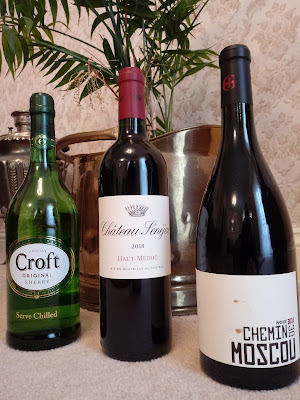
Here are three wines for Christmas that meet that requirement and should keep all-but-the-fussiest of drinkers happy.

The retro choice - pale cream sherry

Sherry has been enjoying something of a revival, but pale cream remains an anomaly.

Stuck in something of a time-warp, pale cream was only created as a category in the late 20th century but remains something that only one's parents or even grandparents drink.

Essentially a sweetened fino, it is an easier sipper than bone-dry sherries, but like its darker, more complex sibling Cream Sherry, it has not quite managed to shake off its "Maiden Aunt" image, which is a pity as it is a lovely accompaniment to all sorts of slightly sweeter foods.

Croft Original Sherry (£12, The Co-op)

yeasty flor, blossom, white pepper and baked white stone fruits; honey, baked apples with sweet spice, white flowers and candied pineapple; warming, substantial, unctuous and complex, yet also mellow and harmonious.

Good.

Serve as a strong-sweet aperitif or match with blue cheese, roasted nuts such as Brazils, melon and parma ham or rich pâté, such as goose liver.

Also consider:

- spicy chorizo or in a Martini in lieu of Vermouth


The Old-School Classic - Bordeaux

Red Bordeaux was my first oenological love and it's a wine I just keep coming back to for its food-friendly, savoury freshness, complexity and aging potential.

Crus Bourgeois are the better wines of the Médoc sub-region of the Left Bank before you get into the stratospheric prices of the Classed Growths; expect just a bit more of everything but without the trophy-wine price tag.

These wine rub shoulders with some of the greatest and most expensive wines you can buy - and it shows.

Chateau Senejac Cru Bourgeois, Bordeaux, 2018 (£17.50, The Co-op)

Vintage matters in Bordeaux perhaps more than anywhere else apart from Burgundy; 2018 is generally considered an exceptional year that favoured the red wines with plenty of warmth.

black cherry and dark plum fruit with complex spice and woodsy sous bois; ripe bramble fruits, raspberry, blackcurrant and plum with minty liquorice and peppery spice; fresh, savoury and supple; long and complex with perfect ripe, very well-integrated tannins

Very Good.

Drinks nicely with plenty of fruit to the fore on first pouring; improves with aeration and has the ability to age.

Match with plain roast red meats or toad-in-the-hole.

The New Classic - Languedoc

From Europe's wine lake to perhaps France's most exciting and innovative region. And almost certainly once of its best-value areas, also scoring well for reliability given its plentiful sunshine.

Languedoc just keeps getting better and better.

Domaine Gayda's first vintage was less than 20 years ago; this 2019 is two-thirds Syrah with one-third Grenache plus some Cinsault making up the balance.

The wine is aged for 21 months in oak in a range of sizes and ages.

Domaine Gayda Chemin de Moscou 2019 (£25, Cambridge Wine Merchants and other independents)

dark purple with complex dark fruits, scrubby garrigue herbs, spice and leathery sous bois; full, supple and fresh with an inky texture, red and black fruits, violets, complex spices and cool mint; plush yet firm; harmonious with well-rounded tannins. Very long.

Very Good.

Drinks nicely with plenty of fruit to the fore on first pouring; improves with aeration and has the ability to age.

Match with garlic-and-rosemary lamb or chicken with a sage-and-sausagemeat stuffing.

***
The first two wines are currently on special offer at The Co-op until January 4th, 2022 :

Croft Original Sherry - reduced to £10.50 
Chateau Senejac Cru Bourgeois, Bordeaux, 2018 - reduced to £16.50

Wednesday, 8 December 2021

Strong And Sweet for Christmas - From The Co-op

A sherry and port from The Co-op

Personally, I can happily drink both sherry and port all year round. But Christmas is an especially good time to have a couple of bottles on hand.

Dry, tangy fino sherry is a great accompaniment to the shorts of cold-cuts, nuts, cheeses and general lunches-from-leftovers meals that are often a staple of the post-Christmas period.

With its ripe fruit, alcohol and sweetness, port is rather more of a cold-weather drink than a summery one; it has the strength to stand up to mince pies and Christmas pudding, or can just be sipped after an expansive meal in your favourite armchair.

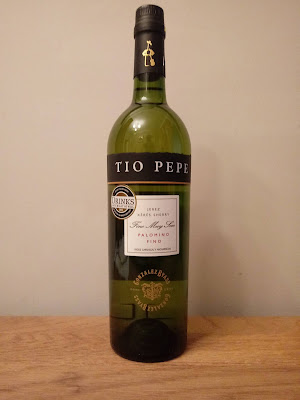
Tio Pepe Fino (£11)

Made from palomino grapes, grown on Albariza soils, fermented to dryness, then fortified lightly for strength, placed in barrels where flor grows and imparts a distinctive tang and finally blended across years via the solera method, sherry is one of the world's great wines.

Complex, elegant and versatile, it is a great match for food; neutral and strong enough not to be overpowered.

pungent with aromatic, floral chamomile; fresh, citrussy and briney-yeasty, with melon, white stone fruit, green apple, brioche, pastry shop, salty almond-and-brazil-nut savouriness; broad, long, complex and elegant.

Good.

The classic match for fino is slices of jamon with machego and bread with olive oil; but it will match almost any collection of "assembled food" meals.

Taylor's Select Reserve Port (£10.75)

Like sherry, port is a wine that has been fortified to keep it stable on the historically long sea voyage from Iberia to England.

Traditionally foot-trodden to extract more colour, flavour and preserving tannins, it is partially fermented then fortified whilst some residual sugar remains to preserve sweetness whilst adding strength.

Ruby is the entry-level of ports, a lighter, younger-drinking wine and whilst "Reserva" historically had no official status, it now indicates a premium ruby port approved by the IVDP's tasting panel, the Câmara de Provadores.

This has everything you want from a port; fruit, spice, warmth and sweetness. It's a lot of wine for not much money. 

red, black and sour cherries, eucalyptus and oaky spice with prunes, raisins and liquorice; sweet, warming and supple with very fine, well-integrated tannins.

Thoroughly enjoyable and good value.

Sip as a digestif; drink with mince pies or chocolate and cherry torte.

---***---

Both wines are currently on special offer at the Co-op:

Tio Pepe Fino is reduced to £10 from December 1 - 14, 2021 and Taylor's Select Reserve Port is down to just £7.50 for the same period.

Wednesday, 4 August 2021

My Sherry Amour - M&S Very Rare Dry Oloroso Sherry

A heavily marked-down M&S dark sherry, made by Lustau

My sherry amour,

Lovely on a summer's day

- My Cherie Amour*, Stevie Wonder (1969)

At a summer garden party, a beer-drinking friend-of-a-friend observed that that every time we bump into each other socially, I seem to be drinking sherry.

Why sherry? he asked.

The obvious answer is of course: why not? But I felt something more considered was needed.

Establishing that he did not really want chapter-and-verse on sherry production, but simply a short list of reasons, I gave him this:

- sherry has very high acidity, so it is very refreshing

- it has no primary fruit flavours, so is highly versatile

- it is fortified to a higher alcohol level, so can stand up to foods

- it is aged for years in soleras so is complex, harmonious and mellow

For food matching, just go by the colour:

- paler sherries match with lighter foods, such as olives, bread and oil and manchego

- darker sherries match with roasted foods, such as roasted almonds, roast beef or roasted vegetables.

If you want to do the food matching properly, the mantra is:

- If it swims, Fino

- If it flies, Amontillado

- If it runs, serve Oloroso.

In my case, I had brought along a half-bottle of M&S VORS Oloroso. It had been marked down to under £2 at a local M&S branch so I had picked up as many as I could physically carry, stuffing them in coat and trouser pockets.

It is fresh enough for an aperitif, especially well-chilled, but comes into its own with some slightly charred barbecue foods, such as burgers.

At home, match it with a starter of roasted almonds and toasted ciabatta with olive oil, followed by a griddled steak.

Very Rare Dry Oloroso Sherry (£9, marked down to £1,79, 37.5cl, Marks & Spencer)

deep brown, with nuts, coffee, nutmeg, old leather roasted almonds and dried apple, apricot and prunes; charred cedarwood,  toasted hazelnuts and exotic citrus peel with fresh acidity. Complex and adept.

Good.

*OK, possibly slightly misheard

Bottle shot courtesy of Erik Burgess.

*****

The website sherrynotes give the following information on oloroso

Oloroso is aged in the absence of flor, in an oxidative way and starts from a selection of heavier, more full-structured musts than a Fino or Manzanilla (sometimes a second pressing of grapes).

After fermentation the young wines are evaluated and the ones with a thicker body will be destined for maturation as Oloroso sherry. To create an Oloroso the base wine will be fortified to 17 or 18 degrees which makes it impossible for flor yeasts to survive in these casks.

Due to evaporation known as merma (about 3-5% in volume each year), the resulting Oloroso will grow more concentrated to around 20-22 degrees.

Oloroso means fragrant and the best examples will display dried fruits, leather, polished wood and exotic spices; nutty aromas (especially walnuts), combined with polished / balsamic notes, subtle dried fruits, toasted hints, tobacco and autumn aromas. There are noticeable spicy notes in older examples. Often there are also subtle meaty hints, truffle and leather.

Though naturally dry, the relatively high strength and full body of an Oloroso (caused by glycerol) will give it an impression of roundness and even sweetness.

It may be lightly sweetened by adding a bit of Pedro Ximénez (Amoroso or Abocado sherry), but this practice is much rarer than it once was.

The classic pairing for an Oloroso would be red meat and game, but it will also be lovely with well-aged cheese. It is served around 12-16°C.

Saturday, 26 December 2020

Zoom Sherry and Madeira Tasting

A tasting of two sherries and a Madeira from Cambridge Wine Merchants - with some Fitzbillies mince pies

As lockdown continues, so do our regular Zoom wine tastings with friends and neighbours: December's theme was fortified wines. One pale sherry, one dark sherry and a sweet Madeira to finish off. These are my talking points from the tasting.

Sherry and Madeira are both production method wines; like fizz, they provide more than just primary fruit flavours from the grapes and gain tertiary flavours from the production method and extended aging.

Sherry is an anglicisation of Jerez, i.e. a place. The three factors in the making of sherry are:

 - the chalky soil, called albariza which gives (the rule is chalk for elegance, clay for fruit)
- the Palomino grape 
- Flor, a yeast 

Sherry is blended in a solera system; this wasn't always the case and was brought in as a practice to improve consistency as demand for sherry increased in the 1800s.

Fino and Manzanilla are aged for up to 6 years under flor; darker sherries will be older as they will have further aging in contact with oxygen.


Manzanilla Solear, Barbadillo 

Pale, from Sanlucar where the river Guadalquivir meets the Atlantic; with an average age of 6 years, this is very pale due to the flor keeping the wine free of oxygen; it goes through nine stages of aging and the transfer of the wine between barrels feeds the flor and oxygenates the wine.

Yeasty with camomile, smooth and even on the palate, full and long.

Barbadillo are a 7th-generation family company and the world’s leading Manzanilla producer with 500ha of vineyard in Jerez Superior, and 15 Bodegas across Sanlucar de Barrameda collectively containing 30,000 sherry butts.

The company is based around San Lucar, where the river meets the Atlantic Ocean; its vineyards are located inland where the climate is drier and there are fewer vineyard pests, meaning higher quality fruit. Flor is very delicate and needs just the right conditions to thrive; specifically cool, damp, fresh air. 

The flor grows thickest in one particular bodega located at the bend of the Guadalquivir, where the river is narrowest and the breezes blow cool, damp air into windows cut into the side of the bodega facing the sea.

The company has 16 bodegas and each sherry butt is moved to a specific bodega at different points during its aging process. The design of the bodega is equally important to the development of the flor with a high roof and the barrels stored only three-high as further up the air becomes too warm and dry (pro-tip: finos can be stacked up to five-high as they have less flor influence).

Match with tapas such as bread and olive oil, jamon iberico and olives.


Amontillado Vina AB, Gonzalez Byass 

The company was founded in 1835 by a failed banker and potato-farmer named Gonzalez who named the sherry after his Uncle Joe ("Tio Pepe" in Spanish).

Byass was the name of the importer tasked with selling the first barrels to make their way over to the UK.

An early adopter of the solera system for blending and aging sherries, the company remains family-owned to this day. 

10 year-old AB Amontillado is a darker style of sherry which has partially oxidised due to the flor dying off and allowing the air to come into contact with the wine; pale gold / straw colour with more flavour from the wood of the solera.

Match with roasted almonds, hard yellow cheese or anything from list by Fiona Beckett: The best pairings for amontillado and palo cortado sherry | Matching Food & Wine (matchingfoodandwine.com)


Blandy's 10yo Bual, Madeira

Madeira is a small, volcanic sub-tropical island in the Atlantic just of the north African coast. It was a stopping-over point for Portuguese explorers; casks of wine used as ballast and the equator twice, pasteurises & cooks the wine.

The defining flavours of Madeira are a biting acidity and complex, aged aromas of old leather, roasted spices and nuts, and rich fruitcake.

Madeira is exposed to heat and air in large barrels which "cooks" the wine over many years to bring about these oxidative aromas. 

The high acidity in Madeira is due to the acidic volcanic soils, fertilisation and irrigation of the vines which leads to high yields and high acidity, plus high humidity and a year-round temperature of 20C-25C.


Styles are defined by the grape variety used:

- Sercial: grown on the highest vineyards (600m-700m+), this is the driest style; match with consomme
- Verdelho: semi-dry from slightly lower down; match with cheeses
- Bual: sweet from lower down, a dessert by itself
- Malvasia / Malmsay: the sweetest form the lowest vineyards.

Canteiro is the style of heating with no artificial heating; the wines is moved around the Madeira lodges in central Funchal (hottest at the top)

Madeira, being fully oxidised in its creation, can last forever - it is a wine to buy for your children and grandchildren - once opened, a bottle will not spoil.

Madeira must be aged for a minimum of three years, but often for much longer.

Blended Madeira is a blend of ages - 3, 5, 10, 15, 20, 30 and 40 years are the standards. Confusingly, these reflect neither a minimum nor an average age, but a style - as defined and verified by the Madeira Wine Institute.

This feels like something from a different, less literal age, from a time when people wrote "here be dragons" at the edges of their maps.


Bual is the second sweetest style of Madeira in which "10 years" is a style indicator rather than having any relationship with time; on this basis, Madeira is the "Big Bang" of wine styles in which the concept of time breaks down and has no meaning.

Chris Blandy, CEO of Blandy's, says that the wine side of the business is the smallest financially but where his emotional interest lies. Madeira was once the wine of kings and conquest, victories and celebrations but is now little more than a footnote in the public consciousness of fortified wine.

Blandy's is the largest producer of Madeira and Chris does not see the wine as ever regaining its former position; there is not the volume of vineyards and getting there would be too expensive, so he focuses instead on developing Madeira as a niche, hand-sold product, on pricing rather than volume.

Bual is matches well with sweet foods such as Christmas pudding and, yes, Fitzbillies mince pies.

Key differences between sherry and Madeira

Sherry is fortified after fermentation; Madeira, like port, is fortified during fermentation.

As a result of this, sherry is inherently completely dry (to be sweet, it has to have some sweet wine added separately), whereas Madeira and port always retain some residual sugar.

Fortification is the adding of spirit and was done historically to make the wine more stable (e.g. for its sea voyage to Britain, the Americas or India)

For port, the sweetness is needed to retain balance with the tannic bitterness of foot-trodden red grapes. For Madeira, the sweetness offsets the high acidity. For sherry, sweetness is added where the wine has developed bitter roasted flavours from exposure to air (darker styles) or where a sweet wine style is desired.

Tuesday, 17 November 2020

Barbadillo Pastora Manzanilla Pasada En Rama

A very special Manzanilla from Barbadillo

Barbadillo is one of the great sherry houses, a 7th-generation family-run business  based in San Lucar, the home of Manzanilla.

The Barbadillo Pastora Manzanilla Pasada En Rama was the first Manzanilla ever to appear on the market in bottle, back in 1827 when Manzanilla was mostly sold in local wine bars by the glass, and to customers who bought in their own containers to be filled.

Pastora Manzanilla Pasada En Rama was resurrected by Barbadillo in 2015 to replicate the original sherry, and it is made in the traditional style, using a solera system, a process for ageing sherry by fractional blending to maintain a reliable style and quality.

This Manzanilla is special for two reasons:

- it is aged for an extra two years to give more complexity and depth; the standard Manzanilla is aged for six years, whereas this is eight years old (on average)

- it is bottled En Rama (meaning ‘raw’); this is, without fining or filtration so you are effectively tasting a barrel sample. 

Barbadillo Pastora En Rama (£9-£14, half-bottle, Avery’s, Roberts & Speight, Fareham Wines, VINVM, Laithwaites, John Lewis, Harvey Nichols, Amazon) bright gold in colour; yeasty with a complex, salty floral tang; toasted hazelnuts, crisp green apple, salted butter and bitter herbs with chamomile tea; dense, mineral, concentrated and savoury. Fresh and energetic. Very elegant.

Very Good.

It positively demands food, such as roasted almonds, jamon, oilives and bread with olive oil. Also think smoked salmon canapés, 

It also comes as a Barbadillo Pastora En Rama and Olives gift box from Laithwaites (£35) and Amazon (£28.90).

Saturday, 7 November 2020

Manzanilla and Beyond: Barbadillo Masterclass from 67 Pall Mall

A virtual tasting of Barbadillo sherries with Tim Holt, hosted by 67 Pall Mall

The basics

The casual sherry enthusiast will know that the key constituents of sherry are:

- the Palomino grape

- Andalusia's chalky-spongy Albariza soil, and

- flor, a local fungus which feeds on the base wine, drying it out and leaving a distinctive tang.

Add to this the solera method of blending wines both to refresh the flor and achieve consistency, plus the distinction between biological and oxidative aging and you have pretty much all the basics covered.

For more on this, read about The Great Sherry Tasting.

The differences

Tim Holt of Barbadillo covered all these topics whilst also giving a deeper dive into his company's terroir, production methods and what distinguishes them from other producers.

Barbadillo are a 7th-generation family company and the world’s leading Manzanilla producer with 500ha of vineyard in Jerez Superior, and 15 Bodegas across Sanlucar de Barrameda collectively containing 30,000 sherry butts.

The company is based around San Lucar, where the Guadalquivir river meets the Atlantic Ocean; its vineyards are located inland where the climate is drier and there are fewer vineyard pests, meaning higher quality fruit.

Another difference is the production method of the base wine: the grapes are pressed whole-bunch with stems included to allow free-run juice to be collected and to oxygenate the must. It is centrifuged for clarity prior to fermentation at a lower temperature with cultivated local yeasts and no added sulphur.

All of this results in a superior base wine with an alcohol level of between 11% and 13%; but this is only the start of the process of creating a Manzanilla.

As Tim explained, flor is very delicate and needs just the right conditions to thrive; specifically cool, damp, fresh air. The flor grows thickest in one particular bodega located at the bend of the Guadalquivir, where the river is narrowest and the breezes blow cool, damp air into windows cut into the side of the bodega facing the sea.

The company has 16 bodegas and each sherry butt is moved to a specific bodega at different points during its aging process.

The design of the bodega is equally important to the development of the flor with a high roof and the barrels stored only three-high as further up the air becomes too warm and dry (pro-tip: finos can be stacked up to five-high as they have less flor influence)

The wines

Barbadilllo “Solear” Manzanilla

With an average age of 6 years, this is very pale due to the flor keeping the wine free of oxygen; it goes through nine stages of aging and the transfer of the wine between barrels feeds the flor and oxygenates the wine. Yeasty with camomile, smooth and even on the palate, full and long.

Price and availability: 37.5cl, £5.99-7.99 / full bottle £10.99, The Wine Society, Sandhams Wines, Cambridge Wine Merchants, The Whiskey Exchange, Ultracomida Online, Waitrose


Barbadillo “Pastora” Manzanilla En Rama Pasada

The Manzanilla Pasada has an extra two years' aging which slows down the rate of refreshment of the wine and therefore results in less flor / more oxygenation; it is half-way to becoming an Amontillado. The colour is more golden with a richer, more pungent and camomile nose; it is richer on the palate with more nuttiness.

Price and availability:  37.5cl, £8.99, Roberts & Speight, TB Watson Wines, VINVM, Laithwaites, Pensitone Wines, Hedonism, Secret Bottle Shop 


Barbadillo “Principe” Amontillado 12 Year Old with an extra four years' aging, this is much darker and with more evaporation leading to greater acidity and concentration; complex, salty and dry with a toffee-caramel note.

Price and availability: 75cl, £28 TB Watson Vintage Wine & Port, Martinez Wines, Saxtys Wines, The Secret Bottle Shop, Roberts & Speight, The Whisky Exchange, Hedonism


Barbadillo “Principe” Amontillado VORS this is the same wine as the 12yo but is aged for around 50 years; it is darker with coconut and some sweetness; dry and powerful, it is long, concentrated and intense with nutty, complex, dried fruit, roasted nuts and orange peel.

Price and availability: 75cl, £63.10, Hedonism 


Barbadillo “Obispo Gascon” Palo Cortado VORS polished furniture, walnut husks, dried apricots and some roasted notes with vanilla; complex and and very elegant with dried orange peel, brine and tangy lemon with dark chocolate, toffee, caramelized nuts. Long and elegant.

Price and availability: 75c; £75 Laithwaites, Turville Valley Wines, Hedonism, Averys 


Barbadillo “Ataman” Vermut production of Ataman began over 100 years ago, but then ceased in the 1970s; the stocks were left untouched until now and this Vermut was relaunched recently using small amounts of the original in the blend which also includes quassia tree bark, wormwood, quinine, rosemary, Seville orange and elderberry. Rich and herbal with bold bitter-sweet, roasted spice complexity; long and harmonious. Deep, savory, layered, uncious yet precise

Price and availability: 50cl, £18-20 The Good Spirits Company, The Solent Cellar, Noble Green Wines, Ultracomida Online, Wadebridge Wines

Wednesday, 23 September 2020

Cream Sherry and Burgers

An unexpectedly successful food match - Cream sherry is not just for trifles

The best discoveries are often happy accidents - here's how I discovered that Lustau M&S Rare Cream Sherry is actually a great match with burgers.

In our house, we divide evening meals into "wine food" and "beer food". Wine food is fish, steak, casserole and roast meats; beer food is spicy, oily, studenty foods like chilis, curries and burgers.

On a Sunday evening, with some previous-days' leftover bottles all finished off, I felt in need of a glass of something to go with my main of burgers in buns.

With no beer in the fridge and reluctant to open a bottle of wine just for the odd, unlikely-to-match glass, I looked in the cupboard at bottles-on-the-go to assess my options - gin, whisky, PX or Cream Sherry.

Gin might have worked but would also likely have earned me a disapproving look: "Moving onto spirits already, dear?"; peaty whisky and PX were definitely out, so I plumped for a glass of Lustau M&S Rare Cream Sherry - we have around half-a-dozen bottles after it was marked down in-store to something less than cost-price, so I felt under no obligation to keep it back "for best".

And the strange thing was - it worked. From the initial "Yeah, that's not actually terrible", I went through "Hmmm, OK actually" to "Yes, this is a match that works" and then "Why has no-one thought of this before" to "But why is this actually a good match?".

The reasons it works, I think, are this:

- the dish is quite sweet (ketchup, gherkins and brioche) and food-matching requires that the wine always be sweeter than the food

- burgers are quite salty and sweet wines work well with salty foods

- the burgers are strongly flavoured with a slight char that goes well with the fragrant cooked fruit, roasted spices and general savouriness of the sherry

- the high acidity cuts through the richness; the intensity stands up to the strong flavours of beef, cheese and garnishes

Put like that, there is no level on which Cream Sherry does not work with burgers; it ticks every box.

If we think of more obvious, natural partners to burgers, it's beer or Coke; beer is sharp and hoppy-fragrant with a moderately high sugar content - like sherry.

Coke is sharp, sweet and spicy - also like sherry.

The only  significant difference is that where beer and Coke finish dry (that is, despite having a fairly high sugar content, they feel acidic on the finish), the sherry remains distinctly sweet on the finish which may take a little getting used to.

If that's the case, and you find you can't get over it, then look for a slightly less-sweet style, such as Oloroso.

But next time you have a burgers, a barbecue or a fry up, forget the beers and try a dark sherry instead. You might be pleasantly surprised.


Monday, 20 July 2020

Lustau Sweet Sherries at Marks & Spencer

A brace of reduced-price Lustau sweet sherries from Marks & Spencer

I feel conflicted about this in many ways; sherry is one of the world's great wines, yet for all the talk of a revival, it is still ridiculously undervalued. The darker and sweeter the style, the more undervalued it seems to be.

These Lustau sweet sherries are selling at what must be below-cost prices, which is a shame not just for the producers now but also for the future of sherry generally; that said, they represent a great short-term bargain for the consumer, so it would be churlish not to buy them. I bought a rucksack full of bottles and then went back for more.

At their full prices, these sherries are good value; at these levels, they are basically being given away.

Yes, I know sweet dark sherries are for vicars and maiden aunts. but really, these are absolutely lovely wines; sweet and expressive with an aged complexity.

M&S Rare Cream Sherry (£5 for 75cl, reduced) fragrant blend of oloroso and PX with mixed fruit, roasted nuts and spices, caramel and toffee with complex savouriness and delicious sweetness cut through with a linear freshness; very harmonious.

Good.

Match with sticky toffee pudding, chocolate truffles, blue cheese or just sip slightly chilled at the end of a meal.

Recommended by Tom Cannavan here.

M&S Rare Pedro Ximenez (£4 for 37.5 cl, reduced) made from sun-dried grapes, intensely sweet and stickily viscous-unctuous; raisiny, figgy, candied-peel, Christmas-pudding roasted sweet spices and long, complex, saline savouriness with just enough freshness to keep it all in check.

Good.

Sip as a pudding-in-a-glass; match with clotted cream ice cream or Christmas pudding (depending on the season).

Recommended by Olly Smith here.

Saturday, 21 March 2020

Top Selection Portfolio Tasting

A portfolio tasting of Top Selection's wines

Top Selection is not a great name for a wine merchant; it has something of a budget supermarket's premium own brand about it. Which is a pity because the wines themselves are superb.

From traditional classics, to emerging regions and some really off-piste wines, if you are prepared to start buying in low double-digits and move up from there, there is a huge breadth to explore.

I liked every wine I tried and scored all of them at least a Good, so here are my highlights:

- more Hungarian dry Furmint, especially Szepsy, and Heimann's red Kekfrankos

- Styrian Sauvignon from Tement; it is lovely to see these wines back in the UK, steely, precise and mineral, they are some of my favourite Sauvignons

- elegant Swiss wines; they're not cheap, they're not good value but they are unique, pure and sometimes so silent that it takes time to hear them

- Nathan Kendall New York whites; fresh and distinctive

- Anton Bauer Austrian Gruener, a long-time favourite, plus his Blaufraenkisch and superb sweet wines from Burgenland's Kracher

- Moroccan wines from Meknes; a first for me

- aged Italian wines are really quite amazing; Campaperi, Ca' la Bionda, Terenzi

- really outstanding Cahors wines from Lagrezette; at £80 the Paragon is pricy but still exceptional value for the quality

- Yves Cuilleron Condrieu; not cheap but lovely

- 100yo solera sherries from Bodegas Yuste

- Canadian aged ice cider is a thing; Leduc -Piedemonte 2011

- Frederiksdal Kirsebaervin's Danish cherry wine; complex and savoury from long fermentations

- German Riesling beer; a "personal project" blend of 1/3rd Riesling with 2/3rds beer to give fruit-pickers something refreshing after a long day in the vineyard

Tuesday, 18 June 2019

Harvey's Bristol Cream - The Co-op

A cream sherry from the Co-op

A bank holiday weekend took us up to my family home; a trip to the shops for a few ingredients revealed a marked-down bottle of sherry at the local Co-op. How could I resist?

Harvey's Bristol Cream is up there with Angel Delight and Old Spice as one of those things I used to think was terribly sophisticated in the '70s and subsequently decided was a bit naff.

I don't think I've had Angel Delight since I was in short trousers or used Old Spice since I clandestinely splashed on a bit of my Dad's before there was even any fuzz on my upper lip.

But sherry is different.

So put on some ABBA, make a Black Forest Gateau and indulge yourself with a deliciously sweet sherry.

Like Dancing Queen or a home-made Schwarzwälder Kirschtorte, Harvey's Bristol Cream is complex and sophisticated, but hides it under sweetly crowd-pleasing exterior.

More tea vicar?

Harvey's Bristol Cream (£10 when not marked down, Co-op and widely available) fragrant and yeasty-pungent with roasted nuts and spices, savouriness and a creamy sweetness. Harmonious, mellow, complex and persistent.

The high-yet-shortish sweetness levels feel a bit unnecessary; underneath is a complex wine that can stand on its own merits.

Drink as a digestif or match with sweet rich, desserts such as sticky toffee pudding.

Wednesday, 2 January 2019

Fernando de Castilla Antique Amontillado - Virgin Wines

An aged, dry dark sherry from Virgin Wines

Sherry is a much under-appreciated drink and all the better value for it - if you have not yet discovered sherry, where have you been?

It comes in all sorts of styles from pale and bone dry to dark and lusciously sweet, with pretty much all points in between.

This Amontillado is dark and bone dry - a complex aperitif wine rather than something for dessert.

Dinner-party fact: amontillado sherry begins as a fino or Manzanilla, then ages in contact with air becoming darker and more complex; it gains flavour first from the flor (a yeast that grows on the fino) and then from oxidative aging.

Fernando de Castilla Antique Amontillado (£25.99) fragrant and aromatic with mixed fruit and roasted spices, roasted nuts and orange peel. Concentrated and complex with tangy, bone-dry freshness.

Very Good.

Match with olives, Manchego, Serrano ham and bread with olive oil.

Friday, 9 November 2018

Four Virgin Wines for Christmas Day

Four Virgin Wines for an indulgent Christmas Day

Christmas is a time for family and togetherness, spending time with loved ones. Celebratory food and superior wines add to the sense of occasion, so here are four wines from Virgin to sort your Christmas Day.

Fizz gets the party started, a dry sherry is the thinking man's aperitif, an off-dry white works with fishy starters and a mature red will complement your roast.

Senti Prosecco Extra Dry (£10.99)
Start with fizz; whether your celebrations begin at breakfast time with a Bucks Fizz or a glass of bubbles whilst the turkey is being carved, Prosecco is a great warm-up act.

Fernando de Castilla Antique Amontillado (£25.99)
Fresh and bone dry with flavours of roasted chestnuts, hazelnuts and orange peel, Amontillado is a great aperitif. Just make sure you have some olives, salted almonds, cured meats or manchego to hand as you sip this.

Clos du Gaimont Vouvray Demi Sec 2015 (£12.99)
An off-dry Vouvray will match with seafood starters, such as scallops, lobster or salmon in a creamy sauce.

Palacio de Ibor Gran Reserva 1998 (£24.99)
You don't often come across a 20 year-old Spanish Cab, so this is interesting of itself; mature reds are a great match with a Christmas roast and the gamier the better, so pair this with duck, goose or turkey.

Tuesday, 7 November 2017

Four Christmas Wines From Virgin


Four wines for Christmas from Virgin

A Special Day in the CWB household gave me an opportunity to road test some Christmas wines from Virgin.

The food was not especially Christmassy, but if you are looking to create a multi-course sense of occasion with accompanying wines, you could do worse than start with this classy line up of fullsome en rama sherry, vibrant English fizz, structured Italian red and complex Loire sticky.

With canapés; olives and roasted almonds
Bodegas Hidalgo La Gitana en Rama, NV, Spain (£16.99 - details here) intense, pungent and concentrated en rama Manzanilla sherry; nutty, floral and bone dry with dried apple fruit and a citrussy finish. Long and elegant.

Good - absolutely demands tapas-style food. Drink now.

With starters; asparagus and parma ham gratin
Bolney Bubbly, NV, Sussex (£22.99 - details here) yeasty, nutty brioche and orchard fruits; well-structured and elegant with a fine mousse. Creamy, citrussy and floral.

Good - works as an aperitif, with light starters or mackerel fillets. Will further improve with age.

With main; beef cobbler
Il Cascinone Rive Barbera, 2014, Piedmonte (£15.99 - details here)
black cherries, plums, spice and violets with a dusting of cocoa; very fresh and well-structured and elegant with firm, very fine tannins. Good underpinnings.

Good - needs rich, red-meat dishes.

With dessert; spiced apple and vanilla cake
Domaine Baumard Coteaux du Layon Carte d'Or, 2015, Coteaux du Layon (£11.99, 37.5cl - details here)
floral and savoury complexity; rich, honeyed and waxy-oily with pineapple, overripe melon, sweet lemon and candied orange peel. Very precise, fresh and lively. Utterly delicious and could age for many years.

Very Good - match with a range of lighter desserts such as cakes, pastries and fruit tarts (but not Christmas pudding).

Monday, 14 November 2016

Sherry Christmas

Harvey's Bristol Cream sherry

On a list of so-out-they're-in things, Cream sherry must be up there with the Milk Tray Man, Old Spice aftershave and vinyl records.

Socio-oneological historians may be intrigued to discover that there were once (lighter) milk sherries and (richer) cream sherries.

Milk sherries were forced to change their name since milk is good for you, so a "milk sherry" implied a misleading health claim. However, as cream is (apparently) an unhealthy indulgence, cream sherries were allowed to remain.

All that aside, this Harvey's Bristol Cream, whilst redolent of 1970s dinner parties, space hoppers and platform boots, is a rich, unctuous sweetie.

Harvey's Bristol Cream (£10, widely available) complex and fragrant nose with roasted spices; raisiny glycerol sweetness, savoury underpinnings and freshness.

Match with mince pies, toffee pecan tart or creme brulee.

And if you are a retro hipster, try these HBC sherry cocktails.

Harveys over orange

Ingredients
50ml Harveys Bristol Cream sherry
Slice of orange
Ice cubes

Method
Pour Harveys Bristol Cream into glass filled with ice.
Garnish with a slice of orange.

Harveys Frosted Apple & Ginger

Ingredients
50ml Harveys Bristol Cream
50ml Apple Juice
Dash of ginger ale
Cinnamon stick
Mint and apple slices to garnish

Method
Fill a glass with ice, Harveys Bristol Cream, apple juice.
Top up with a dash of ginger ale.
Swirl with a cinnamon stick and leave in the glass.
Garnish with a sprig of mint and apple slices.

Sunday, 13 November 2016

Three Production-Method Wines from Tesco

Three wines defined by their production method - from Tesco

Asked about my favourite type of wine, the closest I get to a definitive answer is "wines defined by their production method".

It is a somewhat counter-cultural response - there is nothing artisan about a replicable industrial production method - and yet these wines, including sherry, port and Champagne, have an underappreciated classic quality.

When done well, of course.

Most production-method wines are, I suspect, happy accidents, turning underwhelming base materials into something more complex through the addition of a further process.

Serve the Champagne as an aperitif, with light starters or even roast chicken; the sherry will match with roasted almonds and olives or roast beef; drink the port with cherry and chocolate torte.

Champagne Taittinger Brut NV orchard fruit, leesy richness, biscuitiness and fresh citrus acidity with a mineral backbone. Complex, elegant and adept with a fine mousse. Good.

Harvey's Medium Dry Amontillado golden with wood spice and roasted hazelnuts; off-dry with roasted spices.

Graham's 10 Year Tawny Port roasted nuts, raisins and figs with herby-eucalyptus and red fruits. Good.

Other related articles
Production-Method Wines

Sunday, 4 October 2015

Big Fortified Tasting

Three fortified wines from Marks & Spencer and Waitrose

Defined by their production methods, these fortified wines have flavours that are not of fruit, but something more nutty, roasted and tangy.


Dry Old Amontillado Sherry (£7.49, 35cl M&S) fragrant, tangy and savoury with roasted nuts, spices and freshness. Good and excellent value.

Fresh enough to drink as an aperitif with roasted almonds, or match with roast beef and Yorkshire pudding.

Blandy's Sercial 10-Year-Old Madeira (£19.49, 50cl, Waitrose) the driest of the four Madeira styles, amber mahogany, fragrant with roasted nuts, spices and fruitcake. Sweet-savoury and fresh. Good.

Drink as an aperitif with olives and roasted almonds.

5 Year Old Finest Medium Rich Madeira (£13, 50cl M&S) Rich deep treacly brown; figs, roasted nuts and butterscotch-caramel with an intense freshness. Pleasing entry level sweet Madeira.

Drink as an after dinner dessert or match with Christmas pudding.

Other related articles
Sherry Institute: Cadiz Wine Dinner - Almadraba Tuna and Jerez Wines‏
Madeira - A Guide

Tuesday, 15 September 2015

The Great Sherry Tasting 2015

Five years in, the Great Sherry Tasting shows the renewed energy and dynamism there is around sherry; with master classes, en rama releases, niche bottlings and garargiste producers, sherry is a fashionista's daydream.

Ehrmann's, Historic Vintage Collection 2001 Oloroso there are just 28 casks of this vintage, static-aged / non-solera sherry. Blended on bottling it is not yet released in the UK, but available shortly with a guide price of around £60 for a 75cl bottle. Complex, mellow, fragrant and very long. Very Good Indeed.
Fells, Manzanilla Solear En Rama (£12 half) a pasada, it has around 9 year's aging; pungent and aromatic on the nose, the palate is light and delicate. Good.
Mentzendorff, Hidalgo Manzanilla Pasada Pastrana (£15 half) a favourite of winemaker and owner Javier Hidalgo, it has a wonderful old-school, mellow, substantial complexity. Very Good.
Sherry Boutique Cruz Vieja Fino En Rama (£20 half) from the smallest bodega in Jerez, this is a single-vineyard sherry. Intense yet delicate and elegant. Good.

Sherry Boutique Cruz Vieja Amontillado En Rama (£40 75cl) only 1,000 bottles of this wine are made; great deftness, elegance and complexity. Very Good.
Other related articles

Monday, 4 May 2015

Production-Method Wines‏

A tasting with friends of wines defined by their production method
 
It seems the factors we celebrate as bringing greatness to a wine change over time; the iconoclasts of yore told us it was all about grape variety. Then it became the winemaker's art and now we seem to have come full circle back to terroir.
 
Celebration of a production method in winemaking feels antithetical, almost heretical - certainly not on the zeitgeist.
 
Yet many of my favourite wines are defined by the way in which they are made - sherry, Madeira, port, vin jaune; production-method wines are mostly either obscure or unfashionable. Or both.
 
The only exception is Champagne, which is not really considered a wine at all.
 
With a trainee Master of Wine in our midst, we picked a course each and provided some matching wines.
 
It was also a chance to put my recently-acquired set of antique decanters through their paces.
 
Aperitif
Cremant du Jura, Marcel Cabelier 2012
 
I asked the MW trainee what she would make of this in a blind tasting exam; her analysis was - appley fruit suggests Chardonnay, fullness indicates a warmer climate than Champagne, more fruit character from shorter lees aging, fine mousse from in-bottle fermentation.
 
Production method - secondary fermentation
 
Starters - a mixture of tapas, goose liver pate and bleu d'Auvergne cheese
 
Colosio Fino tangy, pungent fino, full of flavour and depth
Blandy's Madeira Sercial Aged 10 Years age on a Madeira bottle is more a stylistic indication than an objectively measured fact. Fragrant, tangy-nutty and complex.
Domaine de Durban Muscat de Baumes de Venise 2011 I've never quite acquired the habit of starting with a sweet wine, but well-chilled and fresh, this worked perfectly with the pate and cheese.
 
Production method - fortification (all), flor-aging (fino), Madeirisation

Main - chicken with sherry and mushrooms in a creamy sauce
 
Jean-Claud Credoz, vin-jaune, Chateau-Chalon made from Savagnin, aged for six years in barrels under flor and sold in a wax-sealed 62cl clavelin, this is an oddity - and delicious; complex, nutty and tangy with a charming freshness.
 
Production method - flor and extended barrel aging
 
Cheese course
Federico Paternina Rioja 1982
Contino Rioja Reserva 2001
Vina Tondonia Rioja Reserva 2001

With a little reluctance, I had allowed Rioja on the basis that the production method specifies a minimum amount of barrel aging and that it is associated with a particular type of oak.

The 1982 wine was fully mature and complex with red fruits, old leather and gaminess. The two that followed seemed like mere babes in comparison with plenty of primary fruit.

Production method - 3+ years in American oak
 
Dessert - chocolate and raspberry cake
Taylor's Quinta de Vargellas port, 2001 full of ripe red and black berry fruit with raisins, prunes and molasses plus eucalyptus and spice. Complex, vibrant and fresh
 
Other related articles
 

Sunday, 12 October 2014

Harveys 12 Year-Old Signature Sherry

A cream sherry from Harveys

- "I'm bringing sexy back", SexyBack (Justin Timberlake)

Sherry is sexy again - first it was pale crisp fino, then the darker, more complex styles; finally it's time to reclaim the sweet stuff.

Sherry's much-vaunted and oft-delayed eventual revival has inevitably spawned various one-offs and special editions - from En Rama to vintage.

Now Harveys is relaunching its cream sherry - a slightly sweetened dark sherry with an average age of 12 years. With just 20% PX, it feels more off-dry than fully sweet and has a balanced freshness and bitterness.

Golden topaz, the nose is tangy and complex with dried fruit, roasted nuts and spices. The initial sweetness is balanced by freshness, leading to flavours of vanilla, butterscotch, salted caramel and roasted hazelnuts with more roasted nuts and spices on the finish.

Long, savoury and complex. Very Good.

Match with blue cheese, turkey with chestnut stuffing or wild boar.

£11.99 for 50cl at Tesco; provided for review.

Other related articles
Sherry Institute: Cadiz Wine Dinner - Almadraba Tuna and Jerez Wines‏
Harveys at IWC Taste of Gold‏
Harveys 30 Year-Old PX Sherry‏