Popular Posts

Showing posts with label Hungary. Show all posts

Sunday, 13 March 2022

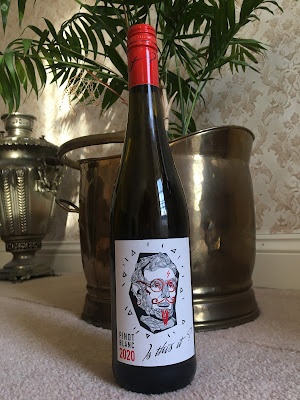
Is This It? Hungarian Pinot Blanc from The Co-op

Is This It? A Pinot Blanc from Hungary via The Co-op

Can't you see I'm trying? I don't even like it
I just lied to get to your apartment
Now I'm staying there just for a while
I can't think 'cause I'm just way too tired

- The Strokes, Is This It? (2001)


I cannot lie, a Hungarian wine that references one of the greatest albums of the 21st century, if not of all time, got my interest.

Budapest was one of the later great eastern European capitals to smarten up; Vienna had always been beautiful, if somewhat sleepy, and Prague, full of scruffy backpackers followed by braying stag-dos, seemed to improve continuously before your eyes but Budapest took another decade-or-so to get with the programme and reveal its charms.

In the early '00s, it was still all Socialist faded glamour, but by the end of the new century's first decade it had some become attractive and vibrant, with a sophisticated, cosmopolitan feel and a newly burnished hedonistic, hipster vibe.

The same, to an extent, is true of Hungarian wines; our local MD at the advertising agency that I used to drop in on periodically twenty-odd years ago could always be relied on to find a good restaurant with an impressive wine list, but these were pioneering exceptions more than the rule.

These days, the Hungarian wine scene is more of a movement and more confident, with plenty of good wines and some that are rather better than that.

This Pinot Blanc from The Co-op fits firmly into the well-made, inexpensive and enjoyable category. Elegant more than complex, it is a perfect everyday wine; an easy sipper for when the weather is good, a barbecue or party wine if you want something easy-drinking and well made with broad appeal or an aperitif / starters wine.

It is also good value even at the list price, before special-offer discounts.

For more on discovering Hungary, see this from Lonely Planet: Hit the road for the best experiences in Hungary – Lonely Planet


Is This It? Pinot Blanc (£6.50, The Co-op)

arestrained nose of citrus and florality; fresh conference pear and green apple, citrus, white flowers and a touch of white pepper; good linear acidity and minerality; well-made, very adept and elegant.

Thoroughly enjoyable.

Drink as a summer sipper or with light starters, such as mozzarella, scallops or chicken salad.


Special offer details 

Reduced to £5.50 from £6.50 from 16 March – 05 April 2022.


Wednesday, 13 May 2020

Dereszla Tokaji Dry from Lidl

An elegant dry Tokaji selected by Richard Bampfield for Lidl's Wine Tour

Historically, all Tokaji was sweet dessert wine. It is only in this century that winemakers have started making dry Tokaji.

At a tasting of mainly dry Tokaji for #FurmintFebruary, I concluded that Furmint is Hungary's answer to Chardonnay (Chardonnay is one of its parents) and Tokaji its Burgundy; the wines are structured yet elegant and nuanced.

This Lidl Tokaji is from Dereszla, a winery founded in 1999 by a French family, and selected by a Master of Wine.

Dereszla Tokaji Dry by Lidl, 2018 (£7.99) acacia blossom, honeysuckle, yellow stone fruits; fresh, and poised with saline minerality; the elegance of a Burgundy at a fraction of the price.

Drinks beautifully straight out of the bottle, opens up with aeration and will improve with age.

Good and good value.

Richard scores this 89, the same as the Saint Emilion and one less than the Riesling-Scheurebe; clearly there's not much in it technically but this is my favourite of the three.

Saturday, 21 March 2020

Top Selection Portfolio Tasting

A portfolio tasting of Top Selection's wines

Top Selection is not a great name for a wine merchant; it has something of a budget supermarket's premium own brand about it. Which is a pity because the wines themselves are superb.

From traditional classics, to emerging regions and some really off-piste wines, if you are prepared to start buying in low double-digits and move up from there, there is a huge breadth to explore.

I liked every wine I tried and scored all of them at least a Good, so here are my highlights:

- more Hungarian dry Furmint, especially Szepsy, and Heimann's red Kekfrankos

- Styrian Sauvignon from Tement; it is lovely to see these wines back in the UK, steely, precise and mineral, they are some of my favourite Sauvignons

- elegant Swiss wines; they're not cheap, they're not good value but they are unique, pure and sometimes so silent that it takes time to hear them

- Nathan Kendall New York whites; fresh and distinctive

- Anton Bauer Austrian Gruener, a long-time favourite, plus his Blaufraenkisch and superb sweet wines from Burgenland's Kracher

- Moroccan wines from Meknes; a first for me

- aged Italian wines are really quite amazing; Campaperi, Ca' la Bionda, Terenzi

- really outstanding Cahors wines from Lagrezette; at £80 the Paragon is pricy but still exceptional value for the quality

- Yves Cuilleron Condrieu; not cheap but lovely

- 100yo solera sherries from Bodegas Yuste

- Canadian aged ice cider is a thing; Leduc -Piedemonte 2011

- Frederiksdal Kirsebaervin's Danish cherry wine; complex and savoury from long fermentations

- German Riesling beer; a "personal project" blend of 1/3rd Riesling with 2/3rds beer to give fruit-pickers something refreshing after a long day in the vineyard

Thursday, 30 January 2020

Furmint February Two-Point-Oh

Wine of Hungary's celebration of 20 years of dry furmint - Furmint February 2.0

I used to be a regular visitor to Budapest on business in the late '90s and throughout the '00s. For a long time, it was by some way the least lovely of the great central European capitals - poorer than Vienna, less buzzy than Prague.

Then, around 15 years ago, it suddenly spruced up and became the sort of place I rather looked forward to visiting. Kate Green, owner of A Drop of Hungary and originally from Hungary, says that much the same changed occurred in Hungarian wines at the same time.

My experience is that there have long been good Hungarian wines, but perhaps I just happened to know the right people in the early days; Miklos, the local CEO, was something of a bon viveur, while his Financial Controller was - somewhat incongruously - an ex-sommelier.

One change that is not disputed is that around the turn of the millennium, the potential for great dry whites made from Furmint was well and truly proven by Istvan Szepsy with his dry Furmint, Szepsy “Urágya”


Say Tokaji and I immediately think of the great botrytised sweet wines. And there were excellent sweet wines at Furmint February. But the revelation was the sheer quality of the dry whites. As a small wine-producing country, it makes sense for Hungary to follow Austria's lead by focusing on quality, rather than volume. This is partly reflected in the prices and means that comparisons are with the great wines of the world, rather than with everyday drinking wines.

Furmint is a half-sibling of Riesling and Chardonnay via its parent Gouais Blanc; the wines have the poise, elegance and focus of Burgundy with the aromatics and richness of Loire Chenin.

As with the Blaufraenkisch-focused Blue of the Danube event last year, there was nary a disappointing wine on show; all were extremely well made technically and prices rose in line with quality.

Top producers - dry

Mad Wine dry Tokajis, varietal Furmint and blend, priced in the teens and imported by Alliance Wine.

Dobogo dry varietal Furmint Tokaji imported by Liberty Wines and priced in the low 20s

Disnoko dry varietal and blend Tokajis imported by Gonzalez Byass, priced in the teens and 20s

Dereszla dry blend Tokaji, priced around £12

Szepsy serious varietal Tokajis, priced from £30s - £90s, imported by Top Selection

Szent Donat Birtok dry varietal and blend Furmint from Balatonfured-Csopak, priced in mid teens and imported by Novel Wines

Gilvesy dry varietal and blend Furmint from Badacsony, imported by Davy's; unusual skin-contact quasi-orange wine for those curious

Demeter Zoltan dry varietal Tokaji from another pioneer of the style, imported by Savage Selection and priced at £75

Top producers - sweet

Szepsy samorodni from around £60 from Top Selection

Royal Tokaji from mid-teens late harvest to 6 puttonyos at £50, imported by Bibendum

Thursday, 19 December 2019

Blue of The Danube; Tasting Notes

Blaufraenkisch, aka Kekfrankos, is arguably Central Europe's signature black grape; a dark-skinned, late-ripening variety, it has cherry and bramble fruit, spice and fine tannins.

This trade tasting of Blaufraenkisch / Kekfrankos was the largest in the UK and featured wines of different countries, colours, styles and production methods all based on this great grape.

Blended: Hungary

Blends included Merlot, Cabernet Saubignon, Cabernet Franc, Zweigelt, Blauburger

Ostoros Family Winery, Soltesz Egri Bikaver Pajados 2016 (K, M, CS, CF) meaty, spicy, bramble fruits, woodsiness; fresh, elegant and supple with fine tannins. Very Good

BOJT Boraszat es Szolobirtok, Bikaver Classic, 2017 (K, CS, Z, B) oaky vanilla spice, bramble fruit, pepper, and minty eucalyptus. Fresh, elegant, long and supple. Very Good.

Bonis Reitter, Patrik Cuvee, 2017 (K, Z, CS) cherry fruit, very fine tannins; assertive and substantial. Good.

Varietal: Hungary

Bodri, Faluhely, 2017 soft, supple, cherry fruit, rounded with good underpinnings and very fine tannins

Bodri, Gurovica 2017, black cherrries and dark fruits, supple and substantial with very fine tannins and an assertive, muscular core. Very Good.

Linzer Orosz, PS Kekfrankos, 2015 oaky nose, red and sour cherry fruit with minty eucalyptus; pure and precise. Good.

Gal, Kekfrankos, 2017, SS-fermented, woodsy and truffly with cherry fruit; fresh and supple. Good.

Gal Kekfrankos, 2018, barrel-aged, woodsy-sulphurous nose, cherry fruit and truffles. Supple and soft. Very Good.

Koch, Kekfrankos, 2017 cherries and undergrowth, fresh and elegant with fine tannins. Good.

Koch PR Kekfrankos, 2017 more complex, nuanced and textured. Very Good. 
Varietal: Slovakia

Bott Frigyes Kekfrankos Faricka 2018 fresh, elegant, peppery spice and vibrant cheery fruit. Good.

Matyas Andras Kekfrankos 2018 cherry fruit and spice, soft and supple, very fine tannins

Matyas Andras Kekfrankos 2017 drier, more rosehip fruit

Sunday, 10 November 2019

Blue of The Danube - Wines to Buy

A selection of wines from Wines of Hungary's Blue of The Danube Tasting

Many of the wines shown at the Blue of The Danube are not yet commercially available in the UK. Here are the ones that are.

Varietal: Hungary

Szent Donat Magma Kekfrankos 2018 (£17.99, Novel) fresh and elegant. Good.

Szent Donat Single Vineyard Kekfrankos 2017 (£25.50, Novel) very adept cherries-and-pepper, concentrated and muscular, supple and harmonious. Very Good.

Gilvessy Kekfrankos (£18.95, Davy's) earthiness and cherry fruit, supple and soft with fine tannins. Fresh and vibrant. Good.

Blended: Croatia

Danjanic, Clemente, 2013 (£25, Croatian Fine Wines - M, CS, Teran, Borgonja) dark and inky with black fruits, beetroot, sweet spices and florality; grippy with very fine tannins. Very Good.

Varietal: Romania

Nachbil Blaufrankisch 2017 (£21, Boutinot) aged 2m in amphora, fresh, supple and elegant; textured and grippy with very fine tannins. Somewhat curious - in a good way. Good.

Balla Geza Blaufrankisch Stonewine 2017 (£18.90, Novel) woodsy-earthy nose, fresh, lifted cherry fruit, very fine tannins. Good.

Varietal: Austria

R+G Triebaumer Blaufraenkisch Reserve 2016 (£34.26, Alpine Wines) oaky and concentrated with dark cherry fruit; assertive and grippy with a muscular core. Very Good.

Tuesday, 29 October 2019

Blue of The Danube

A tasting of mainly Kekfrankos from mainly Danubian countries, organised by Wines of Hungary with masterclasses from Liz Gabay MW

The so-called Blue Danube isn't actually blue; in reality it's a kind of grayish colour.

Blaufraenkisch and I go back many years, but like a mismatched couple in a RomCom, we've never quite hit it off properly.

There have been moments, of course, when we've looked into each others eyes and seen something meaningful, but that initial spark of attraction never really fanned into a flames of desire.

Central Europe was where I first learned to love wine - living and working in Vienna, first came taut, peppery Wachau whites, followed by the wines of Hungary and Romania. Slovakia, just up the road for a day's shopping trip, was a source of good beers but not a wine destination. Not then at least.

So what's changed - is it Blaufraenkisch or me?

As ever, it's probably a bit of both.
Her name means Blue Frankish, for which the Hungarian cognate is Kekfrankos (CAKE-frankosh) and the Slovak Modra Frankovka; unlike Pinot Gris vs Grigio, choice of language does not denote any stylistic connotation. The key influence on Blaufraenkisch's personality is temperature - in milder climates she is pale, delicately cherry fruited and Burgundian; more warmth brings out darker berry fruit, deeper colours and a minty Bordelais character.

So far, so versatile.

This tasting by Wines of Hungary, with several guest appearances, demonstrated the breadth of Kekfrankos ; red, rosé, still, sparkling, varietal, blended, oaked, stainless steel, young, aged, moderate climate and warm climate

All the wines here were at least well-made and thoroughly enjoyable with no technical faults. They were deft, harmonious and balanced with fresh acidity and fine tannins.

Some were paler and more elegant, others deeper and fuller. Many were Good and several were Very Good to Very Good Indeed.

Should you check out Central European Blaufraenkisch / Kekfrankos / Modra Frankovka? On the basis of this tasting, absolutely yes.

Wednesday, 11 September 2019

Ninety Six Pinot Grigio - Virgin Wines

A Hungarian Pinot Grigio from Virgin Wines

Ninety Six Tears - Question Mark & The Mysterians


Pinot Grigio is the same wine as Pinot Gris - the Italian form of the name here is no more than a stylistic indicator. You can reasonably expect a Pinot Grigio to be taught, citrussy-mineral and fairly neutral.

By contrast, a winemaker who puts Pinot Gris on the label is giving you a hint that it will probably be fuller, richer and more perfumed.

This Hungarian Pinot Grigio sits somewhere between the two; Hungary has a fairly warm climate resulting in more fruit ripeness, so although labelled Grigio, it's bigger and fuller.

You could call this a slightly confused Hungarian that does not know whether it wants to be French or Italian - but then a Hungarian friend of mine thought I was writing about her ...

Ninety Six Pinot Grigio (£8.99) ripe stone fruit and a waxy, honeyed florality that is just held in check by a saline-mineral acidity; shows the warmth of its climate.

Match with roast chicken or pork rillettes.

Monday, 9 October 2017

Top Selection Portfolio Tasting

The Autumn portfolio tasting from Top Selection

Top Selection is an award-winning boutique wine and spirits merchant that has been running since 2000.

This autumn portfolio tasting featured over 80 wines - in general, they were all well-made and fault free, reasonably typical and fair value for money.

Some were more interesting than others, so here are the ones I liked best:
Fizz
Andre Jacquart Le Mesnil Grand Cru NV, Champagne complex, leesy and adept. Good.

Whites
Angel Sequeiros Albarino "Foudre" 2010, Rias Baxas complex, oaky, mineral and very long. Incredibly youthful, will age and age. Good.

Laurent Boussey Meursault "Clos du Pre" 2015 citrussy, deft and complex with layers of sophisticated oak; still young. Good.

Reds
David Duband Chambolle Musigny 2013 mushrooms, truffles, red berry fruit and spice; complex, long and supple. Good.

Alves de Sousa Caldas Reserve Touriga Nacional 2012, Douro minty eucalyptus, ripe dark fruit, gaminess and pappery spice; supple and fresh with fine tannins. Good.

Kracher Blend 2 2013, Burgenland vibrant with fresh, ripe, juicy blueberries, coffee grounds and spice. Good.

Ceretto Barolo 2013 fresh and elegant with a firm grip; cherry fruit and long. Good.

Dessert wines
Kracher Beerenauslese 2015, Burgenland roasted peaches in caramel with good freshness. Good.

Clos le Comte Cuvee Emilie 2015, Sauternes sweet spices, buttery roasted stone fruits and caramel. Good.

Szepsy Aszu 2000, Tokaji cognac coloured and complex, with roasted peaches and sweet spice. Long and mellow with aged complexity. Very Good.

Alves de Sousa Quinta da Gaivosa LBV, 2012 fruited, fresh and delicious, typical LBV. Good.

Spirits
La Gabare is one of the last independent cognac houses - founded in 1992 they select, age and sell rare old cognacs.

La Gabare Petite Champagne 1970 complex, vibrant and fiery (60% strength!), spicy and expressive. Very Good Indeed.

La Gabare Petite Champagne 1982 complex, with mixed fruit and sweet spice. Mellow and harmonious. Very Good.

Sunday, 25 June 2017

Going Austro-Hungarian with Virgin Wines


A Wachau Gruener and a dry Tokaji from Virgin Wines

Students of central European history will be especially pleased by this geopolitical combination from Virgin Wines; oenologists will find they highlight stylistic differences between these now neighbouring, once-joined, countries. 

Both are very well-made; the Austrian wine is linear and precise, whereas the Hungarian is fruitier and, although dry, shares the hedonistic flavour profile of sweet Tokaji.

Gruener Veltliner Wachau Selection (£13.99) made by the Wachau's excellent co-op, Domaene Wachau. Poised, elegant citrus and white stone fruits with hints of Gruener's signature celery and lentils; pure and fresh with a saline pebbly minerality, white flowers and a whiff of pepper. Improves with extensive aeration.

Good.

Drink as an aperitif or with light starters.

2015 Chateau Dereszla Tokaji Furmint Dry 2015 (£10.99) dried apricots, marmelade and beeswax-honeysuckle with freshness and a saline minerality, white pepper and sweet spices. Floral, eaxy and rich.

Good.

Drink with rich foods such as pâté.


Sunday, 4 January 2015

Grand Selection Tokaji Késői Arany, 2013

Another night, another goody-bag wine.
 
This sweet Tokaji was my take-home wine after the recent Circle of Wine Writers' Christmas event.
 
Pale sandy yellow, it is lightly floral with tropical fruit and a touch of sweet spice. Sweet, ripe tropical citrus fruits, cut through with a refreshing acidity. Light, but very elegant.
 
Good.
 
Match with fruit tarts or foie gras.
 
Other related articles

Saturday, 6 December 2014

Hungarian Wines at Circle of Wine Writers' Christmas Party

Hungarian wines at the Circle of Wine Writers' Christmas party

Though elusive and hard to define, this [Hungarian] national character exists without visible physical racial characteristics. Magyars do not belong to any particular race, they do not present any noticeable religious, political or social conformity – in fact, the very diversity in these fields seems to be one of the typical characteristics of this people.
The definition of their national ‘ethos" is therefore a very complex task. For one thing, Hungarians are usually too emotional to be able to form impartial judgements of themselves while foreigners are rarely familiar enough with their culture and history to form valid conclusions.
- "A Way of Life": HungarianHistory.com
Despite my many visits to Magyarország, Hungary has always remained to me an impenetrable place, a land that I have only ever travelled through rather than ever feeling fully at home.
Descended from a people of Central Asian origin, adrift in a sea of Slavs, the lilting language full of quaint vowels is simultaneously reassuring and opaque, the culture historically and geographically remote, the topography and landscape of the Carpathian Basin indistinct.
If the Austrians are the missing link between the precise, Teutonic Prussians and the dolce vita of the Italian outdoor lifestyle, then the Hungarians are the other side of the same coin.
Like their grander, more neurotic Imperial cousins up the road in Bécs, the Hungarians both pay a Northern European lip-service to the system of rules yet have a simultaneous Southern disregard for it; Budapest is no less a place of shady business deals than Vienna.
Yet Hungary's markedly southern hedonism lives a low-lying, landlocked and continental, rather than Mediterranean, lifestyle; Budapest is a bewildering mix of imperial boulevards and coffee houses, backstreet pavement cafes, beer halls and hearty food eaten out of doors.
Perhaps it was the wide-ranging ambition of this tasting that hindered a deeper understanding.
Perhaps modern Hungary, after 50 years of Communism, followed by freedom and EU accession is still finding its way oenologically.
Or perhaps the Hungarians simply saw no pressing need for order, focus and structure in what was essentially more of a celebratory event.
For I did not come away with the ordered and structured overall impression of Hungary's wines that I had hoped for.
Taken individually, they were as technically well-made and fault free as I remember them from my many encounters.
But with so many regions, grapes and styles represented, I gained only a limited impression of what contemporary Hungarian wines are all about.
However, key shared features were a precise, clean modernity, a subtle elegance and plenty of fruit expression; like an extended family gathering, there were common traits, but no overall defining feature.

Fizz
The original fizz, Champagne, was developed as a way of making an unpalatable wine drinkable; that is, the process does more than merely add bubbles.
The various fizzes here were elegant enough, but somehow unexciting; they felt like adequate wines with bubbles added.
Whites
Here was the greatest diversity of styles: indigenous and international grapes, varietal wines and blends, various oaking and lees-aging regimes.
All technically well-made, all ripe with good fruit - but little to make the heart beat faster.
Reds
With plenty of international varieties and the judicious use of oak, the reds were recognisably influenced by Bordeaux and the Rhone.
One producer truly stood out - Bock's wines were elegant, adept and harmonious. Takler, managed by Bock, had a similar, only slightly lesser, feel; Gal Tibor's wines were supremely elegant; St Andrea Merengő Egri Bikavér superior 2009 had a Rhone-esque spicy earthiness.
Stickies
Pre-dating Sauternes, the sweet wines of Tokaji in Hungary's north east, are its legendary calling card and only Champagne has spawned as many anecdotes.
It is made into some of the greatest dessert wines in the world by a combination of noble rot, high-altitude vineyards on volcanic soils and a unique production method of adding puttonyos of aszu grapes to a base wine.
The best here (Barta, Beres, Dobogo, Patricius) were intense, powerful and athletic, yet married to ballerina-esque lightness and freshness.

Image credits: Zsolt Szentirmai
Other related articles

Wednesday, 7 March 2012

Laithwaites - Wines from Eastern Europe‏

After tasting a new range of Laithwaites wines from India, Greece, Turkey and Georgia selected by buyer Cat Lomax, we were also invited to try a few of their current Eastern European wines.

Campanula Pinot Grigio 2011, Hungary, £6.99
Aromatic on the nose, this shows pear and green apple fruit. There is some mid-palate sweetness and a creamy texture.

A good, solid quaffer.

Albastrele Pinot Grigio Cahul, 2010, Moldova, £7.79

Moldova is something of a forgotten corner of Europe - historically and linguistically linked with  Romania, it was annexed into a separate republic by the Soviet Union in 1945.

Although a poor, rural backwater, it is talked of as having viticultural potential and this Pinot Grigio was one of the best whites on show - pale golden yellow, it feels weighty, honeyed and full on the palate but also crisp and bone dry.

There is also ripe pear and melon fruit with white blossom aromas.

Scurta Vineyard Viognier Tamaiosa 2010, Romania, £7.49

Although Bucharest is a dirty, smelly, chaotic city, Romania's wines generally feel surprisingly clean and pure.

This wine shows peach and apricot fruit and has a pleasant rounded, peachy feel on the palate.

Solidly OK, but nothing special; the price seems quite ambitious for this.

Albastrele Sauvignon Blanc Cahul 2010, Moldova, £7.79

With good citrus fruit and ripe, tropical passion fruit, this shows typical Sauvignon gooseberry aromas; weighty and full on the palate.

It has an unspecified gold medal from somewhere.

Colina Piatra Alba Pinot Noir 2009, Romania, £7.29

With aromas of sweaty, damp animal and sawdust, this is hardly a "typically Burgundian" Pinot - though to be fair, it is hardly priced as one either.

There is some fresh red berry fruit, but I would rather look to Chile for entry-level Pinot than more of this.

Coline d'Enira Merlot 2008, Bulgaria, £9.79

Bulgaria in the late '70s and early '80s was a source of cheap, rustic but effusive reds before the New World took over that particular role and these days, I'm not really sure what Bulgaria stands for.

The role as a regional Finance Director that took me regularly to Austria, Hungary and Romania, amongst other places, only ever afforded me a single visit to our Bulgarian office (pretty much to close it down), so I have never really got to know Bulgaria's wines.

This 14.5% beast shows ripe sour-cherry and vegetal aromas on the nose; on the palate, there is more ripe plum and prune fruit, vanilla and sour-cherry acidity with ripe tannins and a grippy, perfumey finish - it feels rich, concentrated and surprisingly youthful even with four years' age.

Attention-grabbing more than classy and ambitiously priced.

Recommended wine

This was a bit of a hit-and-miss affair - much as you might expect of a range of Eastern European wines from Laithwaites.

The surprise for me was how well the Moldovan wines showed and how middling the others were.

Hungary and Romania can produce some really good wines but they don't appear to be on the Laithwaites stock list.

By contrast both Moldovan wines from Albastrele - the Pinot Grigio and the Sauvignon Blanc - felt very well-made with real depth on the palate and at just under £8, they are also priced sensibly for the quality on offer, even if an £8 Moldovan wine is something of a challenging sell.

Links

Laithwaites - http://www.laithwaites.co.uk/

Tuesday, 20 September 2011

Liberty Wines Autumn Portfolio Tasting

An email dropped into my in-box last week inviting me to Liberty Wines' Autumn Portfolio Tasting - the following day.

However, as luck would have it, the venue was just five minutes' walk from my office so I was able to pop there in my lunchtime.

With a very limited amount of time there, I picked what I thought would prove to be the most interesting wines to try, so what follows is based on my highly idiosyncratic, spur of the moment choices.

It is worth noting that the wines were generally arranged by style / grape variety rather than country, reflecting the trend of most wine lists these days.

Unless otherwise indicated, retail prices for these wines were generally in the £7 - £15 range that is the heartland of good independent wine merchants.

Italian Varietals

I started with some Italian whites - a lovely Verdicchio was my wine of the month recently, but this Terre di Valbona from Cantine Belisario was sadly not in the same league; lemony and rounded it was well-made and pleasant, but not complex and lacked the toastiness that I associate with good examples.

Much more appealing was a Pecorino IGT Terre di Chieti from Gran Sasso; it had some toastiness on the nose, ripe peach and pear fruit on the palate and a pleasing fullness without being sweet. The finish is long and savoury.

Next came a Pieropan Soave with a minerally nose of white peach, focused acidity on the palate and a minerally finish. It was very elegant but perhaps suffered by comparison in coming after the riper, fuller Pecorino.

Grüner Veltliner

I then got the somewhat unusual chance to benchmark Grüner Veltliners from Austria and New Zealand.

The Loimer "Lois" 2010 from Kamptal showed varietal celery and white pepper with mouthfilling ripe peach and pear and a minerally finish, with none of the leanness that is characteristic of 2010 Wachau whites after a very cool vintage.

The Yealands Estate Marlborough Grüner Veltliner 2011was more aromatic on the nose with herbaceous and flinty notes and felt leaner on the palate and finish.

Both were impressive and equally good technically, but I found myself slightly preferring the Austrian wine for its fuller mouthfeel.

Riesling

I got to repeat this comparison with two Rieslings from the same producers - with the same result.

The Loimer "Lenz" was had a flintsmoke nose and structured, crisp acidity with cox's apples, pears and limes. The palate is mouthfilling with good minerality on the finish.

The Yealands Estate Marlborough 2011 was very pale, almost colourless in the glass with a greenish tinge and again had a herbaceous nose (is there something generally in the air in Marlborough that causes this?). As with the GV, it was lean but rounded with a minerally finish.

Again, I found myself preferring the Austrian example, but I do think the young, current-vintage Yealands wines have the potential to fill out with some more bottle age and a bit of time in the decanter and maybe also need some food to show their best.

As a control, I tried a multi-awarded Australian Riesling from Dandelion Vineyards.

I feel I have yet to fall in love with Australian Rieslings and, medals notwithstanding, this was not the wine to convert me.

With a typical petrolly nose, it was crisp and limey, but fuller than the two previous wines. However, it also felt less interesting and complex, even if technically well-made.

Hungary

Spotting a Hungarian dry, oaked furmint, I couldn't pass up the chance to try something a bit unusual.

This Dobogo Furmint is aged for a year in three-year old Hungarian oak and is a deep golden colour in the glass. It has an almondy, oaky nose, whilst the palate is full yet crisp with a buttery feel.

At around a tenner, I could definitely recommend it if you like the style, but its retail price is £16.99 and I fear it is not quite special enough at this price point.

Pinot Noir

Moving on to the reds, I spotted a Canadian Pinot Noir, "Le Clos Jordanne Vineyard" - at £26.99 it is priced at the level of a good red Burgundy.

On the plus side, it showed plenty of interesting varietal aromas of mushrooms, truffles and forest floor with a smooth texture and a touch of grip on the finish.

However, I found it rather too pale and lightweight, with a simple, strawberry-ish palate and a slightly odd aroma of dried flowers.

If you are an affluent appreciator of Canadian Pinot or even just very open-minded, it's probably fine - but I couldn't recommend it as an introduction to Pinot Noir.

Zweigelt, St Laurent and Blaufrankisch

There were actually more grape varieties than wines here - just two red Austrian wines from Burgenland's Heinrich.

The "Red" (a mix of all three) had simple cherry fruit and was well-made with a pleasing finish. A pepperiness develops on the palate and it is a classic "food red" rather than a quaffer.

The Burgenland Zweigelt was darker in the glass with a more intense and complex nose. It had a fuller palate and more textural complexity.

At £17.99, it is only a few pounds more expensive than the "Red" and definitely worth the extra.

It also has a Decanter Trophy.

Monstrell & Tempranillo

The Monastrell from Spain's Bodegas Castano had a tarry nose, dark bramble fruit, plums and prunes on the palate and and soft yet mouthfilling texture.

Castano is based in the lesser-known region of Yecla at an altitude of around 600m above sea level, giving the wines greater extraction and texture.

Merlot & Carménère

The 2009 Carménère Seleccion from Vina Chocalan had coffee and tar on the nose whilst the palate showed dark berry fruit and more tarriness. The texture is smooth but grippy, increasingly so on the finish, so decanting or cellaring is recommended.

Portugal

Although there was not a specific Portugal category, I tried a number of wines from this country and it makes sense to put them all together.

The 2008 Petit Verdot from Azamor, with 15% Syrah added, was a lovely wine with dark berry fruit and lovely oak on the nose.

On the palate, there is black cherry fruit, a custard cream smoothness and some spice on the finish, whilst the texture is inky and muscular.

It costs £17.99 which is fair given the quality.

The Quinta Do Infanto Douro 2008 Red is a few pounds cheaper and has a Gold Medal from Brussells, but to me was much less interesting - it felt thinner, with simpler cherry fruit, less complex and a grippier finish.

Finally, a 2008 Douro Red Reserva from Quinta Da Romaneira; dark purple in the glass, it has an intense nose of elderberries and ink. The palate shows more dark berry fruit, elderberries and blueberries.

It has a lovely texture, dense and inky yet soft, with dark spices on the finish which is grippy yet balanced and rounded.

It is a really lovely wine and has an IWC Gold to boot.

Sadly, it costs £49.99 and whilst it may just about be worth the price, it's a lot of money to spend on a single bottle.

Languedoc

The 2009 Chateau Saint-Roch Chimeres Cotes du Roussillon Villages had a Decanter Gold, but I found it rather middling and straightforward - juicy with some sweet fruit.

Syrah / Shiraz & Blends

Increasingly, I am finding myself appreciating Rhone Syrah which can rival similarly-priced Bordeaux for texture and fruit even if the wines are very different in style.

The 2007 Paul Jaboulet Aine Crozes Hermitage Rouge Domaine de Thalabert has a complex, intense nose of prunes, oak and pencil shavings.

On the palate, there is bramble fruit, vanilla and spice and the finish shows a lovely mixture of fruit and grip.

The texture is soft with a grip that is gentle yet firm, poised and commanding - rather like a masseuse, I imagine.

A really lovely wine, but again not exactly everyday drinking at £28.99.

My final two wines were both benchmark comparisons of this one:

A similarly-priced (£38.99) Charles Melton Grains of Paradise Shiraz from Australia had dark fruit, sweet eucalyptus and blackcurrant on the nose.

The palate reeks intensely of blackcurrant with prunes and raisins and a dense, inky texture.

Of the two, however, I found the less expensive, more classic French wine to be the more interesting.

The Paul Jaboulet Aine Hermitage. "La Petite Chapelle" 2007 was a step-up in terms of price at £63.99, but also a noticeable step-up in terms of quality from the already very good Thalabert, with greater finesse, complexity and definition.

You are either very lucky or very discerning if you can decide to pick one bottle of the Petite Chapelle over two of the Thalabert, but if it's your birthday and your rich uncle is feeling expansive, there's no contest.

Recommended wine - white

I loved the Austrian GV and Riesling from Loimer and they are definitely worth buying.

However, my non-Austrian recommendations is Gran Sasso Pecorino IGT Terre (£11.99) for its ripe fullness, complexity and balance.

Available through Slurp.co.uk and http://www.reservewines.co.uk/


Recommended wine - red

There were some stunning reds above £20, but at a rather more affordable, if still special-occasion, price point, I recommend the Azamor Petit Verdot (£17.99) for its lovely oaking, wonderful texture and dark sensual fruit.

Links

Liberty Wines - http://www.libertywine.co.uk/index.aspx /

Friday, 12 August 2011

Cigar Dinner‏ at Cambridge's Hotel du Vin


When I first moved to Cambridge over a decade ago, it felt very much like a city outside the influence of London - located (as it was then) over an hour's train ride away.

As a tourist hub, we would - and still do - get large numbers of visitors to the city but, with few really good restaurants or hotels of character, the centre did not really cater for locals and one tended to head outside the city to one of the villages for a decent meal.

Frankly, the local hotels and restaurants just didn't have to try all that hard - what with a constant, steady stream of one-off visitors from far-off places.

However, in the mid-noughties, Cambridge experienced a flutter of new, up-market openings which brought a hitherto unseen level of sophistication to my home town.

One of these was the conversion of a row of four city-centre townhouses opposite the Fitzwilliam Museum into an Hotel du Vin, a branch of the upmarket restaurant, bar and hotel that is owned by Malmaison.


I was recently invited by the hotel's General Manager Jacqui Griffiths to attend a cigar dinner that she was hosting.

Although I am a non-smoker, cigars to me have a certain Romance to them - rather like wine - whilst the smell brings back childhood memories.

Besides, the last time I went to the Hotel du Vin (see here) I was sufficiently impressed to make sure of not passing up an opportunity to go back.

Over a fresh and moreish whisky sour with canapes, Jacqui explained that the chain is primarily focused on being a restaurant and bar with rooms (albeit somewhat luxurious), rather than an hotel that does food and drink.

All hotel branches are housed in buildings that have been formerly used for something else, as it gives them a sense of character and history, and all have a humidor and a cigar shack - the latter being a sheltered space outside which conforms to anti-smoking legislation but allows somewhere civilised for cigar smokers to congregate.

The first cigar of the evening was a Hoyo De Monterrey, matched with a single malt whiskey from Ledaig on Islay. The whisky was light but peaty with a touch of sweetness and a long, balanced finish. The cigar was, apparently, one of the mildest Cubans with a creamy sweetness and deemed a good match by those partaking.

Moving inside for a starter, introductions were made and I learnt I was something of an interloper in a group of transplant surgeons from Addenbrooke's hospital up the road, plus an RAF pilot friend, who had all decided to get together for a private party.

As Jacqui later explained to me, the hotel is increasingly providing bespoke private parties of this type and it does seem a very civilised way to get together with a group of like-minded friends.

Introducing myself in my capacity as a wine-writer (rather than my day-job as a number-crunching company director), I was firstly made very welcome but also pleasantly surprised to be told that I had the coolest job in the room - it's not often a fighter pilot tells you that.

The second surprise was one of the surgeons, puffing expansively on his cigar, announcing he was doing a liver transplant the following morning; I suggested that presumably it would be as routine as changing the spark plugs on a car - open it up, swap the relevant bits over and close back down - to which he replied a liver transplant is far easier than changing the spark plugs on a modern car.

We were also joined by an expert tobacconist who had come along to tell us about the cigars, but not before we had all - somewhat bizarrely but required for legal reasons - signed a disclaimer to say that we acknowledged that his talk in no way constituted encouragement to smoke.


Perhaps not surprisingly, there was a somewhat smokey theme to the food and our starter was smoked eel, truffle potato salad and quail's egg.

Just north of Cambridge, the cathedral city of Ely was once known as the Isle of Eels (hence its present name) as it was surrounded by marshes full of eels. However, the marshes were increasingly drained in centuries gone by and our eel proved not to have come from the area there, but was still local and from somewhere less than an hour's drive away.

In any case, it was delicious and matched perfectly with the dry Tokaji from Chateau Dereszla served with it; Hungarian Bar Manager Stefan explained that he had specifically chosen a crisp wine to freshen up our palates.

Tokaji is perhaps more normally associated with sweet wines, but this blend of Furmint and Hárslevelű grapes was beautifully crisp and aromatic with a lovely acidic structure.

Pale in the glass, it was rounded and mouthfilling with tropical citrus and thick-skinned, phenolic ripeness and not only matched with the starter but also cut beautifully through the spicy and intense olive oil served with bread.

It reminded me somewhat of the Austrian style of ripe-yet-dry whites but when I asked Stefan about this, he very politely and gently indicated that his personal preference was for "fruitier, warmer-climate" Hungarian wines.

I guess some old habits and rivalries die hard, however much of polite veneer you put on it, and I couldn't help noticing Stefan's pointed reference to Hungary's greater number of wine-producing regions and wider variety of styles than Austria's.

At this point, one of the surgeons, with a noticeably Teutonic accent, announced he was actually from Frankfurt in Germany and there was no need to spare his feelings as he felt the same way about Austria, too - more age-old rivalries again.


The next cigar course was a Vegas Robina Unicos with an aged Jamaican Plantation rum from 2000; dark gold in the glass, the rum had a rich, strong nose with more than a touch of nail polish. However, this was less pronounced on the palate which showed prunes, cinnamon and spice and felt smooth and well-integrated.

Our main course of hot smoked duck breast was accompanied by caramelised mango and a spicy jerk jus matched with a Chilean Pinot Noir from Apaltagua in Curico Valley.

The wine was introduced by the hotel's new sommelier who explained he is given a very free hand in selecting the wines and spirits and will be putting together a new list over the coming months; enquiring about altitude, I was told the grapes are grown at "800 - 1,200" - "feet ?" I asked; "No, metres" came the reply.

This seemed implausibly high to me at the time, but a bit of quick research on Twitter subsequently suggested this may be entirely possible.

In any case, the wine was very pale and light with an intensely fruity and complex nose of vanilla, spice, mushroom and forest floor. On the palate it showed red berry fruit, gentle acidity and a lovely smooth finish; it was indeed a lovely wine but perhaps a just a little too light for the food and served just a degree or so too warm.

At this point, the next cigar was due and we popped outside for a Bolivar, Coronas Extra and a 20-year-old Baron de Sigognac from Bas Armagnac; Jacqui enquired if I wasn't tempted to try one of the cigars and in truth I was, but this being a school night, I felt it perhaps was not the best time to try for the first time something whose after-effects I could only guess at.

So I limited myself to sniffing the box of raw cigars and enjoying the Armagnac with its cooked-fruit and coffee nose and the mellowness of 20 years' aging.

Our final course, a "Burnt Forest" gateau of rich chocolate and sponge, was again delicious and all that remained was to chew the fat with my dinner companions over topics as varied as social media for medical professionals, organ donation rates and vintage sports cars, before heading home.

A hosted cigar evening at Cambridge Hotel du Vin costs £75 per person for four cigars, drinks and a three-course meal with canapes.

Links

Hotel du Vin Cambridge - http://www.hotelduvin.com/hotels/cambridge/cambridge.aspx

Malmaison - http://www.malmaison.com/

With thanks to @vinoremus (http://www.vinoremus.blogspot.com/) and @MickeyCbg (http://blog.michaelgray.org.uk/) for the information about the altitude of Chilean vineyards.

Friday, 20 May 2011

Fringe Wines And A Bit Of Geo-Political History‏

I recently got to know through Twitter a US blogger whose site, Fringe Wine, is dedicated to "unusual grape varietals and/or grown in unfamiliar regions all over the world".

I love this idea and went through my own Fringe Wine phase a while ago in search of something local when my business travels regularly took me to central and Eastern Europe. However, there's only so many ropey Czech wines you can try before you inevitably ask for a beer instead and move back to the classics.

However, my Romantic streak remains and in the spirit of friendly competition, I thought I would try out a few vaguely Fringe Wines at the London International Wine Fair.

I will review these separately in more detail later, but Rob, if you are reading this, here are my top Fringe Wines - they all brought back a few memories of travel to these countries as well:

Slovenia

First was a Šipon ("shipon"), the Slovenian name for Hungary's Furmint from Dveri Pax.

Tiny, rural Slovenia will never be a volume player, but I am increasingly impressed by the wines from this former Yugoslav nation now a member of the EU which look set to become of more than mere niche interest or curiosity value.

Romania

I have to say, I never really liked visiting Romania on business, but I did always enjoy the wines there - well-made and fruit-driven but still balanced and European in style, they seem to have a bright up-front openness which belies the dark, murky, inscrutable superstition that for me characterises Romania.

All the grapes here from Prince Stirbey were pretty obscure with a Negru de Dragasani, Novac and, for me the best, a Fetească neagră.

Hungary

Hungary is hardly a Fringe Wine country these days due not least to the fame of its Tokaji wines; historic Budapest is, for me, the least beautiful of the three great central European capitals (the others being stately Vienna and picture-perfect Prague).

Ryan Opaz, however, disagrees with me and prefers it to Vienna - perhaps as an American, he appreciates more its lively buzz and determination to move forward, compared to Vienna which got there years ago and no longer has anything to prove.

The most obscure (in terms of quantity produced) wine here was the Eszencia; made from the free-run juice of botrytised furmint grapes it is produced in tiny quantities.

With around 5 times the residual sugar of even a top-level 5-puttonyos Tokaji, it was extremely syrupy, yet surprisingly fresh.

Ukraine

Historically - and to this day - fought over by competing Empires, but officially independent since 1991, Ukraine is still the "borderland" that its name suggests between its vast overbearing northerly neighbour and the European Union which ends tantalisingly at its various borders with Poland, Slovakia, Hungary and Romania.

Perhaps the most obscure here was a red semi-sweet sparkler, Krimart from Artemovsk winery, which included Saperavi along with Cab and Merlot in the blend; however, for quality, the most enjoyable was their dry white fizz Extra Brut.

Links

Dveri Pax - http://www.dveri-pax.com/

Prince Stirbey - www.stirbey.com

Crown Estates Tokaji - www.tokajwinetrade.com

Artemovsk Winery - www.krimart.com

Recommended reading

Borderland: A Journey Through The History of Ukraine by Anna Reid (Paperback - 6 Mar 2003) - see here

Balkan Ghosts by R. Kaplan (Paperback - Mar 1994) - see here

Image credit - http://longgame.org/2009/11/geopolitics-and-realpolitik-a-layman%E2%80%99s-view/

Tuesday, 11 January 2011

Harcsa paprika - Hungarian catfish with paprika

I recently wrote about how I was introduced to the bitter herbal spirit that is Unicum by a colleague - the restaurant we visited that day was called Serpenyos, on the picturesque and hilly Buda side of the city.

We sat outside in almost 40-degree heat, toasted with an iced glass of Unicum, before settling down to lunch and a discussion of the real business of my trip there.

It's a few years ago now since I went, but we subsequently went there on regular basis and the food was always well-made if unashamedly traditional and old-school.

One dish I particularly remember was harcsa paprika - catfish in a paprika sauce; it is a traditional Hungarian dish using freshwater catfish (Hungary is landlocked) with a sauce made from sour cream, paprika and tomatoes - it is a hearty, calorie-laden stew for peasant labourers with spice but no heat.

Catfish can grow up to several hundred kilos in weight, but the ones I used to buy from a giant fish tank in Budapest supermarkets were about 1kg - 2kgs.

I now make my own version at home in the UK as follows, substituting the more easily-available salmon for catfish. Other meaty white fish like monkfish would also be an option.

Match this with a wine with a bit of spice, not too much tannin and plenty of fruit acidity to cut through the heavy cream sauce; obviously Hungarian if you can get it, otherwise southern French red will do.

Ingredients (to serve 4)

1 large onion, diced
Some cooking oil
6 heaped dessert spoons of paprika
2 large red peppers, thinly sliced any way
300ml sour cream
200ml passata
2 cloves garlic, crushed
4 skin-off salmon steaks

Method

- wash and pat dry the salmon steaks; cut the salmon into equally sized pieces around 3cm square and season generously with salt and pepper, then set aside

- fry the onions in a pan until softened and browned (around 15 mins)

- add the sour cream and passata, sliced red peppers, crushed garlic and seasoning and simmer gently until the sauce is thick and the peppers just cooked through (around 15 mins)

- add the fish to the sauce; simmer gently, stirring occasionally, until cooked (around 15 - 20 mins)

Serve with flat ribbon pasta such as fettucine.

Other related articles
Das ist ein Unikum ! Memories of Hungary and Unicum‏

Hungarian Food and Wine Tasting

Links

Serpenyos website (in English) - http://english.reziserpenyos.hu/


Friday, 7 January 2011

Das ist ein Unikum ! Memories of Hungary and Unicum‏


The agency I once worked for in Austria had a sister business down the road in the Hungarian capital, Budapest - there were all sorts of stories and legends about it, but two of my favourites are these:

- that it had been opened in 1988 before the fall of communism (true) with the MDs of the two businesses smuggling in computers from Vienna in the car, sitting at the border with poker faces and a boot full of contraband IT equipment

- that the agency was sited in what had previously been a school - a kindergarten, in fact - and later on some of staff who came to work at the agency had actually been to the kindergarten where they now worked.

Over the years, I drove down from Vienna to Budapest many times and gradually fell in love with the country and the hospitality of its people whose ancestors were horseback warriors from central Asia.

I never picked up more than a few phrases of the language but I recognised enough food-related words as Slavic in origin to be able to tease my Hungarian friends that it had taken the civilising influence of the Slavs to teach the ancient Huns to settle down and cook their food rather than just hunting, pillaging and eating raw meat.

Hungarian food certainly is hearty by tradition, but I had many good and several excellent meals in Budapest as well as learning to love the wines which are well-made again since the fall of communism and, in the case of Tokaji, deliciously rich and sweet.

All these memories of Hungary came back to me over Christmas when we discovered an old but still perfectly serviceable bottle of Unicum whilst visiting my parents.

Unicum is dark herbal liqueur made using more than forty herbs, some distilled, some macerated; the drink is then blended and aged in oak casks at a factory in Budapest for over 6 months.

It is made by Hungarian drinks company Zwack and the name, according to legend, derives from the pronouncement of the Habsburg monarch Joseph II on first trying it in 1790 - Das ist ein Unikum !

Thick and dark in the glass, it is foreboding and medicinal on the nose - this is not a drink for the faint-hearted; there is briefly some initial sweetness on the palate but this is swiftly followed by a wave of potent, rich and powerful bitter herbs, rather like chewing on sage and rosemary.

It can be either sipped and savoured as a digestif or knocked back central European style as an aperitif - as I was taught to do by our Hungarian Managing Director on the terrace of a lovely restaurant on a hillside on the Buda side of Hungary's capital in a 38 degree heat one summer.

In any case, it does need to be served chilled, otherwise the bitterness is just too much.

Unicum is not yet widely available in the UK, but can be found and costs around £20 per 70cl bottle.

Links

Zwack - http://www.zwack.hu/index2.php?set_lang=en

Unicum (in Hungarian) - http://unicum.hu/start.php

Unicum on Wine Searcher - http://www.wine-searcher.com/find/unicum/0/uk

Saturday, 16 October 2010

Lake Velence Grüner Veltliner, 2008 - Laithwaites

Grüner Veltliner is actually Austria's signature grape, accounting for over a third of all vineyards there, but is also grown to a lesser extent elsewhere in central Europe, including Czech and Hungary.

When made dry and full-bodied (the Austrian "house style" these days), it typically produces wines that are crisp, aromatic and well-structured with white pepper on the nose, and lentils or celery on the palate.

The best examples are racy, elegant and complex - and also increasingly expensive as Austrian wines generally gain a deserved reputation for themselves.

This Hungarian take on Grüner Veltliner from Laithwaites is from the Etyek Buda region just outside Budapest. Mid-weight, with good structure and acidity, very much in the Austrian style, it is refreshing enough to serve as an aperitif, but also has the weight to stand up to food.

With its high acidity levels, it cuts through roast pork beautifully and also matches well with oily fish like salmon. It is well made, well structured and benefits from an hour or more in the decanter.

At £6.49 plus delivery, it is also competitively priced for its quality and has the added advantage of being one of the more unusual wines you might serve your guests.
Overall, thoroughly recommended and good value.

Links

Laithwaites - http://www.laithwaites.co.uk/

More information on Hungarian wines from this region - http://www.winesofhungary.com/hungarian-wine/wine-regions/north-transdanubia.aspx