Popular Posts

Showing posts with label Jura. Show all posts

Thursday, 8 February 2018

Bancroft Wines - Spring Portfolio Tasting

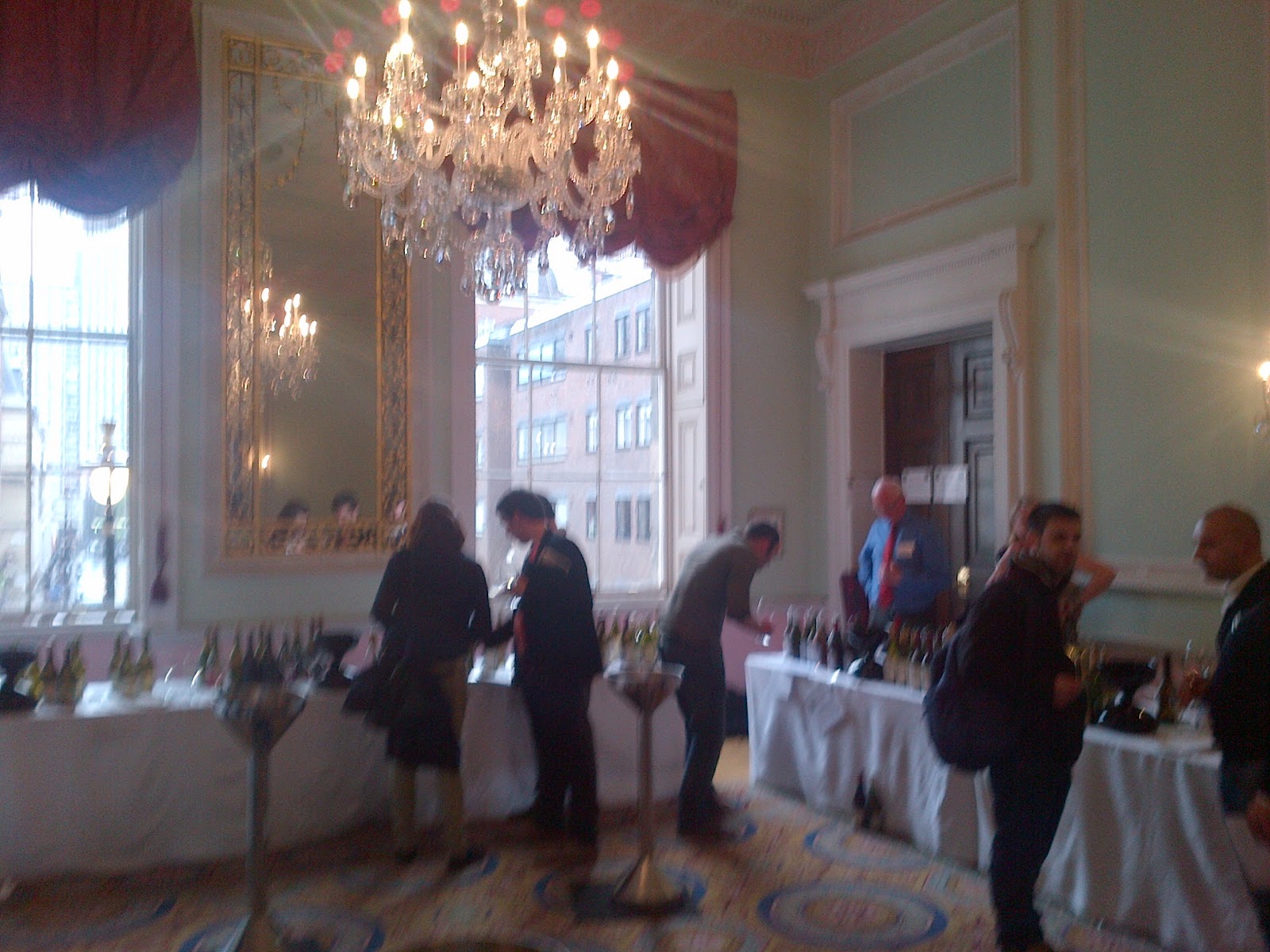
Bancroft Wines' Spring Portfolio Tasting, held in the Dutch Church

I've long believed that you judge the quality of a wine merchant by their weakest wines, not their best. Pick a couple of bottles at random and if there's nothing bad about them, you're likley to be on to a winner.

Fortunately, all the wines I tried at this Bancroft Spring Portfolio tasting were throroughly enjoyable, many of them very impressive indeed.
Here are my top picks:

Westwell Wines, Kent, England
Recently acquired by new owners, the wines on show came with the purchase, so few details available; the range is wide - white, fizz, pink, dessert and even amphora - and they were all enjoyable and reasonably priced given their origin.
WS Special Cuvee 2014 (£22.45) elegant, pricise and mineral traditional metho fizz; low dosage; leesy with a firm, assertive backbone. Very Good.

Weingut Weszeli, Kamptal, Austria
Another newly-acquired winery, with an excellent range of GV and Riesling.
Gruener Veltliner Kaeferberg OeWT 2013 (£26.10) precise, complex and full gruener; restrained with stone fruit and some creaminess. Substantial, structured and long. Very Good.

Elena Walch, Alto Adige, Italy

Lagrein Riserva Vigna "Catel Ringberg" 2013 (£30.20) fresh and spicy with fine tannins; substantial with dark fruit and earthy truffles. Balanced, harmonious and poised. Still very youthful. Very Good.
Tacchino, Piedmont, Italy
Good range of classic reds, whites and an off-dry fizz.
Rosso di Monferrato, Di Fatto 2013 (£15.50) a blend of four varieties, spicy and darkly fruited with black and sour cherries, freshness and a firm core; long. Good.

Domaine Savary, Chablis
Chablis Grand Cru Vaudesir 2015 (£36.70) rich, complex and floral-honeyed; fresh, with orchard fruit. Still very youthful. Very Good.

Domaine Ratte, Jura
Excellent biodynamic wines from Jura with a distinctive flavour.
"Nature" Savignan 2016 (£25.30) complex nose with struck-match and musky, cidery sharpness; fresh and piercing, yet rich and rounded; long, substantial and complex with good underpinnings. Very Good.
Valdaya, Ribera Del Duero, Spain

Valdaya Mirum 2015 (£31.80) very fresh and harmonious with dark fruit, spice  and very fine tannins. Elegant, substantial and precise. Very Good Indeed.

Hermanos Perez Pascuas, Vina Pedros, Ribera Del Duero, Spain
From the entry-level mid-teens to the top cuvee with a trophy price-tag, these were all excellent wines. Choosing here is really just a case of selecting a budget and taking your pick; it would be easy to single out the £200+ wine as the best, as indeed it was. However, in the real world, there is better value around £20.
Vina Pedrosa Crianza 2014 (£21.50) bramble fruit, spice, earthy truffleyness; harmonious, supple and complex with freshness and substance. Very Good.

Es Fangar, Pla I Levant, Mallorca
Mallorcan wines are not that often seen over here, but are worth seeking out.
N'Amarat, 2011 (£35.75) fresh, spicy and complex with dark-berry fruits and gamey truffleyness; elegant and supple. Very Good.

Bodega Luigi Bosca, Mendoza, Argentina
South America is all too often in thrall to the bigger-is-better style of wines that do well further north. The more interesting winemakers, however, are following a more European-style approach.
Icono Malbec Cabernet Sauvignon 2010 (£63.20) fresh, vibrant and substantial with a muscular core; dense, energetic and concentrated. Still very youthful. Very Good Indeed.

Thursday, 14 April 2016

Two Special-Day Wines

Two wines from Jura's Rolet and Niagara's Pillitteri

A special day calls for special wines.

Somebody recently asked me about my favourite wine - it's impossible to answer, of course, for anyone who loves the sheer variety, but as a concession I explained that wines defined by their production method would be a favourite category.

And so we have two of these.

Rolet Pere et Fils Vin Jaune 1998 tangy and slightly floral with savoury roasted flavours of nuts, spices and apple. Fresh and long.

Very Good.

Pillitteri Estates Kerner Icewine 2012 beeswax and orange blossom, ripe roasted peaches. Fresh, intense and concentrated.

Very Good.

Not only are both defined by how they are made, they are also non-standard bottle sizes - the vin jaune comes in a 62cl clavelin (albeit standard for vin jaune); the ice wine comes a 20cl bottle.

The Pillitteri website notes: our first attempt at making an Icewine from Kerner, which is the offspring of Riesling and Trollinger. Our Kerner grapes were harvested on December 29th at around -10°C to give us maximum concentration.

Both wines were sourced by Wine Director Oscar Malek.

Other related articles
Production Method Wines

Saturday, 13 June 2015

French Whites and British Seasonal Food

Four white wines from Les Grands Chais, available at Waitrose and Majestic

Do French white wines match with British seasonal food? Les Grands Chais teamed up with Asparagus, Jersey Royals and Godminster cheddar cheese from Somerset and asked me to find out.

Aperitif:
Cremant de Jura, Cabelier (not currently available in the UK)
Appley fruit, rich fullness and a fine mousse.

With asparagus and new potatoes:
Chateau Cleray Muscadet de Sèvre et Maine sur Lie, Sauvion, 2013 ( Majestic, £9.99)
Substantial and mineral Muscadet - pale sandy yellow, lime flowers and zest; ripe orchard fruits, leesiness and minerality. Fresh and precise with a honey-waxy texture.

Good and very good value. Also match with crostini starters.

Calvet Reserve, Bordeaux (Waitrose, £8.99)
Clean and pure white Bordeaux - aromatic lemongrass and white pepper; pure, clean minerality with white peach and grapefruit. Adept and assured. Good.

Also match with goat's cheese.

With cheddar:
Chateau de Fesles La Chapelle, Anjou Blanc (Majestic £13.99)
Big, complex Loire - golden sandy yellow, elderflower and fern; rich, ripe orchard fruit, beeswax and freshness backed up with a leesy, oaky sweetness.

Good. Also match with rillettes

Other related articles
Les Grands Chais - part 1, part 2, part 3

Thursday, 7 May 2015

Vin Jaune with Wink Lorch

A tasting of Jura's vin jaune introduced by Wink Lorch
 
For the uninitiated, vin jaune is Jura's answer to sherry; a wine aged extensively in barrels over which a voile (film) of yeast grows giving the wine a pungent, nutty tang.
 
Like sherry, it is one of the world's great wines with curious, distinctive flavours of cidery baked apples, nuts and spice, for which an affection creeps up over time with greater acquaintance.
 
Unlike Fino sherry, the wine is not fortified and the barrel is not topped up. It is sold in a  62cl clavelin (1l of initial fill results in 62cl of vin jaune, apparently) whose shape is, like the wine, curious yet distinctive and satisfying,
 
Recently arrived back in the UK from New Zealand (via the Americas), Jura expert and author of Jura Wine, Wink Lorch gave us a deeper dive into the world of vin jaune.
Like sherry, vin jaune is defined by its production method, but it is not homogeneous; the barrels are stored under varied conditions, open to the elements to promote the growth of the voile and so some develop more reliably and consistently than others.
 
There is no science to the storage conditions - it may be production-method led, but the scale is not industrial. However, the CIVJ provides a monitoring service, checking barrel samples every six months to indicate which barrels are developing better than others.
 
Given that vin jaune is such a niche product (making up only 4% of all Jura wine), this allows lesser barrels to be bottled or sold for blending for cash flow purposes, leaving only the best to kept for the minimum six years and turned into the much more expensive vin jaune (it is around double to treble the price of ordinary Jura wine).
 
The free-pour tasting of a dozen bottles of vin jaune from 2007 back to 1988 was the largest collection of this type of wine that I have ever seen in one place and certainly the most extensive in terms of age.
 
All the wines had a distinct family resemblance - the sharp, cidery acidity, baked / preserved apple fruit and a nutty-yeasty tang. Within this, there were variances of emphasis by bottle and also due to the effects of air - for each newly-opened bottle, there was one that had been opened earlier in the day and which had generally opened up and rounded out as a result.
 
Finally, there were variances by chronology - the younger wines (2000 - 2007) were sharper and fresher, whilst the acidity in the oldest wines ('80s) had softened revealing more of the complex nutty flavours beneath.
With this many wines of a distinct style in one place, there were no particular favourites that stood out (as Jancis Robinson note) - except to say that, for me, the very oldest wines were superb.
 
Other related articles

Monday, 4 May 2015

Production-Method Wines‏

A tasting with friends of wines defined by their production method
 
It seems the factors we celebrate as bringing greatness to a wine change over time; the iconoclasts of yore told us it was all about grape variety. Then it became the winemaker's art and now we seem to have come full circle back to terroir.
 
Celebration of a production method in winemaking feels antithetical, almost heretical - certainly not on the zeitgeist.
 
Yet many of my favourite wines are defined by the way in which they are made - sherry, Madeira, port, vin jaune; production-method wines are mostly either obscure or unfashionable. Or both.
 
The only exception is Champagne, which is not really considered a wine at all.
 
With a trainee Master of Wine in our midst, we picked a course each and provided some matching wines.
 
It was also a chance to put my recently-acquired set of antique decanters through their paces.
 
Aperitif
Cremant du Jura, Marcel Cabelier 2012
 
I asked the MW trainee what she would make of this in a blind tasting exam; her analysis was - appley fruit suggests Chardonnay, fullness indicates a warmer climate than Champagne, more fruit character from shorter lees aging, fine mousse from in-bottle fermentation.
 
Production method - secondary fermentation
 
Starters - a mixture of tapas, goose liver pate and bleu d'Auvergne cheese
 
Colosio Fino tangy, pungent fino, full of flavour and depth
Blandy's Madeira Sercial Aged 10 Years age on a Madeira bottle is more a stylistic indication than an objectively measured fact. Fragrant, tangy-nutty and complex.
Domaine de Durban Muscat de Baumes de Venise 2011 I've never quite acquired the habit of starting with a sweet wine, but well-chilled and fresh, this worked perfectly with the pate and cheese.
 
Production method - fortification (all), flor-aging (fino), Madeirisation

Main - chicken with sherry and mushrooms in a creamy sauce
 
Jean-Claud Credoz, vin-jaune, Chateau-Chalon made from Savagnin, aged for six years in barrels under flor and sold in a wax-sealed 62cl clavelin, this is an oddity - and delicious; complex, nutty and tangy with a charming freshness.
 
Production method - flor and extended barrel aging
 
Cheese course
Federico Paternina Rioja 1982
Contino Rioja Reserva 2001
Vina Tondonia Rioja Reserva 2001

With a little reluctance, I had allowed Rioja on the basis that the production method specifies a minimum amount of barrel aging and that it is associated with a particular type of oak.

The 1982 wine was fully mature and complex with red fruits, old leather and gaminess. The two that followed seemed like mere babes in comparison with plenty of primary fruit.

Production method - 3+ years in American oak
 
Dessert - chocolate and raspberry cake
Taylor's Quinta de Vargellas port, 2001 full of ripe red and black berry fruit with raisins, prunes and molasses plus eucalyptus and spice. Complex, vibrant and fresh
 
Other related articles
 

Wednesday, 1 April 2015

Cotes du Jura "Melon" Cuvee, Credoz

Another wine from Jura's Jean-Claude Credoz, based in Chateau-Chalon

Cotes du Jura "Melon" Cuvee, 2012 Speciale (€9.50) Sandy yellow, orchard fruits with a touch of bramley-apple cideriness and a sherry-esque tang. Poised, fresh and long. Good.

Match with roast pork or chicken with cream and mushrooms.

Other related articles
Jura - A Rough Guide
First London Jura Wine Trade Tasting 2013
‏

Saturday, 14 March 2015

Jean-Claude Credoz, Jura

A wine from Jura's Jean-Claude Credoz, based in Chateau-Chalon

Staying at Relais des Abbesses in Chateau-Chalon, we were advised to visit Jean-Claude Credoz's handsome, ivy-covered house and try his wines.
We weren't disappointed; this is one of the wines we bought.

Cotes du Jura Savagnin, 2013 (€12.90) Golden Sandy yellow with a musky, pungent, bramley apple nose. Sharp, cidery, bramley apple fruit, a pungent tang and an oaky-leesy complexity. Very Good.

Photos


Other related articles
Jura - A Rough Guide
First London Jura Wine Trade Tasting 2013
‏

Thursday, 11 September 2014

Jura - A Rough Guide‏

A visit to Chateau-Chalon in Jura
 
Jura is like a staircase, says our hotelier; you have the plain below (and there is a magnificent view of it from our bedroom window) and we are on the first step.
 
We are in Chateau-Chalon, a small, hilltop town about an hour's drive east of Beaune. The drive is completely flat until, for the last few kilometers, there is a steep climb, emerging onto a a rocky precipice. This is Chateau-Chalon and our hotel room looks straight back at the Cote d'Or.
 
The hotelier goes on to say explain that there is a plateau behind us, before the foothills to the Jura mountains, another plateau and then the mountains themselves which lead up to the Swiss border.
 
After a brief stop-off in Chateau-Chalon, we will make this journey before dropping down to Lake Geneva and onwards.
 
Geographically located between Alsace and Burgundy, Jura shares a family resemblance to both places but also has its own personality.
 
Where Alsace's wine route is a pretty Franco-Germanic Disneyland full of timbered houses with flowery hanging baskets and Beaune the aristocratic capital of an ancient duchy, Jura feels rural and unspoilt.
That means, in part, that its charms are less immediately obvious to the outsider - as true of its wines as of its geography.
 
Arriving in Chateau-Chalon, we find a few tourists milling around the town, but not the hoards of coach-trips of Alsace or the plentiful oenophiles who descend on Burgundy's slopes and cities.
 
Instead, there is a quieter feel - and almost no English is spoken. There is a church and an abbey, view-points and caveaux with degustations, but it is not as prominent or well-developed as in neighbouring wine regions.
A visit to nearby Arbois confirms the same pattern - there are some things here for the sightseer, but in general Jura feels more like a place to enjoy living and being in than one that wears its tourist attractions on its sleeve.
 
It is quiet and pastoral rather than bustling and touristy.
We stay at the Relais des Abbesses, a hotel in the centre of the town. It is small, informal and welcoming; our evening meal takes the format of a dinner party - a long table and plates of communal food served by our host Andre along with conversation.
 
For a very modest €25, we get a starter, main, cheese, dessert and coffee plus regularly filled jugs of wine.
 
The highlight of the meal is the main course - pork medallions in a cream and wild mushroom sauce - but the choice of cheeses - Morbier, Comte and Chaorce - is a close second.
 
The following day, we walk around Chateau-Chalon then taste and buy some wine from Jean-Claude Credoz.
His reds, a Poulsard and a Trousseau, are light, cherry-fruited and clean - textbook entry-level Jura reds.
 
Of the whites, the old-vine Chardonnay has a dense texture and the Savagnin has a classic Jura cidery sharpness; the vin jaune in a 62cl clavelin is the most impressive of all - nutty, textured and evolved.
Jura wines are not cheap - entry-level prices are a few euros more than is the case in much of the rest of France; the best value, to my mind, is in the upper-end whites which offer unusual, if not unique, flavours and textures.
 
Other related articles

Saturday, 22 March 2014

Two Jura Wines from The Wine Society - And A Book By Wink Lorch

A review of two Jura wines from The Wine Society

It seems I have become a Jura wine fan - I don't know when it happened. Certainly not at first tasting; that brought ... a degree of understanding and some intrigue, but not quite affection or enthsiasm.

A bit like listening to Van Morrison's unstructured masterpiece Astral Weeks, the first encounter can seem strange and disorientating; it is only with time that its charms somehow creep up on you.

I have written elsewhere about how and why Jura wines are different - suffice it to say, they are not in the modern, fruit-forward style.

A few years ago, you would struggle to find Jura wines in the UK - after the First Jura Wine Trade tasting in London in last year, interest and availability are increasing and The Wine Society now has the widest range.

Côte du Jura Tradition, Domaine Berthet-Bondet 2009 (£13.95) Chardonnay / Savagnin blend, barrel-aged for three years, un-topped up to allow air inside and create the conditions for flor to develop. Mid-straw yellow, tangy cidery nose; citrus and sharp apple flesh, savouriness and saline minerality. Long and elegant with a persistent finish. Good.

L'Etoile Vin Jaune, Domaine de Montbourgeau 2006 (£33) 100% Savagnin, aged under flor for six years. Mid-straw yellow, complex tangy, vegetal, cidery nose leading to a full-flavoured, appley savouriness. Long and substantial; very assured and elegant, will age. Very Good.

Jura is a region where wine and gastronomy go hand-in-hand - match these wines with typically hearty Jura food; Bresse chicken, ham or Comté cheese.

For the Jura enthusiast, Wink Lorch has just published a book out on Jura, focusing mainly on the region's wines, but also covering gastronomy and tourism with photos and maps. It is the first book in English on Jura and available from Wink's website winetravelmedia, priced £25.

Other related articles
The Wines of Jura - An Overview
First London Jura Wine Trade Tasting 2013

Links
The Wine Society - website
Jura Wines - website
Wink Lorch - website

Wednesday, 3 July 2013

The Second Cambridge Tasting

After the success of the inaugural Cambridge Tasting at Downing College earlier this year, I'd promised to do another one shortly.

Matt Boucher of Cambridge Wine Merchants offered to host and so the second Cambridge Tasting took place at his Mill Road shop; I brought along a mixture of wines from Jura, Portugal (vinho verde) and Languedoc (Chateau d'Angles in La Clape, where we had recently spent a week).

Jura - France

Fruitiere Vinicole Arbois, Cremant de Jura Blanc Brut (€4.15 ex cellar) a co-op of around 100 members, dating back to 1906. A blend of mainly Chardonnay with 20% Pinot Noir; melon fruit, muskiness, ripe citrus and a fine mousse with good leesiness.

Juravium Les Parelles Cremant de Jura rose (price n/a) another co-op. This pink fizz foams enthusiastically on pouring; simple red fruits and smokiness, but lacks finesse or length and rather basic.

Juravium Arbois Blanc Chardonnay 2011 Les Parelles (€4.94 ex cellar) melon skin aromas on the nose; creamy texture, leesiness and persistence, ripe citrus. Very much a food wine, this is all about texture and depth. Has a Silver Medal from Paris. Good.

Vinho Verde - Portugal

Casal Garcia Branco NV (from £7, independents) light, floral, lemony and fresh with a slight spritz. Elegant and easy-drinking, a lovely example of its style; perfect as an aperitif or with seafood on a hot summer's day. Well received, too.

Casal Garcia rose (n/a) bright redcurrant colour, red fruits and bubblegum; again, a touch of spritz. Creamy texture, longer and more substantial with a persistence on the finish. For me, this was the more interesting of the two.

Languedoc - France

Chateau d'Angles Grand Vin blanc 2008 (£19.99 Ocado) deep yellow with aromas of sweet spice and honeysuckle; flavours of honey and mead, almost like a dry Gewurztraminer. A big wine with a touch of warming white pepper on the finish. Very popular. Good.

Chateau d'Angles Grand Vin rouge 2008 (£19.99 Ocado) ripe dark fruits and cinnamon spice with some pepperiness; soft texture and fine tannins but still grippy. Long and mouthfilling. Good.

Online availability, favourites and Recommended Wines

The Casal Garcia Branco was a clear winner in the popularity contests - fresh, likeable, and squeaky clean if rather unsophisticated, it was a young Donny Osmond of a wine.

Both Casal Garcia wines are available online from http://www.portugaliawines.co.uk/ and http://www.winedrop.co.uk/.

The warming spice and expressive florality of the d'Angles blanc also made it a popular choice.

Both d'Angles wines were of a quality level (and price point) above all the others and clearly superior.

Aside from these two, the most interesting wines were the textured Casal Garcia rose and Les Parelles Arbois.

Other related articles
The Cambridge Tasting (the first one)
Jura Tasting in London
Vinho Verde
Chateau d'Angles
Aoife Maxwell's review of the event

Links
Cambridge Wine Merchants - website
Jura Wines - website (Wink Lorch)
Vinho Verde - website
Chateau d'Angles - website

Wednesday, 15 May 2013

First London Jura Wine Trade Tasting 2013

A tasting of Jura Wines in London organised by the Comité Interprofessional des Vins du Jura (CIVJ) – the official regional body representing Jura wine, with a Masterclass by Jura expert, Wink Lorch; more details on the region on Wink's Jura website, http://jurawine.co.uk/

Arriving after work just in time to see most of the producers packing up to leave - but chef Raymond Blanc still there - I asked the few stragglers for recommendations of what to try from the 150 wines on show - see my detailed tasting notes below. Wines marked "TWS" are now available from The Wine Society.

Jura - Overview

Nestling in the lower western foothills of the Jura mountains above the Bresse plain, Jura is just 80km east of Burgundy.

It is home to a range of styles - almost none of which is familiar to outsiders.

Jura wines are different, and something of an acquired taste. For me, the key characteristics of Jura's wines are pale reds and sharp, cidery whites; the wines are not without fruit, but it plays a secondary role to more structural matters such as acidity and texture. These then are food wines, best matched with the local hams and cheeses.

Wine styles particular to Jura include Vin Jaune, aged oxidatively under a flor-type yeast, Vin de Paille, a straw wine from dried grapes and Macvin, a liqueur made from grape juice and brandy / marc.

Already something of a niche, Jura wines have also embraced organic, biodynamic and sometimes natural wine methods in the same way, perhaps, that sci-fi geeks love both Star Trek and Dr Who.

Cellier Des Tiercelines, Arbois Chardonnay 2011 pleasant citrus and melon fruit, recognisably Chardonnay.

Arbois Savagnin 2009 "Benoit Mulin" Jura-esque nose of sharpness and wet straw, cidery acidity, good savouriness and grip.

Domaine Baud, Cuvee Flor 2011 cidery sharpness, musky oak, mouthfilling and long.

Domaine Badoz, Cuvee "Dedicace a Pierre" 2009 (Pinot Noir), good fruit and grip.

Domaine Berthet-Bondet, Cotes du Jura Rubis 2011 (Poulsard, Trousseau, Pinot Noir) cabbagey nose, ripe soft red fruits, lots of stuffing, long and well-balanced. Good.

Cotes du Jura Nature 2011 (Savagnin) muskiness on the nose, ripe tropical melon fruit; mouthfilling with a grippy finish.

Chateau-Chalon 2006 (Savagnin) a vin jaune, aged for 6 years in barrel and only just released. Complex Jura-esque nose, sharp and cidery with brown apple flesh and wet straw aromas. Grippy.

Domaine de la Pinte, Arbois Vin Jaune 2005 (Savagnin) wet straw aromas, sharp linear acidity yet softened and mellow, glycerol texture, dry finish.

Domaine de la Renardiere, Jurassique 2011 Arbois-Pupillin TWS £12.95 (Chardonnay) lots of ripe tropical fruit, savouriness, less challengingly sharp

Domaine Morel-Thibaut, Trousseau 2011 Pale red in the glass, vegetal, slightly sulphurous nose. Ripe soft red berry fruit, vibrant with a silky texture and good, but gentle acidity. Persistence on the finish.

Vin de Paille 2009 wet straw aromas, sharp cidery nose, complex sweetness of sultanas and sweet spice. Very Good.

Domaine Hughes-Beguet, Arbois Pupillin Rosé de Ploussard 2011 TWS £11.95 a salmon-pink fizz, touch of muskiness and bubblegum on the nose. Refreshing acidity, good mousse, ripe redcurrant fruit with hints of vegetal farmyardiness. Long on the palate, good linear acidity and mouthfilling. Savoury and persistent on the finish - a good picnic wine.

Ploussard 2011 Arbois Pale red in the glass; musky, vegetal aromas red fruits and a touch of spice. Soft silky texture and sweet ripe red berry fruit on the palate - hints of vegetal farmyard. Long with a firm, persistent finish.

Domaine des Ronces Cotes de Jura Pinot 2010 relatively dark red - the colour of cranberry juice. Red fruits and bubblegum. Sweet ripe red fruits, mouthfilling texture, soft yet mouthfilling acidity.
Very long and savoury on the palate, feels concentrated, firm and persistent on the finish. Very Good.

Henri Maire, La Vigniere Vin de Paille 2008 Arbois Mahogany in the glass, Jura-esque nose - cidery, pungent, honey and beeswax, intensely sweet, cut through with sharpness, savoury bitterness of honey, rancio with roasted nuts and figs. Long palate and well-balanced finish. Very good.

Attendees included a local chef from the region, name of R. Blanc (r)
Other related articles
The Wines of Jura - An Overview
Organic Jura Wines - Tasting Notes

Links
CIVJ - http://www.jura-vins.com/
Jura wine - website, twitter

Image credit: picture of Wink by Brett Jones

Saturday, 26 May 2012

Organic Jura Wines - Tasting Notes

Last weekend, I went to a tasting hosted by Wink Lorch of organic wines from Jura, a region whose wines I previously knew only by reputation as being "a bit different".

Somewhat contrarian by nature, I have historically sought out the unfashionable, different and unusual in wines as well as other areas in an attempt to be anything other than mainstream. However, even the little that I have read on Jura has been enough to let me know that these are wines to be approached with caution.

An enthusiasm for Riesling and sherry - a sure sign of wine-geekery - is positively mainstream in comparison to liking Jura wines. In musical terms, Jura is the Prog Rock of wine: different, old-fashioned, unfashionable and divisive of opinions.

Also like Prog Rock, Jura wines are unlikely to appeal immediately at first acquaintance and take time to reveal their charms.

Wink, who has a base in eastern France and is a regular visitor to the area, had invited a number of bloggers to try these unusual wines at Adiva restaurant in London's East End, with Riedel tasting glasses provided courtesy of Sensible.

Also there, and likely to tweet or write up their impressions in due course were Arnold Waldstein, Caroline Henry, Ryan Opaz, Gabriella Opaz, Simon Woolf, Heather Dougherty and Nayan Gowda.

I wrote up some thoughts as an overview of Jura, so what follows in this post is my detailed tasting notes, starting with two sparklers.

Note: the word oxidative comes up a lot in these reviews and I use it to describe the impression of the sharp, piercing acidity and brown apple-flesh flavour of the white wines, even if many of the wines are ouillé, or "topped up", meaning that they do not actually age fully oxidatively.

Fizz

Cremant du Jura Brut Domaine Pignier: made from 100% Chardonnay, this was perhaps the most conventional wine of the evening, light, fresh and crisp, with some floral sweetness and a fine mousse.

Cremant du Jura Domaine de la Pinte: despite its traditional-method fermentation, this had yeast and oxidative notes on the nose and a rasping, sour-cherry acidity on the palate and finish that demands a food accompaniment

Red Wines

In another break with convention, we tasted reds before whites.

Arbois Poulsard Uva l'Arboisiana 2011 Domaine de la Tournelle: rosé coloured and with a combination of sweetness and spice on the nose, this smells like Chinatown on a Saturday night. Light on the palate, it is mainly about the acidity and is a rosé to all extents and purposes. Good length, but not complex.

Arbois Pupillin Ploussard La Chamade 2009 Philippe Bornard: more complex, this has the same mix of fruit sweetness and Chinese spice, reminiscent of a good, light Pinot, some grip on the finish

Trousseau Les Corvees 2010 Domaine de l'Octavin; with settling by gravity and no filtration, this was somewhat cloudy; again, the fruit sweetness and Pinot-esque red berries.

Trousseau 2010 Domaine Pignier; on the nose, this was to me distinctly sulphurous with industrial gas-leak. Nayan Gowda disagreed and felt it was merely a touch reductive. On the palate, more sweet, red-berry fruit and some grip on the finish.

I asked Wink about the sweetness of the reds and she explained that they are all fully dry with no residual sugar, explaining the lack of tannin might create the impression of sweetness.

My own theory is that there are complex fruit sugars which are not measured as residual glucose or fructose, but which register as sweetness on the palate.

Arbois A la Capitaine 2009: the last of the reds, noticeably darker, pale but recognisably a red wine; less on the nose, a touch of oxidative and wet dog, more mouthfilling and longer on the palate. This turns out to be 2/3rds Pinot Noir, 1/3rd Poulsard with a few drops of Trousseau. Ironically, the least "Pinot-esque".

Whites

Cotes du Jura Chardonnay A la Percenette 2010 Domaine Pignier: zippy, zesty lemon and lime with some rounded fruit sweetness, spitzy and sherberty, a hint of oxidative character, some firm grip on the finish

Arbois Chardonnay La Mailloche Pamina 2010 Domaine Octavin: oxidative nose, with aromas of grated apple flesh left to turn brown, mouthfilling and long, good depth and grippy finish

Arbois Pupillin Melon Le Queue Rouge 2009 Philippe Bornard: strawberry bubble gum on the nose, some oxidative notes, sweet lemon curd and bubble gum on the palate, an easier drinker with less grip on the palate and more ripe fruit sweetness (Queue Rouge is a clone of Chardonnay)

Arbois Chardonnay 2008 Les Corvées sous Curon Domaine de la Tournelle: oxidative hints on the nose and on the palate, rasp of lemon-lime acidity, a touch of sherbert, less sweetness with a grippy finish

Arbois Savagnin Les Nouvelles Comtesse A ... 2011 Domain L'Octavin: oxidative notes on the nose, sherberty, lemony palate with zippy acidity and sweet butteriness, refreshing on the finish

Arbois Fleur de Savagnin 2009 Domaine de la Tournelle: mildly, but persistently sulphurous on the nose, oxidative notes, sweet lemony fruit with rasping acidity, good depth and grip on the finish

Cotes du Jura Savagnin Ouillé Les Chassagnes 2008 Philippe Bornard: ouillé means topped-up, so less oxidative in theory, but this has an oxidative nose, lemony palate and grip

Arbois Cuvée d'Automne, Savagnin / Chardonnay Domaine de la Pinte: highly oxidative on the nose and palate, but the acidity is still fresh, palate developed and complex.

Recommended wines

What I got out of the evening was more of the distinctive "Jura style" than any specific preferences; however, based on my notes, my recommended wines are:

- Fizz: Cremant du Jura Brut Domaine Pignier
- Red: Arbois Pupillin Ploussard La Chamade 2009 Philippe Bornard
- White: Arbois Savagnin Les Nouvelles Comtesse A ... 2011 Domain L'Octavin

Links

Wink Lorch - main blog, Jura blog, twitter

Image credits: Brett Jones, http://www.thewinemaestro.co.uk/

Wednesday, 23 May 2012

The Wines of Jura - An Overview


Jura, in Eastern France (not to be confused with the Scottish island of the same name - or indeed any of the other Jura references to be found on wikipedia), is a place of strange grape varieties, unusual wine-making techniques and challenging wines.

Not for the faint-hearted then.

From the outside, at least, Jura seems stuck in an oenological time-warp with its own ways and traditions that owe little to contemporary wine-making.

An oddity with a complex history, Jura is mountainous but not alpine, gives us the word Jurassic and formed part of the Free County of Burgundy (not to be confused with the Duchy of Burgundy).

Its nearest wine-making neighbour remains Burgundy, and it does seem to share some at least superficial characteristics with that region - the reds are pale and light, the whites big and often oaky.

And although you will find some Burgundian grapes here, Jura generally specialises in varieties that are grown nowhere else.

So what is Jura wine like and why is it so challenging ?

Whilst the general rule of thumb for Jura seems to be that everything is at best unfamiliar and more often the exact opposite of what wine-making convention deems usual, here are some specific pointers to what I think makes the wines different, based on a tasting of Jura wines I attended at the weekend.

The tasting was organised by Jura enthusiast and part-time resident, Wink Lorch, and held at Adiva restaurant in London's East End, with Riedel tasting glasses provided courtesy of Sensible.

Grape varieties

The grape varieties grown here are mainly ones you've never heard of; reds are mainly Poulsard and Trousseau, whites are Savagnin, none of which are widely grown anywhere else to my knowledge.

There is some Chardonnay and Pinot Noir, but even these won't seem familiar due to the next point.

Vinification

Whilst contemporary wine-making generally looks for as little air contact as possible between pressing the grapes and drinking the wine, in Jura, the wines are made oxidatively - that is, in contact with air - so that the fruit aromas die off and you are left with aromas of brown apple flesh, roasted nuts, old leather and generally something rather sherry-like.

Styles

Unusual grape varieties and wine-making techniques result in unusual styles of wine and flavours: the reds are light, delicate and rosé-esque, tasting of allspice and toffee apple and can either be sipped as they are, or matched with white meat such as roast pork.

The whites, by contrast, are bigger and heavier, with no overt fruit but rather, developed, oxidative aromas and a grippy finish that positively demands food to match; whilst the lack of fruit / oxidative style perhaps actually makes them more versatile as food wines.

As a result, in another break with convention, we tasted the reds before the whites.
A full list of my tasting notes will form a separate post for anyone intrigued enough to want to know more.

At this point, suffice it to say that you are unlikely to be convinced by your first bottle of Jura wine - or even by your first day spent in the region. After a few days - or a half-case, depending on where you are based - you may start to understand the wines and from there even begin to develop a fondness for them.
Vin Jaune - Jura's answer to sherry

As for me, I feel that tasting 15 or so wines at once was enough to understand Jura and its key characteristics. And if I have not yet fallen in love with them - and some are certainly more challenging than others - I would happily try them again. Ideally in situ with some local food.

Failing that, I'd drink them on Arnold Waldstein's rooftop terrace in Manhattan where he likes to indulge in the occasional bottle of Jura wine with Rob Tebeau who also knows a thing or two about these strange beauties (see Rob's Jura reviews here).

For Heather Doughty's take on the evening - see here: http://heatherdougherty.blogspot.co.uk/2012/06/jura-its-france-jim-but-not-as-we-know.html

Links

Wink Lorch, Jura website - http://allaboutjurawine.wordpress.com/

Twitter hashtag - #jurawineuk

Image credits: Main and other Jura images courtesy of Brett Jones, http://www.thewinemaestro.co.uk/