Popular Posts

Showing posts with label Rhône. Show all posts

Friday, 8 July 2022

Calvet Kitchen

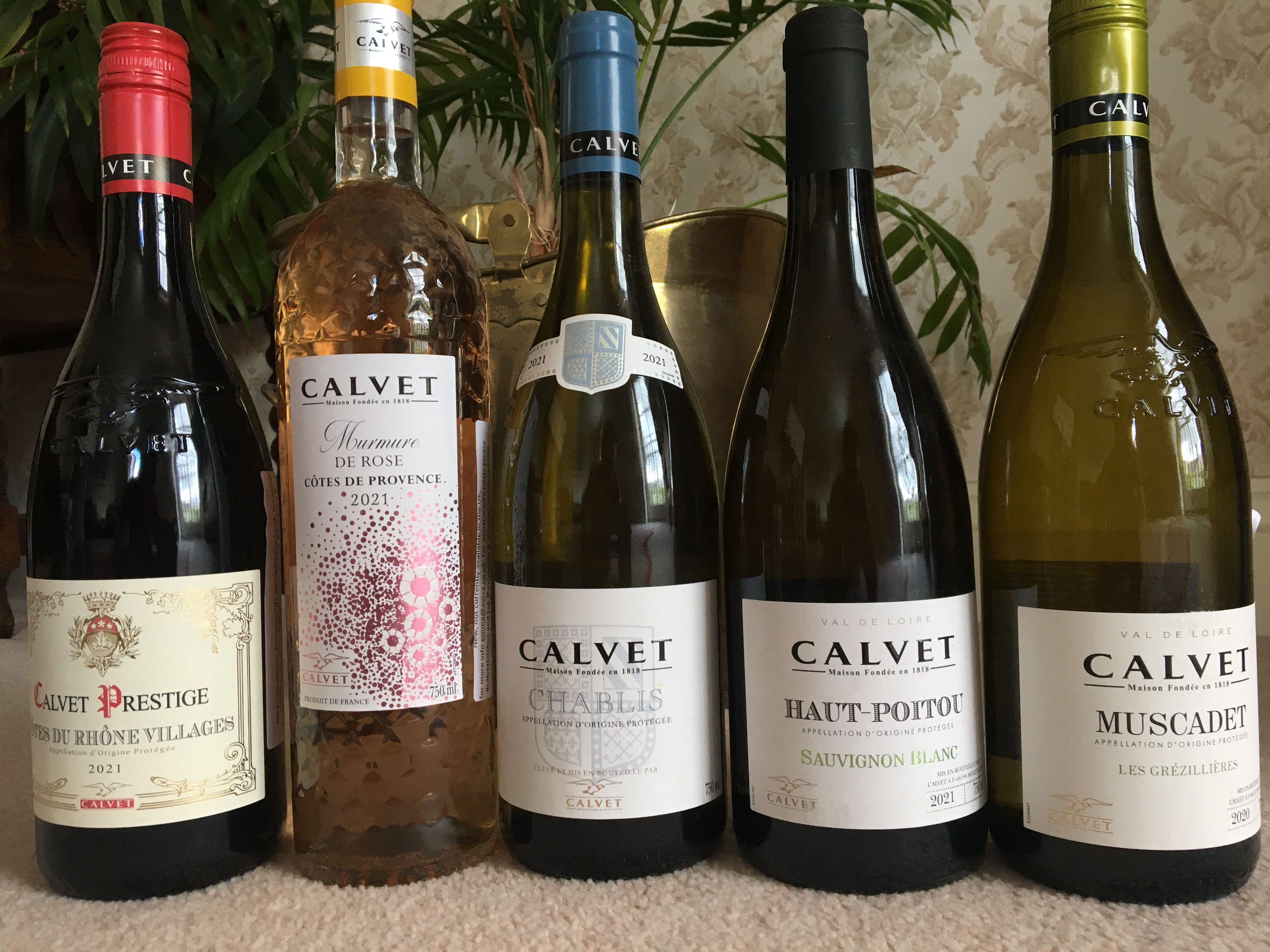
Six wines from France's Calvet - and the Calvet Kitchen experience

If you know Calvet's wines, it is probably for their range of easy-drinking and inexpensive Bordeaux. And if you don't, you probably should, as they are the largest French wine brand in the UK and the UK is Calvet's largest market.

But Calvet turns out to be a lot more than just Bordeaux; established over 200 years ago, the company makes wine in almost all of France's major regions.

Calvet Kitchen is a food-and-wine matching initiative to pair regional French dishes with Calvet wines; which is, after all, when French wine is all about.

With 64 winemakers in 7 regions, Calvet is a diverse business and yet all the wines here had a family resemblance that reflects Calvet's aims - an elegance and easy-drinking freshness with plenty of food-friendly mid-palate.

These wines all drink well on first pouring, but also open with aeration and have the body and complexity to stand up to food.

Loire-based winemaker Pierre-Jean Sauvion explained his approach:

- quality of fruit

- balance of fruit and freshness

- food-friendly salinity

The wines were all of broadly similar quality and, the Chablis aside, price, so preferences come down largely to personal taste.

Of the whites, I enjoyed the Chablis most, but given the price difference, the Muscadet makes a good value alternative.

Of the other colours, the CdRV was the most substantial and interesting.

The Calvet Kitchen playlist archive is here:

Calvet Kitchen | Meet Guillaume Lassevils, chef in the Bordeaux region - YouTube


Calvet Muscadet 2020, abv 12%, (£5.95-7 Sainsbury’s, Tesco, Co-op)

Grown on warmer sandy soils, resulting in more ripeness in the wine.

minty and floral with tropical fruit; fresh, rounded and saline with pear and white stone fruits

Thoroughly enjoyable.

Match with seafood and freshwater fish.


Calvet Haut Poitou 2021, abv 11.5%, (£10.99 Waitrose)

A new appellation to the south of the Loire around an hour from Saumur, it was created in 2011 but has a long history dating back to the 14th century. The soils are part of the same chalk limestone that runs under Champagne and moderates the water table which is key to the condition of the grapes.

Loire Sauvignon with a new world nose, but old world palate.

expressive and exuberant; gooseberries, exotic fruits and mintiness; juicy citrus, ripe green fruits and herbaceous, minty, zippy lime,

Thoroughly enjoyable.

Matches well with fresh tomato-based dishes.


Calvet Chablis 2021, abv 12%, (£20 Ocado)

Grown on chalk soils with 80% fermented in stainless steel for freshness and 20% in barrel for complexity.

stone fruits, peaches an dapricot; green apple and grapefruit, with lemon zest, fresh coriander and salinity.

Thoroughly enjoyable.

A versatile food wine, serve as an aperitif or match with starters and lighter mains.


Calvet Murmure de Rose Côtes de Provence 2021, abv 12.5% (new)

Newly-launched in the UK; night-picked for freshness with a short maceration; fermented in stainless steel for freshness.

red fruits, mint and spice; fresh, fruited and textured with red berries and salinity.

Sip as an aperitif or match with picnic foods.

Calvet Prestige Bordeaux Red 2020, abv 14%, (£7.50-£8.50 Sainsburys, Ocado, Co-op, Tesco)

80% Merlot with 20% Cabernet

red and dark berry fruits with vanilla spice; fresh with juicy, ripe and fleshy berry fruits; fine tannins and leafy, savoury, mushroomy flavours

Thoroughly enjoyable.

Match with red meats, such as bbq burgers or char-grilled steak.

Calvet Prestige Côtes du Rhône Villages 2021, abv 14%, (£7.50 Tesco)

Classic Rhône GSM blend

dark fruits and spices with garrigue herbs; substantial, fresh and supple with gentle tannins; harmonious and adept

Thoroughly enjoyable.

Match the freshness to meaty fish, such as salmon or rare tuna steaks.

Tuesday, 28 June 2022

Big White And Big Red From Tesco

Two summer barbecue reds from Tesco

If your idea of summer drinking is light sippers for the garden, then look away now; these two wines from Tesco are designed to stand up to griddled foods with strong flavours.

With plenty of sun-ripened warmth, they have enough easy-drinking fruit to be crowd-pleasers - in the best sense of the phrase - but they also have the freshness and food-friendly complexity to impress even the most discerning of palates.

The white is a classic oaked Chardonnay from California's Monterey County; like much of the new World, California seems to have found the sweet spot for Chardonnay with a bit more fruit ripeness than Burgundy without the overoaked, monolithic pantechnicon thing.

Lirac in France's southern Rhône sits opposite the rather more famous Châteauneuf-du-Pape appellation, just the other side of the river; it has similar terroir in terms of soil type and sunshine hours, resulting in a bit more of everything in the wines.

Tesco is celebrating summer by adding over 40 new wines to its award-winning selection. These exciting new bottles are the perfect accompaniment to any summer get-together, from hanging out with friends in the sun or splashing out for a special occasion.

Whether you’re sipping on a refreshing white wine in the garden, celebrating with a bottle of rosé in the park, or looking for something special to serve with your Sunday barbecue, there are plenty of new wines at Tesco to explore this summer

Estancia Chardonnay, 13.5% abv, £15.00

From Monterey County in California, this creamy oaked Chardonnay is medium bodied with zesty citrus and grapefruit flavours and aromas of vanilla. 

ripe yellow stone fruits, blossom and honeysuckle with sweet, toasty spices; rich, full and apricotty with citrussy lemon-lime, honeydew melon and creamy-leesy brazil nut underpinnings; savoury, spicy and persistent.

Drinks nicely on first opening; can be cellared.

Good.

Match with barbecue herby pork sausages or griddled peppers.

Domaine d’Arbousset Lirac, 14.5% abv, £12.00 This delicious red from the Rhône is made from the highest quality Grenache, Cinsault, Mourvèdre and Syrah grapes. The result is a velvety smooth wine, with ripe dark fruits and spices, making it the perfect pairing for grilled steaks and miso aubergine.


baked red and black fruits, eucalyptus, dried herbs and roasted spices; fresh with baked berry fruits, full, supple and inky with rounded, harmonious and well-integrated tannins; savoury, long and persistent 

Drinks nicely on first pouring and opens up with air; can be cellared for a few years.

Good.

Match with lamb skewers or merguez sausages.

Sunday, 29 May 2022

Four French Rosés For Summer

Four rosés for summer

Some people make the mistake of having rosé in the summer.

Others know better and drink it all year round.

Either way, summer is rosé season and International Rosé Day is on 11 June.

Here are four well-made and inexpensive rosés from France - look away now, label snobs; there is nothing from Provence here, but that just makes these wines better value.


La Belle Angèle rosé 2021 (£8.99 / £6.99 mix six, Majestic)

A Vin de France made with a blend of grapes including Grenache and Cinsault from both the Languedoc and the Gers in the South of France. Aged for just a few months in vats means this wine is fresh and full of strawberry bon bon flavours and floral aromas, as well as being a pretty, delicate pink colour.

La Belle Angèle was a famous muse for many of the French Impressionist painters in the Belle Epoque renowned for her beauty and joie de vivre. 

raspberry and redcurrant fruit, white pepper, saline minerality and good underpinnings. Rounded and elegant.

Thoroughly enjoyable.

Match with barbecues, salads or just sip outside in the garden.


Abbotts & Delaunay, Fleurs Sauvages, Pays d’Oc, Grenache rosé 2021 (£9.99 / £8.99 mix six, Majestic)

A new wine from the Abbotts & Delaunay Collection. Thanks to the work in the vineyards that respect the soils and the vines, healthy, concentrated grapes can be harvested whilst respecting the wild flowers (fleurs sauvages) and other wild life that surrounds them.

Made from 100% grenache grapes coming from the Hérault plain and the Aude to create a wine which is fresh, pale Provence pink and bursting with strawberry and raspberry aromas with a touch of minerality.

delicate red berries and florality; crisp, fresh and saline-mineral with soft red fruits; elegant, harmonious and refreshing.

Thoroughly enjoyable.

Serve as an aperitif on a sunny day in the garden or match with sushi or a warm chicken salad.


Calvet rosé d’Anjou 2021 (£8, Ocado)

Lower in alcohol at 11% making it good for summer drinking, this rich salmon coloured rosé comes from the Anjou region of the Loire Valley and is made from a blend of Cabernet Franc, Grolleau and Gamay grapes grown on clay/schist and clay/limestone soils.

expressive strawberry, raspberry and redcurrant flavours with watermelon, green apples, white peach and fresh citrus; hints of hazelnut and mint.

Thoroughly enjoyable.

Refreshing and light enough for an aperitif, a great barbeque wine, match with seafood or quiche.

Fleurs de Prairies, AOP Luberon, 2021, £8, Morrisons - or £2.25 for a 1/4 bottle)

Made from a blend of 45% Syrah, 46% Grenache, 5% Vermentino, 4% Ugni Blanc grown in clay and limestone soils on the slopes of the Luberon in the southern Rhône Valley which is becoming increasingly popular for its rosés.

This pale pink wine comes in a pretty bottle decorated with the fleurs de prairies or the wild flowers; lavender, poppies and sunflowers which carpet the Luberon in the South of France.

sweet strawberries, rose petals, citrus and tropical fruits with white pepper and mint; saline and mineral.

Thoroughly enjoyable.

Ideal as an aperitif accompanied by a platter of Proscuitto and Mozzarella.

Friday, 18 March 2022

The CWB Eastern France-Off - A Deeper Dive

Five wines from Eastern France

Draw a straight line down the Eastern side of France from the English Channel to the Mediterranean and you will pass through three great wine regions; Champagne, Burgundy and the Rhône.

It is around 800 miles end-to-end, and can be a pleasant drive to sunnier climes if you add in a stop-over - lunch in Reims, dinner somewhere between Dijon and Macon then an onward drive the following day to the Rhône, Provence or Côte d'Azur for a week of R&R.

We have done it many times over the years with the children and like to mix up the journey with various scenic detours, including, on one occasion, a side-trip to Chablis.

Visiting a wine region and spending time there is the best way I have found to understand its geography, terroir, history, gastronomy as well as the sources of its diversity.

So, in anticipation of a long European summer drive south to sun-kissed beaches and shimmering seas, here is a deeper dive in to a few regions along the way.

Chablis

At the the far north of Burgundy, Chablis is perhaps better understood as a southerly outpost of Champagne.

Chablis has four levels of classification from Petit up to Grand Cru. Premier Cru is, somewhat confusingly, the second rank of wines, tending to be well structured and long, but needing 5-10 years of ageing to show their best.

There are 40 Premier Cru sites scattered across the appellation, with 17 main ‘Climats’.

Chardonnay is the only permitted grape across the region so there is a distinct Chablis flavour profile - lean and steely in its youth, golden and complex with age.

Vintage aside, the differences are more about quality as a result of location, aspect and soil type - and prices charged will reflect this, of course.

At Premier Cru level, a key distinction is Left Bank vs Right Bank; the Left Bank of the Serein River is cooler giving steelier wines that benefit more from ageing, whereas the Right Bank tends to produce fuller, richer, more powerful wines that are more expressive and approachable when younger.

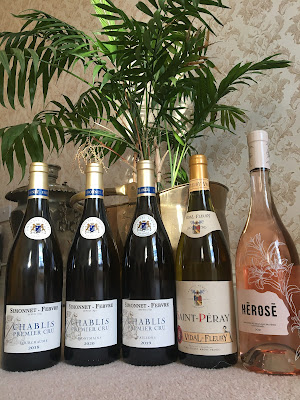
Here, we have two younger left bankers and a right bank Premier Cru Chablis with more age.

The age vs bank dynamic accentuates the differences in the wines; the older Right Bank wine is showing better right now and for immediate drinking would be my recommendation.

However, with an eye on the future, you should also consider the two Left Bankers and tuck them away somewhere dark and cool, then dig them out in several years and consider what an excellent investment you made.

Simonnet-Febvre Chablis Premier Cru Montmains 2020 (WaitroseCellar.com: £25.49, Great Grog: £32.29, FL Dickins, Thedrinkshop.com: £28.54) 

This is from the left bank which faces southeast, enjoying the morning sun, but it is colder and windier throughout the day, meaning the wines are often more restrained and emphasising classic minerality.

Wines from Montmains are more mineral than fruit driven, because of the stony minerality from the chalk soils.

This has a mineral touch and is powerful with predominant aromas of flowers. It is a supple and rounded wine which has a real sense of its terroir.

restrained orchard fruits and citrus; orchard and white stone fruits, delicate florality and hints of honeysuckle with saline minerality; fresh, supple and pure.

Drinks well on first opening, but better to aerate and also preferably cellar for several years to allow it to develop and show its best.

Very Good.

Match with fish in sauce or white meats.

Simonnet-Febvre Premier Cru Vaillons 2019 (WaitroseCellar.com (£28.99), Small Beer, Whole Foods Market, Thedrinkshop.com (£28.91))

This wine enjoys soils on the left bank that are less clay-like than those on the right bank. Vaillons is one of the largest and well-known of the Chablis Premiers Crus and this wine is an excellent example of a highly rated left bank Chablis.

Pure and focused, it has aromas of delicate white flowers and fruit. Well-rounded and charming this wine has a note of minerality on the palate and a good balance between acidity and fruit.

A generous, beautifully balanced wine with good length and very typical of Chablis.

fresh zippy citrus and delicate florality; orchard and white stone fruits with saline minerality, white pepper and a savoury leesiness; elegant, precise and poised.

Drinks nicely on first opening, but will improve with cellaring and some aeration.

Very Good.

Drink with seafood, grilled fish and white meats in sauce.

Simonnet-Febvre Premier Cru Fourchaume 2018 (Tesco: £25-£30, Thedrinkshop.com: £31.99) 

This is from the Right Bank which tends to produce richer and more powerful wines.

The Fourchaume vineyard borders the northern limits of the town of Chablis and is one of the most well-known and highly respected crus, with a reputation for generosity of flavours. Exposed to the west and southwest, the area sees many hours of sunshine and being downstream, it benefits from the rich terroir created from the alluvium carried by the river. The grapes from the vines here have an average age of 30 years. 

Aged on lees, in stainless steel, for 10-12 months, this is classically elegant, powerful, and round with lovely aromas of citrus fruit, fresh mint and spicy notes alongside ripe fruits and honey flavours.

honeysuckle and yellow stone fruits with white pepper and herbaceous mint; full and supple with saline minerality; stone fruits, honey and savoury, creamy brazil nut leesiness.

Very Good.

Match with fruits de mer, lobster, oysters, clams, prawns, or pork medallions in a cream-and-mushroom sauce.

Northern Rhône

Drive past Lyon and out of Burgundy and, as the mercury rises, you start heading head towards the dusty, rocky, lavender-scented region of Provence via the Rhône valley.

The Northern Rhône is Syrah's spiritual home and predominantly a red-wine area.

Saint-Péray, then, is something of an anomaly; small and little-known, it is an exclusively white region, producing mainly sparkling wines that were once more highly-regarded than Champagne.

Oenologically, it dates back to Roman times, grows mainly Roussanne and was apparently Napoleon's first taste of wine as a Cadet in nearby Valence.

UK Rhône expert Matt Walls says of the region: stylistically, it is most similar to St. Joseph. It has both granite and limestone soils, so the specific wine style depends on where the vines are planted, but it’s usually marginally softer than a typical St Joseph. It can be lovely

US-based Jeb Dunnuck adds: it's more limestone soils as opposed to granite soils; the wines rarely seem to have the density of a top Hermitage or Saint Joseph, but always seem to shows a terrific sense of minerality as well as salinity. Most great Hermitage Blancs come from the more limestone and loess soils on the eastern part of the hill, so there are some similarities from a soil standpoint, but Saint-Péray is more east-facing, so it doesn't have the incredible exposure of Hermitage.

This wine is an anomaly within an anomaly; neither sparkling nor made from Roussanne. It is also very impressive.

Saint-Péray 2020, Vidal-Fleury 

Made from 100% Marsanne grown on granitic soil covered with silt, lœss and limestone debris. The wine is fermented in stainless steel tanks and and aged 30% in oak barrels and 70% in stainless steel on the lees with some batonnage.

bright yellow and green with white flowers, lemon zest and subtle hawthorn, violet, and acacia with hints of honey; sweet lemon, apricot, pear and creamy-leesy almond with aromatic fennel, white pepper and aniseed;  rounded, decadent and long yet fresh.

Very Good

Match with fish, white meat or regional cheese.

Southern Rhône

Hedonistic where the North can be haughty, the Southern Rhône is home to a wider range of grapes, colours and styles of wine. 

I've been very impressed with Cellier des Princes previously; the wines are not only consistently well-made and at least enjoyable, if not generally rather better than that, they have a characteristic, atypical vibrant freshness.

The winery dates back to 1925 and is the first and only cooperative in Châteauneuf-du-Pape, overseeing production from vine to the bottle. 

Hérosé, IGP Méditerranée, 2021

Grown on clay and silicious soils, a blend of 70% Grenache, 15% Syrah and 15% Cinsault; fermented at low temperature in stainless steel for freshness and aromatics. 

bright and aromatic with citrus flowers and red fruits; soft red fruits and berries with citrus freshness; elegant and well-made with good, savoury underpinnings.

Good.

Serve as an aperitif or match with fish dishes, summer salads, grilled meats and Provence-style dished.

Saturday, 18 September 2021

Three Côtes du Rhône Wines. And A Book. And Some Food.

Three Côtes du Rhône wines - plus a book by Matt Walls. And Some Food.

The Rhône is one of France's great wine regions - or two of them to be exact. For in practice, the Northern Rhône and Southern Rhône are distinct regions that share little more than a name and a river.

The North, running from just south of Lyon to Valence produces a mere 5% of the wines of the combined region. Arguably the most prestigious and quite possibly the most expensive.

The city of Montélimar marks the gateway to the vast, geologically diverse Southern Rhône which covers a greater distance east to west than from north to south.

Where the Northern Rhône has a continental climate with cold winters and the strong, cold Mistral wind, the South is Mediterranean with milder winters, hotter summers and less rain.

The North is mostly Syrah, with some Viognier plus Marsanne and Roussanne, from a handful of appellations; the South permits 19 grape varieties in Châteauneuf-du-Pape alone and plenty more elsewhere.

If Rhône wines have a single, unifying feature it is substance; it is one of the warmer vineyard climates in France and produces dark-fruited, fleshy reds and rich, generous, hedonistic whites.

I have loved the wines of the Rhône for many years, sufficiently so to take several holidays there.

However, the true expert on the Rhône is Matt Walls who not only lives in the region but has also written a book, covering extensively appellations,  producers, history and terroir.

Matt gives an introduction to the region and his book in this podcast, introduced by Joe Wadsack: ‎Wine of the Times Podcast Series: Living the Wine Dream - Moving to the Rhône to write a book about wine – does it get much better? on Apple Podcasts

For a deeper dive, the book is available here: Wines of the Rhône | Infinite Ideas (infideas.com)

The Côtes du Rhône appellation is the most widely known sub-region and is a great starting point for getting to know the wines better. Especially with some regional food.


Three Côtes du Rhône wines

Domaine Maby, Cotes du Rhône, Variations, 2019 

elderberries, plums, blackberries and blackcurrants with cool mint and some spice; fresh and supple with lifted ripe, juicy red fruits, sour cherries, dried green herbs and peppery spice; harmonious, inky, supple and substantial with good underpinnings.

Very Good.

Match with char-grilled red meats.

Chateau de Montfaucon, Cotes du Rhône, 2017

dusty-spicy garrigue with blackcurrant and dried berry fruit; fresh, juicy plum and dark berry fruit, minty green herbs; perfectly ripe, rounded and well-integrated tannins with a gentle firmness; complex and savoury.

Very Good.

Match with darker game, such as rare venison steak.

Terra Firma, Cotes du Rhône, 2017 

lifted, slightly stewed dark berries, peppery spice, leathery-mushroomy sous bois and herbaceous aromas; fresh, juicy red and black berry fruits, cassis, mintiness and a supple, inky texture with rounded, well-integrated tannins. Very harmonious and adept.

Very Good.

Match with roasted red meats, such as rosemary and garlic lamb.


Tuesday, 14 September 2021

Viognier - A Deep Dive Around The World

Detailed tasting notes on four Viogniers from around the world

A recent tweet by WineMatcher Fiona Beckett on foods to match with Viognier had me digging out an earlier post on this peachy-apricotty tropical sun goddess of a grape.

From obscurity bordering on extinction just a few generations ago, it has now travelled around the world.

Here are four Viogniers to try with Fiona's food recommendations of mild creamy curries like kormas or spicy south-east Asian curry or spicy dishes with a hint of peach or apricot.

If you haven't tried Viognier before, it may well be unlike anything else you have tried - in a good way.

Viognier is originally from the northern Rhône, so it likes a warm climate; it is relatively high in alcohol and low in acidity, so it is rich, plush and hedonistic.

There is no real "adjacent" grape variety to Viognier; Gewuztraminer has a similar high alcohol / low acidity profile, but is much more floral, perfumed and exotic. Viognier shares warm-climate Chardonnay's breadth and affinity for oak and lees-aging, but its flavour profile is more peachy-spicy.

The ripe-yet-dry wines of Alsace, especially Pinot Gris, may be the closest overall match to Viognier, and Marsanne has the same rich waxiness, but if you are new to Viognier, there's a chance that neither of these wines will be adequate reference points either.

My own experience of Viognier was relatively limited until I tasted my way through these wines; I'm still not 100% sure I could spot one blind now, but I have certainly gained an affection for its ripe, peachy richness.

The Yalumba punches above its weight for quality, while the Latour shows the sophisticated oaking you would expect from a Burgundy House. The Guigal is elegant, rich and sun-kissed, while the Viu Manent shows a little more freshness.

Yalumba Y Series Viognier 2020, (£9.49 Majestic, Asda, Morrison’s, The Co-op) 

All Yalumba Viogniers are fermented using wild yeasts which add extra character and complexity to the wines. 

white flowers, white pepper and stone fruit; waxy yet crisp with peach, apricot and pineapple fruit, some grapefruit and lemon pitch; honeysuckle and minerality with good, savoury underpinnings.

Match with spicy and rich dishes such as a Sri Lankan vegetable or chicken curry.

Good.

Louis Latour Ardèche Viognier 2018, (around £15 from Dickens House Wine Emporium, Il Vino, Worsley Wines, winedirect.co.uk)

planted on steeper hillsides, 30% aged in French oak barrels from Latour’s cooperage in Beaune, giving the wine a roundness and slightly spicy edge. The remaining 70% is matured entirely in stainless steel

yellow fruit, blossom and a touch of sweet spice; ripe stone fruits, marzipan and honeysuckle, rich, complex and rounded with very god underpinnings; long and savoury.

Very Good.

Match with duck terrine with chestnuts, lighter game or middle eastern dishes with a spiced, creamy almond sauce.

Guigal Côtes du Rhône White 2019, (£12-£14.75, Tesco, North & South Wines, Clifton Cellars, Amps Fine Wines, Amazon) 

A blend of 60% Viognier, with Roussane, Marsanne and others; the average vine age is 25 years.

floral with peach, orchard fruits and sweet spices; dense and concentrated with peachy fruit, fennel honeysuckle, white pepper and a savoury, waxy sappiness; very long and complex with excellent underpinnings.

Good.

Match with rich dishes such as roast pork or creamy curries

Chile Viu Manent Secret Viognier 2018 (around £14, Great Grog, Chester Wine and Beer, Albury Wine Store, La Zouch, The Wine Chambers, Flagship Wines) 

From the Colchagua valley, which has warm days, cool nights and moderating breezes; the wine is fermented with native natural yeasts and vinified in stainless steel. Up to 15% of this blend can be ‘other varieties’ which vary each year depending on weather conditions. 

gently floral with slightly musky orchard fruit; pineapple, white peach, pear, white pepper, ginger and sweet spices; fresh, clean and sappy with good underpinnings.

Good.

 A versatile food wine, match with white-meat stews, turkey, grilled chicken, meaty fish, such as sea bass, poached salmon and tuna or a seafood risotto

Sunday, 12 September 2021

The CWB Co-op South American Red-Off

Two South American reds from The Co-op

Either side of the Andes, Chile and Argentina and synonymous with South American wine and are its two biggest producers.

For reds, Chile's signature grape is Carménère (historically confused with Merlot, which it somewhat resembles); whereas, for Argentina it is the heat-loving Malbec.

These two South American wines from the Co-op represent an exploration of what these countries can do beyond their most well-known varieties.

Syrah is a warm-climate grape originally from the Rhône, whereas Cabernet Franc tolerates a wider range of climates from the somewhat chilly Loire (where it produces fresh, vibrant wines) to warm-climate Languedoc where it is bigger and fuller.

Leyda Valley Syrah, Chile (£10)

A fresh and juicy cool-climate Syrah grown just 4km away from the Pacific Ocean and produced by multi-award winning winemaker Viviana Navarrete.

floral, bubblegum nose with baked dark fruits, cocoa and spice; juicy, slightly stewed blackcurrant, blackberry and black cherry fruits, minty eucalyptus and generous extraction with ripe, rounded tannins; fresh and savoury.

Improves with aeration.

Good.

Match with char-grilled red meats or charcuterie. 

Brazos Cabernet Franc, Argentina (£9.50)

Made by Familia Zuccardi, a family-run winery in Mendoza region of Argentina, dating back to 1968.

red and black fruits, eucalyptus, clove and peppery spice; red and black plum, black olives, grilled notes and lifted cool mint with spicy oakiness: generously extracted and slightly port; firm, slightly drying tannins

Thoroughly enjoyable in a rough-and-tumble sort of way

Match with hearty foods such as rustic pâté or crostini with tapenade.

Saturday, 5 June 2021

The CWB Southern-Rhône-Off


Two very different Southern Rhônes - Fontbonau and Tesco *Finest

If you like wines with the spice and fruit of a warm climate, yet also the classic substance and structure of the Old World while avoiding the heavy-hitting price tag of a Big Name Region, then the Southern Rhône pretty much ticks all boxes.

The Southern Rhône is a large and diverse wine-producing area, producing wines of all colours; wine-making here dates back 2,000 years and there are over 5,000 winemakers and merchants.

The valley has had a turbulent geological past, as is typical for riverscapes, creating steep slopes, rolling hillsides and a huge variety of different soil types. It is theses different soils, aspects and slopes that bring variety and interest to the wines of the region. The southerly climate with high levels of sunshine brings ripeness, body and darker fruit flavours.

In quality terms, Côtes-du-Rhône Villages is a step up the classification  ladder from the catch-all Côtes-du-Rhône, but sits below more-specific appellations such as Châteauneuf-du-Pape and Vacqueyras.

Southern Rhône reds are usually a blend of Grenache for vibrancy with Syrah for colour / tannins and dark fruit / spice as well as Mourvèdre which likes the heat and provides flavours of wild game, earthiness and red fruits.

Tesco Finest Cotes Du Rhone Villages, 2020 (Tesco, £7) 

From the Côtes-du-Rhône village of Signargues, a blend of mainly Syrah and Grenache.

Baked red and dark berry fruits with sweet vanilla spice and some leathery gaminess; hefty and warming, but with enough freshness and very fine, gentle tannins.

Drinks nicely on first opening, then continues to improve with aeration.

Well-made and thoroughly enjoyable.

A crowd-pleasing Big Red, this would be a great summer barbecue wine; in autumn, with bangers and mash or beef stew.


Domaine de Fontbonau Cotes-du-Rhone 2012 (£12.99, Cambridge Wine Merchants) 

Despite its more lowly classification, this is a very different wine; the price also belies its quality somewhat. Around £20 would be a fairer reflection of its quality and age, but it was a fire-sale lot picked up by CWM's buyers for well below market price.

Mature southern Rhônes are somewhat unusual; they tend to drink well in their youth so do not require the same level of aging as, say, Bordeaux to become approachable.

Leather, mushrooms and sous bois with ripe berries, cool mint and complex, well-integrated, oaky vanilla spice; ripe yet savoury, intense and supple with very fine tannins.

Very Good.

Match with darker game or roast lamb.

Wednesday, 5 May 2021

Calmel & Joseph Languedoc Reds from Daniel Lambert


Two Calmel & Joseph reds from Daniel Lambert

I've long been a fan of Languedoc in general and Calmel & Joseph in particular; I've also been impressed with pretty much everything I have tried from Daniel Lambert's range of well-made, technically adept wines that are complex enough to to be serious yet also easy to enjoy.

For years Europe's "wine lake", Languedoc has successfully reinvented itself as a go-ahead region of innovation and quality.

Much like indie or punk rock (in the very broadest sense), Languedoc wines combine stylish innovation with an edgy urgency over something very pleasing indeed.


Languedoc is, then, in the process of becoming a modern classic wine region.

This focus on quality and innovation but without the long-standing heritage is something of an advantage for the buyer; at its simplest, it means lower prices for the same if not better quality when compared to more established regions such as Bordeaux, Burgundy or the Rhône which can charge more of a premium for the name on the label regardless of what is in the bottle.

Calmel & Joseph Le Domaine Le Sentier 2019, Pays d’Oc, France (£14, independents) ripe black cherry fruit with raspberry, spice and something slightly herbaceous; fresh and savoury with very fine but persistent tannins. Well-made, precise and elegant.

Improves with some aeration.

Good. Match with tuna tartare or roast duck.

Calmel & Joseph say of their wine: An appealingly cherry red. Aromas of red and black fruit and pomegranate seeds announce a wine of great freshness and superb tension. An impression confirmed in the mouth that opens with fresh summer fruits such as wild cherry and finishes on more spicy, peppery and floral notes. A poised and magnificently balanced wine.


Calmel & Joseph Les Terroirs Vieux Carignan, IGP Côtes du Brian 2019 (£14, independents)

100% Carignan from vines planted in 1890 with a long growing season in 2019.

Ripe red and black cherries, dried blueberries and cinnamon spice with dried green herbs; rich, full and supple with very ripe tannins.

Good.

Match with robust dishes such as wild boar sausages.

Other reviews:

Calmel & Joseph Le Domaine Le Sentier 2019

Jancis Robinson.com (18/03/2020) Certified organic. Single vineyard. From their own property. Smells like cherry pie and stick cinnamon. Dry but ripe. Tannins like a comfortable cup of proper builder’s tea. Neither too much nor too little. Touch of green in the flavour (not the texture). Light-bodied, neat, pointed on the finish. Exceptionally good for a Pays d'Oc Pinot. Tamlyn Currin 16.0 / 20

Tuesday, 4 May 2021

Two Wines from the Rhône's Vidal-Fleury


Two wines from the Rhône's Vidal-Fleury

The region - Rhône

The Rhône is one of France's great rivers. rising in Switzerland and draining into the Mediterranean in the Camargue delta; if its wine have a defining feature, it is that of being substantial.

As a vineyard, the Rhône divides neatly in to the North (cooler, smaller, more prestigious, more expensive) and the more diverse South.

The North makes red wines from Syrah and whites from Marsanne, Roussanne and Viognier. By contrast, the South produces an array of red, white and rosé wines, often blends.

The Côtes du Rhône appellation covers all of the southern Rhône; the reds are usually dominated by Grenache, whites are more varied.


The history - Vidal-Fleury

Located in the Northern Rhône's Côte-Rôtie, Vidal-Fleury is the oldest continuously operating wine producer in the region.

It was founded by Joseph Vidal in 1781 and visited by Thomas Jefferson, then United States Ambassador to France, in 1787.

In the 1890s, Gustave Vidal married a young lady named Fleury and the estate became Vidal-Fleury. the bride's dowry was invested in replanting the vineyard after the devastating attacks of phylloxera.

In in 1984, with no heir to take on the estate, it was sold to the Guigal family who had a long and close history with Vidal-Fleury, allowing the the business to flourish whilst still operating independently.

The most substantial changes have taken place more recently; anew winery was opened in 2008 and a new winemaker Guy Sarton du Jonchay joined the company to set about reviewing and improving the Vidal-Fleury range.


The grapes - Viognier (white)

Viognier is something of a sun-worshipping hedonist; high in alcohol and low in acidity, it is full-bodied, perfumed and rich. Until relatively recently, Viognier was something of a niche grape - hard to find and expensive to buy - but it is starting to make a home for itself around the world. 

The Grapes - Grenache (red)

Grenache is a thin-skinned, low acidity / low-tannin red grape that needs warm temperatures to ripen and is most commonly blended with Syrah and Syrah and Mourvèdre - the classic "GSM blend".


Côtes-du-Rhône Blanc 2019 Vidal Fleury (£12 Majestic) 

A Viognier-dominated blend with some Clairette, Roussanne and Grenache Blanc; gown on clay, granitic and sand soil at 150m to 250m.

Rich and peachy-apricotty with acacia, honeysuckle, ginger and tropical citrus fruits; richly almondy and waxy with sweet spices and a herbal-minty edge.

Good.

Drinks nicely on first opening and continues to improve with aeration; serve well-chilled to enhance the freshness.

Match with richer dishes, such as chicken in a creamy mushroom sauce, risotto with cream cheese or roast pork.

Côtes-du-Rhône Rouge 2017 Vidal Fleury (£12 Majestic) 

65% Grenache with Syrah, Mourvèdre and some Carignan; grown on a mix of soils including pebbly soils over clay, mostly from the southern Rhône Valley at an altitude of 150m to 250m.

Red and black cherries, bramble fruits and dark berries (elderberries and blueberries) with garrgiugue herbs, spice, mintiness and graphite; some gaminess and aged leather; warming yet fresh, full and supple with very fine tannins

Good.

Drinks nicely on first opening and continues to improve with aeration. Now four years old and will age further.

Match with Lyonnaise sausage or a herby cassoulet with duck confit.


Monday, 12 April 2021

Three Mature Wines (and some food)

A 1983 German Riesling, a 2014 NZ Riesling, a 2012 Rhône and a take-away restaurant meal

A neighbour was moving house and asked if I had any surplus wine packaging going spare; in return for a few cartons retrieved from the recycling, he proffered a bottle from the cellar, with the warning "It's a bit Madeirised, but hopefully OK".

I decided I had got the better end of the bargain and decided to put it up against another aged Riesling and some food from Alex Rushmer's Vanderlyle.

Opening the wine was surprisingly easy, if somewhat unconventional; applying the corkscrew, the cork slipped down the neck of the bottle irretrievably, so I pushed it all the way in then fetched a decanter-plus-tea-strainer and out it poured.

What else to pair with an aged Riesling but another aged Riesling?

Peter Ranscombe had recently tipped a 2014 Marlborough Riesling from Aldi and I'd been intrigued enough to buy a few bottles.

Freeman’s Bay Marlborough Riesling 2014 (£7.99, Aldi) sealed under screwcap, it has not evolved as much as a similarly priced and similarly aged Mosel Riesling from The Co-op.

Honeysuckle, citrus and a hint of petrol, zippy and fresh with lime marmalade and a slatey mineral thrill; falls away quickly but mineral-persistent on the finish. Thoroughly pleasant and off-the-beaten-track.

Deidesheimer Herrgottsacker Riesling Spatlese 1983 golden topaz in colour, or Earl Grey tea, with aromas of bruised apple, a touch of old leather and some cellar mustiness but nothing approaching diesel or kerosene.

On the palate, stone fruit and citrus with toasted brazil nut and cashew, sultanas, beurre noisette and savoury, caramelised butterscotch; sweet-sour, saline-mineral and long. A well-knitted, complex and harmonious mass of wonderful contradictions; starts sweet and finishes dry, mellow yet energetic, fruited but savoury, oxidised yet fresh.

Very Good.

Drink as an aperitif or match with lighter game or mushrooms.

Domaine de Fontbonau Cotes-du-Rhone 2012 (£12.99, Cambridge Wine Merchants) Alex had suggested a gutsy Malbec to go with his main course, a multi-stage, two-day chili, so I picked out this warming, mature red.

A bin-end, fire-sale wine that had been destined for the restaurant trade; I bought several cases of this, and also sent a bottle to Peak District-based PR Francesca Gaffey as part of Dan Kirby's twitter wineswap.

Mature Rhônes are somewhat unusual as they tend to be consumed young, but this is ripe yet savoury, intense and supple with very fine tannins.


The Food - Vanderlyle

Vanderlyle and MJP@TheShepherds are the Blur and Oasis of the Cambridge Dining Scene; Alex was a Masterchef finalist and Mark has held a Michelin Star.

Starter

Rapeseed oil focaccia with blackened salsa; tomatoes and roasted chili, with cardamom and fennel seeds. Warm the bread, dip into the salsa; more amuse bouche than starter but very well-made.

Main

Carlin Pea & Morita Pepper Chili
Aged Cheddar Mac 'n' Cheese
Braised Spring Greens

Spicy-savoury and rich; it took a few mouthfuls before we realised it was vegetarian (or at least meat-free); appropriately hearty and warming for a late-spring chill.

Dessert

Orange Poppyseed & Olive Oil Pudding Custard

More a light cake than a pudding, the most adept and elegant part of the meal.

With coffee

Vanderlyle "Black & White Biscuit"

A homemade Oreo - but so much better.

Footnotes: Deidesheim is a small, highly prestigious wine-growing village in Germany's Pfalz wine region. It is best known for its Riesling, which is by far the dominant variety here. Like other Pfalz wines, Riesling made here is fuller-bodied and richer than most other German Riesling, thanks to the region's relatively warm, dry climate.

Most Deidesheimer Rieslings are trocken (dry). Situated just a few miles north of Neustadt town, Deidesheim lies right at the heart of Pfalz's top vineyard area. The village and its vineyards sit at the foot of the Haardt mountain range, giving them a much-prized easterly aspect and sheltered position. This, combined with the rain shadow cast by the peaks above, makes for a warmer, brighter and drier macroclimate than those a few miles away.

Jancis Robinson says of the 2009 vintage of this wine:

Georg Mosbacher, Deidesheimer Hergottsacker Riesling Spätlese trocken 2009 Pfalz 17 Drink 2011-2014

100% Riesling from Weingut Georg Mosbacher, a family-owned estate with nearly 45 acres of vineyards in the picturesque wine village of Forst, in Germany's Pfalz region. Vines are planted on clay sand with a high percentage of stones. The grapes were hand-picked and fermented with temperature control at 18°C with selected yeast in stainless-steel tanks. Bottled in May 2010.

Winemaker Juergen Dueringer. TA 7.1 g/l, RS 3.1 g/l.

Great to see a supermarket bothering with top-quality Germans! Honeyed nose. Very broad peppery palate. Lovely well-balanced stuff that is already drinking well and is chock full of fruit but not sugar. Really good! 13% £16.99 Waitrose (8 stores)

Sunday, 11 April 2021

Six Wines from Daniel Lambert - Part #2/3

 
Two more wines from Daniel Lambert - whites from France

See here for part #1 of this review.

Both these whites from Daniel Lambert are somewhat unusual in their own way and carry a certain amount of bragging rights if you like off-the-beaten track bottles.

That said, you could also just enjoy them for being inherently good wines as well.


Fabien Murail Le Clos des Chaumes, Fiefs Vendeens Blanc, 2020

Fiefs Vendeens is the region - a small zone in Vendee close to the west coast of France south of Nantes. Mareuil is the sub-region, some 20 miles inland from the coast.

In practice, this means a maritime climate with a bit more warmth than, say, Muscadet country but the freshness of the Atlantic. It also allows for a wider range of grape varieties;  Chenin Blanc (minimum of 50 percent), Sauvignon Blanc and Chardonnay, plus Melon de Bourgogne (the Muscadet grape) and Grolleau Gris 

The region was officially created only in 1984, but winemaking here dates back to Roman times and covers red, white and rosé wines.

Winemaker Fabien Murail uses a blend of 60% chenin blanc and 40% chardonnay for this Le Clos des Chaumes.

Floral with honeysuckle and white flowers; yellow stone fruits, ripe orchard fruits and fresh, citrussy pineapple; full and supple with a saline minerality. 

Good.

A versatile food wine, match with richer dishes such as roast pork or monkfish in beurre blanc.

This would also be a great wine wine to serve blind and see if anyone can guess the blend or region.


Calmel & Joseph Le Domaine Le Penchant 2019

I have been a fan of Calmel & Joseph's Languedoc wines for some time now and it was their Malbec that first led me to importer Daniel Lambert.

Calmel & Joseph is a "maison de négoce" specializing in Languedoc-Roussillon wines from across the region. Over the years, they have built close personal relationships with a large number of growers from all appellations. Convinced of the extraordinary potential of this region, oenologist, Laurent Calmel along with Jerome Joseph work together on the vinification, blending and ageing of wines with the common purpose of demonstrating the little known yet unique quality of these Mediterranean terroirs 

The wine's name does not tell you, but it is a varietal Roussanne. This is important because varietal Roussanne is somewhat uncommon with a distinctive flavour profile.

The chances are that if you have ever had Roussanne, it was probably in a white northern-Rhône blend, possibly a white Châteauneuf-du-Pape.

Despite being a warm-climate grape, its flavours of white fruits and fresh herbs suggest something more northerly. The richness comes via almond flavours, which develop towards greater nuttiness as the wine ages, and finally there is some minty-liquorice which is more commonly found in red wines.

So, what foods match with this unusual combination of flavours?

The view of various somms is to match the dominant herbal-aniseed notes with tarragon or fennel, so think roast chicken, chicken and tarragon salad with parmesan, pork with fennel or for vegetarians, curry-spiced cauliflower steak.

Delicate white flowers and white stone fruit; orchard fruits, honeysuckle and fresh herbs with creamy-almondy-savoury richness and minty liquorice. Fresh, concentrated and saline. Delicate yet intense.

Improves with aeration and will repay cellaring.

Good.

Jancis Robinson writer Tamlyn Currin says of this wine:

Deeply fragrant, inviting, yellow blossom and nectarines with a trace of honeysuckle that pulls through to the palate like a golden thread. Ripe white-peach fruit flaring fan-like across the mouth, beautifully juicy and fresh, with the added delicacy of chamomile flowers. Fennel-seed crunch and edge towards the finish. Really gorgeous, with potential to become interesting with a bit of age.

Sunday, 4 April 2021

Around The World in Viognier

Been around the world and I, I, I
I can't find my baby

- Lisa Stansfield, 1989


Not that long ago, you would be hard pushed to find a Viognier; it had become almost extinct by the 1960s and was mostly limited to some rarefied - and pricey - whites in the northern Rhône.

Condrieu is its spiritual home, but this low-yielding, sensitive but warmth-loving grape has been around the world making a comeback and now even has its own day, International Viognier Day, on 30th April 2021.

If you have yet to get to know her, expect ginger, stone fruit, white peaches, apricots, white pepper and exotic star anise character from Viognier. She is is a low acid wine, full-bodied like Chardonnay but with a more aromatic character.

Helena Nicklin describes Viognier as a tropical Sun Goddess.

Here are five Viogniers from around the world with tasting notes and food matching suggestions from their producers.

Australia

Samuel’s Collection Eden Valley Viognier 2017, (£17.99 Taurus Wines, winedirect.co.uk, vinvm.co.uk, auswineonline.co.uk, Yorke Vines, Liquorice Wines, Flagship Wines)

Yalumba is one of the most influential producers and world leaders of Viognier. In 1980, when other Barossa wineries were planting Chardonnay, Yalumba planted the first significant plantings of Viognier in Australia, on the elevated slopes of the Eden Valley. This wine honours Yalumba’s founder Samuel Smith. It is spicy, with stone fruit characters, richness and softness.

The 2017 vintage is a blend of grapes from six vineyards, 60% barrel fermented in old hogsheads and the rest in stainless steel. The juice passively interacts with air creating a perfect environment for the natural yeast to do their job before maturing on the lees for 10 months. Over time, the wine will continue to develop in the bottle where it will develop honey flavours and toasty complexity.

The richness and the spice in the Viognier bring out flavours and textures in food, and this one pairs particularly well with spicy and rich dishes. Try with a wild mushroom and thyme risotto.

Yalumba Y Series Viognier 2020, (£9.49 Majestic, Asda, Morrison’s, The Co-op)

When Louisa Rose, joined Yalumba in 1992, she took the variety under her wing. All Yalumba Viogniers are fermented using wild yeasts which come in with the grapes when they are picked. The wild yeasts add extra character and complexity to the wines.

A pure expression of the variety, Yalumba Y Series Viognier is made with as little intervention as possible and a commitment to ‘getting it right’ in the vineyard and first stages of the winemaking process.

A delicious young wine to enjoy with food to show its true credentials; an incredible food wine pairing particularly well with spicy and rich dishes such as a Sri Lankan vegetable or chicken curry.

France

Louis Latour Ardèche Viognier 2018, (around £15 from Dickens House Wine Emporium, Il Vino, Worsley Wines, winedirect.co.uk)

A beautifully crafted Viognier from Louis Latour who produce fine Burgundian wines. In the 80’s they stepped outside their traditional wine making region and after great success with Chardonnay in the Ardèche, in 2007, they began to make wines with Viognier, a grape that has long been grown in the region.

The Viognier grapes are planted on steeper hillsides than the Chardonnay and are hand-picked and vinified at Louis Latour's modern winery on the outskirts of the village of Alba-la-Romaine.

30% aged in French oak barrels from Latour’s cooperage in Beaune, giving the wine a roundness and slightly spicy edge. The remaining 70% is matured entirely in stainless steel.

The resulting wine is elegant offering notes of apricot, honey and hints of fresh almonds and is a joy as an aperitif or alongside Duck terrine with chestnuts or with a simple plate of charcuterie.

Guigal Côtes du Rhône White 2019, (£12-£14.75, Tesco, North & South Wines, Clifton Cellars, Amps Fine Wines, Amazon)

Guigal is one of the most famous Rhône producers, where white wine production accounts for just 6%, yet 25% of all Guigal’s wine production is white wines.

Guigal Côtes du Rhône Blanc is a blend of 60% Viognier (unusually high for white Côtes du Rhône) with Roussane, Marsanne and others to make this the most captivating Rhône white. Guigal source the best grapes from vineyards in the Southern Rhône and the average vine age is 25 years old.

The dominant presence of Viognier in this wine gives it a wonderful density and  freshness marked with peachy fruit and blossomy honey. Drink as an aperitif, with starters lightly spiced or curried dishes.

Chile

Viu Manent Secret Viognier  2018 (around £14, Great Grog, Chester Wine and Beer, Albury Wine Store, La Zouch, The Wine Chambers, Flagship Wines)

The predominant grape in this wine is Viognier. The ‘secret’ is that up to 15% of the blend in this range are ‘other varieties’ which can vary each year depending on weather conditions. The grapes for the Viu Manent Secret Viognier 2018 come from the family-owned San Carlos vineyard in Colchagua valley, where the average age of the vines is 17 years.

Here the warm days, cool nights and moderating breezes from the Andes and the Pacific Ocean provide perfect conditions. The grapes are hand-picked, whole bunch pressed, fermented with native natural yeasts and vinified in stainless steel with no oak, resulting a wine that is fresh and complex with delicious notes of pineapple, white peach, pear and subtle floral notes.

It’s super-versatile when it comes to pairing with different dishes, enjoy it with all manner of stews, turkey, grilled chicken, sweet and sour chicken, fish, such as salmon or tuna or a seafood risotto.

Thursday, 1 April 2021

Six Wines From Daniel Lambert - Part 1

Six wines from UK wine merchant Daniel Lambert

I don't generally do politics here; I leave that for conversations around the watercooler or over the dinner table.

But it is impossible to talk about Daniel Lambert Wines without mentioning the eponymous owner's recent campaign to raise awareness of the additional red tape faced by wine importers since Brexit.

Like science, The Virus and Marcus Rashford, Daniel Lambert can be credited with pretty much single-handedly forcing the UK government into one of its regular U-turns. In his case it involved an obscure but costly and pointless bureaucratic document called the Vi-1.

Take away the technical details and you can read this as just another example of the lie that was Brexit coming to light. Or you can see one man's struggle on  behalf of an entire sector for common sense and pragmatism to prevail over simplistic, jingoistic state-sponsored gaslightling.

Opinionated and not afraid to speak truth to power, Daniel is a man after my own heart.

He also sells some superb wines.

I know this because he imports a Calmel and Joseph Languedoc Malbec that I liked a lot.

I discovered that that wine was not merely a fluke when I subsequently tasted my way round his portfolio in London, just prior to lockdown.

As I noted at the time, there was nothing I didn't like; all the wines were at least Good, and many were much better than that (David Kermode's take is here).

After a twitter exchange, Daniel sent me a selection of his wines to try. I started with a Spanish Chardonnay and an Austrian red.

Enate Chardonnay 234, Somontano, Spain

An area in the foothills of the Pyrenees, Jancis Robinson describes Somontano as "another Spanish wine region worthy of international attention". More specifically, she characterises it as a small and growing region, potentially one of Spain's most exciting, even if much of its produce tends to be fashioned in the image of international classics. She singles out producer Enate, saying that they make some fine reds and whites from imported grape varieties.

Tasted blind, you'd be forgiven for having no idea where this wine comes from; it has a warm-climate topicality and breadth with a European complexity and elegance. It hints at the perfumed richness of Alsace with the waxiness of the Rhône.

Floral and aromatic with tropical citrus fruits and toasty leesiness; pineapple, melon and passionfruit with fennel, ginger and warming sweet spices; savoury, leesy and waxy with just enough freshness to hold everything together. Very clean, pure and long.

Good.

Match with rich, Alsace-style dishes such as pork with creamy sauce or mature hard cheeses.

Weingut Pfaffl Plum St Laurent, Lower Austria

Austrian whites were my first love, but I am a more recent convert to the country's reds. Where the whites are austere and structured, the reds are generally delicate and juicy. Think Chablis vs Beaujolais.

St Laurent is a signature Austrian red grape along with the more well-known Blaufraenkisch; while both grapes are Pinot-esque, this St Laurent is more Gamay than Burgundian.

Dark purple with cherry and custard aromas; juicy and spicy with black cherries and dark-plummy fruit, pencil shavings, inkiness and spice with some florality; juicy and fresh with a gentle firmness and good savoury underpinnings.

Good.

Fresh and versatile, an easy quaffer or picnic wine with the freshness for tuna tartare, mixed anti-pasti or roast chicken.  

Wednesday, 24 February 2021

Two Wines for International Women's Day

Two wines made by female winemakers

Château des Jaume, Cru Maury Sec
Domaine Clavel, Syrius

Both these wines are interesting on several levels; for a start, they are both very good. They are also, in their own ways, somewhat unusual:

- Maury in the Roussillon is home to fortified vins doux naturels, strong, somewhat portlike, sweet red wines. This wine, however, is an unusual dry Maury sec 

- St Gervais in the southern Rhône is a tiny appellation with a winemaking history dating dating back to Roman times

The other connection between these wines is that they are both made by women winemakers. I asked them about their winemaking vision and whether they felt gender had any role in that.

Marie Toussaint, Château des Jaume (part of Les Grands Chais de France)

"I have the chance to work on several appellations which each have their own "personality". I am also lucky enough to work in the most beautiful wine region in the world; I do not know of a vineyard that offers such a diversity of terroirs concentrated on a same region. It's a job where you learn a lot and which leaves room for neither routine nor boredom.

"It is really a team effort where everyone has their place; I work closely with the estate manager and the vineyard manager. We share our knowledge and experience to bring out the best in each area; the idea is to obtain the best quality grapes to intervene as little as possible in the cellar.

"Regarding the place of women in this profession, I would say that there are no doubt more and more of us (as in many other professions). The gender question is not something I consider any longer. The managers of Seguala and Tholomiès are also women and they manage teams made up mainly of men. I don't think they have any questions either. I just wish there were more of us so people would stop asking about it."

Château des Jaume Cru Maury Sec 2016, (Connolly’s £14.95)  a blend of 70% Grenache and 30% Carignan grown on black schist and slate.

Ripe morello cherry and plum fruit with cassis, minty eucalyptus and tobacco leaf. Beefy and porty, yet balanced, fresh, supple and full with inky pencil shavings. Very harmonious and no rough edges.

Benefits from aeration.

Good.

Match with darker-game-and-fruit combinations, such as duck in a red wine sauce, or blue cheeses.

Claire Clavel, Domaine Clavel 
"I am a descendant of a family that has worked the vineyard since 1640, so I strive every day to continue the story of several generations. A passionate winegrower, I am proud to take over the family estate.

"I love my job, I often say that I don't have just one job but several, covering everything from from the vine to the bottle.

"I follow the work of the vine, I transform the grapes into wines, and then I travel to make it known. Each year is different, forever starting anew.

"I think as women we have a different sensibility and that is reflected in the wines.

"A member of Femmes Vignes Rhône, I believe strongly in the influence of the moon on the vines and on different stages of wine productions, as well as in sustainable agriculture."

Domaine Clavel Syrius, CDR Villages St Gervais 2017 (Ake + Humphris, £10.99)

The estate covers 5 municipalities and over a hundred parcels, with the different terroirs expressing different wine characteristics. The vineyard for this wine is located mostly on the commune of St Gervais, with well-exposed southerly slopes, composed of sand, clay and limestone soils on along a cool and windy plateau, benefiting from to the cooling Mistral wind.

A blend of 70% Grenache and 30% Syrah.

Truffley-mushroomy with bright, vibrant blueberries, dark berry and cherry fruit; fresh with clove and peppery spice, cocoa and herbal cedar; very fine, rounded tannins. Precise, deft, concentrated and elegant.

Very Good and Good Value.

Match with lamb or darker game such as venison.

It has 91 points from Wine Enthusiast; Matt Walls, author of The Wines of The Rhône,  says I know Clavel well. This is arguably their best bottling. St-Gervais (just north of Lirac) is one of the most promising appellations in the Southern Rhône.

Also recommended by Brian Elliott in his Sunday Best Wines For Spring.

Thursday, 3 September 2020

Paul Jaboulet Aîné Hermitage Le Chevalier De Stérimberg White, 2005

An unusual white Rhône - with 15 years' aging

Paul Jaboulet Aîné Hermitage Le Chevalier De Stérimberg White, 2005

The northern Rhône's Hermitage is Syrah's spiritual home and produces almost entirely red wines; a small amount, up to 15%, of white grapes are allowed in the blend and, very occasionally, they are made into white wines in their own right.

This rich, savoury Marsanne-Roussanne would not be out of place in a line-up of white Burgundies.

Paul Jaboulet Aîné Hermitage Le Chevalier De Stérimberg White, 2005, golden topaz with  honeysuckle and acacia, spice and citrus; savouriness with tangerine oil, pineapple marmalade, zesty lime with quince, apple and pear fruit; minerality and pencil shavings; rich, full and waxy yet fresh.

Very Good.

Match with lighter game, such as guinea fowl or partridge.

Friday, 14 August 2020

Côtes du Rhône Villages - Roaix and Laudun

Three Côtes du Rhône Villages wines with food

Domaine Pique Basse L'Atout Du Pique
Les Templiers, Roaix
Rocca Maura ‘Les Barryes’

The southern Rhône is one of my favourite wine areas: if you have ever been there in summer, the name alone can be enough to evoke lavender-scented fields at the foot of the Alps. Its wines balance a southern warmth and substance with complexity and a fresh food-friendliness.

With overseas travel proving something of a gamble this year, I opened up a supper box from Côtes du Rhône with three bottles of their wine in the garden one evening and tuned into a podcast on the region from writer Matt Walls and presenter Joe Wadsack.

After all, if you can't get to the Rhône, why not bring the Rhône to your home?
The supper box contained local salami and cheeses with bread, pickles and all sorts gastronomic loveliness. But the really immersive touch was the bunch of lavender which instantly took me back to lazy summer holidays with rocky mountains and winding country roads.

Two of the wines were from the very small Roaix sub-region which I think could become my new favourite wine area. The white is a highly-unusual single vineyard Grenache blanc (the region is almost exclusively red) which, due to its elevation and aspect, feels more northerly in style than the more-typical waxy-style of southern Rhône whites.
Matt suggests chilling the red, which on a hot day is a good idea, and in any event keeps its big personality a little more in check.

Domaine Pique Basse L'Atout Du Pique, Côtes Du Rhone Villages florality and lime zest on the nose with honeysuckle, marzipan, brazil nuts and creamy oatmeal, fresh apple-and-pear fruit. Concentrated, saline-mineral with leesiness. Harmonious, elegant and long.

Improves with aeration and will age.

Good.

Match with chicken, pork or meaty fish dishes.

Les Templiers, Roaix Côtes Du Rhone Villages, France GSM blend; tarry with damp earth, dark fruits and spices; dark berries, black cherry fruit and minty eucalyptus; fresh acidity and fine, gentle tannins. Long, supple, complex and adept.

Improves with aeration and will age.

Good.

Match now with roast red meats and, when aged, with darker game.

Rocca Maura ‘Les Barryes’, Côtes du Rhône Villages Laudun dark-berry fruits, black cherries, rubbed sage and complex roasted spices; full, fresh and supple and inky with rounded tannins and good underpinnings. Very well-made

Good.

Match with salamis or darker game.

If you want to listen to the podcast, here's the link to Matt's tweet about it: https://twitter.com/mattwallswine/status/1292787180226654210

Photo credit for Brian Elliott: https://twitter.com/midweekwines/status/1288084639647703042