Popular Posts

Showing posts with label Spain. Show all posts

Saturday, 23 July 2022

The CWB Franco-Spanish Production-Method-Off

Four production-method wines from France and Spain, via Co-op and M&S

A friend recently asked me for some advice on arranging a wine-tasting; beyond the usual basics, I suggested it might be interesting to have a theme, such as a grape, region or other feature of the wine.

I have done themed tastings around aged Bordeaux, Iberia and the Americas as well as production method wines (i.e. wines whose character derives more from the they they are produced than from grape varieties).

For this line-up, I pulled out one of my own purchases to compare fizzes from France and Spain as well as two different types of sherry.

With a few exceptions, production method wines tend to be from either very cool climates (Champagne or England) or very hot climates (Andalusia, Douro, Madeira).

When asked about my favourite wines, my standard answer is: mature wines, production method wines and cool-climate wines. Essentially, I really like older, cool-climate wines that taste of something more than mere primary fruits.

All of the wines in this line-up are defined by their production method - for the fizz, it is secondary fermentation in bottle on the lees, which provides a food-friendly leesy complexity (as well as the bubbles).

For the sherries, it is the blending across years and growth of flor in the barrel which imparts a tangy dryness; in the case of Manzanilla, the flor character is more evident due to the cooler conditions where it is produced. For Amontillado, the flor is allowed to die away and the wine ages oxidatively acquiring complex roasted flavours of nuts and spices.

We started with the sherries as pretty much the perfect aperitif, matched to simple, tapas-style starters of chorizo, roasted almonds, manchego, olives and bread with home-made mayonnaise.

The fizzes were opened with a continent-hopping main course of chicken Thai green curry.

The sherries

Barbadillo Solear Manzanilla (£10.99, Waitrose, £9.50 Ocado - also in half-bottles, see footnote)

Made in Sanlucar de Barrameda, using both cooling ocean breezes and cool air current from a bend in the Guadalquivir river to grow the flor to optimum thickness and impart more flavour to the wine, Barbadillo is a family company and one of the great names of sherry.

pungent with pastry shop, camomile, almonds and hazelnuts; fresh and savoury with oatmealy leesiness, saline minerality, white fruits and white pepper; elegant and adept with very good underpinnings.

Good.

A versatile food wine, match with Andalusian tapas or any salty foods such as salamis, olives and hard cheese.

Very Rare Amontillado Sherry (£9, marked down to £1,79, 37.5cl, Marks & Spencer)

deep brown, with nuts, coffee, nutmeg, old leather roasted almonds and dried apple, apricot and prunes; charred cedarwood, toasted hazelnuts and exotic citrus peel with fresh acidity. Complex and adept. 

Good.

Match with roasted almonds or roasted / char-grilled beef.

Fizz

Champagne is the benchmark style of sparkling wine and it commands a hefty premium for the name; Spain's cava, by contrast, is working hard to match its pricing to the improved quality and cost of production.

Cava Sumarroca Gran Reserva 2017

Good cava is one of the wine world's great bargains; this one is made using the Traditional Method with three years' lees ageing for complexity by a family-owned house .

lemon peel, roasted hazelnuts, white flowers and leesiness; fresh, citrussy and poised with lemons and limes, creamy-nutty leesiness and saline minerality. Harmonious and long, very adept and elegant.

Good.

A versatile wines. serve as an aperitif, match with mixed starters or mains such as fish and chips or green Thai curry.

Les Pionniers Vintage Champagne 2013 (£27, The Co-op)

Made only in the best years, Vintage Champagne should be left at least 10 years before opening. On that basis, this one is a little young, but is showing well now and has plenty of life ahead of it.

golden sandy yellow with complex orchard fruits, bruised apple, citrus fruits, melonskin and toasted brioche; dense, concentrated and fresh with a fine mousse, citrussy lemon curd and lime marmalade, orchard fruits with red berries and savoury-leesy oatmeal, creamy brazil nut and saline minerality. Complex and long.

Very Good.

Match with lighter game or seafood-and-pastry such as prawn vol-au-vents or salmon-en-croute.

***

Half-bottle of the Barbadillo Manzanilla:

- Wine Society £5.95

- Loki Wine Merchants £7.99,

- Banstead Vintners £6.99

- Latitude Wine Merchants £7.50,

- Rannoch Scott £6.19

- Sandham Wines £6.20

- Vintage Cellars £6.50

- Gusto Wines £6.60

- The Whisky Exchange £6.76

- Mumbles Fine Wines £6.95

- Oxford Wine Co £7.25 

plus many other good independents.

Sunday, 19 June 2022

The CWB Inexpensive Co-op Rioja-Off

An inexpensive red and white Rioja from The Co-op

Asked to name a Spanish table wine, many people's first suggestion might well be Rioja; for a long time it was that country's most well-known oenological product.

These days, Spain produces a dazzling array of different wines of all colours and styles, for reasons I explain here: The Cambridge Wine Blogger: The CWB Spain-Off

Rioja's style of traditional winemaking, with aging in oak barrels, was brought to the region by the Bordelais fleeing the effects of Phylloxera in their homeland in the late 1800s. 

So it make sense to think of Rioja as akin to a warmer-climate Bordeaux, with plenty of fruit but also the structure and complexity to be food-friendly.

Here are two well-made and inexpensive Riojas from the Co-op.

Muriel Tempranillo Rioja, 2019 (£8:50)

From a family owned winery that prides itself on the quality of its Rioja wines. Founded by José Villaverde Murú in 1926 and revived by son Julian Murúa sixty years later.

ripe bramble fruits, roasted spices, dried herbs and woodsy undergrowth; sweet, ripe slightly jammy bramble and plum fruit; spices and herbs with very fine, slightly drying tannins.

Thoroughly pleasant.

Match with roasted red meats or a plate of charcuterie.

CUNE White Rioja (£9:50)

softly oaked, 100% Viura

white flowers, orchard fruits, citrus and grapefruit pith with toasty melonskin; supple, citrussy and fresh with with stone fruits; full and savoury.

Very adept.

Good.

A versatile food wine, match with roast white meats or a cheese board.

Thursday, 2 June 2022

Three Off-Piste Whites From Lidl

Three inexpensive whites from Lidl made from off-piste grapes

With #1 child back from university exams and family visitors staying with us, we have been doing various "wine lessons" to cover off a few of the basics of wine - classic regions, grapes and styles.

The theme of this tasting was off-piste whites; all three grapes here are somewhat unusual, but worthy of exploration.

- Austrian Gruener was more or less the grape that first got me into wine and it remains a personal favourite

- Godello hails from north west Spain's Galicia region; I've had a few over the years and always enjoyed them

- Falanghina was completely new to me; and not completely what I expected. In a good way.

Also unusual is that these wines were all purchases as a result of lockdown when all tastings and events had been summarily cancelled, based on recommendations (see further reviews below).

Sassi del Mare Falanghina Beneventano, 2019 (£7.99)

Dark yellow in the glass and relatively neutral on the nose, I wondered if this had oxidised in the year-plus since I bought it, but a bit of subsequent internet checking revealed that this is what it's supposed to be like.

It is very different from the standard crisp-fresh white and is more of an old school oily-waxy wine.

citrussy with pear and quince, white flowers and ripe, yellow stone fruit and dry straw; oily texture with good underpinnings.

Well made and thoroughly enjoyable.

Match with richer dishes, such as pate.

CEO Godello, Galicia, 2019 (£7.99)

Native to Spain and increasing in popularity, Godello is still relatively uncommon, so don't be surprised if you've never had it before

mint, bay and preserved lemons; fresh and citrussy with ripe stone fruits and zippy lime marmalade, white flowers and salinity with good underpinnings.

Well-made and thoroughly enjoyable.

Match with starters or a main of white meat or grilled oily fish.

Gruener Veltliner, Johann Quest, Niederosterreich 2019 (£6)

Gruener is Austria's signature grape, as well as its mostly widely grown. The Grueners of the Wachau are, I believe, world-class wines that can be considered as in the same league as top white Burgundies and the best German Rieslings.

This is my first Austrian Gruener from Lidl - see here for an unusual Italian Gruener from Suedtirol. It's also my personal favourite wine of the three here.

citrus, florality and white pepper; citrussy-zippy with fresh, linear acidity and slatey minerality, white pepper and classic Gruener celery-and-lentils.

Well-made and thoroughly enjoyable.

Serve as an aperitif; or match the fresh acidity to grilled oily fish or even steak with herb butter.

***

Further reviews

The Godello was Tom Cannvan's Wine of The Week: From Spain, the Ceo, Godello 2019, wine review - YouTube

His written review here: CEO, Godello 2019 - wine-pages

Also reviewed by Dave Cronin: CEO Godello : Hidden Gem : Lidl : Vinoviews

The Gruener reviewed by A Time For Wine: Grüner Veltliner – Lidl – A Time for Wine

Monday, 30 May 2022

Lesser-Known Grapes from Tesco

Two lesser-known grapes from Tesco

I've said it before, but I rarely drink the same wine twice; I'm so busy trying new wines, that I don't often go back to ones I've had before.

For me, the endless variety of wine, the new countries, grapes, production methods and styles are all part of the fascination.

In practice, however, many people like to stick with something they know, have heard of or have tried before.

This summer, Tesco's buyers have pulled together a collection of new and interesting alternatives-to-the-usual that will work well with picnics and barbecues.

Albariño from Rias Baixas is perhaps more up-and-coming than brand new kid on the block; it has been around for a while now and can be considered a logical next step for Sauvignon Blanc aficionados with its botanical aromatics, citrus and and peachy fruit.

By contrast, Passerina is rather more obscure; it is grown in Marche in Italy, but its origins remain obscure. It is named after the bird that feeds on the grape. Stylistically, it is a classic Italian white, fruited yet food friendly and similar to Soave or Alsace Pinot Gris.


Tesco Finest Passerina, Terre di Chieti, Abruzzo 2021 (£7)

Made by the Citra winery, founded in 1973, in Abruzzo.

citrus, stone fruits and florality; fresh, broad and generous with peachy fruit, citrus and some warming sweet spice; supple and harmonious.

Thoroughly enjoyable and Good Value.

Drinks nicely on first pouring

A versatile food wine, match with picnic or barbecue foods, such as chicken, hummus or grilled fish.


Tesco Finest Viñas del Rey Albariño, 2021 (£9.50)

Rias Baixas is a cool, damp region of Atlantic Spain, just north of Portugal; the DO here dates back to just 1980.

aromatic citrus, cut grass and grapefruit pith, honeysuckle and stone fruits; fresh and mineral with apricot and mandarin fruit, zippy lime marmalade, white pepper and lemongrass; expressive, fresh and elegant.

Thoroughly enjoyable.

Drinks nicely on first opening.

Match with goat's cheese, parsley-and-ham terrine or monkfish in a herby broth.

*****

Where next?

If these wines have piqued your interest to explore further, here are some more suggestions. 

If you like the Passerina, consider the Botte de Conti Pecorino, Terre di Chieti from Lidl.

If you want to explore Albariño and other bracing whites from both Spain and Portugal, then check out these Iberian Atlantic whites: The Cambridge Wine Blogger: The CWB 3-Way Iberian-Atlantic-Off

Friday, 22 April 2022

Two Spring Whites - Spain and South Africa

Two whites from South Africa's Kleine Zalze and Spain's CVNE

Kleine Zalze Vineyard Selection Chenin Blanc 2020
Maruxa Godello 2020

I've titled this two spring whites, but these two wines are so good, you could pretty much have them any time of the year.

They are spring wines in the sense of being a bit bigger, fuller and more complex than summer garden sippers without being the sort of full-on Big Reds of the winter months.

Both wines are really well made from good fruit with lots of savoury complexity and the sort of  underpinnings that will both match food and also allow them to age.

They are old school / old world in the sense of being more "palate" than "nose"; that said, they don't lack aromatics or fruit, it's just that there is also a sophisticated texture, breadth and generosity.

If you are having guests, either would serve well as a white with starters; or match with a main if it's white meat or grilled oily fish.

Godello is native to Spain and, although increasing in popularity, is still relatively uncommon, so don't be surprised if you've never had it before. Master of Wine Siobhan Turner characterises it as "nose of bay leaves, peaches, hint of lemon. Fresh bright acidity with touch of salinity on palate."

Chenin Blanc is the great grape of the Loire; with high natural acidity, it can make everything from fizz to long-lived botrytised dessert wines via fully dry and off-dry table wines. South Africa is its second home.

Vineyard Selection Chenin Blanc 2020 (£15.10, Cambridge Wine Merchants, independents)

The grapes for this wine came from a couple of old Chenin Blanc vineyards around Stellenbosch. 

Careful canopy management ensured enough sunlight, but protected the grapes against direct sunlight.

The grapes were handpicked early in the morning and immediately crushed into holding tanks; extended skin contact extracted all the Chenin flavours to ensure good structure in the final wine.

Only the free run juice was used and settled for 1 day before inoculation with selected yeast strains. The juice was racked into barrels for fermentation.

No new barrels were used to ensure that unique characters of the specific terroirs were preserved in the wine. After fermentation the wine was aged on the primary lees for another 6 months before being racked out and prepared for bottling.

Vintage conditions allowed for good even ripening, with natural balance and healthy acidity. 

baked yellow stone fruits, citrus, honeysuckle, beeswax, orange peel and sweet spices with marzipan and brazil nut; fresh and generous with ripe peach, pineapple and mang, with creamy leesy-brazil-nut complexity; long and savoury with very good underpinnings.

Drinks nicely on first opening; improves with some aeration and can be cellared for up to ten years.

Very Good.

Match with roasted white meats, grilled seafood or tarte flambée.


Maruxa Godello 2020 (£14.75, Majestic)

Maruxa Godello is made by Virgen del Galir in Valdeorras in Spain's north west Galicia region..

Virgen del Galir is a Galician project that has been owned by CVNE since 2018, and has a focus on recovering very special micro-plots on the edge of the Camino de Santiago, specifically in the town of éntoma, in Valdeorras.

They produce fresh and very mineral wines with character. Maruxa Godello comes from a vineyard with clay loam soils with some slate and other minerals. These vines lie on slopes more than 600 metres above sea level and enjoy a continental climate with a strong Atlantic influence.

When the grapes reach optimum ripeness, they are manually harvested in 15 kg boxes. In the winery, the Maruxa Godello grapes are cooled to avoid oxidation. They are gently pressed and the resulting must begins alcoholic fermentation with native yeasts at a controlled temperature. Finally, the wine ages for 4 months on fine lees in stainless steel tanks.

Maruxa Godello is named after the mother of the winery’s founder and is a tribute to an exceptional place. This wine is faithful to the Valdeorras tradition where the native Godello variety is silky, elegant and very lively. 

CVNE, one of the biggest names in Rioja, have branched out to Valdeorras in Galicia where they pick grapes from steep terraced vineyards where the altitude encourages acidity in Godello grapes. This brings plenty of refreshing character to the wine. Expect citrus and floral aromas, with a complex, mineral finish. 

white flowers, orchard fruits, citrus, white pepper and honeysuckle; fresh and complex with ripe tropical citrus and yellow stone fruits with creamy, savoury brazil nut ands hints of aniseed, marzipan and Mediterranean herbs. Broad, harmonious and savoury with good underpinnings.

Drinks nicely on first opening; improves with some aeration and can be cellared.

Very Good.

Match with scallops or roasted pork belly.

Saturday, 16 April 2022

Food and Wine Matching with Kindling Restaurant - Slow Roast Shoulder Of Mutton With Carrot, Tomatoes And Red Wine

A lamb recipe from Kindling Restaurant, Brighton - with some classic wine matches

Kindling Restaurant in Brighton is about more than just the delicious food, it is a community of people: staff, customers and suppliers all sharing and celebrating local produce. Nature writes the menu as the seasons inspire the dishes. Kindling is featured in the Michelin Guide and is a member of the Sustainable Restaurants Association.

Facebook: https://www.facebook.com/KindlingBrighton @KindlingBrighton
Instagram: https://www.instagram.com/kindlingrestaurant/ @KindlingRestaurant

The Food - slow roast shoulder of mutton with carrot, tomatoes and red wine

Perfect for Easter or a Mother’s Day gathering, why not try Kindling Restaurant’s slow roast mutton shoulder as a centre piece for your table. A classic combination of seasonal flavours from Chef Toby Geneen’s childhood, this dish is rich, comforting and perfect for a family celebration.

Kindling’s ethos centres around seasonal produce and ethical farming. Here, the traditional spring lamb is replaced with a piece of regeneratively farmed mutton. Regenerative agriculture is a farming system that aims to restore and improve the countryside. When it comes to sheep this means rotating their grazing and uses practices such as planting herbs into the fields to enhance the health of the herd. This has the added benefit of enhancing the flavour.

Mutton is typically four to six years old. Being a matured meat, it has had plenty of time outside allowing it to develop a generous fat content and deep gamey flavour that just isn’t present in the younger lamb.

At the restaurant the mutton is sourced directly from a local farm, Saddlescombe, located on the Sussex downs. To source high quality mutton, speak to your local butcher or farm shop.

Chef Toby Geneen: credit Jo Hunt
The Wines

Roast lamb and Big Red is a classic match; ripe-yet-fresh wines will have the body and acidity to stand up to the richness of lamb.

All these wines will benefit from a couple of hours in the decanter before serving.

Torres Altos Ibéricos Rioja Crianza (£11.99, Waitrose)

red and bramble fruits with complex oaky spices; dark cherries, black raspberries and ripe red plum with leather and earthy tobacco; fresh, substantial and intense with firm but fine tannins.

Chateau La Raze Beauvallet Medoc Cru Bourgeois 2016 (£14.99, Virgin Wines)

A medal-winning Cru Bourgeois Bordeaux from the Medoc; outstanding 2016 vintage and has some bottle age that will match well with the gaminess of the mutton.

bramble fruit, blackcurrant leaf and earthy, toasty cigar-box with some evolved, leathery complexity; dark berries, plum fruit, dried green herbs and toasty spice; complex and savoury; fresh, supple and elegant with very fine, perfectly-ripe tannins.

Wynns The Siding Cabernet Sauvignon, 2019, Coonawarra (£15, Tesco)

ripe dark berries and bramble fruits, oaky spice and some florality; supple cassis, baked blueberry and black olives with minty green herbs and liquorice; ripe, rounded and very well-integrated tannins; savoury, fresh and elegant.


The Recipe

Ingredients:

1 whole mutton shoulder, on the bone (1.8 - 2kg)
5 echalion shallots, halved and peeled
10 ripe plum tomatoes, halved with the white core removed
5 large carrots, peeled and thinly sliced
1 head of garlic, divided into cloves, but not peeled
1 tbsp olive oil
Sea salt
1 bunch of thyme, tied
3 sticks of rosemary, tied
3 bay leaf
500 ml red wine
500 ml chicken stock

Method:

Preheat your oven to 130C.

Mix all the vegetables together in a roasting tray with a little salt and olive oil. Spread them out into a bed for the shoulder. Tuck the herb bundles underneath the meat and pour your wine and chicken stock over the vegetable bed. Slow roast for 4 hours uncovered, topping up the liquid with a little water if the stew becomes too dry.

Remove the tray from the oven and put meat to one side to rest, ideally with a clean tea towel on top to prevent it from cooling too much. Remove herb bundles from the sauce by giving them a little shake.

Carefully pour or spoon the sauce into another pan, then simmer for 10 - 15 mins until thickened. Season with some salt if it needs it, then arrange in your serving dish and top with the mutton, carved or pulled apart. Serve with mash potato and seasonal greens.

***

Here is WineMatcher Fiona Beckett's recommendations for lamb-and-wine matching:

Saturday, 26 March 2022

The CWB Spain-Off

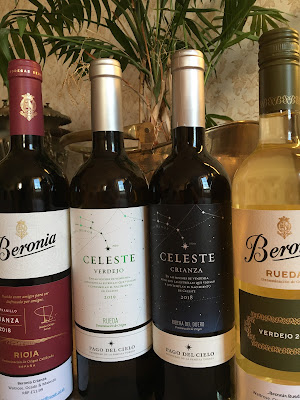
A Spanish red and white from Beronia and Torres

If it feels like wines from Spain have been getting more interesting and diverse for as long as you can remember, that's probably because they have.


How did Spain go from Rioja, sherry and inexpensive rustic reds to a vibrant and dynamic country with more Michelin-starred restaurants than France?

The simple answer is democracy, trade and economics.

As Eastern Europe will attest, dictatorships of any political persuasion tend not to produce great wine. In the late 1970s and early 1980s, Spain peacefully and successfully transition into a democracy; by 1986, it was enjoying the benefits of increased trade and rising wealth as a result of joining the European Union.

With lower land prices than in Big Name parts of France and Italy plus plentiful established regions filled with old vines, Spain became a more attractive destination for younger and more ambitious but less affluent winemakers wanting to make a name for themselves.

And a rising tide lifts all boats; inland Spain's harsh, high-altitude marginal climates became a reason to command a price premium rather than simply an expensive place for family-owned  farms to make small amounts of wine.

Bodegas Beronia

Founded in 1973 by friends with a passion for fine food and the shared desire to produce wines worthy of pairing with their culinary creations, Beronia set out to create the perfect blend between tradition and innovation. The Beronia portfolio celebrates the long-standing traditions of the Rioja region, while paving way for a sustainable future.

Beronia Rueda 2020 (£8.99, Waitrose, Ocado, Sainsbury’s)

The grapes are harvested mechanically at night to retain freshness. The fruit is pressed gently in an inert atmosphere with fermentation using selected yeasts and the temperature control for 10-15 days in stainless steel for aromatics and concrete for complexity.

 After 2 to 3 months' ageing on its lees with weekly remuage, the wine is clarified and filtered prior to creating the perfect blend and bottling.

bright pale yellow with green hints; intensely aromatic and herbaceous with mint, fennel, citrus and white pepper; fresh and precise with ripe stone fruits, tropical melon and pineapple fruit, fresh herbs and creamy-leesy savouriness.

Drinks nicely on first opening and gains complexity with aeration.

Good.

Match with pork and sage, garlic and herb roulade or white fish in a herby broth. 

Beronia Crianza 2018 (£11.99, Waitrose, Ocado, Majestic)

Made from selected Tempranillo, Garnacha and Mazuelo grapes. Upon arrival at the winery the fruit was macerated for a few days prior to fermentation. Temperature controlled alcoholic fermentation followed, with the temperature kept below 26ºC. The must was pumped over regularly to extract the desired colour and aromas, then the wine was left for twelve months in barrels made of American oak staves and French oak ends to create the unmistakable “Beronia style”. 

Lastly, the wine was bottled and left to rest for three months prior to release.

deep cherry red with a garnet edge; clean, bright and complex on the nose, with of cherry, raspberry and herbal notes of rosemary and thyme, as well as cinnamon and tobacco; blackcurrant, blueberry, cherry, fig, plum Very fresh vanilla and chocolate. Supple and full.

Improves significantly with aeration and can be cellared.

Good.

Match with roasted red meats, chargrilled chops, Ibérico cured meats and mature cheese. 

Familia Torres

With more than 150 years of experience as winemakers and viticulturists, and eager to experiment with a different terroir, Torres produced their first Tempranillo from the DO Ribera del Duero in northern Spain in 2004.

Celeste Crianza proved such a success, a winery soon followed, named Pago del Cielo in reference to the vines that grow at nearly 900 metres above sea level, and appear to form a magical connection with the heavens above. Celeste Verdejo joined the fold in 2020, and the starry labels on both wines reflect the star-filled sky seen from the winery at night.

Familia Torres Celeste Verdejo 2019 (£12.99 from Wine Direct, Soho Wines, Handford Wines, Signarellis Deli, The Grape to Glass Wine (Wales), Christopher Keiller (by the case))

a new wine from Rueda, known for its crisp white Verdejo

Celeste Verdejo is modern in style and shows remarkable freshness and aromatic intensity. Made from 100% Verdejo, a grape variety exclusive to the region of Rueda, from a wine-making area situated on the highest part of the northern plateau. The vineyards in Villafranca del Duero are on the left bank of a wide river, which meanders its way through the first foothills of the valley amid a landscape of gentle slopes.

The iron-rich alluvial soils contain lots of pebbles characteristic of the riverbed giving good drainage which combined with the continental climate of cold winters and hot summers make this an ideal spot for growing this native white variety.

The grapes are harvested at night, under the star-lit sky to control the temperature and then fermented in stainless steel.

aromatic and intense with herbaceous fennel, anise, white pepper and citrussy pineapple; fresh yet broad with sweet mango, exotic tropical fruits and yellow stone fruits; elegant and harmonious with good underpinnings.

Good.

Fresh and aromatic enough for an aperitif; match with seafood, fresh and fried fish and herbaceous salads

Familia Torres Celeste Crianza 2018 (£12.99 from Waitrose, Cambridge Wine Merchants, Roberts and Speight, Vinvum, TheDrinkShop.com, Wine Direct (Sussex), Noble Green Wines, Connolly’s Wine Merchants (W.Midlands), Lattitude (Yorkshire), Handford Wines)

an expressive Tempranillo from the high-altitude vineyards of Ribera del Duero

Celeste Crianza was the first Torres wine to be produced in the Ribera Del Duero region. The wine is made from 100% Tempranillo, Spain’s most widely planted grape, known locally as Tinto Fino.

The vines thrive in the extremes of scorching summers, freezing winters and mountain winds in the high-altitude vineyards planted in Ribera’s diverse soils. Low yields resulting from conscientiously tended old vines give Celeste Crianza its distinctive depth and complexity.

expressive dark-berry fruit with complex oaky spice, mushrooms and leather; fresh, concentrated and dense with blackberries, black cherries, cassis and black olive; liquorice, vanilla and minty, slightly warming eucalyptus; full and supple with harmonious, perfectly ripe and well-integrated tannins.

Benefits from aeration and will repay further cellaring.

Very Good.

Match with with hearty red meat dishes such as barbecued or grilled steak, lamb chops and sausages.

Saturday, 5 March 2022

The CWB Spain-Off - Crisp Young White And Mature Big Red

An inexpensive Spanish crisp white and mature red from The Co-op

Crisp White and Big Red is the standard pairing for any meal.

A fresh, vibrant white serves as both aperitif and matches with starters such as fish, young cheeses or vegetables.

A big red matches with a substantial main of beef or lamb; if it's mature, it will match with something gamier such as venison or duck.

To avoid paying big money for grand-name appellations, you can seek out better-value wines from less well-known regions to get more wine for your pounds.

Even better, these two bottles from The Co-op are on special offer between February 23rd and March 15th, 2022 and both reduced to £5.

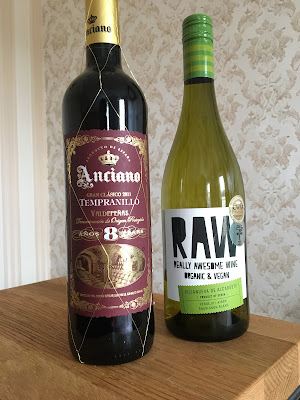
Raw Airen Verdejo Sauvignon Blanc Organic (£8, The Co-op)

A lighter, fresher alternative to entry-level Petit Chablis, Loire white or kiwi Sauvignon.

Airen, Verdejo and Sauvignon Blanc blend; aromatic, floral and peppery with vibrant lemon-lime citrussy zip, gooseberries and freshly-cut grass. Fresh and mineral; light and easy drinking with no rough edges.

Good and Good Value.

Drink as an aperitif or with the lightest of starters - oysters or goat's cheese.

Anciano Gran Clasico 8-Year-Old (£9)

Tempranillo grapes hand picked from 30 year-old vines in late August/early September, 18 months in oak; this is a budget alternative to mature Rioja.

floral and spicy with bramble fruit, fresh with red berry fruits, red berry fruits, plum, tobacco, vanilla, leather and herbs; evolved roasted nuts and old leather.

Thoroughly enjoyable and Good Value for the age.

Match with robust red meat dishes, such as beef bourguignon or venison stew.

Saturday, 29 January 2022

Two Tesco Wines for Valentine's Day

Two Tesco wines for Valentine's Day - pink fizz and Spanish red

Pink fizz is perhaps the most traditional wine for Valentine's Day and spending a few extra pounds on a good Champagne shows you really mean it.

Of course, the reality is that Valentine's falls in the middle of winter when the weather is hardly suited to sitting in the garden and you are more likely to want a steak than a salad for your evening meal

So, here are two wines from Tesco that cover both bases - a good, well-made rosé Champagne to serve as an aperitif or with starters.

Then, a very sophisticated and food-friendly Spanish red to match with a wide range of wintry comfort foods.

Both wines drink nicely on first pouring, but open up with a bit of air, so don't be afraid to open them ahead of time.

The Established Classic - Champagne

If you are buying fizz, whilst there are plenty of good ones around from all over the world, you do need a reason for it not to be Champagne.

And if you are making a gesture, very few people will object to it being that famous northern French fizz.

The Modern Classic - Ribera Del Duero

Ribera Del Duero could be the best Spanish region you've never heard of; whilst Rioja is perhaps the country's most famous red-wine area, Ribera Del Duero is higher and cooler with a harsher, more intense continental climate that results in a structured, concentrated freshness.

The grape is the same as Rioja's - Tempranillo - and geologically the region follows the Duero river that becomes Portugal's Douro, the home of port.

Tesco Finest Premier Cru Brut Champagne Rosé (£23)

a blend of Chardonnay for fruit and elegance with Pinot Noir for colour and weightiness.

red fruits, florality and toasty, yeasty brioche; fresh, ripe, soft red berry fruits, savoury brazil nut and almond and fresh, citrussy sherbet with a fine mousse.

Good.

Serve as an aperitif or match with seafood starters, lighter prawn curries or salmon dishes.

Tesco Finest Ribera Del Duero, 2019 (£12)

darkly fruited, oaky spice, pencil shavings and florality; inky, intense and concentrated yet very fresh and structured; ripe dark berry fruits, liquorice and sweet vanilla spice; fleshy yet with a muscular core. Well-made, sophisticated and enjoyable.

Very Good.

Match with char-grilled red meats, roast lamb or grilled portobello mushrooms

***** 

 Further reviews: Joanna Simon on the Ribera del Duero: www.joannasimon.com

Saturday, 18 December 2021

Three Christmas Wines - Retro, Old Classic, New Classic

Three Christmas wines - Retro, Old Classic, New Classic

I've long argued that Christmas is not a time for wild experimentation or straying too far out of your comfort zone.

With multi-generational family gatherings, lots of cooking and the general weight of expectation, I prefer to reduce the stress levels by keeping wine choices fairly simple.

The most straightforward approach can be simply to have slightly better versions of what you normally drink - with plenty of it to go round.

Here are three wines for Christmas that meet that requirement and should keep all-but-the-fussiest of drinkers happy.

The retro choice - pale cream sherry

Sherry has been enjoying something of a revival, but pale cream remains an anomaly.

Stuck in something of a time-warp, pale cream was only created as a category in the late 20th century but remains something that only one's parents or even grandparents drink.

Essentially a sweetened fino, it is an easier sipper than bone-dry sherries, but like its darker, more complex sibling Cream Sherry, it has not quite managed to shake off its "Maiden Aunt" image, which is a pity as it is a lovely accompaniment to all sorts of slightly sweeter foods.

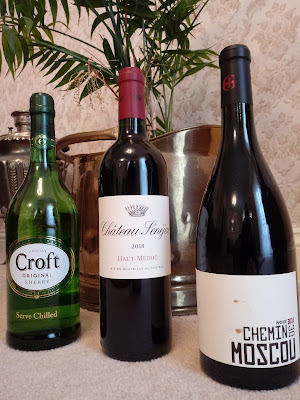
Croft Original Sherry (£12, The Co-op)

yeasty flor, blossom, white pepper and baked white stone fruits; honey, baked apples with sweet spice, white flowers and candied pineapple; warming, substantial, unctuous and complex, yet also mellow and harmonious.

Good.

Serve as a strong-sweet aperitif or match with blue cheese, roasted nuts such as Brazils, melon and parma ham or rich pâté, such as goose liver.

Also consider:

- spicy chorizo or in a Martini in lieu of Vermouth


The Old-School Classic - Bordeaux

Red Bordeaux was my first oenological love and it's a wine I just keep coming back to for its food-friendly, savoury freshness, complexity and aging potential.

Crus Bourgeois are the better wines of the Médoc sub-region of the Left Bank before you get into the stratospheric prices of the Classed Growths; expect just a bit more of everything but without the trophy-wine price tag.

These wine rub shoulders with some of the greatest and most expensive wines you can buy - and it shows.

Chateau Senejac Cru Bourgeois, Bordeaux, 2018 (£17.50, The Co-op)

Vintage matters in Bordeaux perhaps more than anywhere else apart from Burgundy; 2018 is generally considered an exceptional year that favoured the red wines with plenty of warmth.

black cherry and dark plum fruit with complex spice and woodsy sous bois; ripe bramble fruits, raspberry, blackcurrant and plum with minty liquorice and peppery spice; fresh, savoury and supple; long and complex with perfect ripe, very well-integrated tannins

Very Good.

Drinks nicely with plenty of fruit to the fore on first pouring; improves with aeration and has the ability to age.

Match with plain roast red meats or toad-in-the-hole.

The New Classic - Languedoc

From Europe's wine lake to perhaps France's most exciting and innovative region. And almost certainly once of its best-value areas, also scoring well for reliability given its plentiful sunshine.

Languedoc just keeps getting better and better.

Domaine Gayda's first vintage was less than 20 years ago; this 2019 is two-thirds Syrah with one-third Grenache plus some Cinsault making up the balance.

The wine is aged for 21 months in oak in a range of sizes and ages.

Domaine Gayda Chemin de Moscou 2019 (£25, Cambridge Wine Merchants and other independents)

dark purple with complex dark fruits, scrubby garrigue herbs, spice and leathery sous bois; full, supple and fresh with an inky texture, red and black fruits, violets, complex spices and cool mint; plush yet firm; harmonious with well-rounded tannins. Very long.

Very Good.

Drinks nicely with plenty of fruit to the fore on first pouring; improves with aeration and has the ability to age.

Match with garlic-and-rosemary lamb or chicken with a sage-and-sausagemeat stuffing.

***
The first two wines are currently on special offer at The Co-op until January 4th, 2022 :

Croft Original Sherry - reduced to £10.50 
Chateau Senejac Cru Bourgeois, Bordeaux, 2018 - reduced to £16.50

Wednesday, 8 December 2021

Strong And Sweet for Christmas - From The Co-op

A sherry and port from The Co-op

Personally, I can happily drink both sherry and port all year round. But Christmas is an especially good time to have a couple of bottles on hand.

Dry, tangy fino sherry is a great accompaniment to the shorts of cold-cuts, nuts, cheeses and general lunches-from-leftovers meals that are often a staple of the post-Christmas period.

With its ripe fruit, alcohol and sweetness, port is rather more of a cold-weather drink than a summery one; it has the strength to stand up to mince pies and Christmas pudding, or can just be sipped after an expansive meal in your favourite armchair.

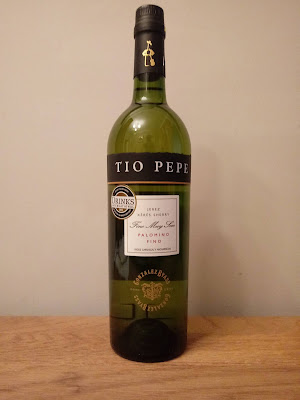
Tio Pepe Fino (£11)

Made from palomino grapes, grown on Albariza soils, fermented to dryness, then fortified lightly for strength, placed in barrels where flor grows and imparts a distinctive tang and finally blended across years via the solera method, sherry is one of the world's great wines.

Complex, elegant and versatile, it is a great match for food; neutral and strong enough not to be overpowered.

pungent with aromatic, floral chamomile; fresh, citrussy and briney-yeasty, with melon, white stone fruit, green apple, brioche, pastry shop, salty almond-and-brazil-nut savouriness; broad, long, complex and elegant.

Good.

The classic match for fino is slices of jamon with machego and bread with olive oil; but it will match almost any collection of "assembled food" meals.

Taylor's Select Reserve Port (£10.75)

Like sherry, port is a wine that has been fortified to keep it stable on the historically long sea voyage from Iberia to England.

Traditionally foot-trodden to extract more colour, flavour and preserving tannins, it is partially fermented then fortified whilst some residual sugar remains to preserve sweetness whilst adding strength.

Ruby is the entry-level of ports, a lighter, younger-drinking wine and whilst "Reserva" historically had no official status, it now indicates a premium ruby port approved by the IVDP's tasting panel, the Câmara de Provadores.

This has everything you want from a port; fruit, spice, warmth and sweetness. It's a lot of wine for not much money. 

red, black and sour cherries, eucalyptus and oaky spice with prunes, raisins and liquorice; sweet, warming and supple with very fine, well-integrated tannins.

Thoroughly enjoyable and good value.

Sip as a digestif; drink with mince pies or chocolate and cherry torte.

---***---

Both wines are currently on special offer at the Co-op:

Tio Pepe Fino is reduced to £10 from December 1 - 14, 2021 and Taylor's Select Reserve Port is down to just £7.50 for the same period.

Tuesday, 16 November 2021

Two Leftfield Whites from The Co-op

Two delicious whites from the Co-op, from unusual grapes / locations

Name a classic, food-friendly white wine and Chablis, kiwi Sauvignon or Pinot Grigio may well be amongst the first  that spring to mind.

These two leftfield wines from the Co-op are classic grapes / wines that are a little bit less common and therefore  slightly leftfield.

This means that:

- they are slightly better value than well-known wines from Big Name Regions
- they are good enough to please anyone who just wants "a glass of something nice"
- they are unusual enough to be interesting, but also classic enough to command respect

Some dinner party facts:

- Viognier's spiritual home is the northern Rhône, where it make very expensive Condrieu
- it almost became extinct, but has seen a revival in fortunes and is now grown all around the world
- it like lots of sun and tastes of ripe peaches and apricots

- not all Rioja is red; white Rioja can be made from local indigenous varieties Viura (aka Macabeo), Malvasía and Garnacha blanca
- CVNE (COO-nay) is the Compañía Vinícola del Norte de España, a family winery founded in 1879 in Haro, La Rioja

Yalumba Y Series Viognier, 2020,  Australia (£9)

All Yalumba Viogniers are fermented using wild yeasts which add extra character and complexity to the wines.

white flowers, white pepper and stone fruit; waxy yet crisp with peach, apricot and pineapple fruit, some grapefruit and lemon pitch; honeysuckle and minerality with good, savoury underpinnings. 

Match with spicy and rich dishes such as a Sri Lankan vegetable or chicken curry.

Good

Cune White Rioja, 2019 Spain (£9.50)

A blend of Viura and Malvasia

golden sandy yellow. ripe, fresh citrus, orchard fruit and galia melon; fresh clean acidity; pure with long saline minerality. Elegant, substantial and deft.

Good.

A versatile food wine, match with roast white meat, pasta in creamy sauces or meaty white fish.

Both these wines are reduced by £1 from 10 November to 30 November 2021 inclusive.

Here's a recipe to match with the white Rioja: Spanish chicken supreme with spring vegetables recipe - BBC Food


Friday, 12 November 2021

Light & Elegant Wines from North-West Spain with Tim Atkin

Three wines from North West Spain with Tim Atkin MW of Three Wine Men

Tim Atkin MW talks through three outstanding wines from Castilla y León, one of Spain’s most diverse wine-producing regions - and increasingly one of its most exciting.

Castilla y León is Spain's north west is the largest autonomous region in the country; north west of Madrid and formerly the northern part Old Castille, it is on the central Spanish plateau, known as the meseta, whose limestone soils suggest it was once a sea or lake.

The region has 9 DOs and 4 DOPs, is home to old vines and indigenous grape varieties and is defined by its geography and climate:

- altitude, some of the highest vineyards in Europe on a high plateau
- continental climate, cold winters and hot summers with large diurnal variation
- castles dominate the landscape, big skies and wide vistas, beautiful piercing light
- the Duero river runs through the region
- the main grape varieties are Tempranillo and Verdejo

Tim says: “After tasting through an appealingly diverse set of wines from Castilla y León, I’m delighted to have the chance to show three of my favourites from this extensive and extremely varied region.

Tim's picks are a new wave Ribera del Duero red, a Ruedo Verdejo from 100-year-old vines and a rare Albillo Real from Cebreros.

Tim introduced the wines along with the winemakers and provided tasting notes.


Cuatro Rayas Viñedos Centenarios 2020, Rueda

Rueda is a successful and growing region, specialising in Verdejo; it has changed dramatically since creation as an appellation in 1980, previously growing Palomino made a sherry-style wine

Verdejo has the aromatic acidity of kiwi-style Sauvignon, but the fruit is more peachy.

The winery was founded 1935 as a co-op with over 300 members; it has some of the oldest vines in the region, some over 100 years; 100% Verdejo, 15% in French oak, 85% in stainless steel, matured in stainless steel with battonage; 

white flowers with fennel aromas, crisp and elegant, fresh and silky

Arrayan Albillo Real Granito 2020 Cebreros

750m altitude, sandy and granitic soils, formerly a bulk wine area; the Albillo Real grape is local to the area, producing small berries with golden skin, low acidity, early maturing, hand harvested; thin skins but with low rainfall and early harvesting, there is no risk of rot 

Grown on sandy-pebbly soil, they tread the grapes by foot, 3 days' skin contact, spontaneous fermentation in stainless steel, aged in waxed tinajas for seven months with no malolatic fermentation in order to preserve acidity

fresh and mineral with honey flavours and the textural grip of an amber wine; flinty saline-minerality with sweet vanilla


Páramos de Legaris 2017, Ribera del Duero

The region is all red wines, all from Tempranillo, but with very varied soil types including clay, sandy and pebbly with altitudes from 50m to 1,000m. Historically, it was considered too cold for making wines, but early-ripening Tempranillo is suited to the climate.

The winery aims to show the freshness of the wine, aged in old oak for 11 months, unusually high 15% alcohol; late frosts in April reduced yields, giving very high concentration, followed by very hot summer with harvesting a month earlier than usual; they sought to harvest as late as possible for flavour, leading to the high alcohol levels.

red and black summer berries, with dried prunes and soft, well-integrated tannins.

This was the popular favourite of the tasting.

Wednesday, 13 October 2021

A Miraculous Wine - Made by Jesus. Bodegas Pirineos Moristel Principio

A rare wine made by Jesus - Bodegas Pirineos Moristel Principio

Have you ever had a wine made by Jesus?

Chances are you may well have done as it's actually not an common name in Spain; many years ago a friend used to pick up the phone and ask for Jesus, then chat to his Spanish colleague whom he then correctly addressed as "hay-SOOS".

This wine has an even more extraordinary story to tell; the grape variety, Moristel, is grown only in Spain's Somontano region in Aragon at the foot of the Pyrenees and is rarely bottled as a varietal wine, making this is one of very few bottlings of 100% Moristel to be found anywhere in the world - just 5,000 bottles produced, from vines averaging 20 years of age.

The Moristel grape was on the brink of extinction before Somontano was granted DO status in 1984. Bodegas Pirineos is responsible for 700 hectares, nearly a quarter of the Somontano DO, of which just 40 hectares is planted to Moristel.

Grape characteristics are red fruits, strawberries and raspberries, to tea, honeysuckle, and aromatic hops. Moristel offers good acidity and relatively high alcohol. It’s a little wild and rustic at first, so give it half an hour to breath for the fruit to really shine through.

The wine is named ‘Principio’ meaning ‘origin’ or ‘source’ denoting a return to one’s roots by working with the local cultivar. Moristel Principio is the very essence of its environment. The grapes ripen in the blazing Spanish sunshine, cooled by the mountain winds, and nourished by the mineral rich sandy loam soils.

Despite these conditions, Moristel can be difficult to grow successfully. It requires a committed, but low-intervention approach, both in the vineyard and the winery.

The wine is fermented with natural yeast and left unwooded, unfined and unfiltered, with minimal sulphur.

Jesus Astrain, the winemaker at Bodega Pirineos, puts the success of this wine down to working the vineyards according to their potential and selecting the ideal grapes, citing the potency of the fruit and its acidity, with carefully selected natural yeasts reinforcing the concept of terroir and the typicity of the area on this unique variety. 

Bodegas Pirineos Moristel Principio, 2019 (£11 - £12, Les Caves de Pyrene)

funky-pungent  aromas; refreshing and vibrant with cranberry, sour cherry and soft red-berry fruits, red plum, pomegranate with ginger and rhubarb; black pepper, ginger and liquorice, vanilla, soft tannins / nutmeg clove and cedar; sappy, minty & herbal. Vibrant, expressive and distinctive.

Good.

Improves with some air; drink young and slightly chilled.

Match its refreshing vibrancy to meaty dishes, especially slow cooked lamb stews, Moroccan tagines or meaty fish, including salmon, tuna, or swordfish.

Also available at:

- Eden Fine Wines (W, Yorkshire)
- Legs Wine (E9)
- The Good Wine Shop (TW11)
- The Good Wine Shop (W4)
- Gnarly Vines (E17)
- Clapton Craft (SE23)
- Clapton Craft (E17)
- Clapton Craft Online Forest Wines (E17)
- R S Wines (Bristol)
- Wolf Wine (Bath)
- Fourteen Drops Online
-  Burgess and Hall (E11)
- Yardarm (E10)

Friday, 24 September 2021

Three Wines for #InternationalGrenacheDay

Three Grenache-based wines for #InternationalGrenacheDay

Historically a blending variety, Grenache is starting to make a name for itself more as a front man than merely dance-at-the-back hanger-on. Think New Kid on The Block gone solo.

Grenache is a widely-planted, sun-loving grape from the Mediterranean; somewhat counter-intuitively, it is reducing in quantity just as it is increasing in quality. The reasons for this are varied, but mainly because Grenache can be both a prolific producer of inexpensive fruity quaffers (for which demand is declining) as well as something much more sophisticated and complex when properly handled.

Fruity and thin-skinned, Grenache is not generally a wine for oaking or aging; as a varietal wine, it tends to be pale, fruity and ripe with high-ish alcohol. For this reason, it is often blended with some Syrah for colour and Mourvèdre for tannins.

Here are three Grenache / Grenache-based wines for #InternnationalGrenacheDay - or just any coolish, late summer evening.

Yalumba Samuel’s Collection Barossa Bush Vine Grenache 2018 (£17.99, Wine Direct, Latitude Wine Merchants (Yorkshire), Amazon, Vagabond, The Specialist Cellar, Cambridge Wine Merchant, Australian Wines Online, Frazier’s Wine Merchants, Flagship Wines, Richard Granger, Voyageurs du Vin, House of Townsend, Vinotopia)

100% Grenache from Australia’s oldest family-owned winery, a lighter-style Grenache showcasing bright Barossa Grenache at its best. It has bags of flavour and character yet easy drinking for those who might ‘prefer white’, as well as being food friendly with lighter foods you might normally have with a white wine to richer style dishes that work with a typical red. 

pale in the glass, almost Pinot-esque; wild strawberries, leather, complex oaky spice and herbaceous, minty sage; fresh red berry fruits, eucalyptus, sappy, savoury and warming-spicy.

Drinks well on first pouring and continues to improve with aeration.

Good.

Match with spare-ribs or pork pie; will work well with mushroom based dishes

Delicious on its own as an aperitif. Try it served lightly chilled.

Torres Salmos 2017 (£21.99, Fareham Wine Cellar, Vinvm, Rannoch Scott Wines, Winebuyers, Hedonism Wines, Sandham Wine Merchants)

Garnacha, Cariñena, Syrah blend that pays homage to the monks of the intrepid Carthusian order, who arrived in Priorat in 12th century, renowned for its steep impoverished rocky slopes of black slate-like ‘licorella’ soils, which gives the wines its ‘graphite’ or mineral character.

dusty, dried sour cherries, tarry black fruits, plums and forest berries with toasty / grilled flavours, licorice and anise, leather and sous bois, cedar, cocoa and spices; supple, harmonious and well-structured. Complex, concentrated, inky and long.

Very Good.

Still very youthful at four years; needs several hours' in the decanter or several years' cellaring to show its best.

Match with plain roast red meat - or venison when mature.

Vidal-Fleury Vacqueyras 2018 (£27.99 from Wadebridge Wines, Great Grog Bottle Shop, Whole Foods Market, TheDrinkShop.com)

50% Grenache, 45% Syrah and 5% Mouvedre matured for 18 months in both tank and foudre from the oldest continuously operating winery in the Rhône.

dark fruits, fresh cherries, florality, complex spice and cassis; red and black fruits, violets, mint and dried green herbs with rounded, plush tannins; fresh, full, supple and savoury with excellent underpinnings and a gentle-yet-firm grip.

Very Good.

Needs some aeration and will repay cellaring.

Match with roast leg of lamb with sage, rosemary, and thyme, or mature cheeses.


***

More on Grenache from WSET:

Understanding grapes spotlight on Grenache | Wine & Spirit Education Trust (wsetglobal.com)

Monday, 6 September 2021

Three Summer-Holiday Wines from Tesco

Three "summer-holiday" wines from Tesco - classics from France, Italy and Spain

My idea of a perfect summer holiday involves getting in the car and driving to France, Italy or Spain for sunshine, outdoors living and lovely food and wine plus a bit of exploring and cultural history.

Since that was never really a serious option this year, I spent time with he family discovering new parts of our home country, even if they are more famous for their beers, rainy weather and seal rather than sun-kissed beaches, yachts and dusty lavender scents.

However, being unable to drive to sunnier climes doesn't have to mean no foreign-holiday vibes; you just need to be more imaginative about arranging it all from home. And be prepared to eat indoors.

France

The Loire is home to impressive chateaux and is an easy top-over on the way south from Calais.


Tesco Finest Pouilly Fume 2020 (£13)

temperature controlled fermentation for aromatics, followed by 6-12 month fine lees ageing for savoury complexity

aromatic and musky-pungent; fresh gooseberry, melon, white stone fruit and citrussy lime with creamy minerality; intense adept and concentrated.

Very Good.

Match with a goat's chees tart starter, herby pork terrine or white fish in a parsley broth.

Italy

Gavi is made from the Cortese grape in Italy's north west region of Piedmont, a region which includes the city of Turin and the foothills of the alps, where there are truffles and game to be found.

Think of Gavi as akin to an entry-level white Burgundy and you won't go far wrong - a versatile, and food-friendly relatively neutral wine.

Tesco Finest Gavi 2020 (£8.50)

This wine sees some old oak and has a little lees aging for complexity.

floral and citrussy; apples and pears, white stone fruits and sherbetty citrus freshness with good underpinnings and savouriness. Clean, pure and elegant.

Very Good and Good Value.

Match with a range of starters, meaty white fish such as sea bass or roast pork; also lighter game such as guinea fowl or partridge.

Spain

High-altitude oak-aged Tempranillo from Ribera del Duero. Local foods here include roast veal or lamb, roast suckling pig, morcilla (black pudding), roasted meat with wine, ox steak with garlic, chorizo omelette and rabbit.

Tesco Finest Ribera Del Duero, 2019 (£12)

darkly fruited, oaky spice, pencil shavings and florality; inky, intense and concentrated yet very fresh and structured; ripe dark berry fruits, liquorice and sweet vanilla spice; fleshy yet with a muscular core.

Very Good.

Match with char-grilled red meats, roast lamb or grilled portobello mushrooms


*****

Further reviews:

Tuesday, 17 August 2021

Warm Weather Wines from Familia Torres. And Some Spanish Food

Summer wines from Spanish producer (with vineyards in Chile) Torres

Here are some wines to have on standby this summer from Familia Torres; bubbles, crisp white, aromatic white, barbecue reds, rosé and something sweet.

The  accompanying food was from Brindisa, my "winnings" from a world cup sweepstake in which I drew Euro champions Italy. It consisted of tapas foods, such as olives, almonds, chorizo, cheeses, breadsticks and jamon.

A perfect set of simple but delicious tapas-style food for matching with a range of wines.

Everything here was very enjoyable indeed and good value.

Estelado Rosé, Chile (£13.99 Thedrinkshop.com, VINVM, Vivino, Soho Wines)

Miguel Torres Estelado Rosé is one of Chile’s most innovative sparkling wines. Made entirely from Pais, Chile’s oldest grape variety. Planted by many small farmers, the variety was long forgotten, and undervalued until Torres rediscovered it for making quality wines.

Made using the traditional method with second fermentation in the bottle.

pale pink with fresh wild strawberries, redcurrants and yeasty brioche; elegant and mineral; very pure and clean.

Good.

Serve as an aperitif or match with light starters such as shellfish.


Vina Sol 2020 (£7.50 Tesco, Waitrose, Sainsburys, Morrisons, Asda and Co-op)

Made from Parellada (with a touch of Garnacha Blanca), the white grape traditionally used to make sparkling Cava wines, here it shows beautifully as a still wine.

The grapes are cool fermented in stainless steel for fresh fruitiness.

aromatic and citrussy with white pepper and lime zest; fresh and lemony with white stone fruit and a persistent minerality. Very harmonious and adept.

Good.

Light enough for a summer sipper, match with fish and chips, sushi, soft white cheeses or even spicy Thai. 

Also available in an environmentally friendly 2.25-litre bag-in-box, which will fit easily in a fridge – the perfect format for summer months.


Vina Esmeralda 2020 (£9, Tesco)

Made from a blend of Moscatel and Gewürztraminer, off-dry with expressive floral characters and tropical fruit aromas.

orchard fruits, white stone fruits, orange blossom and pear drops with tropical melon, pineapple and lychees; lime marmalade and honeysuckle; crisp, refreshing and light.

Good.

Serve well-chilled as an aperitif or with appetisers such as avocado and shellfish or melon with ham or with grilled fish.


Vina Sol Rosé 2020 (£7.99, Waitrose, Ocado)

Vina Sol Rosé 2020 is the pale raspberry pink sibling to the classic Vina Sol. Made mainly with Garnacha and Carinena, it’s fragrant and sensual, with notes of redcurrant and a lovely spicy, pink peppercorn finish.

strawberries and white pepper; delicate red berries, crunchy orchard fruits and fresh, crisp citrus; concentrated and long with good underpinnings. Fresh, delicate and balanced.

Good.

Light enough for impromptu sunny alfresco lunches; match with charcuterie and tapas, cold chicken and pasta salads.


Sangre de Toro 2019 (£7.50 Tesco, Sainsburys, Asda)

First made in 1954, this red is all about the Spanish way of life. It’s the one with a eco-friendly bull on the bottle, representing Spain’s culture. Made from native Spanish grapes, Garnacha Tinta and Carinena, selected from vineyards throughout the region, gives this red its spicy notes and delicious fruit.

black fruits, dried prunes, cherry and toasty-oaky spice with some liquorice, dried herbs and cocoa; good structure with juicy fresh acidity and very gentle tannins. Some aged complexity and savouriness. 

Thoroughly enjoyable.

Match with barbecue and picnic foods, duck liver pate or roasted red meats, smoky cheese, or any tomato-based dishes.


Floralis Moscatel Oro (£8.99 Waitrose, Ocado, Morrisons)

Floralis Moscatel Oro is one of the Mediterranean’s most characteristic dessert wines made since 1946. Luscious, clean and crisp, with lovely honeyed and acacia flavours and naturally sweet and an unmistakable floral perfume of roses, geranium, lemon and verbena.

Floral and aromatic with raisiny cooked mixed fruits, sweetness and lemony ginger beer and verbena.

Good.

Serve well-chilled and match with almond tart, or a flaky pastry Pastels de Natas with its rich custard filling served warm or anything chocolatey to finish of a perfect summer night dinner under the stars.

*****

Tom Cannavan makes the Floralis Moscatel Oro his wine of the week, here: Review of Torres Floralis Moscatel Oro wine - YouTube

Wednesday, 4 August 2021

My Sherry Amour - M&S Very Rare Dry Oloroso Sherry

A heavily marked-down M&S dark sherry, made by Lustau

My sherry amour,

Lovely on a summer's day

- My Cherie Amour*, Stevie Wonder (1969)

At a summer garden party, a beer-drinking friend-of-a-friend observed that that every time we bump into each other socially, I seem to be drinking sherry.

Why sherry? he asked.

The obvious answer is of course: why not? But I felt something more considered was needed.

Establishing that he did not really want chapter-and-verse on sherry production, but simply a short list of reasons, I gave him this:

- sherry has very high acidity, so it is very refreshing

- it has no primary fruit flavours, so is highly versatile

- it is fortified to a higher alcohol level, so can stand up to foods

- it is aged for years in soleras so is complex, harmonious and mellow

For food matching, just go by the colour:

- paler sherries match with lighter foods, such as olives, bread and oil and manchego

- darker sherries match with roasted foods, such as roasted almonds, roast beef or roasted vegetables.

If you want to do the food matching properly, the mantra is:

- If it swims, Fino

- If it flies, Amontillado

- If it runs, serve Oloroso.

In my case, I had brought along a half-bottle of M&S VORS Oloroso. It had been marked down to under £2 at a local M&S branch so I had picked up as many as I could physically carry, stuffing them in coat and trouser pockets.

It is fresh enough for an aperitif, especially well-chilled, but comes into its own with some slightly charred barbecue foods, such as burgers.

At home, match it with a starter of roasted almonds and toasted ciabatta with olive oil, followed by a griddled steak.

Very Rare Dry Oloroso Sherry (£9, marked down to £1,79, 37.5cl, Marks & Spencer)

deep brown, with nuts, coffee, nutmeg, old leather roasted almonds and dried apple, apricot and prunes; charred cedarwood,  toasted hazelnuts and exotic citrus peel with fresh acidity. Complex and adept.

Good.

*OK, possibly slightly misheard

Bottle shot courtesy of Erik Burgess.

*****

The website sherrynotes give the following information on oloroso

Oloroso is aged in the absence of flor, in an oxidative way and starts from a selection of heavier, more full-structured musts than a Fino or Manzanilla (sometimes a second pressing of grapes).

After fermentation the young wines are evaluated and the ones with a thicker body will be destined for maturation as Oloroso sherry. To create an Oloroso the base wine will be fortified to 17 or 18 degrees which makes it impossible for flor yeasts to survive in these casks.

Due to evaporation known as merma (about 3-5% in volume each year), the resulting Oloroso will grow more concentrated to around 20-22 degrees.

Oloroso means fragrant and the best examples will display dried fruits, leather, polished wood and exotic spices; nutty aromas (especially walnuts), combined with polished / balsamic notes, subtle dried fruits, toasted hints, tobacco and autumn aromas. There are noticeable spicy notes in older examples. Often there are also subtle meaty hints, truffle and leather.

Though naturally dry, the relatively high strength and full body of an Oloroso (caused by glycerol) will give it an impression of roundness and even sweetness.

It may be lightly sweetened by adding a bit of Pedro Ximénez (Amoroso or Abocado sherry), but this practice is much rarer than it once was.

The classic pairing for an Oloroso would be red meat and game, but it will also be lovely with well-aged cheese. It is served around 12-16°C.