Popular Posts

Showing posts with label France. Show all posts

Tuesday, 30 August 2022

The CWB Fizz-Off

Three non-Champagne fizzes

Let's get fizzical, fizzical*

- Physical, Olivia Newton-John (1981)

Cambridge-born Olivia, like the Bee Gees before her, went off to Australia then made it big in the US in the late '70s.

I'd like to think she would have approved of this fizzical line-up.

Nozeco (£3.25 - £4.00, Tesco, Sainsbury’s, Asda, Morrison and Co-op)

An alcohol-free Prosecco lookalike, it is made from flavoured de-alcoholised wine from Spain; it is vegan and has fewer calories than regular wine. It costs less, too.

It sits somewhere between a sophisticated elderflower lemonade and a decent entry-level Prosecco, albeit without the alcohol, and has an IWSC Silver medal.

foams enthusiastically; elderflower, orange blossom and citrussy bergamot; crisp and refreshing with lemon-lime, sherbet and florality

Well-balanced and thoroughly pleasant.


Tesco Finest Prosecco DOC (£8.50, Tesco)

Made by Cantine Maschio using selected yeasts and aged for around one month at a controlled temperature of 12-15°C to preserves the fruit aromas.

Frothy, floral and citrussy; orchard and white stone fruits, sherbet, refreshing citrus and salinity. Crisp, clean and elegant

Well-made and thoroughly enjoyable.

Serve as an easy-drinking, crowd pleasing aperitif or with the lightest of canapés.


Gratien & Meyer Crémant De Loire Rosé NV (£12 , Tesco)

Founded in 1864, Gratien & Meyer are one of the leading producers of Cremant (traditional method sparkling wines) in the Loire. These are produced in the same way as Champagne, but sell for much less, making them a great value alternative for celebrations and special occasions.

A blend of Pinot Noir, Chardonnay, Chenin, Cabernet Franc.

yeasty, biscuity brioche, creamy oatmeal and white pepper with citrus, florality and red berry fruits. Adept, with complex, savoury underpinnings.

Good.

Serve as an aperitif or match with shellfish, lighter curries and picnic foods such as hams, quiches and chicken drumsticks.


*lyrics may not be 100% correct.

***

Other reviews:


Friday, 19 August 2022

New York Chardonnay Show-Down

New York State Chardonnays vs the rest of the world

"Showtime!"

- Mr Incredible, The Incredibles (2004)


Crafted in New York, but inspired from everywhere, New York is a unique community of passionate producers who approach winemaking with a multitude of personalities and backgrounds—they’re not alike, and they like it that way.

Wine has been made in New York since the 17th century and its unique history of hybrid cultivars paired with an increasing amount of planted Vitis vinifera has positioned the region as one of the most diverse and resilient.

In New York wines you’ll find subtlety, depth and nuance; it’s no surprise that they’ve found a place on the global stage, alongside other great wine regions of the world.

These tasting took a look at New York’s star varieties side by side with other great wine regions of the world, exploring the common threads as well as the varied approaches to viticulture and winemaking.

New York wines

Chardonnay has a relatively long history in New York state, being one of the first grape varieties planted there and making a name for itself from the 1970s onwards, but today remains somewhat in the shadow of Riesling and Cabernet Franc.

Fox Run Vineyards, Doyle Family Chardonnay 2020 Finger Lakes, NY ($14, seeking distribution in the UK)

Founded in 1990, an hour's flight from the ocean, it has a continental climate; on the same latitude as Rioja and Tuscany, it suffers from spring frosts however bud-break is late. 8% Traminette in the blend for some "fruit salad" character; no oak or lees aging, made from purchased fruit that enjoys afternoon suns.

Easy-drinking and popular wine that does well in the restaurant trade.

citrus and orchard fruits; white stone fruits, green apple and pears; lean, sinewy, fresh and harmonious.

Well-made and thoroughly enjoyable.

Wolffer Estate, Perle Chardonnay 2019 Long Island NY ($32, Seeking distribution in the UK)

Based in The Hamptons, Long Island with a moderate maritime climate; milder winters, no spring frosts and cooler summers. On the same latitude as Madrid and Naples, giving plenty of sunshine for ripening and a long hang time for minerality and elegant fruit.

Small-cluster vines for even ripening, barrel fermented, canopy management and air flow reduce diseases and give long hang time. Hand picked and pressed immediately with 48 hours' skin contact, fermented in 90% new French oak with around 8 months on the lees and almost no battonage. 

bruised apple, white stone fruits and florality; orchard fruits, creamy-leesy roasted brazil nuts and oatmeal, saline minerality and orange peel; rich, complex and savoury, long and elegant.

Very Good.

Nathan Kendall, Chardonnay 2020 Finger Lakes, NY ($33, Master of Malt, Whisky Exchange, 9 Elms Wines)

West-side grapes with morning sun, 50yo vines; hand picked and foot-stomped for phenolic extraction, spontaneous fermentation in old barrels with 11m aging on lees and no stirring, partial malo

bruised orchard fruits, toastiness and florality; fresh with zippy lime, citrussy acidity and spice; saline-mineral with good texture, delicate finesse and elegance.

Very Good.

Chile

Errazuriz Wines, Aconcagua Costa Chardonnay 2019 Chile (£17.50, Ocado, Noel Young Wines, Hop Cellar)

Modern style, full-bodied with reductive winemaking, 45% malo, 100% old oak.

aromatic minty herbs, zippy lime and struck match; refreshing lime marmalade, gooseberries and greengage with minty vanilla, honeysuckle citrus, orchard fruits and nutty, leesy complexity.

Very Good.

New Zealand

Villa Maria Wines Taylors Pass Chardonnay 2019 (£15.99, nzhouseofwine)

Awatere Valley fruit, 100% barrel fermented, 50% wild ferment, full malo with 11 months on the lees.

struck match, fresh orchard fruits and bruised crab apple skins; fresh, linear and precise with green apple, lime zest, white stone fruits and broad savouriness

Very Good.

France, Chablis

Jean Durup, Chablis 2021 (€16, not currently available in the UK)

From the difficult 2021 vintage, no oak influence, cool climate, kimmeridgian soils.

citrus, lemongrass and rubbed sage; fresh and saline with honeydew melon, white stone fruits, lime zest and honeysuckle; broad and savoury with leesy oatmeal.

Very Good.

***

Image credits: Susana Kawai

Further reviews:

Susana Kawai: Food with Susi on Instagram: "Chardonnay Show Down - New York State of Wine Have you tried a Chardonnay from New York State? In a glance: The climate is continental…"

The Buyer: The_Buyer on Twitter: "Part 2 @TheBuyer11 importers debate with @NYWineGrapeFdn producers looks at the wine styles that buyers think have the most potential to do well in the UK and why the region has much to offer with cool climate, fresh, pure fruit forward, acid driven wines https://t.co/6gyKZZE5mF https://t.co/hbBn4u3RFJ" / Twitter

Wednesday, 3 August 2022

Two Rosés from Tesco

Two Provence rosés from Tesco

Provence is to rosé as Champagne is to fizz; the standard against which all other wines are judged - for better or worse.

As a result, Provence rosés can command a significant price premium, especially if they are celebrity endorsed; however, the good news is that these two are keenly priced, albeit you do pay a little extra for the Studio's star credentials vs the Tesco own-label.

And a note on the power of branding for those who think it is all about the liquid inside the bottle; I offered these around the table in the garden on a sultry summer's eve. "Anyone want want some Brangelina wine?" I asked.

"Ooh, Brangelina wine, yes please, I'll have some of that!" said Mrs CWB, grabbing the bottled and enthusiastically filling up glasses for herself, her sister and the other ladies around the table.

In that context, a tasting note is somewhat redundant here - this is an enjoyable pink from a sun-kissed part of France made by a glamorous Hollywood power ex-couple and that's all you really need to know.

Tesco Finest Provence Rosé (£9)

This elegant and refreshing Provence Rosé is carefully sourced from picturesque vineyards that spend the year basking in the Mediterranean sun. Delicious stone fruit flavours are balanced with notes of fresh strawberries and redcurrants to create this crisp, delicate and dry wine with its signature pale pink colour. Pairs perfectly with seafood and antipasti.

red berry fruits, delicate mint and watermelon; white stone fruits, conference pears and red berries with white pepper, sweet spices and a leesy richness; broad and harmonious with good underpinnings

Drinks nicely on first opening.

A summer sipper, it will match well with picnic foods or cold cuts

Studio by Miraval (£12)

Blend of equal parts Cinsault, Grenache, Tibouren and Rolle (aka Vermentino); all the varieties are vinified by direct pressing.

The Cinsault and Tibouren in Stainless steel vats. The Grenache & Rolle are partially vinified in tulip-shaped concrete vats with a rounded bottom. This ovoid shape gives rise to a natural convection movement that suspends the lees creating the same effect as a batonnage and gives the wine a lot of structure.

very pale, slightly toasty; soft red-berry fruits, citrus and white fruits, white pepper and leesiness with saline minerality; elegant and pure.

Well-made and thoroughly pleasant.

A pleasant sipper, match with picnic food.

Tuesday, 2 August 2022

The Regional Wines of Louis Latour

Four regional Burgundies from Louis Latour

Maison Louis Latour is a family-owned business, one of the most highly regarded in Burgundy. They have been making excellent value wines in a similar style from their vineyards in regional appellations very successfully for many years.

While prices for top Burgundies have increased steadily for many years now, these regional wines are more affordable.

The Ardèche Chardonnay and Bourgogne Gamay have plenty of easy-drinking ripe fruit; the Macon-Lugny and Terrasses Pinot Noir are more classically elegant.

Louis Latour Ardèche Chardonnay 2019 (from £12, Ocado, Bon Coeur Fine Wines)

Louis Latour arrived in the Ardèche in the late 1970s, as they looked outside of Burgundy to find alternative sources of high quality, everyday priced Chardonnay. They pioneered the planting of Chardonnay vines here, in what at the time was a relatively unknown area. Attracted by the hillside clay limestone rich soils, a consistent climate, abundant sunshine to perfectly ripen the grapes and a drying Mistral wind eliminating the risk of rot, all proved Ardèche to be the perfect place. Today, they have 350 hectares of vines under contract to local growers.

The grapes for Ardèche Chardonnay are treated as if they were grown in the prestigious vineyards of the Côte d’Or and vinified Latour’s winery in Alba. Louis Latour Ardèche Chardonnay 2019 is a fresh and appealing wine with considerable depth of flavour.

stone fruits and florality; orchard fruit, apricots, honeysuckle and sweet, slightly toasty spices; leesy brazil nut and good savoury underpinnings. Adept and harmonious

Good.

Serves as an aperitif; match with poultry, fish, and charcuterie.

Macon-Lugny Les Genievres 2020 (£17.99, Bon Coeur Fine Wines, Hennings Wine, House of Townend, North and South)

Mâcon-Lugny Les Genièvres, one of Louis Latour's best-selling wines, is from the top vineyards in the Mâconnais region. Mâcon-Lugny was introduced by Louis Latour, with the support of the successful Lugny cooperative, offering a very respectable alternative for a white Burgundy. Lugny is in the most southerly part of the Mâconnais where it borders Beaujolais, on land at 235-380m elevation, with limestone soils and the advantage of warmer days which gives the wine a refreshing, but riper fruit profile.

This is 100% Chardonnay, made without the use of oak, and produced from grapes grown in Les Genièvres vineyard on the northeast side of the village.

stone fruits, melon and honeysuckle; ripe pears, white peaches and melon with creamy-leesy oatmeal and spice; complex, broad and saline; very elegant.

Good.

Perfect with smoked salmon or simple grilled fish but with enough depth to work with a delicious plate of charcuterie or a simple pasta dish.

Louis Latour Bourgogne Gamay 2020 (From £16, Ocado, Majestic, North and South Wines, TheDrinkShop.com)

Bourgogne Gamay became a new regional appellation in 2011, a place that sits between the northern heartland of Burgundy and the sprawling Beaujolais vineyards to the south. Whilst technically part of Burgundy, the lighter, fruitier Gamay used in the wine must come exclusively from the best ‘Cru’ villages of Beaujolais Crus, which are situated on the granite hillsides in Northern Beaujolais. Louis Latour’s approach is to produce a wine which focusses on fruit and freshness with consistent quality, whilst still possessing the attractive characteristics of Burgundy.

On the nose this wine is more immediately fruity than a traditional pinot noir. Its light, crisp juiciness also makes it and a fine chillable red.

red and black cherries, violets and roasted spices; supple and inky with ripe cherry fruit, savouriness; good underpinnings and rounded, very fine tannins.

Good.

Match with charcuterie or grilled / roasted red meats.

Louis Latour Les Terrasses Pinot Noir 2019, (£15 Ocado)

Louis Latour have been growing Pinot Noir in the Var for over 30 years, creating, and producing wonderful reds from clones and rootstock imported from Burgundy. The conditions in the South of France are acceptable for this difficult grape variety with plenty of warm sunny days during the summer months and cooler temperatures at night.

The vineyards, at 500 metres above sea level, are a similar altitude to the finest Grand Crus and their southern exposure gives the grapes perfect maturity at the same time as the Grands Crus of Corton.

lifted red berry fruits, spices and mushroomy woodsiness; red and black cherries with savouriness, peppery spice, minty dried herbs and very fine tannins.

Good.

Match with ham or turkey, grilled red meats such as lamb, or salmon.

Friday, 29 July 2022

Two Provence Rosés

Two rosés from Provence

Sun is in the forecast and what better way to take your summer days to the next level than with a glass of inimitable Vins de Provence rosé?

Whether you’re enjoying an al-fresco lunch in the garden with friends, hosting a sophisticated dinner party, or celebrating a special occasion with loved ones, a bottle of refreshing Vins de Provence rosé is sure to make summer moments even more perfect.

Crisp and elegant, and always presented in a chic bottle, these premium rosés are the epitome of class and the true taste of style. Delicious as an apéritif or alongside a variety of cuisines, ranging from fragrant Asian curries to simple grilled seafood, a sip of Vins de Provence rosé will bring that little bit of Provençal warmth and sea breeze to wherever you are. 

Try a wine from each of the three beautiful appellations – Côtes de Provence, Coteaux d’Aix-en-Provence and Coteaux Varois en Provence – to experience all the variety and sophistication that Vins de Provence has to offer.

Château Saint Maur Cru Classé, Saint M, Côtes de Provence, 2021 (£14.48, Vinatis)

Saint M from Château Saint Maur is elegant and refined, with peach, raspberry and gooseberry aromas. A well-balanced rosé, from vines that have been grown in clay limestone soil.

red fruits, florality and white pepper; saline and broad with red fruits, melon, orchard fruits, some zippy lime and brazil nut creaminess; complex and savoury.

Good.

Match with salmon tartare or fresh Greek salad


Domaine de Valdition, Vallon des Anges, Coteaux d’Aix-en-Provence, 2021 (£12.93, Vinatis)

Located in the Alpilles area, this winery covers 240 hectares of breath-taking countryside. From these organic vines comes a stunning pale rosé, which is highly complex and has plenty of minerality. 

delicate red fruits, grapefruit and hints of fennel; saline with white stone fruits, melon and lime; broad and textured.

Thoroughly enjoyable.

Serve as an apéritif, or match with sushi, marinated fish or prawn skewers.

Saturday, 23 July 2022

The CWB Franco-Spanish Production-Method-Off

Four production-method wines from France and Spain, via Co-op and M&S

A friend recently asked me for some advice on arranging a wine-tasting; beyond the usual basics, I suggested it might be interesting to have a theme, such as a grape, region or other feature of the wine.

I have done themed tastings around aged Bordeaux, Iberia and the Americas as well as production method wines (i.e. wines whose character derives more from the they they are produced than from grape varieties).

For this line-up, I pulled out one of my own purchases to compare fizzes from France and Spain as well as two different types of sherry.

With a few exceptions, production method wines tend to be from either very cool climates (Champagne or England) or very hot climates (Andalusia, Douro, Madeira).

When asked about my favourite wines, my standard answer is: mature wines, production method wines and cool-climate wines. Essentially, I really like older, cool-climate wines that taste of something more than mere primary fruits.

All of the wines in this line-up are defined by their production method - for the fizz, it is secondary fermentation in bottle on the lees, which provides a food-friendly leesy complexity (as well as the bubbles).

For the sherries, it is the blending across years and growth of flor in the barrel which imparts a tangy dryness; in the case of Manzanilla, the flor character is more evident due to the cooler conditions where it is produced. For Amontillado, the flor is allowed to die away and the wine ages oxidatively acquiring complex roasted flavours of nuts and spices.

We started with the sherries as pretty much the perfect aperitif, matched to simple, tapas-style starters of chorizo, roasted almonds, manchego, olives and bread with home-made mayonnaise.

The fizzes were opened with a continent-hopping main course of chicken Thai green curry.

The sherries

Barbadillo Solear Manzanilla (£10.99, Waitrose, £9.50 Ocado - also in half-bottles, see footnote)

Made in Sanlucar de Barrameda, using both cooling ocean breezes and cool air current from a bend in the Guadalquivir river to grow the flor to optimum thickness and impart more flavour to the wine, Barbadillo is a family company and one of the great names of sherry.

pungent with pastry shop, camomile, almonds and hazelnuts; fresh and savoury with oatmealy leesiness, saline minerality, white fruits and white pepper; elegant and adept with very good underpinnings.

Good.

A versatile food wine, match with Andalusian tapas or any salty foods such as salamis, olives and hard cheese.

Very Rare Amontillado Sherry (£9, marked down to £1,79, 37.5cl, Marks & Spencer)

deep brown, with nuts, coffee, nutmeg, old leather roasted almonds and dried apple, apricot and prunes; charred cedarwood, toasted hazelnuts and exotic citrus peel with fresh acidity. Complex and adept. 

Good.

Match with roasted almonds or roasted / char-grilled beef.

Fizz

Champagne is the benchmark style of sparkling wine and it commands a hefty premium for the name; Spain's cava, by contrast, is working hard to match its pricing to the improved quality and cost of production.

Cava Sumarroca Gran Reserva 2017

Good cava is one of the wine world's great bargains; this one is made using the Traditional Method with three years' lees ageing for complexity by a family-owned house .

lemon peel, roasted hazelnuts, white flowers and leesiness; fresh, citrussy and poised with lemons and limes, creamy-nutty leesiness and saline minerality. Harmonious and long, very adept and elegant.

Good.

A versatile wines. serve as an aperitif, match with mixed starters or mains such as fish and chips or green Thai curry.

Les Pionniers Vintage Champagne 2013 (£27, The Co-op)

Made only in the best years, Vintage Champagne should be left at least 10 years before opening. On that basis, this one is a little young, but is showing well now and has plenty of life ahead of it.

golden sandy yellow with complex orchard fruits, bruised apple, citrus fruits, melonskin and toasted brioche; dense, concentrated and fresh with a fine mousse, citrussy lemon curd and lime marmalade, orchard fruits with red berries and savoury-leesy oatmeal, creamy brazil nut and saline minerality. Complex and long.

Very Good.

Match with lighter game or seafood-and-pastry such as prawn vol-au-vents or salmon-en-croute.

***

Half-bottle of the Barbadillo Manzanilla:

- Wine Society £5.95

- Loki Wine Merchants £7.99,

- Banstead Vintners £6.99

- Latitude Wine Merchants £7.50,

- Rannoch Scott £6.19

- Sandham Wines £6.20

- Vintage Cellars £6.50

- Gusto Wines £6.60

- The Whisky Exchange £6.76

- Mumbles Fine Wines £6.95

- Oxford Wine Co £7.25 

plus many other good independents.

Friday, 8 July 2022

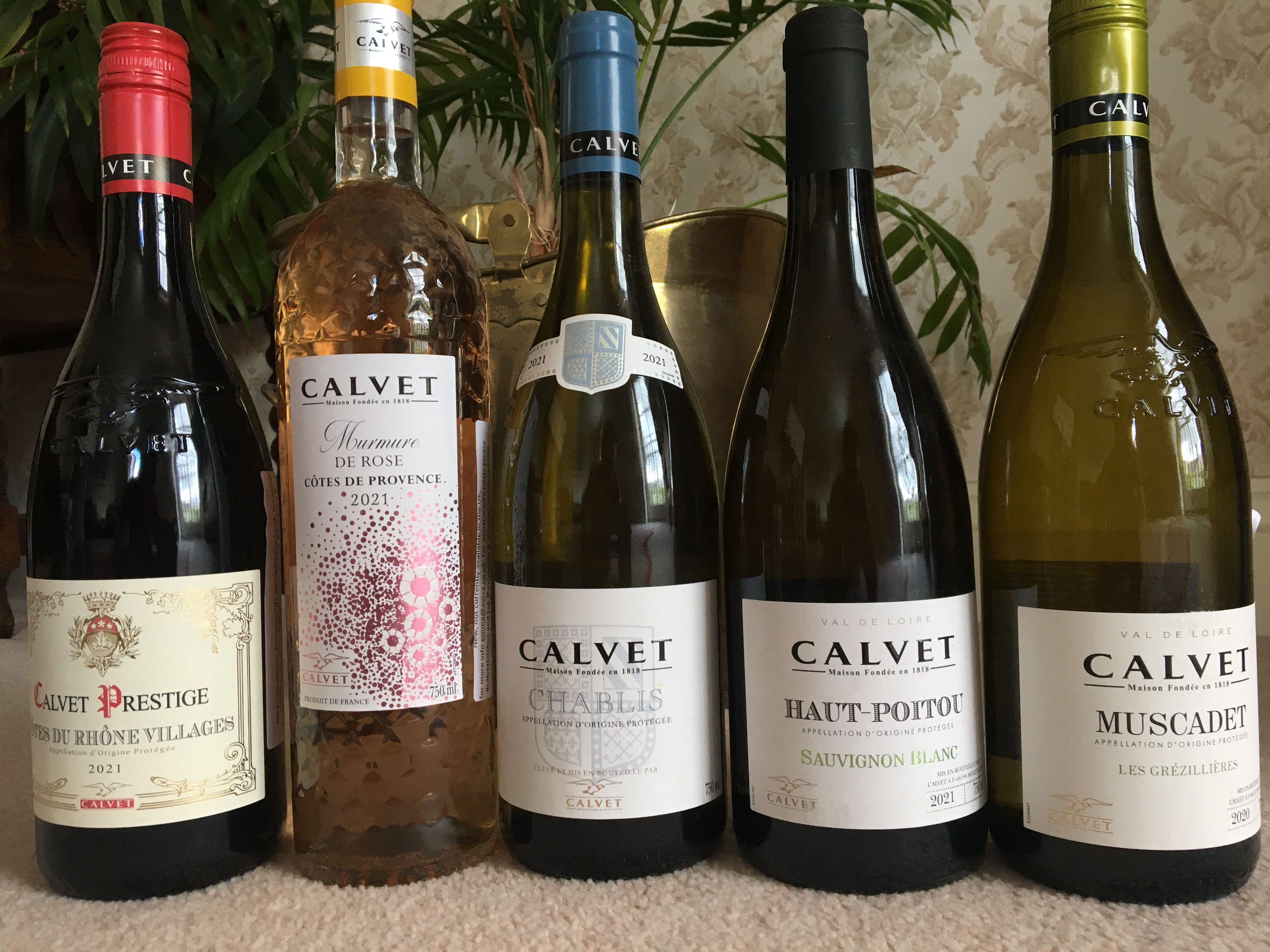
Calvet Kitchen

Six wines from France's Calvet - and the Calvet Kitchen experience

If you know Calvet's wines, it is probably for their range of easy-drinking and inexpensive Bordeaux. And if you don't, you probably should, as they are the largest French wine brand in the UK and the UK is Calvet's largest market.

But Calvet turns out to be a lot more than just Bordeaux; established over 200 years ago, the company makes wine in almost all of France's major regions.

Calvet Kitchen is a food-and-wine matching initiative to pair regional French dishes with Calvet wines; which is, after all, when French wine is all about.

With 64 winemakers in 7 regions, Calvet is a diverse business and yet all the wines here had a family resemblance that reflects Calvet's aims - an elegance and easy-drinking freshness with plenty of food-friendly mid-palate.

These wines all drink well on first pouring, but also open with aeration and have the body and complexity to stand up to food.

Loire-based winemaker Pierre-Jean Sauvion explained his approach:

- quality of fruit

- balance of fruit and freshness

- food-friendly salinity

The wines were all of broadly similar quality and, the Chablis aside, price, so preferences come down largely to personal taste.

Of the whites, I enjoyed the Chablis most, but given the price difference, the Muscadet makes a good value alternative.

Of the other colours, the CdRV was the most substantial and interesting.

The Calvet Kitchen playlist archive is here:

Calvet Kitchen | Meet Guillaume Lassevils, chef in the Bordeaux region - YouTube


Calvet Muscadet 2020, abv 12%, (£5.95-7 Sainsbury’s, Tesco, Co-op)

Grown on warmer sandy soils, resulting in more ripeness in the wine.

minty and floral with tropical fruit; fresh, rounded and saline with pear and white stone fruits

Thoroughly enjoyable.

Match with seafood and freshwater fish.


Calvet Haut Poitou 2021, abv 11.5%, (£10.99 Waitrose)

A new appellation to the south of the Loire around an hour from Saumur, it was created in 2011 but has a long history dating back to the 14th century. The soils are part of the same chalk limestone that runs under Champagne and moderates the water table which is key to the condition of the grapes.

Loire Sauvignon with a new world nose, but old world palate.

expressive and exuberant; gooseberries, exotic fruits and mintiness; juicy citrus, ripe green fruits and herbaceous, minty, zippy lime,

Thoroughly enjoyable.

Matches well with fresh tomato-based dishes.


Calvet Chablis 2021, abv 12%, (£20 Ocado)

Grown on chalk soils with 80% fermented in stainless steel for freshness and 20% in barrel for complexity.

stone fruits, peaches an dapricot; green apple and grapefruit, with lemon zest, fresh coriander and salinity.

Thoroughly enjoyable.

A versatile food wine, serve as an aperitif or match with starters and lighter mains.


Calvet Murmure de Rose Côtes de Provence 2021, abv 12.5% (new)

Newly-launched in the UK; night-picked for freshness with a short maceration; fermented in stainless steel for freshness.

red fruits, mint and spice; fresh, fruited and textured with red berries and salinity.

Sip as an aperitif or match with picnic foods.

Calvet Prestige Bordeaux Red 2020, abv 14%, (£7.50-£8.50 Sainsburys, Ocado, Co-op, Tesco)

80% Merlot with 20% Cabernet

red and dark berry fruits with vanilla spice; fresh with juicy, ripe and fleshy berry fruits; fine tannins and leafy, savoury, mushroomy flavours

Thoroughly enjoyable.

Match with red meats, such as bbq burgers or char-grilled steak.

Calvet Prestige Côtes du Rhône Villages 2021, abv 14%, (£7.50 Tesco)

Classic Rhône GSM blend

dark fruits and spices with garrigue herbs; substantial, fresh and supple with gentle tannins; harmonious and adept

Thoroughly enjoyable.

Match the freshness to meaty fish, such as salmon or rare tuna steaks.

Friday, 1 July 2022

Six Centre Loire Wines

Six Centre Loire wines

There's an old saw in the wine trade about punters who declaim: I never drink Chardonnay but I love Chablis.

I've heard this story many times from retailers and educators but I have never actually heard the statement uttered by anyone.

And while it may be fun to laugh at the nonsense that people say, or are reported to have said, there is actually some truth in the idea.

Chablis is, of course, made from the Chardonnay grape, so at face value the statement is nonsense. 

However, "Chardonnay" was for a long time the varietal labelling of many an overripe, over-oaked New World wine, so there can indeed be a valid distinction between a cool-climate, steely wine with "Chablis" on the bottle versus plonk from some antipodean Creek or Gully labelled as "Chardonnay".

Today's equivalent to this may well be: I never drink Sauvignon but I love Loire whites.

New Zealand Sauvignon took the aromatic potential of the great Loire grape and turning it up to 11 discovered the 21st Century's first proper darling - for a while, at least. The combination of cool maritime climates, extended skin contact and temperature-controlled stainless steel fermentation resulted in a pungent expressive white with as much subtlety as Robin Williams after too many glasses of orange squash.

And just as Chablis remains the OG for Chardonnay, Loire whites have a timeless, classic complexity and sophistication this is neither as as in-yer-face and thrillingly modern as Marlborough c. 2004 nor as dated now either.
These six wines from Centre Loire - the middle section of one of France's great rivers -  show what this region can do in terms of colour and price.

Of the whites, right now, the entry-level wine from Coteaux du Giennois (no, me neither) is drinking best, but given a couple of years the more ambitious Pouilly-Fumé and Sancerre will round out and become more harmonious. If you must drink them young, match with some food and give them plenty of time in the decanter.

The Quincy has a warmth and heft that demands weighty foods.

The rosé is an elegant and complex Pinot Gris while the red from Menetou Salon red is an atypical Pinot; darker, leafier and less farmyardy than Burgundy. Tasted blind, I would have guessed Cab Franc.

Coteaux du Giennois, Taste the Difference 2020/2021 £11.00 (Sainsbury’s)

100% Sauvignon Blance with some aging on fine lees.

lifted aromatics, lemongrass, mint and fresh green herbs; citrus, melon and orchard fruits with flinty, slatey minerality, leesiness and good underpinnings.

Drinks nicely on first pouring.

Good.

Match with goat's cheese or seafood starters.


Pouilly-Fumé, Domaine Chatelain 2020/2021 £16.99 (Waitrose)

100% Sauvignon Blanc from vines aged 30 - 45 years; aged on fine lees.

flinty herbaceous nose with grapefruit pith; saline mineral with citrus, melon, ripe white stone fruits and green apple; zippy lime marmalade ; elegant, concentrated and very adept.

Improves with aeration and will repay some cellaring.

Very Good.

Match with white fish, seafood or pork terrine.

Sancerre, Château de Crézancy 2020/2021 £19.99 or £17.99 mix six (Majestic Wine)

100% Sauvignon Blanc aged on fine lees until April of the following year

flinty with stone fruits and honeysuckle florality; white peach, citrus, grass, pear, and yellow bell pepper with wet stone minerality, lemongrass, grapefruit and lime; complex with leesy, brazil nut savouriness and good underpinnings.

Improves with aeration and will repay some cellaring.

Very Good.

Match with goat's cheese or mackerel paté salad.

Quincy Vieilles Vignes Domaine du Tremblay 2020 £14.50 (The Wine Society)

100% Sauvignon Blanc with some aging on fine lees.

baked spiced apple and lemon meringue pie; warming, weighty and viscous with dried orchard fruits and yellow stone fruit, sweet spices, creamy brazil nut, persistent savoury leesiness and saline minerality.

Drinks nicely on first opening, but improves with aeration and will repay some cellaring.

Match with weightier dishes such as roast pork or pasta with a creamy mushroom sauce.

Reuilly Rosé Les Chatillons, Denis Jamain 2020 £15.95 (BBR)

100% Pinot Gris with three hours of skin contact and five months of fine lees aging.

delicate red berry fruits, florality and savoury leesiness; fresh, citrussy, saline and supple with ripe white stone fruits, orchard fruits, melon and a touch of warming sweet spices.

Improves with aeration.

Very Good

A versatile food rosé; match with weightier picnic foods such as cold cuts, quiche

Menetou Salon red, Domaine Chavet La Cote 2020 £16.99 (Virgin Wines)

100% Pinot Noir grown on Kimmeridgian soil of fossilised oysters; aged in vats and large oak foudres.

dark translucent purple; red and black berry fruits, raspberry leaf, and spicy-savoury miso; fresh and minty-herbaceous with juicy red and black cherry fruit, soft berries and spice; concentrated and supple with very fine tannins. Very deft and accomplished.

Very Good.

***


Chris Kissak's review of Quincy Vieilles Vignes Domaine du Tremblay: Domaine du Tremblay Quincy Cuvée Vieilles Vignes 2020 • Winedoctor (thewinedoctor.com)

Sunday, 29 May 2022

Four French Rosés For Summer

Four rosés for summer

Some people make the mistake of having rosé in the summer.

Others know better and drink it all year round.

Either way, summer is rosé season and International Rosé Day is on 11 June.

Here are four well-made and inexpensive rosés from France - look away now, label snobs; there is nothing from Provence here, but that just makes these wines better value.


La Belle Angèle rosé 2021 (£8.99 / £6.99 mix six, Majestic)

A Vin de France made with a blend of grapes including Grenache and Cinsault from both the Languedoc and the Gers in the South of France. Aged for just a few months in vats means this wine is fresh and full of strawberry bon bon flavours and floral aromas, as well as being a pretty, delicate pink colour.

La Belle Angèle was a famous muse for many of the French Impressionist painters in the Belle Epoque renowned for her beauty and joie de vivre. 

raspberry and redcurrant fruit, white pepper, saline minerality and good underpinnings. Rounded and elegant.

Thoroughly enjoyable.

Match with barbecues, salads or just sip outside in the garden.


Abbotts & Delaunay, Fleurs Sauvages, Pays d’Oc, Grenache rosé 2021 (£9.99 / £8.99 mix six, Majestic)

A new wine from the Abbotts & Delaunay Collection. Thanks to the work in the vineyards that respect the soils and the vines, healthy, concentrated grapes can be harvested whilst respecting the wild flowers (fleurs sauvages) and other wild life that surrounds them.

Made from 100% grenache grapes coming from the Hérault plain and the Aude to create a wine which is fresh, pale Provence pink and bursting with strawberry and raspberry aromas with a touch of minerality.

delicate red berries and florality; crisp, fresh and saline-mineral with soft red fruits; elegant, harmonious and refreshing.

Thoroughly enjoyable.

Serve as an aperitif on a sunny day in the garden or match with sushi or a warm chicken salad.


Calvet rosé d’Anjou 2021 (£8, Ocado)

Lower in alcohol at 11% making it good for summer drinking, this rich salmon coloured rosé comes from the Anjou region of the Loire Valley and is made from a blend of Cabernet Franc, Grolleau and Gamay grapes grown on clay/schist and clay/limestone soils.

expressive strawberry, raspberry and redcurrant flavours with watermelon, green apples, white peach and fresh citrus; hints of hazelnut and mint.

Thoroughly enjoyable.

Refreshing and light enough for an aperitif, a great barbeque wine, match with seafood or quiche.

Fleurs de Prairies, AOP Luberon, 2021, £8, Morrisons - or £2.25 for a 1/4 bottle)

Made from a blend of 45% Syrah, 46% Grenache, 5% Vermentino, 4% Ugni Blanc grown in clay and limestone soils on the slopes of the Luberon in the southern Rhône Valley which is becoming increasingly popular for its rosés.

This pale pink wine comes in a pretty bottle decorated with the fleurs de prairies or the wild flowers; lavender, poppies and sunflowers which carpet the Luberon in the South of France.

sweet strawberries, rose petals, citrus and tropical fruits with white pepper and mint; saline and mineral.

Thoroughly enjoyable.

Ideal as an aperitif accompanied by a platter of Proscuitto and Mozzarella.

Sunday, 22 May 2022

Supermarket Crisp White And Big Red

An Austrian Crisp White from Morrison's and Big Red from Lidl

Bordeaux was my first oenological love - we had taken a weekend break to northern France in the car and decided to bring back a few bottles with us. They cost the equivalent of a few pounds each and I had plucked them off the shelves pretty much at random, but back home every bottle we opened was at least thoroughly enjoyable if not rather better and I realised that I actually liked wine (or French wine bought in France, to be specific) a lot more than the generic UK-brewed beers and lagers I had previously consumed.

Not long afterwards, I took on a high-travel role that saw me visiting Vienna most months; to fend off the boredom of endless evenings with just a newspaper's business pages for company in one of the world's great cities, I started eating (and drinking) at slightly better restaurants and developed a taste for Michelin-quality food and high-end Austrian wines.

It's easily done when the company is paying for you.

So, Austrian Gruener and red Bordeaux remain my go-to for a brace of enjoyable wines to accompany a meal.

I met Markus Huber a couple of times at various tastings and was impressed by the quality of his wines - for Morrison's to get his wine and stock it at around £7 is no mean feat.

This purchase was a chance find - I happened to be in Morrison's and it happened to be marked down by a few pounds; I now wish I'd bought more, but I can say that of many wines in my makeshift cellar and I still have more than I can get through.

The Lidl Bordeaux was recommended by Richard Bampfield MW; I have reviewed it previously, but the 2017 now has a bit more bottle age and can be viewed with some perspective.

I bought  a case each of the 2016 and 2017 when they were on special offer; the '16 is the better vintage but the '17 being lighter and fresher is ready for drinking sooner (on this tasting, it will still benefit from a few more years).

I decanted the red around an hour before the meal; with hindsight, this was too little. It can take (and will benefit from) several hours in the decanter to soften the tannins and allow the fruit to come to the fore.

The Gruener was chilled and aerated; it shows well on first pouring and doesn't require decanting, but  it does improve greatly with more air.

Morrisons The Best Gruner Veltliner 2019, Niederoesterreich (£7.50, Morrison's)

citrus, orange blossom and honeysuckle, stone fruits, white pepper and crushed slate; crisp and fresh with lemon-lime, pineapple, fresh yellow stone fruits and orchard fruits; white pepper, minerality and some dried green herbs.

Thoroughly enjoyable.

A versatile food wine, match with picnic foods, a wide range of starters, meaty white fish or roasted white meats.

Lidl Saint Emilion Grand Cru (£11.99, Lidl) 

bramble fruits, plums cherries and pencil shavings with oaky spice; soft and supple with cherry fruit coffee grounds and spice; firm, slightly grippy tannins.

Thoroughly enjoyable.

89 points from Richard Bampfield for the 2016 vintage.

Match with midweight dishes, such as pork rillettes, salami or roast chicken.

Thursday, 19 May 2022

The CWB Sauvignon Blanc Off

Two very different Sauvignon Blancs - Loire and New Zealand

Sauvignon Blanc is perhaps somewhere at the "late majority" stage in its life cycle - selling in larger quantities than ever, but a bit, well, passé for the ultra-cool urban hipsters in search of the latest thing.

I'll be honest, even I don't drink that much Sauvignon these days.

And that's not because I don't like it. 

I do like Sauvignon; I like its crisp freshness, its aromatics and minerality; I like the way it responds the places it's grown in and the way it is made. It is a wonderful grape.

Yes, it's cool to be down on Sauvignon for being synonymous with "generic pub white", but when it's well made with character and individuality, it is a refreshing, complex and food-friendly mouthful.

Sauvignon's classic regions are the Loire and New Zealand; and it traditionally makes very different styles of wine in each region.

Loire Sauvignon is where it all started with that steely-flinty-smoky thing, while New Zealand is the new classic with its aromatic, zesty and tropical vibe.

Ultimately, it's a Old World palate vs New World aromatics distinction.

Both these wines are equally good on a technical level, so it really comes down to personal preference.

The Old World One

Domaine Jacky Marteau Touraine Sauvignon Blanc 2019 Touraine AOC (£15 / £13, Avery's)

Touraine is situated next door to the Loire's Central Vineyards which includes renowned Sancerre and Pouilly Fumé. Touraine Sauvignons tend to be much better value.

Domaine Jacky Marteau is a fourth generation estate founded by Gérard Delaunay, the current owners' maternal great grandfather. Passed down the line, it has been run since 2010 by Rodolphe Marteau and his sister Ludivine.

Their vineyards on the left bank of the river Cher are ideal for Sauvignon. Picking at the peak of maturity and cool fermenting in stainless steel vats ensure lovely ripe fruit with super charged freshness.


gooseberry, grapefruit and citrus with nettles, cut grass, flintiness and a hint of white pepper; full and supple with green apple, grassiness, elderflower and melon fruit; deft and elegant with good savoury underpinnings.

Drinks nicely on first opening, but improves with aeration and will repay some cellaring.

Good.

Match with seafood or goat's cheese.

The New World One

Smith & Sheth CRU Sauvignon Blanc 2021 (£17, Tesco)

Smith & Sheth Cru Sauvignon Blanc, from Wairau, New Zealand, is made by Steve Smith MW, one of New Zealand wine’s most respected figures, and Brian Sheth, an investor and wildlife conservationist with a strong love for New Zealand.

They share a passion for fine wine and seek out the finest grapes from exceptional vineyards, crafting wonderful wines which show a sense of place, subtleties, and precision. 

Cru Sauvignon Blanc is made using the best grapes from two vineyards in Marlborough. A combination of machine and handpicked fruit, from mature vines grown in rocky soils around the town of Renwick is blended with biodynamically grown grapes from the cooler clay hillside of Churton vineyard.

Fermented at cooler temperatures in stainless steel, with a small portion wild fermented in oak.

gently pungent with lifted aromatic lime, grapefruit, grassiness and lemongrass with exotic fruits and pebbly sea spray; fresh lime juice, gooseberry, white stone fruit, guava, white pepper and citrus with linear acidity and saline minerality; concentrated, precise and complex.

Good.

Match with asparagus and goats’ cheese, meaty white fish, such as halibut, monk fish or bbq roasted prawns with a salad.

***

The Smith & Sheth CRU is also recommended by Joanna Simon, who says:

A cracking New Zealand Sauvignon Blanc; crackling with energy, flavour and texture. From a mature vineyard on gravelly soils around Renwick and a biodynamic vineyard on cooler, clay slopes in the southern valleys.

Saturday, 7 May 2022

A(nother) CWB Chardonnay-Off

Three very different Chardonnays

This is not my first Chardonnay-Off rodeo; far from it, in fact.

There has been the Southern Hemisphere one, the International one, the Southern French Oaky one and the Adelaide Hills one.

Chardonnay is The Beatles of wine grapes; among both the most accomplished and most popular performers, it is the one that inspired so many others and remains the standard against which many are judged.

This Chardonnay-Off highlights the variety that this grape can show - different countries, different price points and different ages.

It is also a great food wine; match with starters, white meats, meaty white fish and creamy mushroom pasta.

Entry-level Chardonnay is a great picnic wine; with more age and complexity, match with lighter game.

All three wines here drink nicely on first pouring, but open up and improve with some aeration.

Australian Limestone Coast Chardonnay, 2021 (£5.99 / £4.49 on offer, Lidl)

Australia's Limestone Coast is a catch-all appellation for several regions within South Australia; it was once underwater and as a result, the soil is fossil-rich, hence the name.

Lidl wines are generally priced extremely keenly, so special offers like this are a good excuse to stock up, not just for immediate drinking, but also for laying down, provided you have space and can wait.

restrained citrus and stone fruit aromas with some florality; ripe yellow stone fruits, melon and zippy lime with sweet spices and creamy brazil nut

Thoroughly enjoyable and Good Value.

Can be aged for a few years.


Petaluma Chardonnay, 2020 (£16.00, Tesco)

Based in the cool-climate region of Adelaide Hills, Petaluma is one of the great names of Australian wine, producing Burgundian-style Chardonnays.

citrus, white flowers, stone fruits and complex oaky spice; fresh, elegant and poised with preserved lemons, melon fruit, pineapple pieces, sweet spices and zippy lime marmalade; broad complex and generous with saline minerality. Poised and precise.

Very Good.

Can be aged for many years.

Pernot-Belicard Bourgogne Chardonnay 2012 (£17, Cambridge Wine Merchants)

Philippe Pernot and his wife (from the Belicard side) launched their own domaine in 2009, with just six hectares of vines in Puligny. They pick quite early, all by hand, with hand sorting at the cellar.

This wine was a fire-sale bargain picked up by Cambridge Wine and sold at a discount to market price.

sandy yellow with roasted spices, stone fruits, florality, and evolved musty leather; savoury-creamy toasted brazil nut, almonds and macadamia with citrus, orchard fruits and stone fruits; complex, oaky, roasted spices; fresh, complex, broad and generous.

Very Good.

Fully mature, but will remain at a peak for several more years.

Saturday, 23 April 2022

Two Languedoc Whites from Foncalieu

Two vibrant and refreshing Languedoc whites from Foncalieu

Foncalieu make lovely, inexpensive wines in France's Languedoc with as much attention to detail to the presentation as there is in the winemaking.

These two wines are no exception.

I have tasted earlier vintages of the Iberian-grape-in-France, Albariño Sillages, and worked my way through the Versant range with the rosé (which I liked a lot) and a Pinot (which I thought was OK, but nothing special).

Before the wines themselves. first a bit of history from the company's website

Backstory

Les Vignobles Foncalieu are a union of cooperatives anchored in the heart of Languedoc.

Our territory stretches from the Corbières massif to the banks of the Mediterranean, from the Mistral- swept hillsides to the sun-caressed plains between Carcassonne and Béziers. It is in the heart of these landscapes, situated between ocean and mountains, that all our wine- growers tend to our 4,000 hectares of vines every day in order to offer

Foncalieu the high-quality grapes used to produce exceptional wines.

A cooperative with strong values since 1967, our 650 winegrowers cultivate team spirit, authenticity, innovation and a shared passion, all of which have led Foncalieu to be named as one of the 50 most well-known brands of wine in the world by the trade magazine Drinks International in 2017.

Les Vignobles Foncalieu stretch across 4,000 hectares between the Cité de Carcassonne and the Canal du Midi, two UNESCO World Heritage Sites. This vast territory characterised by a mosaic of terroirs and denominations has enabled the development of a wide range of wines, most of which are labelled PDO and PGI of Languedoc.

The largest and oldest wine-making region in the world is also a land of culture, art and gastronomy, characterised by mild winters and hot summers. Its multitude of terroirs swept by the Tramontane and the sea wind stretches from the Pyrenees to the Mediterranean, offering a wide palette of grape varieties from Carignan to Malbec, and Roussanne to Sauvignon.

The colour, nose and mouthfeel of a Languedoc vary considerably according to its terroir, the varieties used in the blend, the yields practised, the quality of the soil and the climate of the preceding year. By mastering our terroir and selecting plots that we believe extraordinary, we produce fine Languedoc wines, including the Atelier Prestige collection and the Château Haut-Gléon wines labelled PDO Corbières and PGI Vallée du Paradis owned by Foncalieu since 2012.

We owe our know-how to all these people, who, thanks to their attentiveness and human qualities, have been developing Foncalieu for more than 50 years and have demonstrated their wine-growing spirit. 

From generation to generation, our passion for the vine remains strong. Passing on this passion to the younger generations is at the heart of our concerns so that our wonderful territories endure. The strength of Vignobles Foncalieu lies in the combination of skills brought by all our wine-growers and the various French and international specialist centres.

And so, our teams of agronomists and oenologists work hand in hand with the wine-growers to unveil the potential of each terroir in order to express the immense diversity of wine-growing identities. Enhancing the best plots, mastering the wine cellar and orchestrating the most wonderful blend ensures a noble quality, from the vine to the glass.

This work, aided by cutting-edge technology, is first and foremost a matter of talent. Our many expressions have been rewarded by a host of medals and distinctions and also recognised by the greatest international wine tasters such as Robert Parker.


Foncalieu Pays d'Oc Extraordinaires Sillages Albariño 2021 (£8 - £10, indpendents)

pear drops, citrus, sea-spray and lemon curd; stone fruits, honeysuckle and beeswax with sweet spices and some southern warmth. Saline, mineral and elegant.

Drinks nicely on first pouring; will repay a few more months' bottle age.

Good.

Fresh enough for an aperitif, it will work with a range of starters, such as seafood, white fish and pork rillettes.

Foncalieu Pays d'Oc, Le Versant Sauvignon Bio 2021 (£11, Hennings)

herbaceous, aromatic with lime and kiwi with orchard fruits and exotic passionfruit; fresh and mineral with citrus, lemongrass, blackcurrant leaf and minerality.

Drinks nicely on first pouring; will repay a few more months' bottle age.

Good.

Match with grilled fish with lemon, sushi or asparagus gratin.

Sunday, 17 April 2022

Three Wines from Abbotts & Delaunay

Three wines from French producer Badet Clément

It's a pretty safe bet that anything by Badet Clément will be well-made and enjoyable.

The website explains:

Badet Clément is the story of two winemakers, passionate about the diversity of wines and vineyards, possessed by a love for the earth and a penchant for well-executed work… 

With our feet rooted in tradition, and our hands reaching out to innovation, our company has participated in the revival of wines from Burgundy, the Languedoc, and the Rhône Valley for over 20 years now.

By staying on top of market needs and being attentive to our environment, we consider our cuvées as moments of pleasure for those who taste them. The harmony between the wine, the context, and the people who share in its enjoyment represents our vision of the perfect accord.

With increasingly demanding expectations and requirements, Badet Clément offers wines whose unique character tells the story of their terroirs and the open-mindedness of the professionals who conceive of them, each in its own way.

Keeping an open mind always, means maintaining an unrestricted and creative outlook, interconnecting points of view and ideas, encountering different terroirs and allowing for the expression of different grape varieties.

It is also the starting point for stimulating discussion, lasting partnerships, and innovation. Respectful of the know-how that has been passed on to us and supported by the richness and diversity of our vineyards, it is with integrity and altruism that we instil open-mindedness into each stage of the evolution of wine.

From our corporate culture to the first sip from the glass, our motto is OPEN WINEDED

The two Abbotts & Delaunay wines are both new and will be in-store from Easter 2022 at Majestic 

Abbotts & Delaunay, Fleurs Sauvages, Pays d’Oc, Chardonnay 2020 (£9.99 or £8.99 mix six @ Majestic)

A new wine from Abbotts & Delaunay, which will be landing in Majestic just before Easter and well in time for International Chardonnay Day coming up in May.

Made from a blend of grapes coming from four different regions in the Languedoc; Limoux, the Aude Valley, the Hérault plain and the slopes of the Cévennes mountains to create a wine which is fresh, balanced and complex. 

white flowers, tropical citrus, honeysuckle and sweet spices; melon, pineapple and yellow stone fruit with pear, green apple, some toasty spice with buttery hazelnut; fresh, savoury and long .

Good.

Drinks nicely on first pouring; improves with aeration. Will gain complexity with some cellaring.

A versatile food wine, match salmon fishcakes, pork or chicken dishes or a mild curry, such as chicken Makhani.


La Belle Angèle Pinot Noir 2020, Vin de France (£10.99 or £8.99 mix six @ Majestic)

From the Languedoc in the South of France; the grapes are grown on clay and limestone soils in the plains of the Hérault not far from the sea, between Beziers and Valras-Plage and also from the Minervois.

Subtle and soft, this wine’s juicy flavours of Morello cherry and strawberry mingle with herbs and spices from the region’s Garrigue vegetation.

La Belle Angèle was a famous muse for many of the French Impressionist painters in the Belle Epoque renowned for her beauty and joie de vivre.

red and black cherry fruit, spice and a supple texture; textbook warmer-climate Pinot; fresh, well-made and harmonious

Thoroughly enjoyable

A versatile wine, drink lightly chilled on its own or match with salamis, pates or herby pork rillettes.


Abbotts & Delaunay, Fleurs Sauvages, Pays d’Oc, Malbec 2020 (£10.99 or £8.99 mix six @ Majestic)

30 year old vines grown on the slopes of the Orb Valley in the Hérault, vineyards in the west of the Aude and in the dry salt marsh in Marseillette, each bringing different characteristics to the wine.

Thanks to the work in the vineyards that respect the soils and the vines, healthy, concentrated grapes can be harvested whilst respecting the wild flowers (Fleurs Sauvages) and other wild life that surrounds them.

plummy dark berry fruit and spice; fresh and supple with inky graphite; violets, liquorice, red and black fruits with spicy notes; well-structured and elegant with a persistent finish. Opens up with some aeration and can be cellared.

Good.

Match with charcuterie or rare red meats

Saturday, 16 April 2022

Food and Wine Matching with Kindling Restaurant - Slow Roast Shoulder Of Mutton With Carrot, Tomatoes And Red Wine

A lamb recipe from Kindling Restaurant, Brighton - with some classic wine matches

Kindling Restaurant in Brighton is about more than just the delicious food, it is a community of people: staff, customers and suppliers all sharing and celebrating local produce. Nature writes the menu as the seasons inspire the dishes. Kindling is featured in the Michelin Guide and is a member of the Sustainable Restaurants Association.

Facebook: https://www.facebook.com/KindlingBrighton @KindlingBrighton
Instagram: https://www.instagram.com/kindlingrestaurant/ @KindlingRestaurant

The Food - slow roast shoulder of mutton with carrot, tomatoes and red wine

Perfect for Easter or a Mother’s Day gathering, why not try Kindling Restaurant’s slow roast mutton shoulder as a centre piece for your table. A classic combination of seasonal flavours from Chef Toby Geneen’s childhood, this dish is rich, comforting and perfect for a family celebration.

Kindling’s ethos centres around seasonal produce and ethical farming. Here, the traditional spring lamb is replaced with a piece of regeneratively farmed mutton. Regenerative agriculture is a farming system that aims to restore and improve the countryside. When it comes to sheep this means rotating their grazing and uses practices such as planting herbs into the fields to enhance the health of the herd. This has the added benefit of enhancing the flavour.

Mutton is typically four to six years old. Being a matured meat, it has had plenty of time outside allowing it to develop a generous fat content and deep gamey flavour that just isn’t present in the younger lamb.

At the restaurant the mutton is sourced directly from a local farm, Saddlescombe, located on the Sussex downs. To source high quality mutton, speak to your local butcher or farm shop.

Chef Toby Geneen: credit Jo Hunt
The Wines

Roast lamb and Big Red is a classic match; ripe-yet-fresh wines will have the body and acidity to stand up to the richness of lamb.

All these wines will benefit from a couple of hours in the decanter before serving.

Torres Altos Ibéricos Rioja Crianza (£11.99, Waitrose)

red and bramble fruits with complex oaky spices; dark cherries, black raspberries and ripe red plum with leather and earthy tobacco; fresh, substantial and intense with firm but fine tannins.

Chateau La Raze Beauvallet Medoc Cru Bourgeois 2016 (£14.99, Virgin Wines)

A medal-winning Cru Bourgeois Bordeaux from the Medoc; outstanding 2016 vintage and has some bottle age that will match well with the gaminess of the mutton.

bramble fruit, blackcurrant leaf and earthy, toasty cigar-box with some evolved, leathery complexity; dark berries, plum fruit, dried green herbs and toasty spice; complex and savoury; fresh, supple and elegant with very fine, perfectly-ripe tannins.

Wynns The Siding Cabernet Sauvignon, 2019, Coonawarra (£15, Tesco)

ripe dark berries and bramble fruits, oaky spice and some florality; supple cassis, baked blueberry and black olives with minty green herbs and liquorice; ripe, rounded and very well-integrated tannins; savoury, fresh and elegant.


The Recipe

Ingredients:

1 whole mutton shoulder, on the bone (1.8 - 2kg)
5 echalion shallots, halved and peeled
10 ripe plum tomatoes, halved with the white core removed
5 large carrots, peeled and thinly sliced
1 head of garlic, divided into cloves, but not peeled
1 tbsp olive oil
Sea salt
1 bunch of thyme, tied
3 sticks of rosemary, tied
3 bay leaf
500 ml red wine
500 ml chicken stock

Method:

Preheat your oven to 130C.

Mix all the vegetables together in a roasting tray with a little salt and olive oil. Spread them out into a bed for the shoulder. Tuck the herb bundles underneath the meat and pour your wine and chicken stock over the vegetable bed. Slow roast for 4 hours uncovered, topping up the liquid with a little water if the stew becomes too dry.

Remove the tray from the oven and put meat to one side to rest, ideally with a clean tea towel on top to prevent it from cooling too much. Remove herb bundles from the sauce by giving them a little shake.

Carefully pour or spoon the sauce into another pan, then simmer for 10 - 15 mins until thickened. Season with some salt if it needs it, then arrange in your serving dish and top with the mutton, carved or pulled apart. Serve with mash potato and seasonal greens.

***

Here is WineMatcher Fiona Beckett's recommendations for lamb-and-wine matching:

Thursday, 14 April 2022

Two Malbecs for #MalbecWorldDay

Two Malbecs - Languedoc (Abbotts & Delaunay) and Argentina (Argento)

France is Languedoc's original home and Argentina its new home; a heat-loving grape, it was once grown in over 30 departements, but is now mainly associated with the South Western Cahors region.

That said, it appears pretty much all the way down the Atlantic seaboard from the Loire to Languedoc via Bordeaux, where it was once a major grape, but has since been replaced by the more reliable Merlot.

It was introduced to Argentina in the late 1800s, possibly as a clone that is now extinct in France. Given the Andes rise very gradually, it can be grown at very high altitude, allowing for long slow ripening with plenty of sunlight for flavour and cool nights to preserve freshness.

Malbec's appeal is easy to understand; Big Fruit with plentiful colour and an inky texture. World Malbec Day is on 17th April

Abbotts & Delaunay, Fleurs Sauvages, Pays d’Oc, Malbec 2020 (£10.99 or £8.99 mix six @ Majestic)

30 year old vines grown on the slopes of the Orb Valley in the Hérault, vineyards in the west of the Aude and in the dry salt marsh in Marseillette, each bringing different characteristics to the wine. 

Thanks to the work in the vineyards that respect the soils and the vines, healthy, concentrated grapes can be harvested whilst respecting the wild flowers (Fleurs Sauvages) and other wild life that surrounds them.

plummy dark berry fruit and spice; fresh and supple with inky graphite; violets, liquorice, red and black fruits with spicy notes; well-structured and elegant with a persistent finish.

Opens up with some aeration and can be cellared.

Good.

Match with charcuterie or rare red meats.

Argento Single Vineyard Altamira Organic Malbec (£13.99, www.allaboutwine.com)

Single-vineyard wine from Altamira in Mendoza's Uco Valley; 100% Malbec grown at almost 1,100m above sea level; the 22.5-hectare plot is certified both organic and Fairtrade.

dark fruits, blackcurrant pastilles and complex oaky spices with leather and mushrooms; supple, dense and inky with cassis, dark berries, black olives, graphite and mouth-watering freshness; savoury with very good underpinnings.

Drinks nicely on first pouring but improves with aeration and can be cellared.

Very Good.

Match with jamon or rare roast beef or tuna steak

Further reviews


Saturday, 2 April 2022

Food and Wine Matching with Kindling Restaurant - Chocolate Sponge with Salted Caramel Sauce and Popcorn

A dessert recipe from Kindling Restaurant, Brighton - with wine matches

Kindling Restaurant in Brighton is about more than just the delicious food, it is a community of people: staff, customers and suppliers all sharing and celebrating local produce. Nature writes the menu as the seasons inspire the dishes. Kindling is featured in the Michelin Guide and is a member of the Sustainable Restaurants Association. 

Facebook: https://www.facebook.com/KindlingBrighton @KindlingBrighton
Instagram: https://www.instagram.com/kindlingrestaurant / @KindlingRestaurant

The Food - chocolate sponge with salted caramel sauce and popcorn 

This decadent dessert is dairy-free, suitable for vegans and can even be made gluten free as well, but you’ll never be able to tell! Rich moist chocolate sponge, topped with creamy caramel sauce and crunchy salty popcorn.

Serve with chocolate sorbet or dairy free ice cream for a luxury finish.

For non-vegans, just substitute with the appropriate dairy products. 


The wine matches

The rule of wine matching for puddings is that the wine must be sweeter than the food; the sweetness in this recipe comes from the salted caramel sauce, so the quantity of sauce you apply will determine the required sweetness level of the wine.

These two wines will work with the gentlest of drizzles - no more than a teaspoon or two. This will leave you with a lot of surplus sauce so either reduce the quantities or, if you want the sponge bathed in the style of a sticky toffee pudding, you'll need to consider espresso, whisky, ruby port or a sweet dark sherry.

Gewurztraminer is a once-classic, now slightly-out-of-fashion aromatic and perfumed grape; with high natural sugars, it is a spiced, exotic, indulgent hedonist's delight.


a heady perfume of lychees, rose petals, exotic fruits and sweet spices; rich, full and supple with exotic citrus fruits, pineapple and mango with acacia-blossom honey. 


tropical fruits with honey, ginger and lychees; waxy, viscous, unctuous and sweet with pineapple pieces, exotic melon and overripe peach and orange, candied peel; concentrated and intense


The recipe

For the sponge:

75g oil
35g good quality cocoa powder
220g dairy free yogurt e.g. soya yogurt
30g oat milk
2 tsp (10ml) distilled vinegar
150g soft dark brown sugar
140g self-raising flour (gluten-free self-raising flour will also work here)
¾ tsp bicarbonate of soda
½ tsp table salt 


• Line an 8-inch square cake tin with baking paper. Preheat the oven to 170C. 
• Place the oil and cocoa powder in a small pan and heat gently for a few minutes to help bring out the flavour of the chocolate, then set aside to cool.
• Put the dairy free yogurt, oat milk, vinegar and sugar together in a mixing bowl or kitchen aid and whisk until smooth. Then stir in the chocolate and oil mixture.
• Sift the flour, bicarbonate of soda and salt together in a clean bowl. Fold into the wet ingredients, mixing well to avoid any lumps.
• Pour into the lined cake tin and gently level using a spatula, being careful to avoid removing too much air from the cake.
• Bake in the preheated oven at 170C for 20 - 25 mins, until risen and springy to the touch.


Salted caramel sauce:

200g vegan butter alternative
250g soft dark brown sugar
125g golden syrup
Large pinch of Maldon sea salt 

• Place all the ingredients in a medium sized pan and heat gently over a low heat, whisking until combined.
• Whisk the sauce occasionally as it cools to ensure a silky texture.

Popcorn:

A small handful of popping corn kernels
2 tbsp of oil
Fine salt for seasoning

• Heat the oil in a large saucepan on medium high heat.
• Put 3 or 4 piece of popping corn into the oil and cover the pan.
• When the test kernels pop, add the rest of the popcorn kernels in an even layer. Cover, remove from heat and wait 30 seconds.
• Return the pan to the heat and gently shake it as the popcorn starts to pop.
• Try to keep the lid slightly ajar or use a lid with a vent hole in it to help release some of the steam.
• Once the popping slows, remove the pan from the heat, remove the lid, and put the popcorn immediately into a wide bowl. Sprinkle with salt and toss to ensure it is evenly seasoned

To serve:

Cut the cake in long fingers and drizzle with the caramel sauce. Top with salted popcorn and serve with chocolate sorbet or dairy free ice cream.