Popular Posts

Showing posts with label Chile. Show all posts

Friday, 19 August 2022

New York Chardonnay Show-Down

New York State Chardonnays vs the rest of the world

"Showtime!"

- Mr Incredible, The Incredibles (2004)


Crafted in New York, but inspired from everywhere, New York is a unique community of passionate producers who approach winemaking with a multitude of personalities and backgrounds—they’re not alike, and they like it that way.

Wine has been made in New York since the 17th century and its unique history of hybrid cultivars paired with an increasing amount of planted Vitis vinifera has positioned the region as one of the most diverse and resilient.

In New York wines you’ll find subtlety, depth and nuance; it’s no surprise that they’ve found a place on the global stage, alongside other great wine regions of the world.

These tasting took a look at New York’s star varieties side by side with other great wine regions of the world, exploring the common threads as well as the varied approaches to viticulture and winemaking.

New York wines

Chardonnay has a relatively long history in New York state, being one of the first grape varieties planted there and making a name for itself from the 1970s onwards, but today remains somewhat in the shadow of Riesling and Cabernet Franc.

Fox Run Vineyards, Doyle Family Chardonnay 2020 Finger Lakes, NY ($14, seeking distribution in the UK)

Founded in 1990, an hour's flight from the ocean, it has a continental climate; on the same latitude as Rioja and Tuscany, it suffers from spring frosts however bud-break is late. 8% Traminette in the blend for some "fruit salad" character; no oak or lees aging, made from purchased fruit that enjoys afternoon suns.

Easy-drinking and popular wine that does well in the restaurant trade.

citrus and orchard fruits; white stone fruits, green apple and pears; lean, sinewy, fresh and harmonious.

Well-made and thoroughly enjoyable.

Wolffer Estate, Perle Chardonnay 2019 Long Island NY ($32, Seeking distribution in the UK)

Based in The Hamptons, Long Island with a moderate maritime climate; milder winters, no spring frosts and cooler summers. On the same latitude as Madrid and Naples, giving plenty of sunshine for ripening and a long hang time for minerality and elegant fruit.

Small-cluster vines for even ripening, barrel fermented, canopy management and air flow reduce diseases and give long hang time. Hand picked and pressed immediately with 48 hours' skin contact, fermented in 90% new French oak with around 8 months on the lees and almost no battonage. 

bruised apple, white stone fruits and florality; orchard fruits, creamy-leesy roasted brazil nuts and oatmeal, saline minerality and orange peel; rich, complex and savoury, long and elegant.

Very Good.

Nathan Kendall, Chardonnay 2020 Finger Lakes, NY ($33, Master of Malt, Whisky Exchange, 9 Elms Wines)

West-side grapes with morning sun, 50yo vines; hand picked and foot-stomped for phenolic extraction, spontaneous fermentation in old barrels with 11m aging on lees and no stirring, partial malo

bruised orchard fruits, toastiness and florality; fresh with zippy lime, citrussy acidity and spice; saline-mineral with good texture, delicate finesse and elegance.

Very Good.

Chile

Errazuriz Wines, Aconcagua Costa Chardonnay 2019 Chile (£17.50, Ocado, Noel Young Wines, Hop Cellar)

Modern style, full-bodied with reductive winemaking, 45% malo, 100% old oak.

aromatic minty herbs, zippy lime and struck match; refreshing lime marmalade, gooseberries and greengage with minty vanilla, honeysuckle citrus, orchard fruits and nutty, leesy complexity.

Very Good.

New Zealand

Villa Maria Wines Taylors Pass Chardonnay 2019 (£15.99, nzhouseofwine)

Awatere Valley fruit, 100% barrel fermented, 50% wild ferment, full malo with 11 months on the lees.

struck match, fresh orchard fruits and bruised crab apple skins; fresh, linear and precise with green apple, lime zest, white stone fruits and broad savouriness

Very Good.

France, Chablis

Jean Durup, Chablis 2021 (€16, not currently available in the UK)

From the difficult 2021 vintage, no oak influence, cool climate, kimmeridgian soils.

citrus, lemongrass and rubbed sage; fresh and saline with honeydew melon, white stone fruits, lime zest and honeysuckle; broad and savoury with leesy oatmeal.

Very Good.

***

Image credits: Susana Kawai

Further reviews:

Susana Kawai: Food with Susi on Instagram: "Chardonnay Show Down - New York State of Wine Have you tried a Chardonnay from New York State? In a glance: The climate is continental…"

The Buyer: The_Buyer on Twitter: "Part 2 @TheBuyer11 importers debate with @NYWineGrapeFdn producers looks at the wine styles that buyers think have the most potential to do well in the UK and why the region has much to offer with cool climate, fresh, pure fruit forward, acid driven wines https://t.co/6gyKZZE5mF https://t.co/hbBn4u3RFJ" / Twitter

Wednesday, 6 July 2022

The CWB Co-op Chile-Off

Two Co-op reds from Chile

Chile has always possessed great potential, but it hasn't always produced great wines. Historically, it churned out too much heavy-handed plonk that had an eye on American mass market rather than budget-conscious European palates - over-alcoholic, over-extracted, over here.

Fortunately, as people like Tim Atkin have shown, there is an increasing trend in Chile now to focus on freshness, drinkability and elegance.

These two wines show what Chile is capable of at UK supermarket prices.

The Carménère is Chile's signature red grape variety; long mistaken for Merlot, it was rediscovered only in 1994. Its flavour profile, unsurprisingly, is similar to Merlot, but somehow darker and artier with more soy, coffee and dark chocolate.

The Malbec is another Bordeaux grape that has found a home in South America, but is more associated with Argentina on the other side of the Andes.

A notes on the labels

I've long argued the the role of a wine label is to make a promise to the purchaser that the liquid in the bottle keeps. See here for more on this:

The Cambridge Wine Blogger: Costly Signalling - The Peacock Effect

Of the wines bottles here, the Bio Bio Malbec has the more elegant and interesting label, IMHO, but don't let the Carménère label put you off; it's much more adept and sophisticated than the somewhat garish  artwork on the bottle might lead you to believe.

Co-op Irresistible Carménère (£7)

From the Maipo Valley, it was awarded a Gold and Value medal at the Decanter awards, with the judges observing:

“A deliciously peppery style and a lot of wine for the price! There are attractive varietal aromas: roasted red pepper, soy, rich cassis, and a hint of mint. The palate is dense, with firm-ish tannins, yet rounded and showing a lovely freshness. Impressive”. 

soy, iodine and red meat with pencil shavings and dark-berry fruits; juicy dark berries, cherries and peppery vanilla spice; fresh, full and supple with gentle rounded tannins. Well-made with good underpinnings.

Benefits from some aeration.

Good and Good Value.

Match with a plate of salami or a pizza.

Bio Bio Malbec (£8)

Won Silver at the Decanter wine awards, with judges commenting:

“Plum and blueberry with some ginger, cedar, and dried herbs. Good concentration of fruit, some floral freshness.”

dark, black fruits, violets, spice, pencil shavings and liquorice; fresh, supple and savoury. Plump and inky yet focused with fine, rounded tannins. Well-made, accomplished and harmonious.

Good and Good Value.

Match with roast lamb or rare steak; for a meat-free option, match with griddled courgette and aubergine drizzled with balsamic vinegar.

Thursday, 3 March 2022

Two Classic Wines From Tesco

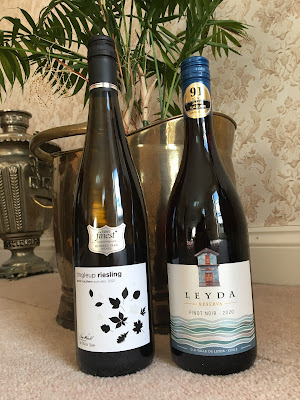
Two classic wines from Tesco - Riesling and Pinot Noir

Ask anyone who is enthusiastic about wine for their favourite grapes varieties and you will often hear Riesling and Pinot Noir cited.

They are wine geeks' grape varieties and until relatively recently were not that often seen in the mainstream; Riesling had fallen out of popularity while Pinot had a tendency to be expensive, unreliable and hard to find.

They are now coming back into fashion with plentiful reliable and inexpensive Pinot from cooler parts of the New World and Riesling providing a logical progression for those looking to move on from zippy, thrilling but slightly passé kiwi Sauvignon.

Both these wines are well-made and enjoyable with generous New World fruit; fresh enough to sip on a sunny day in the garden, but with enough structure to match up to food.

They are also made from two of the great classic grapes.

Tesco Finest Tingleup Riesling, Australia (£9)

Made by Howard Park, one of Western Australia's most celebrated wine producers, from grapes carefully cultivated in the Great Southern region.

Through all of the wine making stages, the Riesling grapes are managed under cool temperatures, allowing them to retain natural crisp, refreshing lime and citrus flavours with subtle hints of white pepper.

aromatic and floral with orchard and white stone fruits; crisp, refreshing, nettley zippy lime with pineapple, sherbet and white pepper; saline mineral and persistent.

Drinks nicely on first pouring, opens up with some air and can be cellared.

Good.

Serve as an aperitif or match the freshness to aromatic Asia/ Pac foods, oily fish or pork rillettes.

Leyda Reserva Pinot Noir, Chile (£12)

Leyda valley is nestled in the rolling hills of Chile's coastal mountain range. Located just eight miles from the Pacific Ocean it has a distinctly cool maritime climate. The Leyda winery created a new D.O. in Chile by being the first to plant grapes there in 1998.

Before then the valley was best known for the iconic blue train station that connected the capital city of Santiago with the Pacific coast and the port of San Antonio. Today Leyda is home to some of the most elegant, expressive cool climate wines from Chile.

Viña Leyda was founded in 1998, in Leyda Valley, today recognized as the last great innovation of Chilean viticulture. Traditionally, Leyda Valley has been an area of natural pasture lands and basic crops such as wheat and barley. 

Along the coast there is a strong influence from the Pacific Ocean, which is particularly cold because of the Humboldt Current. Granite soil along small rolling hills with up to 30° incline. Single blocks receive different levels of sunlight, resulting in a variety of ripeness and unique characteristics from each vineyard.

crushed, dried red berries with wild herbs and spice; fresh, juicy ripe strawberries, red cherries and herbs with a delicate smokiness and tobacco; persistent with very fine tannins.

Drinks nicely on first pouring, opens up with some aeration.

Thoroughly enjoyable.

Match with Burgundian foods such as duck, escargots, beef bourguignon or coq au vin.

Saturday, 8 January 2022

The CWB Co-op Southern Hemisphere Chardonnay-Off

Two southern hemisphere Chardonnays from The Co-op

Oaky Chardonnay might be a bit Bridget Jones, but it is one of the world's great grape varieties and styles.

It all started with white Burgundy and Chardonnay's affinity to new oak; a relatively neutral grape, it is fresh, savoury and food-friendly when made in a cool-climate; oak-aging adds to the flavour profile and complexity.

The reason New World Chardonnay went out of fashion was more to do with too many overripe, over-oaked versions than any inherent weakness and, increasingly, the New World is making it in a cooler, more restrained, gently oaked Burgundian style.

Just without the price tag.

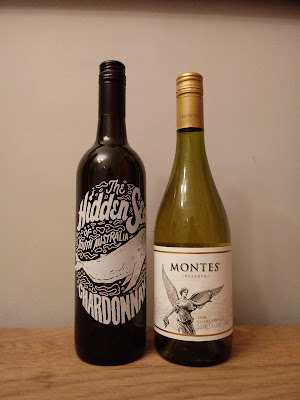
The Hidden Sea recycle 10 plastic bottles from oceans and rivers for every bottle of wine sold; if that isn't a reason to drink their wines, I don't know what is.

You won't find too much technical information about the wines on their website, but there's plenty about their ambition to remove plastic from the oceans and how they are going about it.

It may be something of a cliche but passion is the best brand.

Montes Reserva Chardonnay, Chile (£8)

ripe tropical pineapple and melon fruit, toasty vanilla oak and creamy brazil-nut savoury leesiness. Fresh and mineral; supple, harmonious and well-made.

Good and Good Value.

A versatile food wine, match with herby sausages, roast chicken or wiener schnitzel.

The Hidden Sea Chardonnay (£8)

aromatic floral with musky melonskin and some sweet spices; ripe peach and apricot with butterscotch, creamy brazil nut and a hint of toasty oak; fresh and saline-mineral with good savouriness. Very well made and harmonious.

Drinks well on first pouring and further improves with aeration.

Good and Good Value.

Another versatile food wine, match the freshness to cream cheese starters, white fish or plain roast white meats.

Where next?

If you like these wines and want dive deeper into Burgundian Chardonnay, look at:


The CWB International Chardonnay-Off - Chardies from all over the world: The Cambridge Wine Blogger: The CWB International Chardonnay-Off


***

Note on pricing:

The Montes Chardonnay is reduced from £8 to £7 until February 1st 2022.

Hidden Sea mission:

The Hidden Sea Chardonnay is part of The Co-op's vegan range and suitable for anyone doing Veganuary.

This is their story:

We exist for socially conscious consumers who love great tasting wine, and want to feel a part of something bigger than themselves. We remove and recycle 10 plastic bottles from oceans and rivers for every bottle of wine we sell.

WHY DO WE DO THIS?

Because we want to leave the world better than it was when we came in, and our wines carry a heritage born from the sea. 26 million years ago, South Australia’s incredible Limestone Coast was submerged by a vast ocean that was home to a thriving marine ecosystem.

A series of dramatic ice ages caused the ocean to recede, leaving the area rich with deep limestone deposits containing majestic marine fossils. Ancient mineralised relics, and an extensive museum of marine life, now lay buried beneath the alluvial soils of this World Heritage site.

One of these relics is the fossilised remains of an ancient whale which contributes to the rich, fertile soil in our vineyard. It also provides a natural and unique filtration system - perfect for growing the grapes that produce our award-winning wine.

So that’s our story.

Thursday, 14 October 2021

The CWB Beer vs Wine Curry Off

Does beer or wine go better with curry?

I recently reviewed two Tesco wines with a curry for National Curry Week and was pleasantly surprised at how well they went together.

Gewurz with curry is a go-to much-cited match that I have never been really convinced about, but it worked rather well here.

Red wine and curry is a much tougher ask, in my opinion, but a chilled Carménère was a surprisingly successful match with rogan josh.

A bit of discussion on Twitter about the food and wine combinations led me to the following conclusions:

- curry works best with high acidity, relatively neutral wines with a good mid-palate;

- traditional method fizzes meet all these criteria, so don't be afraid to try Cava and curry; it's generally quite inexpensive, so a more affordable starting point for experimentation than vintage Grand Marque Champagne

- crisp, citrussy and bubbly, Cava is also not dissimilar to a good lager; the traditional match for a curry

- if you want other inexpensive refreshing bubbles with curry, I would advise that you avoid Prosecco; with its shorter fermentation and more floral profile, it does not really stand up to the spicy bitter-umami of Indian foods

- chilling reds enhances the freshness and suppresses the flavours; this works with curry and is most suitable for simply, juicy wines rather than anything too high-end, tannic or complex

- bear in mind that chilled reds become a different wine, albeit chilling does not quite turn them into white wines; they retain a texture that is still red, even if they lose their "red wine" flavours

- you can chill expensive Cali Zinfandel if you want and it will then match with a curry; but why? It is something akin to a Monster Truck - Big, Expensive, Pointless, Blue-Collar Dumb Fun.

Beer and Curry - the curry

For this experiment, we started with poppadoms and sauces; mango and lime chutneys are a complete palate-killer so, unsurprisingly, the beers won out here.

For mains, I made a (version of) coconut and tamarind chicken curry from a Meera Sodha recipe: Coconut and tamarind chicken curry | Meera Sodha

It's similar to a European stew, slightly sweet from the coconut and not too spicy with exotic flavours of ginger and cinnamon.


Beer and Curry - the beers

I tried two traditional "curry beers" from Tesco; unsurprisingly, they both worked well.

Kingfisher Lager - £2.00/650ml bottle, Tesco

Kingfisher is an Indian lager brewed in the UK, but crucially to the same recipe as the original. It is India's best-selling lager and dates back to 1978.

hoppy and aromatic; crisp, citrussy and expressively hoppy with zippy grapefruit zest and a food-friendly bitter-sweetness.

Matches well with the curry and stands up to the strong flavours - unanimously agreed as the popular favourite.

Good.

Cobra Indian Premium Lager - £2.00/620ml bottle, Tesco

Cobra is brewed in the UK from barley, rice, maize wheat and four varieties of hops; the company was founded in 1989 by Karan Bilimoria who wanted to create a beer with the refreshment of a lager, but with the smoothness of an ale.

malty and savoury with subtle aromatics; rich, smooth and refreshing with an easy-drinking sweetness; very well-made, well-balanced and harmonious if a little neutral and unassuming.

Works well with the curry, but very much in a supporting role; lacks the immediate appeal of the Kingfisher.

Good.

Alternatives and rejects

I tried a couple of other wines I had on the go to see how they went with curry - in general they did not work, so the advice here is: approach with caution.


A lovely wine, but the "red wine" fruit flavours clash with the curry; interestingly, the acidity and tannins work well with the food, so chilled down, it might be a much better match.

Copper Crew Discovers Sauvignon Blanc (around £4 per can)

A WIGIG limited-edition from Copper Crew that I had on the go, this works well with the curry on most, but not quite all fronts. With plenty of acidity and a bit of lees aging, it has the freshness and the savouriness not to be overpowered by the food.

The acidity works well on the front palate and the leesy savouriness carries it through to the back palate; but the mid-palate sweetness and spices of the curry are just too much.

Surprisingly successful with the curry, it also just-about stands up to poppadums and onion salsa. If you drink mainly Sauvignon and must have wine with your curry, this is about as close as it gets.


This had worked well with a savoury rogan josh when chilled, but like the Negly, failed completely with a sweeter, coconut-based curry when at room temperature.

Thursday, 30 September 2021

Tesco Wines For National Curry Week

Two Tesco wines for National Curry Week

I've never quite subscribed to the idea that wine works with curry; at least in the sense of the fiery, heavy, oily dishes you typically find in any local curry house.

For this, you need beer - or even a versatile whisky.

But not all curries are inimical to wine and, in my somewhat limited curry repertoire, rogan josh comes closest to being a European-type dish - albeit with some distinctly Asian flavours in the mix.

With paprika and sour cream, rogan josh somewhat resembles a style of Hungarian stew. But on top of this, there is ginger, cumin and cinnamon to gently remind you that not in Europe anymore.

With National Curry Week approaching, (from 4th – 10th October 2021), I matched two Tesco wines to my signature "wine-friendly" curry.

And, in another departure from the norm, I chilled the red as well as the white.

The rogan josh recipe is here: How to make Rogan Josh, recipe by MasterChef Sanjeev Kapoor

De Colmar Gewurztraminer (£9)

Hillsides facing South / South East, on a steep slope with an altitude of 270m to 360m; temperature-controlled fermentation for aromatics, aged on fine lees for weight.

Arthur Metz is the leading player in the vineyards of Alsace and the main producer of the sparkling wine Crémant d'Alsace. 

floral, musky-perfumed and exotic with honeysuckle, sweet spices and lychees; rich and waxy with ripe pineapple and mango, ripe yellow stone fruits, beeswax and spices; good savoury underpinnings.

Thoroughly pleasant and works well with the curry.

Match with spicy exotic dishes, prawns, chicken curry or strong cheeses.

Tesco Finest Puemo Carménère, Valle de Cachapoal, Wine of Chile, 2019 (£8)

Producer by ever-reliable Concha y Toro and sealed under screwcap, the grapes are from the Peumo vineyards in the Cachapoal Valley, 130km south of Santiago and 170m above sea level.

The valley stretches along the Cachapoal River, in terraced hills of the Cordillera de la Costa. Temperate microclimate, it has very warm autumns and springs, giving a good fruit set early on and allowing for a late harvest with long hang time. 

Hand and machine harvesting, gently de-stemmed, crushed and fermented for 8 days followed by aging  in oak for 10 months. 

Concha y Toro was founded in 1883 and produces premium, expressive and innovative wines that convey the spirit of the new world.

chilled and served with the curry, it is darkly-fruited, focused and refreshing; it stands up to and cuts through the richness.

at standard serving temperature, the details become more apparent: dark-fruited and floral with baked dark-berries; full and supple with moderate extraction; dark plum, cocoa and wild herbs with rounded, gentle tannins.

Thoroughly pleasant.

Match with grilled meats and strong hard cheeses at room temperature, spicy dishes when chilled.

Tuesday, 14 September 2021

Viognier - A Deep Dive Around The World

Detailed tasting notes on four Viogniers from around the world

A recent tweet by WineMatcher Fiona Beckett on foods to match with Viognier had me digging out an earlier post on this peachy-apricotty tropical sun goddess of a grape.

From obscurity bordering on extinction just a few generations ago, it has now travelled around the world.

Here are four Viogniers to try with Fiona's food recommendations of mild creamy curries like kormas or spicy south-east Asian curry or spicy dishes with a hint of peach or apricot.

If you haven't tried Viognier before, it may well be unlike anything else you have tried - in a good way.

Viognier is originally from the northern Rhône, so it likes a warm climate; it is relatively high in alcohol and low in acidity, so it is rich, plush and hedonistic.

There is no real "adjacent" grape variety to Viognier; Gewuztraminer has a similar high alcohol / low acidity profile, but is much more floral, perfumed and exotic. Viognier shares warm-climate Chardonnay's breadth and affinity for oak and lees-aging, but its flavour profile is more peachy-spicy.

The ripe-yet-dry wines of Alsace, especially Pinot Gris, may be the closest overall match to Viognier, and Marsanne has the same rich waxiness, but if you are new to Viognier, there's a chance that neither of these wines will be adequate reference points either.

My own experience of Viognier was relatively limited until I tasted my way through these wines; I'm still not 100% sure I could spot one blind now, but I have certainly gained an affection for its ripe, peachy richness.

The Yalumba punches above its weight for quality, while the Latour shows the sophisticated oaking you would expect from a Burgundy House. The Guigal is elegant, rich and sun-kissed, while the Viu Manent shows a little more freshness.

Yalumba Y Series Viognier 2020, (£9.49 Majestic, Asda, Morrison’s, The Co-op) 

All Yalumba Viogniers are fermented using wild yeasts which add extra character and complexity to the wines. 

white flowers, white pepper and stone fruit; waxy yet crisp with peach, apricot and pineapple fruit, some grapefruit and lemon pitch; honeysuckle and minerality with good, savoury underpinnings.

Match with spicy and rich dishes such as a Sri Lankan vegetable or chicken curry.

Good.

Louis Latour Ardèche Viognier 2018, (around £15 from Dickens House Wine Emporium, Il Vino, Worsley Wines, winedirect.co.uk)

planted on steeper hillsides, 30% aged in French oak barrels from Latour’s cooperage in Beaune, giving the wine a roundness and slightly spicy edge. The remaining 70% is matured entirely in stainless steel

yellow fruit, blossom and a touch of sweet spice; ripe stone fruits, marzipan and honeysuckle, rich, complex and rounded with very god underpinnings; long and savoury.

Very Good.

Match with duck terrine with chestnuts, lighter game or middle eastern dishes with a spiced, creamy almond sauce.

Guigal Côtes du Rhône White 2019, (£12-£14.75, Tesco, North & South Wines, Clifton Cellars, Amps Fine Wines, Amazon) 

A blend of 60% Viognier, with Roussane, Marsanne and others; the average vine age is 25 years.

floral with peach, orchard fruits and sweet spices; dense and concentrated with peachy fruit, fennel honeysuckle, white pepper and a savoury, waxy sappiness; very long and complex with excellent underpinnings.

Good.

Match with rich dishes such as roast pork or creamy curries

Chile Viu Manent Secret Viognier 2018 (around £14, Great Grog, Chester Wine and Beer, Albury Wine Store, La Zouch, The Wine Chambers, Flagship Wines) 

From the Colchagua valley, which has warm days, cool nights and moderating breezes; the wine is fermented with native natural yeasts and vinified in stainless steel. Up to 15% of this blend can be ‘other varieties’ which vary each year depending on weather conditions. 

gently floral with slightly musky orchard fruit; pineapple, white peach, pear, white pepper, ginger and sweet spices; fresh, clean and sappy with good underpinnings.

Good.

 A versatile food wine, match with white-meat stews, turkey, grilled chicken, meaty fish, such as sea bass, poached salmon and tuna or a seafood risotto

Sunday, 12 September 2021

The CWB Co-op South American Red-Off

Two South American reds from The Co-op

Either side of the Andes, Chile and Argentina and synonymous with South American wine and are its two biggest producers.

For reds, Chile's signature grape is Carménère (historically confused with Merlot, which it somewhat resembles); whereas, for Argentina it is the heat-loving Malbec.

These two South American wines from the Co-op represent an exploration of what these countries can do beyond their most well-known varieties.

Syrah is a warm-climate grape originally from the Rhône, whereas Cabernet Franc tolerates a wider range of climates from the somewhat chilly Loire (where it produces fresh, vibrant wines) to warm-climate Languedoc where it is bigger and fuller.

Leyda Valley Syrah, Chile (£10)

A fresh and juicy cool-climate Syrah grown just 4km away from the Pacific Ocean and produced by multi-award winning winemaker Viviana Navarrete.

floral, bubblegum nose with baked dark fruits, cocoa and spice; juicy, slightly stewed blackcurrant, blackberry and black cherry fruits, minty eucalyptus and generous extraction with ripe, rounded tannins; fresh and savoury.

Improves with aeration.

Good.

Match with char-grilled red meats or charcuterie. 

Brazos Cabernet Franc, Argentina (£9.50)

Made by Familia Zuccardi, a family-run winery in Mendoza region of Argentina, dating back to 1968.

red and black fruits, eucalyptus, clove and peppery spice; red and black plum, black olives, grilled notes and lifted cool mint with spicy oakiness: generously extracted and slightly port; firm, slightly drying tannins

Thoroughly enjoyable in a rough-and-tumble sort of way

Match with hearty foods such as rustic pâté or crostini with tapenade.

Tuesday, 17 August 2021

Warm Weather Wines from Familia Torres. And Some Spanish Food

Summer wines from Spanish producer (with vineyards in Chile) Torres

Here are some wines to have on standby this summer from Familia Torres; bubbles, crisp white, aromatic white, barbecue reds, rosé and something sweet.

The  accompanying food was from Brindisa, my "winnings" from a world cup sweepstake in which I drew Euro champions Italy. It consisted of tapas foods, such as olives, almonds, chorizo, cheeses, breadsticks and jamon.

A perfect set of simple but delicious tapas-style food for matching with a range of wines.

Everything here was very enjoyable indeed and good value.

Estelado Rosé, Chile (£13.99 Thedrinkshop.com, VINVM, Vivino, Soho Wines)

Miguel Torres Estelado Rosé is one of Chile’s most innovative sparkling wines. Made entirely from Pais, Chile’s oldest grape variety. Planted by many small farmers, the variety was long forgotten, and undervalued until Torres rediscovered it for making quality wines.

Made using the traditional method with second fermentation in the bottle.

pale pink with fresh wild strawberries, redcurrants and yeasty brioche; elegant and mineral; very pure and clean.

Good.

Serve as an aperitif or match with light starters such as shellfish.


Vina Sol 2020 (£7.50 Tesco, Waitrose, Sainsburys, Morrisons, Asda and Co-op)

Made from Parellada (with a touch of Garnacha Blanca), the white grape traditionally used to make sparkling Cava wines, here it shows beautifully as a still wine.

The grapes are cool fermented in stainless steel for fresh fruitiness.

aromatic and citrussy with white pepper and lime zest; fresh and lemony with white stone fruit and a persistent minerality. Very harmonious and adept.

Good.

Light enough for a summer sipper, match with fish and chips, sushi, soft white cheeses or even spicy Thai. 

Also available in an environmentally friendly 2.25-litre bag-in-box, which will fit easily in a fridge – the perfect format for summer months.


Vina Esmeralda 2020 (£9, Tesco)

Made from a blend of Moscatel and Gewürztraminer, off-dry with expressive floral characters and tropical fruit aromas.

orchard fruits, white stone fruits, orange blossom and pear drops with tropical melon, pineapple and lychees; lime marmalade and honeysuckle; crisp, refreshing and light.

Good.

Serve well-chilled as an aperitif or with appetisers such as avocado and shellfish or melon with ham or with grilled fish.


Vina Sol Rosé 2020 (£7.99, Waitrose, Ocado)

Vina Sol Rosé 2020 is the pale raspberry pink sibling to the classic Vina Sol. Made mainly with Garnacha and Carinena, it’s fragrant and sensual, with notes of redcurrant and a lovely spicy, pink peppercorn finish.

strawberries and white pepper; delicate red berries, crunchy orchard fruits and fresh, crisp citrus; concentrated and long with good underpinnings. Fresh, delicate and balanced.

Good.

Light enough for impromptu sunny alfresco lunches; match with charcuterie and tapas, cold chicken and pasta salads.


Sangre de Toro 2019 (£7.50 Tesco, Sainsburys, Asda)

First made in 1954, this red is all about the Spanish way of life. It’s the one with a eco-friendly bull on the bottle, representing Spain’s culture. Made from native Spanish grapes, Garnacha Tinta and Carinena, selected from vineyards throughout the region, gives this red its spicy notes and delicious fruit.

black fruits, dried prunes, cherry and toasty-oaky spice with some liquorice, dried herbs and cocoa; good structure with juicy fresh acidity and very gentle tannins. Some aged complexity and savouriness. 

Thoroughly enjoyable.

Match with barbecue and picnic foods, duck liver pate or roasted red meats, smoky cheese, or any tomato-based dishes.


Floralis Moscatel Oro (£8.99 Waitrose, Ocado, Morrisons)

Floralis Moscatel Oro is one of the Mediterranean’s most characteristic dessert wines made since 1946. Luscious, clean and crisp, with lovely honeyed and acacia flavours and naturally sweet and an unmistakable floral perfume of roses, geranium, lemon and verbena.

Floral and aromatic with raisiny cooked mixed fruits, sweetness and lemony ginger beer and verbena.

Good.

Serve well-chilled and match with almond tart, or a flaky pastry Pastels de Natas with its rich custard filling served warm or anything chocolatey to finish of a perfect summer night dinner under the stars.

*****

Tom Cannavan makes the Floralis Moscatel Oro his wine of the week, here: Review of Torres Floralis Moscatel Oro wine - YouTube

Friday, 11 June 2021

The CWB Supermarket New World Red-off


Two widely-available New World reds

Carignan and Pinot Noir both produce soft, silky wines with a delicate, supple texture.

The main difference is that Pinot is expensive to make and always carries a price premium, due to the reputation of Burgundy; by contrast, Carignan is a "wine lake" grape, historically producing high yields in hot parts of France with no classic heritage.

If you have heard of Pinot but not of Carignan, this is possibly why; it's the darling vs the ugly duckling.

Another reason is that Carignan is typically a blending wine; late-ripening and heat-loving, it provides colour, acidity and tannins but can prove difficult to make into an elegant varietal wine.

Both these wine are relative bargains, then and punch above their price tag; New Zealand makes some of the best Pinots outside Burgundy for a fraction of the price. And Carignan has the soft texture of Pinot but without the premium.

They are both drinking nicely now, but have the concentration and complexity to improve with some age.

Indomita Gran Reserva Carignan, Chile, 2019 (£7.50, Co-op)

Chile has been getting better and better for a decade or so and is finally starting to reach its potential now.

Lifted red and black fruits with florality and oaky, peppery spice, garrigue herbs, cocoa and savouriness; fresh, full and supple with a dense inky texture; very harmonious and well-made.

Good and Good Value.

Drinks nicely on first opening but can be cellared.

Match with roast red meat or barbecue foods.

Tesco Finest Central Otago Pinot Noir, 2020 (Tesco, £13)

Made by Villa Maria, New Zealand's most awarded winery and always a source of highly enjoyable, well-made, good-value wines.

Farmyardy sous-bois and complex spices; lifted dark berry fruits, black cherries and black olives with some toasty savouriness; fresh, supple, concentrated and long.

Very Good.

Drinks nicely on first opening, but will improve further with some aging.

A fresh, versatile red, match with rich, strongly-flavoured foods, from lamb to salmon steak, venison to guinea fowl, pâté to charcuterie.

Sunday, 4 April 2021

Around The World in Viognier

Been around the world and I, I, I
I can't find my baby

- Lisa Stansfield, 1989


Not that long ago, you would be hard pushed to find a Viognier; it had become almost extinct by the 1960s and was mostly limited to some rarefied - and pricey - whites in the northern Rhône.

Condrieu is its spiritual home, but this low-yielding, sensitive but warmth-loving grape has been around the world making a comeback and now even has its own day, International Viognier Day, on 30th April 2021.

If you have yet to get to know her, expect ginger, stone fruit, white peaches, apricots, white pepper and exotic star anise character from Viognier. She is is a low acid wine, full-bodied like Chardonnay but with a more aromatic character.

Helena Nicklin describes Viognier as a tropical Sun Goddess.

Here are five Viogniers from around the world with tasting notes and food matching suggestions from their producers.

Australia

Samuel’s Collection Eden Valley Viognier 2017, (£17.99 Taurus Wines, winedirect.co.uk, vinvm.co.uk, auswineonline.co.uk, Yorke Vines, Liquorice Wines, Flagship Wines)

Yalumba is one of the most influential producers and world leaders of Viognier. In 1980, when other Barossa wineries were planting Chardonnay, Yalumba planted the first significant plantings of Viognier in Australia, on the elevated slopes of the Eden Valley. This wine honours Yalumba’s founder Samuel Smith. It is spicy, with stone fruit characters, richness and softness.

The 2017 vintage is a blend of grapes from six vineyards, 60% barrel fermented in old hogsheads and the rest in stainless steel. The juice passively interacts with air creating a perfect environment for the natural yeast to do their job before maturing on the lees for 10 months. Over time, the wine will continue to develop in the bottle where it will develop honey flavours and toasty complexity.

The richness and the spice in the Viognier bring out flavours and textures in food, and this one pairs particularly well with spicy and rich dishes. Try with a wild mushroom and thyme risotto.

Yalumba Y Series Viognier 2020, (£9.49 Majestic, Asda, Morrison’s, The Co-op)

When Louisa Rose, joined Yalumba in 1992, she took the variety under her wing. All Yalumba Viogniers are fermented using wild yeasts which come in with the grapes when they are picked. The wild yeasts add extra character and complexity to the wines.

A pure expression of the variety, Yalumba Y Series Viognier is made with as little intervention as possible and a commitment to ‘getting it right’ in the vineyard and first stages of the winemaking process.

A delicious young wine to enjoy with food to show its true credentials; an incredible food wine pairing particularly well with spicy and rich dishes such as a Sri Lankan vegetable or chicken curry.

France

Louis Latour Ardèche Viognier 2018, (around £15 from Dickens House Wine Emporium, Il Vino, Worsley Wines, winedirect.co.uk)

A beautifully crafted Viognier from Louis Latour who produce fine Burgundian wines. In the 80’s they stepped outside their traditional wine making region and after great success with Chardonnay in the Ardèche, in 2007, they began to make wines with Viognier, a grape that has long been grown in the region.

The Viognier grapes are planted on steeper hillsides than the Chardonnay and are hand-picked and vinified at Louis Latour's modern winery on the outskirts of the village of Alba-la-Romaine.

30% aged in French oak barrels from Latour’s cooperage in Beaune, giving the wine a roundness and slightly spicy edge. The remaining 70% is matured entirely in stainless steel.

The resulting wine is elegant offering notes of apricot, honey and hints of fresh almonds and is a joy as an aperitif or alongside Duck terrine with chestnuts or with a simple plate of charcuterie.

Guigal Côtes du Rhône White 2019, (£12-£14.75, Tesco, North & South Wines, Clifton Cellars, Amps Fine Wines, Amazon)

Guigal is one of the most famous Rhône producers, where white wine production accounts for just 6%, yet 25% of all Guigal’s wine production is white wines.

Guigal Côtes du Rhône Blanc is a blend of 60% Viognier (unusually high for white Côtes du Rhône) with Roussane, Marsanne and others to make this the most captivating Rhône white. Guigal source the best grapes from vineyards in the Southern Rhône and the average vine age is 25 years old.

The dominant presence of Viognier in this wine gives it a wonderful density and  freshness marked with peachy fruit and blossomy honey. Drink as an aperitif, with starters lightly spiced or curried dishes.

Chile

Viu Manent Secret Viognier  2018 (around £14, Great Grog, Chester Wine and Beer, Albury Wine Store, La Zouch, The Wine Chambers, Flagship Wines)

The predominant grape in this wine is Viognier. The ‘secret’ is that up to 15% of the blend in this range are ‘other varieties’ which can vary each year depending on weather conditions. The grapes for the Viu Manent Secret Viognier 2018 come from the family-owned San Carlos vineyard in Colchagua valley, where the average age of the vines is 17 years.

Here the warm days, cool nights and moderating breezes from the Andes and the Pacific Ocean provide perfect conditions. The grapes are hand-picked, whole bunch pressed, fermented with native natural yeasts and vinified in stainless steel with no oak, resulting a wine that is fresh and complex with delicious notes of pineapple, white peach, pear and subtle floral notes.

It’s super-versatile when it comes to pairing with different dishes, enjoy it with all manner of stews, turkey, grilled chicken, sweet and sour chicken, fish, such as salmon or tuna or a seafood risotto.

Sunday, 1 November 2020

(Another) CWB Pinot-Off

Two non-Burgundian Pinots Noirs

Chardonnay and Pinot Noir are the great Burgundian grapes; but while Chardonnay has gone around the world to runaway success in most wine-producing countries, Pinot's rise has been slower.

Unlike Chardonnay, Pinot is a difficult grape to grow, prone to mutation and thrives only in relatively cool conditions; it needs latitude, altitude, maritime coolness - or all three.

Burgundian Pinot is rarely an inexpensive wine; it tends to be somewhere between pricey and hair-raising - and it isn't even always that great. If you like Pinot but don't want to spend a fortune, or just want to see what the fuss is all about, more-affordable and more-reliable versions are starting to appear in other parts of the world.

While Burgundian-style Pinots often command Burgundian prices, countries like Chile prove that reliable, affordable Pinot is possible.

The second Pinot here is French, but not a Burgundy. Rather it is from Provence, an area much more associated with rosé. The Valmoissine Estate vineyards are made up of 120 hectares spread over four communes at an altitude of 500m giving a longer, more Burgundian growing season with warm sunny days during the summer months but cooler temperatures at night.

Cono Sur Bicicleta Pinot Noir, Chile (£8, The Co-op) Burgundian nose of red fruits and farmyard; overripe, slightly cooked soft red fruits, spice and some dark green herbs. Well-made and easy-drinking with a silky texture.

Thoroughly pleasant. Good Value.

It has a Decanter silver medal.

Louis Latour Domaine de Valmoissine Pinot Noir 2017 (£11.99, Majestic, Fine Wine Direct, House of Townend, North and South Wines, Small Beer, Tanners Wine Merchants, Thedrinkshop.com, Winebuyers, Winedirect) ripe-but-fresh wild raspberries, red and black cherries; spice and savouriness with liquorice; long and supple, well-made.

Good.

Match with autumnal Burgundian foods, such as truffles, mushrooms, duck in blackberry sauce. Later in the year, think of Christmas ham or turkey, grilled red meats such as lamb or a fish alternative of salmon.

Also reviewed by:

David Kermode: https://www.vinosaurus.co.uk/pinot-noir-provence-louis-latour/

Joanna Simon: WINE OF THE WEEK: Maison Louis Latour Bellevue Domaine de Valmoissine Pinot Noir 2017, Var, France (joannasimon.com)

Wednesday, 14 October 2020

Chile Masterclass: The Reds - with Tim Atkin


A Masterclass of Tim Atkin's favourite reds from Chile

Chile has almost too much of a good thing - diverse terroirs and soil types, the effects of volcanoes, earthquakes and erosion, phylloxera-free vineyards, cooling influences from the Pacific Ocean and the Andes plus the effects of altitude from two mountain ranges.

This embarrassment of riches was all for naught as Chile pursued a Bigger-Is-Better style in the 1990s, trying to appeal to the Parkerized US market.

And then something happened.

Around 2010, a few isolated winemakers in Chile decided to put the machine into reverse and start making fresher, more elegant wines - the sorts of wines that they actually wanted to drink themselves, rather than just points-chasing Big, Oaky Reds.

Forerunners in this movement include De Martino's Marcelo Retamal and Francisco Baettig of Errzuriz.

Marcelo Retamal told his story of conversion to fresher styles to the Circle of Wine Writers in 2011; harvesting ever later and fermenting for longer with more new oak and additives like tartaric acid and cultured yeasts, his wines were becoming bigger and more full-on. And less enjoyable to drink. So, in agreement with the winery owners, he started picking earlier and intervening less in the winemaking process to create a fresher, more elegant and nuanced wine.

Francisco Baettig outlined a similar vision over dinner one evening a few years later in London, where he talked about hot years being a problem, not a blessing; lower alcohol levels; a more-European style of food wines; old oak rather than new.

Over the years since those talks, I've had as many disappointingly over-oaked Chilean wines as subtle and elegant bottles. And, to be honest, I was wondering if the country had given up on the freshness thing.

In practice, a revolution takes a long time to happen and not all Chilean winemakers are quite so progressive and forward-thinking.

But Tim Atkin's masterclass, all done via Zoom with the winemakers dialling in for each wine, showed that there is a definite movement with eight wineries from all over Chile represented.

The first part of the Masterclass is here.

The second part was all about reds.

2018 La Roncière Licantén Malbec, Licantén - Curicó (£13.95, Corney & Barrow) an unusual  Malbec blend (Malbec is just 1.7% of plantings) from a very good, dry year giving deep concentration and 10 months in new oak providing plenty of oaky spice and tannins. This needs age and was much more settled when re-tasted 24 hours later. Deep dark colour with dark fruits, florality, spice and savoury concentration. Needs age, firm, grippy but very fine and well-integrated tannins .

Very Good.

2016 Maquis Viola, Colchagua Valley (£40.00, HispaMerchants) Carmenere blend from a cold, wet and difficult year with 24 months in oak.Complex aromas with plush ripe red and black berries, woodsy, mushroomy earthiness; fresh, concentrated and supple with perfectly ripe tannins and good underpinnings.

Very Good

2018 De Martino Old Vine Series VIGNO, Maule Valley (£35.00, Enotria&Coe) Carignan blend with two years in large, neutral foundres; raspberry leaf and red fruits, red and black cherries, spice; fresh, long concentrated and harmonious with gentle, perfectly ripe tannins.

Very Good.

2016 Los Vascos Le Dix, Colchagua Valley (£45.00, Waddesdon Wine) Cabernet Sauvignon blend, old vines with 18m in oak, 50% new, from a "Bordeaux-type" year (aka cold and wet); the winery has links with Lafite and this shows in the elegance of the winemaking: complex bramble fruits and spice and leatheriness; fresh, supple, elegant and harmonious.

Very Good.

Monday, 12 October 2020

Falling Back In Love with Chile - Part #1


A Masterclass of top Chilean wines with Tim Atkin MW

I've fallen in and out of love with Chile more times than I care to remember - I got excited about the potential, was underwhelmed by the bigger-is-better approach and eventually moved elsewhere for my oenological pleasures.

Well, Chile is back and it's looking better than ever.

The unspoken aim of this masterclass seemed to be a demonstration that Chile can do world-class, European-style elegant and restrained wines with the potential to age.

Tasted blind, these wines would have you thinking of Sancerre and Burgundy, not South America; lower alcohol levels, more freshness and elegant nuance were all here.

Tim started with a recap of Chile - the world's longest, thinnest country with cooling influences from the Andes and the Pacific, complex terroirs and two parallel ranges of mountains with vineyards at everything from sea-level to 2.2km altitude.

New information was about the level of vintage variation, a far more Europe concept than a New World one. As a result of the various influences of La Niña and El Niño, Chile has experiences significant vintage variation in recent years:

- 2016 was cold and wet (aka "European")

- 2017 was hot with fires

- 2018 cool, dry and balanced

- 2019 dry

- 2020 a dry year with early harvesting.(helpful, given pandemic lockdowns)

In practice, Chile has been moving away from US styles to freshness for many years now and factors like site, terroir and soil type are becoming key.

The world's seventh-largest wine producing country, Chile does volume (in a way), but seems much happier focusing on quality. Prices were reflective of this.


Flight #1

Casa Marin 2020 Cipreses Vineyard Sauvignon Blanc, Lo Abarca (£19.00) smokey, saline Sancerre-esque Sauvignon with expressive, slightly pungent aromatics, tropical fruit and lime zest. Savoury, long and complex. Will age.

Very Good.

2019 El Principal Kiñe Verdejo, Maipo Andes (£9.99) rich, savoury, leesy, complex and long; a textured and substantial wine with influences of skin contact and battonage. Flavours of lemony citrus and orchard fruits and stone fruits.

Very Good.

2018 Viña Ventisquero Tara White Wine 1, Chardonnay, Huasco - Atacama (£42.00) old-school techniques giving a savouriness with orchard fruits; concentrated, textured and long, with a tension between saline-minerality and saltiness

Very Good.

2018 Errazuriz Las Pizarras Pinot Noir, Aconcagua Costa (£85.00) woodsy, expressive, Burgundian nose, concentrated dark cherry fruit; fresh, structured, long and harmonious.

Very Good.

Sunday, 6 September 2020

Montes Reserve Chardonnay - The Co-op

A wonderful throwback Chilean Chardie from The Co-op

Montes Reserve Chardonnay, Chile

I kind of miss the 80s and 90s - to be honest, I rather miss 2019.

Anyway, the era of the Terminator, yuppies, Ladettes and Girl Power also gave us Big Oaky Chardonnay.

Yes, like all things, it eventually got a bit out of hand, but in its heyday, it was great.

Good Oaky Chardonnay is full of ripe fruit, butterscotch and spice; it's as easy to enjoy as one of Arnie's catchphrases.


Zig-a-zig ah!

Montes Reserve Chardonnay, Chile, (£8, The Co-op) ripe tropical pineapple and melon fruit, toasty vanilla oak and creamy brazil-nut savoury leesiness. Fresh and mineral; supple, harmonious and well-made.

Good and Good Value.

A versatile food wine, match with herby sausages, roast chicken or wiener schnitzel.

Sunday, 16 August 2020

Valle Secreto Syrah - The Co-op

A crowd-pleasing yet sophisticated Chilean Syrah from The Co-op

Valle de Secreto Syrah, 2018

I have long had a soft spot for Chile; it's a fascinatingly contradictory sort of place.

Blessed with amazing and varied terroir, it has the potential to be one of the great wine producing countries of the world. And yet far too many of its wines are pumped out in a bigger-is-better style that the US, in particular, loves.

Forward-thinking winemakers in Chile are increasingly making sophisticated, European-style wines and this is one of them; there's plenty of New World fruit and ripeness, but there's also balance and freshness. It treads a fine line between crowd-pleasing over-extraction and sophisticated nuance.

Valle Secreto Syrah 2018 (£11, The Co-op) plum and black fruits with plenty of oaky spice and port-like minty eucalyptus; blackcurrant leaf florality and sour-cherry freshness; savoury, supple and inky with good underpinnings; fine, grippy tannins.

Good.

Match with roast lamb with garlic and rosemary.

Thursday, 26 December 2019

Antakari Syrah, Laithwaites

A Big-and-Blowsy, but well-enough-made Chilean Syrah from Laithwaites

I feel like I've been on a run of overextracted, chewy, chunky Big Reds from Laithwaites; as a result, I have started to have a bit of a thing about over-extraction.

This latest Laithwaites wine is another Big Red to be sure, but what it does have in its favour is that at least it's not overextracted. There's not much else to recommend it, however; even Laithwaites' own customers only give it 3.4 out of 5.

Antakari Syrah 2017 (£9.99)  lots of up-front dark fruit, spice and mintiness; warming and alcoholic; reasonable tannins and acidity.

Overblown, overpriced and underwhelming.

Tuesday, 24 December 2019

De Martino Niebla Sauvigon Blanc

A classy Chilean Sauvignon from Virgin Wines

De Martino is one of the most interesting wineries in Chile - eschewing alcoholic, heavy-handed, US-pleasing styles, they focus on elegance, subtlety and restraint in their wines and are leading the way for many Chilean winemakers.

This Sauvignon is well-made and distinctly New World, almost kiwi in style; priced in the low teens, it is a good purchase for Christmas or any other occasion where you want a slightly superior version of a familiar wine.

If you are serving to guests and want a couple of dinner party facts:

- Niebla means "fog" and refers to daily fogs of the Casablanca Valley during early summer mornings
- This fog keeps the grapes cool and ensures freshness in the wine
- Niebla is also the name of the vineyard, a small block of vines just 11 miles from the sea

De Martino Niebla Sauvigon Blanc 2019 (£13.99) lifted aromatics and herby-nettley cut-grass; ripe tropical fruits with pea pod, asparagus and lime, white pepper and florality. Pure and precise, deft and elegant with a saline-minerality.

Good.

Serve as an aperitif, with goat's cheese tartines or herby fish dishes.

Tuesday, 10 December 2019

Twelfth Night Wines for Christmas from Virgin

Three subversive wines for Christmas wines from Virgin - and two superior standards

My general rule-of-thumb at Christmas is not to try anything too different - keep to stuff you like and maybe spend a bit more on a slightly better version; Bordeaux from a smarter appellation and a superior vintage, say, or Grand Cru Chablis rather than Petit Chablis.

But what's the point of Christmas if you can't break a few rule and have some fun? So here are three wines from Virgin that, like Twelfth Night when everything gets turned upside down and all the rules are reversed, will both subvert your expectations and entertain in equal measure

Chiarli Medaglie Lambrusco Grasparossa di Castelvetro DOC 2018 (£11.99) get the party started with some red fizz. Lambrusco has a bit of historic baggage in this country, but done properly this light sparkling red from Emilia Romagna matches brilliantly with local parma ham, parmesan cheese and balsamic vinegar. Or just serve it lightly chilled as a pick-me-up.

Schnaitmann Simonroth Lemberger 2016 (£24.99) Lemberger, aka Blaufraenkisch, is the great black grape of central Europe and shows great versatility. In milder climates, it is cherry-fruited and elegant, a lighter, fresher yet serious red that rivals Pinot Noir and Nebbiolo. As with this wine from southern Germany, warmer temperatures bring something more akin to Bordeaux with deeper colour, plumper fruit and more tannins.

Solevari Reserve Feteasca Neagra 2017 (£12.99) Romania makes wonderful wines from international varieties, but Feteasca Neagra is its signature red variety - plump, supple and spicily dark-fruited, it matches brilliantly with steak or rare roast beef. Serve as an alternative to a Rhone or a northern Italian red.

And if you want to keep it straightforward and conventional, here are two superior classic wines:

De Martino Niebla Casablanca Sauvignon Blanc 2019 (£13.99) De Martino is one of the pioneering wineries of Chile, making subtle, nuanced wines in an elegant food-friendly European style. This is a single vineyard Sauvignon from the cool, foggy Casablanca Valley. Drink this with smoked salmon on Boxing Day.

Heranca Late Bottled Vintage Port 2012 (£14.99) with figgy, raisiny flavours and a warming sweetness, port is synonymous with Christmas. Best served with mince pies, a crackling fire and the Queen's Speech, LBV is a vintage port that is aged in barrel for several years and is ready to drink without further aging. If you manage not to finish it off all at once, drink it on Boxing day with a plate of cheeses or a chocolate-and-cherry torte.

Friday, 4 October 2019

Viña Tarapacá Malbec Shiraz

A chewy Chilean Big Red from Laithwaites

To be fair, this wine has warning signs written all over it - Laithwaites, Chile, Malbec and Shiraz all tell you this is going to be a Big Wine, probably with a chewy, over-extracted style to it.

Why so?

Firstly, that's pretty much Laithwaites' house style; secondly, it has become Chile's house style (albeit not universally and some more interesting producers are doing the elegance thing rather well these days). Finally, Malbec and Shiraz are unlikely ever to give you a delicate wine, albeit elegance is eminently achievable.

It need not be this way; I've had good wines from Chile and I've had excellent Malbecs and Shirazes - just not from Laithwaites.

It only gets 3.1 / 5 on Laithwaites own website, so even their own customers seem rather underwhelmed.

Viña Tarapacá Malbec Shiraz 2018 (£10.49, Laithwaites) sweet, ripe dark fruits with herbs and spice, rather jammy and overcooked; heavily-stewed, over-extracted texture. Not pleasant.

One to avoid.