Popular Posts

Showing posts with label Waitrose. Show all posts

Saturday, 20 August 2022

Two Wines From New Zealand's Jackson Estate

Two wines from New Zealand's Jackson Estate

New Zealand's Jackson estate is based in Marlborough, at the tip of the South Island, an area world famous for its Sauvignon Blancs.

Jackson's website says:

Lying at 41.3 degrees south, Marlborough has about the same amount of heat as Burgundy and slightly less than Bordeaux.

In these bright but relatively “cool” climate conditions, the grapes have the advantage of a long slow, flavour-intensifying ripening period. The average daily temperatures during summer is nearly 24 degrees Celsius but clear cool nights keep acid levels high in the grapes.

Marked diurnal (day/night) temperature variations are a key factor behind the ability of Marlborough grapes to retain both fresh, vibrant fruit and crisp, herbaceous characters. The temperature contrast also helps to enhance the flavour development in the skins of Pinot Noir.

Within Marlborough viticulture has been developed primarily on sites with moderate low fertility and a noticeably stony, sandy loam top soil overlaying deep layers of free-draining shingle, as found in the viticulturally developed areas of the Wairau Valley.

These shallow, fast draining, low fertility soils help to produce a lush, aromatic ripe wine that results in vines with less vigour. The region currently has over 27,000 hectares of land planted vineyard, primarily located within the Wairau Valley.

Marlborough is now New Zealand’s largest wine region – producing some 79% of the country's wine. 

When combining the climate we enjoy with our soil profile this is what makes Marlborough unique and providing its distinctive flavours.

I first came across Jackson's wines a decade ago and was impressed with them then and on later re-acquaintance.

Jackson Estate Stich Sauvignon Blanc 2021 (£14, Ocado, Waitrose, Majestic)


Stich Sauvignon Blanc is named in recognition of John ‘Stich’ Stichbury, founder of Jackson Estate.

lifted aromatics of lemongrass, lime zest, exotic fruits and herbal murkiness: white stone fruits, melon, and citrussy gooseberry-grapefruit with zippy lime and leesy Brazil nut and cashew underpinnings. Fresh, complex and adept.

Good+.

Drinks nicely in first pouring; will repay some cellaring.

Match with ham hock terrine and parsley, saltimbocca or meaty white fish in a herby broth.


Jackson Estate Vintage Widow Pinot Noir 2018 (£21, Ocado)


Vintage Widow is named in recognition of the families at Jackson Estate, who are often forgotten at vintage as they strive to make the perfect bottle of Pinot Noir.

soft red berries, cherries, dried green herbs and spicy, mushroomy undergrowth; supple and fresh with red fruits, spice, rubbed sage, soft-yet-firm, rounded and well-integrated tannins, toasty-grilled notes and salinity.

Good+.

Drinks nicely on first pouring; can be cellared to gain further complexity.

Match with darker game, such as aromatic duck breast, venison meatballs or a mutton stew.

Saturday, 23 July 2022

The CWB Franco-Spanish Production-Method-Off

Four production-method wines from France and Spain, via Co-op and M&S

A friend recently asked me for some advice on arranging a wine-tasting; beyond the usual basics, I suggested it might be interesting to have a theme, such as a grape, region or other feature of the wine.

I have done themed tastings around aged Bordeaux, Iberia and the Americas as well as production method wines (i.e. wines whose character derives more from the they they are produced than from grape varieties).

For this line-up, I pulled out one of my own purchases to compare fizzes from France and Spain as well as two different types of sherry.

With a few exceptions, production method wines tend to be from either very cool climates (Champagne or England) or very hot climates (Andalusia, Douro, Madeira).

When asked about my favourite wines, my standard answer is: mature wines, production method wines and cool-climate wines. Essentially, I really like older, cool-climate wines that taste of something more than mere primary fruits.

All of the wines in this line-up are defined by their production method - for the fizz, it is secondary fermentation in bottle on the lees, which provides a food-friendly leesy complexity (as well as the bubbles).

For the sherries, it is the blending across years and growth of flor in the barrel which imparts a tangy dryness; in the case of Manzanilla, the flor character is more evident due to the cooler conditions where it is produced. For Amontillado, the flor is allowed to die away and the wine ages oxidatively acquiring complex roasted flavours of nuts and spices.

We started with the sherries as pretty much the perfect aperitif, matched to simple, tapas-style starters of chorizo, roasted almonds, manchego, olives and bread with home-made mayonnaise.

The fizzes were opened with a continent-hopping main course of chicken Thai green curry.

The sherries

Barbadillo Solear Manzanilla (£10.99, Waitrose, £9.50 Ocado - also in half-bottles, see footnote)

Made in Sanlucar de Barrameda, using both cooling ocean breezes and cool air current from a bend in the Guadalquivir river to grow the flor to optimum thickness and impart more flavour to the wine, Barbadillo is a family company and one of the great names of sherry.

pungent with pastry shop, camomile, almonds and hazelnuts; fresh and savoury with oatmealy leesiness, saline minerality, white fruits and white pepper; elegant and adept with very good underpinnings.

Good.

A versatile food wine, match with Andalusian tapas or any salty foods such as salamis, olives and hard cheese.

Very Rare Amontillado Sherry (£9, marked down to £1,79, 37.5cl, Marks & Spencer)

deep brown, with nuts, coffee, nutmeg, old leather roasted almonds and dried apple, apricot and prunes; charred cedarwood, toasted hazelnuts and exotic citrus peel with fresh acidity. Complex and adept. 

Good.

Match with roasted almonds or roasted / char-grilled beef.

Fizz

Champagne is the benchmark style of sparkling wine and it commands a hefty premium for the name; Spain's cava, by contrast, is working hard to match its pricing to the improved quality and cost of production.

Cava Sumarroca Gran Reserva 2017

Good cava is one of the wine world's great bargains; this one is made using the Traditional Method with three years' lees ageing for complexity by a family-owned house .

lemon peel, roasted hazelnuts, white flowers and leesiness; fresh, citrussy and poised with lemons and limes, creamy-nutty leesiness and saline minerality. Harmonious and long, very adept and elegant.

Good.

A versatile wines. serve as an aperitif, match with mixed starters or mains such as fish and chips or green Thai curry.

Les Pionniers Vintage Champagne 2013 (£27, The Co-op)

Made only in the best years, Vintage Champagne should be left at least 10 years before opening. On that basis, this one is a little young, but is showing well now and has plenty of life ahead of it.

golden sandy yellow with complex orchard fruits, bruised apple, citrus fruits, melonskin and toasted brioche; dense, concentrated and fresh with a fine mousse, citrussy lemon curd and lime marmalade, orchard fruits with red berries and savoury-leesy oatmeal, creamy brazil nut and saline minerality. Complex and long.

Very Good.

Match with lighter game or seafood-and-pastry such as prawn vol-au-vents or salmon-en-croute.

***

Half-bottle of the Barbadillo Manzanilla:

- Wine Society £5.95

- Loki Wine Merchants £7.99,

- Banstead Vintners £6.99

- Latitude Wine Merchants £7.50,

- Rannoch Scott £6.19

- Sandham Wines £6.20

- Vintage Cellars £6.50

- Gusto Wines £6.60

- The Whisky Exchange £6.76

- Mumbles Fine Wines £6.95

- Oxford Wine Co £7.25 

plus many other good independents.

Wednesday, 20 July 2022

Australia's Oxford Landing

A taste of Australia's Oxford Landing

If your budget is not much over the national average of a fiver, and you don't want to make a special trip for your wine, easily-available bottles from the supermarkets risk being a bit hit-and-miss.

The good news is that these three wines from Oxford Landing are all well-made, reliable and thoroughly enjoyable.

Oxford Landing is the name of the wine and the place in South Australia where the beautiful River Murray runs through the vast, red landscape, filling the community and environment with life, promise and affordable wines that are sustainably produced. 

Here Oxford Landing wines are nurtured from bunch to bottle using a small-scale approach with methods usually reserved for boutique winemaking, thus guaranteeing the authenticity, provenance, quality and consistency of every bottle of Oxford Landing wine.

Oxford Landing Sauvignon Blanc 2021 (£6 from Tesco, Waitrose, Sainsburys, Morrisons, ASDA)

Oxford Landing Sauvignon Blanc is the number one Aussie Sauvignon Blanc in the UK; its crisp, refreshing style makes it a popular choice, and at just 10.5% alcohol, it is the perfect pick for summer parties, social gatherings or just a cheeky glass after work.

This wine has been carefully made using cool fermentation with aromatic yeast strains to enhance the punchy zesty characteristics of Sauvignon Blanc. A percentage of the wine was fermented on skins to add an extra dimension of complexity.

The result is a fresh wine with zesty aromas of passionfruit, lemongrass and freshly cut hay, light-bodied and showing layers of fresh citrus and papaya flavours. 

aromatic with rubbed sage, mint and pepper; ripe, zesty, tropical fruits, with lime, grapefruit and gooseberries; crisp and refreshing with lemongrass, white pepper and some saline minerality

Well-made, food friendly and thoroughly enjoyable.

Drink as an aperitif or serve with a simple cheeseboard, some olives, dried fruit and crackers or with classic fish and chips.

Oxford Landing Pinot Grigio 2021 (£6.50, Sainsburys)

Don’t let Oxford Landing’s Pinot Grigio’s pale veneer and subtle aromas fool you; there’s plenty of flavour going on in the glass.

The wine was fermented with natural yeasts that come in from the vineyard, creating layers of flavour and richness. Following fermentation, the wine was left on its lees for 3 months and stirred weekly to impart a creamy richness to the palate.

A refreshing, medium bodied style of Pinot Grigio with lemon pith, apple skin, grapefruit, poached pear and cinnamon flavours with every mouthful.

orchard and white stone fruits, white pepper spice; weighty, concentrated, full and supple with conference pears, citrus, white peaches, leesy saline minerality and warming sweet spices.

Well made and adept; thoroughly enjoyable.

Enjoy with potato salad and a ‘green’ avocado style dressing, Asian chicken salad with roasted peanuts or tortilla chips and a spicy black bean salsa.

Oxford Landing Merlot 2020 / 2021 (£7.25, The Co-op)

Oxford Landing Merlot will take you through to the cooler end of summer months and into Autumn.  It has good depth of colour, with generous red fruit flavours of plums and cherries.

Merlot thrives under the warm Australian sun alongside the Murray River and this is a generous and succulent example of a great Australian Merlot.

blueberries, violets and spice; juicy berry fruits, cherries, dried green herbs and woodsy undergrowth; gentle tannins.

Well made and thoroughly enjoyable.

Drink slightly chilled on a hot day or match with grilled red meat, such as lamb seasoned simply with salt, pepper and a squeeze of lemon and seared on the barbecue for a few minutes each side and served with a side order of caramelized roast vegetables, a Moroccan spiced curry or a pasta dish cooked with a creamy tomato sauce.

Friday, 8 July 2022

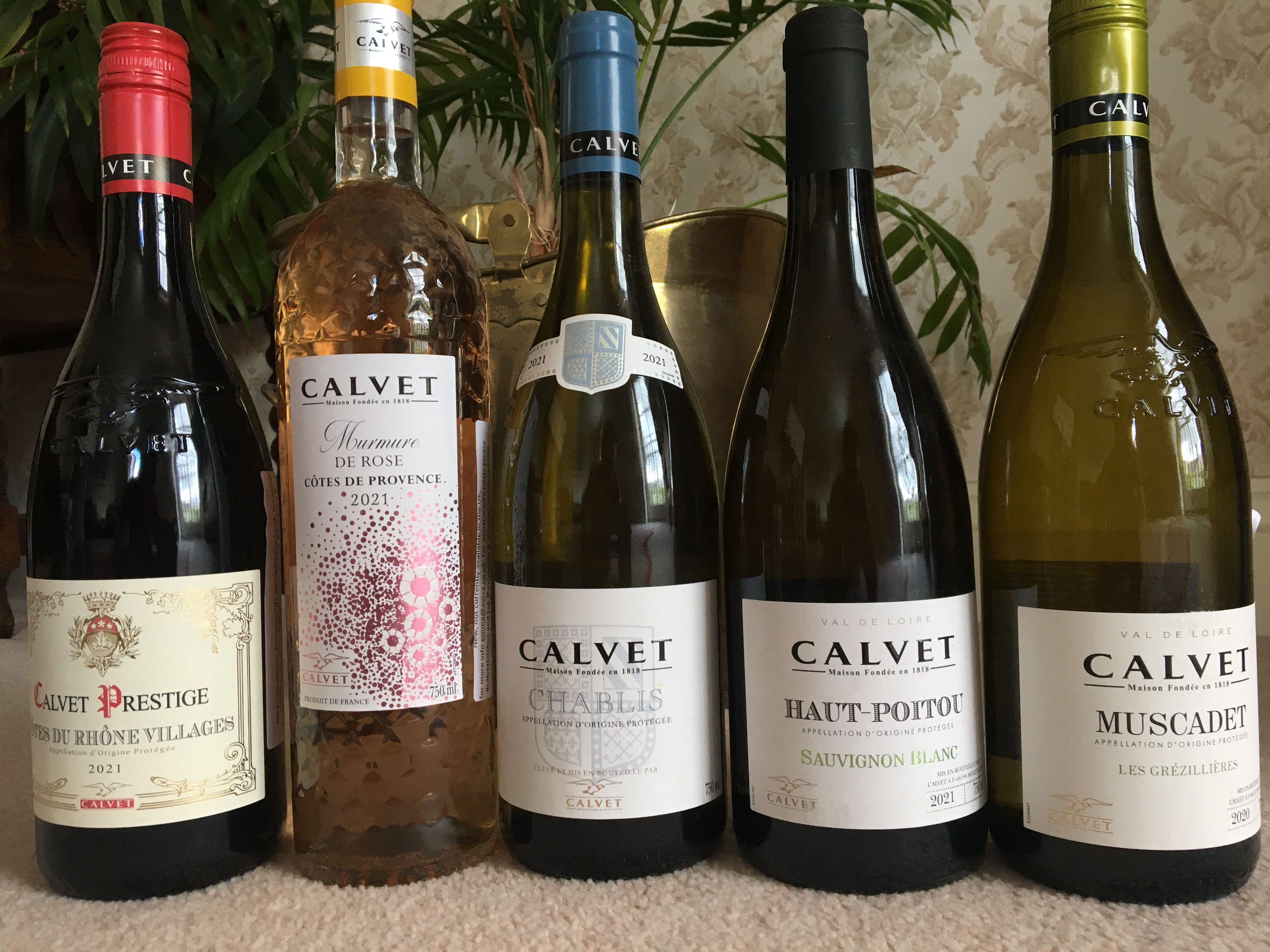
Calvet Kitchen

Six wines from France's Calvet - and the Calvet Kitchen experience

If you know Calvet's wines, it is probably for their range of easy-drinking and inexpensive Bordeaux. And if you don't, you probably should, as they are the largest French wine brand in the UK and the UK is Calvet's largest market.

But Calvet turns out to be a lot more than just Bordeaux; established over 200 years ago, the company makes wine in almost all of France's major regions.

Calvet Kitchen is a food-and-wine matching initiative to pair regional French dishes with Calvet wines; which is, after all, when French wine is all about.

With 64 winemakers in 7 regions, Calvet is a diverse business and yet all the wines here had a family resemblance that reflects Calvet's aims - an elegance and easy-drinking freshness with plenty of food-friendly mid-palate.

These wines all drink well on first pouring, but also open with aeration and have the body and complexity to stand up to food.

Loire-based winemaker Pierre-Jean Sauvion explained his approach:

- quality of fruit

- balance of fruit and freshness

- food-friendly salinity

The wines were all of broadly similar quality and, the Chablis aside, price, so preferences come down largely to personal taste.

Of the whites, I enjoyed the Chablis most, but given the price difference, the Muscadet makes a good value alternative.

Of the other colours, the CdRV was the most substantial and interesting.

The Calvet Kitchen playlist archive is here:

Calvet Kitchen | Meet Guillaume Lassevils, chef in the Bordeaux region - YouTube


Calvet Muscadet 2020, abv 12%, (£5.95-7 Sainsbury’s, Tesco, Co-op)

Grown on warmer sandy soils, resulting in more ripeness in the wine.

minty and floral with tropical fruit; fresh, rounded and saline with pear and white stone fruits

Thoroughly enjoyable.

Match with seafood and freshwater fish.


Calvet Haut Poitou 2021, abv 11.5%, (£10.99 Waitrose)

A new appellation to the south of the Loire around an hour from Saumur, it was created in 2011 but has a long history dating back to the 14th century. The soils are part of the same chalk limestone that runs under Champagne and moderates the water table which is key to the condition of the grapes.

Loire Sauvignon with a new world nose, but old world palate.

expressive and exuberant; gooseberries, exotic fruits and mintiness; juicy citrus, ripe green fruits and herbaceous, minty, zippy lime,

Thoroughly enjoyable.

Matches well with fresh tomato-based dishes.


Calvet Chablis 2021, abv 12%, (£20 Ocado)

Grown on chalk soils with 80% fermented in stainless steel for freshness and 20% in barrel for complexity.

stone fruits, peaches an dapricot; green apple and grapefruit, with lemon zest, fresh coriander and salinity.

Thoroughly enjoyable.

A versatile food wine, serve as an aperitif or match with starters and lighter mains.


Calvet Murmure de Rose Côtes de Provence 2021, abv 12.5% (new)

Newly-launched in the UK; night-picked for freshness with a short maceration; fermented in stainless steel for freshness.

red fruits, mint and spice; fresh, fruited and textured with red berries and salinity.

Sip as an aperitif or match with picnic foods.

Calvet Prestige Bordeaux Red 2020, abv 14%, (£7.50-£8.50 Sainsburys, Ocado, Co-op, Tesco)

80% Merlot with 20% Cabernet

red and dark berry fruits with vanilla spice; fresh with juicy, ripe and fleshy berry fruits; fine tannins and leafy, savoury, mushroomy flavours

Thoroughly enjoyable.

Match with red meats, such as bbq burgers or char-grilled steak.

Calvet Prestige Côtes du Rhône Villages 2021, abv 14%, (£7.50 Tesco)

Classic Rhône GSM blend

dark fruits and spices with garrigue herbs; substantial, fresh and supple with gentle tannins; harmonious and adept

Thoroughly enjoyable.

Match the freshness to meaty fish, such as salmon or rare tuna steaks.

Friday, 1 July 2022

Six Centre Loire Wines

Six Centre Loire wines

There's an old saw in the wine trade about punters who declaim: I never drink Chardonnay but I love Chablis.

I've heard this story many times from retailers and educators but I have never actually heard the statement uttered by anyone.

And while it may be fun to laugh at the nonsense that people say, or are reported to have said, there is actually some truth in the idea.

Chablis is, of course, made from the Chardonnay grape, so at face value the statement is nonsense. 

However, "Chardonnay" was for a long time the varietal labelling of many an overripe, over-oaked New World wine, so there can indeed be a valid distinction between a cool-climate, steely wine with "Chablis" on the bottle versus plonk from some antipodean Creek or Gully labelled as "Chardonnay".

Today's equivalent to this may well be: I never drink Sauvignon but I love Loire whites.

New Zealand Sauvignon took the aromatic potential of the great Loire grape and turning it up to 11 discovered the 21st Century's first proper darling - for a while, at least. The combination of cool maritime climates, extended skin contact and temperature-controlled stainless steel fermentation resulted in a pungent expressive white with as much subtlety as Robin Williams after too many glasses of orange squash.

And just as Chablis remains the OG for Chardonnay, Loire whites have a timeless, classic complexity and sophistication this is neither as as in-yer-face and thrillingly modern as Marlborough c. 2004 nor as dated now either.
These six wines from Centre Loire - the middle section of one of France's great rivers -  show what this region can do in terms of colour and price.

Of the whites, right now, the entry-level wine from Coteaux du Giennois (no, me neither) is drinking best, but given a couple of years the more ambitious Pouilly-Fumé and Sancerre will round out and become more harmonious. If you must drink them young, match with some food and give them plenty of time in the decanter.

The Quincy has a warmth and heft that demands weighty foods.

The rosé is an elegant and complex Pinot Gris while the red from Menetou Salon red is an atypical Pinot; darker, leafier and less farmyardy than Burgundy. Tasted blind, I would have guessed Cab Franc.

Coteaux du Giennois, Taste the Difference 2020/2021 £11.00 (Sainsbury’s)

100% Sauvignon Blance with some aging on fine lees.

lifted aromatics, lemongrass, mint and fresh green herbs; citrus, melon and orchard fruits with flinty, slatey minerality, leesiness and good underpinnings.

Drinks nicely on first pouring.

Good.

Match with goat's cheese or seafood starters.


Pouilly-Fumé, Domaine Chatelain 2020/2021 £16.99 (Waitrose)

100% Sauvignon Blanc from vines aged 30 - 45 years; aged on fine lees.

flinty herbaceous nose with grapefruit pith; saline mineral with citrus, melon, ripe white stone fruits and green apple; zippy lime marmalade ; elegant, concentrated and very adept.

Improves with aeration and will repay some cellaring.

Very Good.

Match with white fish, seafood or pork terrine.

Sancerre, Château de Crézancy 2020/2021 £19.99 or £17.99 mix six (Majestic Wine)

100% Sauvignon Blanc aged on fine lees until April of the following year

flinty with stone fruits and honeysuckle florality; white peach, citrus, grass, pear, and yellow bell pepper with wet stone minerality, lemongrass, grapefruit and lime; complex with leesy, brazil nut savouriness and good underpinnings.

Improves with aeration and will repay some cellaring.

Very Good.

Match with goat's cheese or mackerel paté salad.

Quincy Vieilles Vignes Domaine du Tremblay 2020 £14.50 (The Wine Society)

100% Sauvignon Blanc with some aging on fine lees.

baked spiced apple and lemon meringue pie; warming, weighty and viscous with dried orchard fruits and yellow stone fruit, sweet spices, creamy brazil nut, persistent savoury leesiness and saline minerality.

Drinks nicely on first opening, but improves with aeration and will repay some cellaring.

Match with weightier dishes such as roast pork or pasta with a creamy mushroom sauce.

Reuilly Rosé Les Chatillons, Denis Jamain 2020 £15.95 (BBR)

100% Pinot Gris with three hours of skin contact and five months of fine lees aging.

delicate red berry fruits, florality and savoury leesiness; fresh, citrussy, saline and supple with ripe white stone fruits, orchard fruits, melon and a touch of warming sweet spices.

Improves with aeration.

Very Good

A versatile food rosé; match with weightier picnic foods such as cold cuts, quiche

Menetou Salon red, Domaine Chavet La Cote 2020 £16.99 (Virgin Wines)

100% Pinot Noir grown on Kimmeridgian soil of fossilised oysters; aged in vats and large oak foudres.

dark translucent purple; red and black berry fruits, raspberry leaf, and spicy-savoury miso; fresh and minty-herbaceous with juicy red and black cherry fruit, soft berries and spice; concentrated and supple with very fine tannins. Very deft and accomplished.

Very Good.

***


Chris Kissak's review of Quincy Vieilles Vignes Domaine du Tremblay: Domaine du Tremblay Quincy Cuvée Vieilles Vignes 2020 • Winedoctor (thewinedoctor.com)

Saturday, 16 April 2022

Food and Wine Matching with Kindling Restaurant - Slow Roast Shoulder Of Mutton With Carrot, Tomatoes And Red Wine

A lamb recipe from Kindling Restaurant, Brighton - with some classic wine matches

Kindling Restaurant in Brighton is about more than just the delicious food, it is a community of people: staff, customers and suppliers all sharing and celebrating local produce. Nature writes the menu as the seasons inspire the dishes. Kindling is featured in the Michelin Guide and is a member of the Sustainable Restaurants Association.

Facebook: https://www.facebook.com/KindlingBrighton @KindlingBrighton
Instagram: https://www.instagram.com/kindlingrestaurant/ @KindlingRestaurant

The Food - slow roast shoulder of mutton with carrot, tomatoes and red wine

Perfect for Easter or a Mother’s Day gathering, why not try Kindling Restaurant’s slow roast mutton shoulder as a centre piece for your table. A classic combination of seasonal flavours from Chef Toby Geneen’s childhood, this dish is rich, comforting and perfect for a family celebration.

Kindling’s ethos centres around seasonal produce and ethical farming. Here, the traditional spring lamb is replaced with a piece of regeneratively farmed mutton. Regenerative agriculture is a farming system that aims to restore and improve the countryside. When it comes to sheep this means rotating their grazing and uses practices such as planting herbs into the fields to enhance the health of the herd. This has the added benefit of enhancing the flavour.

Mutton is typically four to six years old. Being a matured meat, it has had plenty of time outside allowing it to develop a generous fat content and deep gamey flavour that just isn’t present in the younger lamb.

At the restaurant the mutton is sourced directly from a local farm, Saddlescombe, located on the Sussex downs. To source high quality mutton, speak to your local butcher or farm shop.

Chef Toby Geneen: credit Jo Hunt
The Wines

Roast lamb and Big Red is a classic match; ripe-yet-fresh wines will have the body and acidity to stand up to the richness of lamb.

All these wines will benefit from a couple of hours in the decanter before serving.

Torres Altos Ibéricos Rioja Crianza (£11.99, Waitrose)

red and bramble fruits with complex oaky spices; dark cherries, black raspberries and ripe red plum with leather and earthy tobacco; fresh, substantial and intense with firm but fine tannins.

Chateau La Raze Beauvallet Medoc Cru Bourgeois 2016 (£14.99, Virgin Wines)

A medal-winning Cru Bourgeois Bordeaux from the Medoc; outstanding 2016 vintage and has some bottle age that will match well with the gaminess of the mutton.

bramble fruit, blackcurrant leaf and earthy, toasty cigar-box with some evolved, leathery complexity; dark berries, plum fruit, dried green herbs and toasty spice; complex and savoury; fresh, supple and elegant with very fine, perfectly-ripe tannins.

Wynns The Siding Cabernet Sauvignon, 2019, Coonawarra (£15, Tesco)

ripe dark berries and bramble fruits, oaky spice and some florality; supple cassis, baked blueberry and black olives with minty green herbs and liquorice; ripe, rounded and very well-integrated tannins; savoury, fresh and elegant.


The Recipe

Ingredients:

1 whole mutton shoulder, on the bone (1.8 - 2kg)
5 echalion shallots, halved and peeled
10 ripe plum tomatoes, halved with the white core removed
5 large carrots, peeled and thinly sliced
1 head of garlic, divided into cloves, but not peeled
1 tbsp olive oil
Sea salt
1 bunch of thyme, tied
3 sticks of rosemary, tied
3 bay leaf
500 ml red wine
500 ml chicken stock

Method:

Preheat your oven to 130C.

Mix all the vegetables together in a roasting tray with a little salt and olive oil. Spread them out into a bed for the shoulder. Tuck the herb bundles underneath the meat and pour your wine and chicken stock over the vegetable bed. Slow roast for 4 hours uncovered, topping up the liquid with a little water if the stew becomes too dry.

Remove the tray from the oven and put meat to one side to rest, ideally with a clean tea towel on top to prevent it from cooling too much. Remove herb bundles from the sauce by giving them a little shake.

Carefully pour or spoon the sauce into another pan, then simmer for 10 - 15 mins until thickened. Season with some salt if it needs it, then arrange in your serving dish and top with the mutton, carved or pulled apart. Serve with mash potato and seasonal greens.

***

Here is WineMatcher Fiona Beckett's recommendations for lamb-and-wine matching:

Saturday, 26 March 2022

The CWB Spain-Off

A Spanish red and white from Beronia and Torres

If it feels like wines from Spain have been getting more interesting and diverse for as long as you can remember, that's probably because they have.


How did Spain go from Rioja, sherry and inexpensive rustic reds to a vibrant and dynamic country with more Michelin-starred restaurants than France?

The simple answer is democracy, trade and economics.

As Eastern Europe will attest, dictatorships of any political persuasion tend not to produce great wine. In the late 1970s and early 1980s, Spain peacefully and successfully transition into a democracy; by 1986, it was enjoying the benefits of increased trade and rising wealth as a result of joining the European Union.

With lower land prices than in Big Name parts of France and Italy plus plentiful established regions filled with old vines, Spain became a more attractive destination for younger and more ambitious but less affluent winemakers wanting to make a name for themselves.

And a rising tide lifts all boats; inland Spain's harsh, high-altitude marginal climates became a reason to command a price premium rather than simply an expensive place for family-owned  farms to make small amounts of wine.

Bodegas Beronia

Founded in 1973 by friends with a passion for fine food and the shared desire to produce wines worthy of pairing with their culinary creations, Beronia set out to create the perfect blend between tradition and innovation. The Beronia portfolio celebrates the long-standing traditions of the Rioja region, while paving way for a sustainable future.

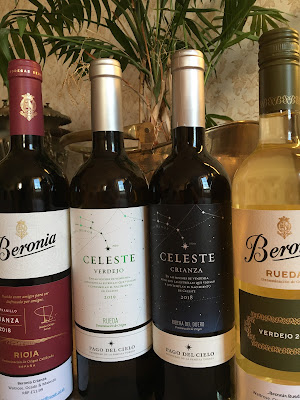
Beronia Rueda 2020 (£8.99, Waitrose, Ocado, Sainsbury’s)

The grapes are harvested mechanically at night to retain freshness. The fruit is pressed gently in an inert atmosphere with fermentation using selected yeasts and the temperature control for 10-15 days in stainless steel for aromatics and concrete for complexity.

 After 2 to 3 months' ageing on its lees with weekly remuage, the wine is clarified and filtered prior to creating the perfect blend and bottling.

bright pale yellow with green hints; intensely aromatic and herbaceous with mint, fennel, citrus and white pepper; fresh and precise with ripe stone fruits, tropical melon and pineapple fruit, fresh herbs and creamy-leesy savouriness.

Drinks nicely on first opening and gains complexity with aeration.

Good.

Match with pork and sage, garlic and herb roulade or white fish in a herby broth. 

Beronia Crianza 2018 (£11.99, Waitrose, Ocado, Majestic)

Made from selected Tempranillo, Garnacha and Mazuelo grapes. Upon arrival at the winery the fruit was macerated for a few days prior to fermentation. Temperature controlled alcoholic fermentation followed, with the temperature kept below 26ºC. The must was pumped over regularly to extract the desired colour and aromas, then the wine was left for twelve months in barrels made of American oak staves and French oak ends to create the unmistakable “Beronia style”. 

Lastly, the wine was bottled and left to rest for three months prior to release.

deep cherry red with a garnet edge; clean, bright and complex on the nose, with of cherry, raspberry and herbal notes of rosemary and thyme, as well as cinnamon and tobacco; blackcurrant, blueberry, cherry, fig, plum Very fresh vanilla and chocolate. Supple and full.

Improves significantly with aeration and can be cellared.

Good.

Match with roasted red meats, chargrilled chops, Ibérico cured meats and mature cheese. 

Familia Torres

With more than 150 years of experience as winemakers and viticulturists, and eager to experiment with a different terroir, Torres produced their first Tempranillo from the DO Ribera del Duero in northern Spain in 2004.

Celeste Crianza proved such a success, a winery soon followed, named Pago del Cielo in reference to the vines that grow at nearly 900 metres above sea level, and appear to form a magical connection with the heavens above. Celeste Verdejo joined the fold in 2020, and the starry labels on both wines reflect the star-filled sky seen from the winery at night.

Familia Torres Celeste Verdejo 2019 (£12.99 from Wine Direct, Soho Wines, Handford Wines, Signarellis Deli, The Grape to Glass Wine (Wales), Christopher Keiller (by the case))

a new wine from Rueda, known for its crisp white Verdejo

Celeste Verdejo is modern in style and shows remarkable freshness and aromatic intensity. Made from 100% Verdejo, a grape variety exclusive to the region of Rueda, from a wine-making area situated on the highest part of the northern plateau. The vineyards in Villafranca del Duero are on the left bank of a wide river, which meanders its way through the first foothills of the valley amid a landscape of gentle slopes.

The iron-rich alluvial soils contain lots of pebbles characteristic of the riverbed giving good drainage which combined with the continental climate of cold winters and hot summers make this an ideal spot for growing this native white variety.

The grapes are harvested at night, under the star-lit sky to control the temperature and then fermented in stainless steel.

aromatic and intense with herbaceous fennel, anise, white pepper and citrussy pineapple; fresh yet broad with sweet mango, exotic tropical fruits and yellow stone fruits; elegant and harmonious with good underpinnings.

Good.

Fresh and aromatic enough for an aperitif; match with seafood, fresh and fried fish and herbaceous salads

Familia Torres Celeste Crianza 2018 (£12.99 from Waitrose, Cambridge Wine Merchants, Roberts and Speight, Vinvum, TheDrinkShop.com, Wine Direct (Sussex), Noble Green Wines, Connolly’s Wine Merchants (W.Midlands), Lattitude (Yorkshire), Handford Wines)

an expressive Tempranillo from the high-altitude vineyards of Ribera del Duero

Celeste Crianza was the first Torres wine to be produced in the Ribera Del Duero region. The wine is made from 100% Tempranillo, Spain’s most widely planted grape, known locally as Tinto Fino.

The vines thrive in the extremes of scorching summers, freezing winters and mountain winds in the high-altitude vineyards planted in Ribera’s diverse soils. Low yields resulting from conscientiously tended old vines give Celeste Crianza its distinctive depth and complexity.

expressive dark-berry fruit with complex oaky spice, mushrooms and leather; fresh, concentrated and dense with blackberries, black cherries, cassis and black olive; liquorice, vanilla and minty, slightly warming eucalyptus; full and supple with harmonious, perfectly ripe and well-integrated tannins.

Benefits from aeration and will repay further cellaring.

Very Good.

Match with with hearty red meat dishes such as barbecued or grilled steak, lamb chops and sausages.

Tuesday, 30 November 2021

Celebrate National 🎄🌳🌲Tree Week with 17 Trees

An Old-School Big Aussie Red from De Bortoli for National Tree Week

De Bortoli is a family-owned Australian winery established almost a century ago; in 1924, Vittorio De Bortoli journeyed from Castelcucco in the Venetian hinterland to New South Wales where, after working hard and living under a rain water tank for some time, he is joined by his fiancée, Giuseppina in 1926.

In 1928, he purchased a 55 acre mixed fruit farm; that year there is a glut of shiraz grapes and many farmers see it cheaper to let them rot. So, Vittorio takes them for free and crushes 15 tonnes of shiraz grapes which local Italians and other European workers in the area offer to buy off him.

De Bortoli Wines is born.

Roll forward to the 21st century, and De Bortoli’s early sustainability project sees them planting 17 trees for each company vehicle to offset the carbon effects of the fleet.

Today 17 Trees is a brand that has a purpose; it is a collaboration with the company's suppliers, distributors, customers and consumers to plant trees for a sustainable future

The 17 Trees range now plants a tree for every six bottles sold and has hit the milestone of planting 50,000 globally since launch in 2020.

The 17 Trees website includes three fun facts about trees:

HOW MANY TREES ARE THERE IN THE WORLD?

Globally, there are estimated to be 3.04 trillion trees. Trees help clean the air we breathe, filter the water we drink, and provide habitat to over 80% of the world's terrestrial biodiversity. That's why with every 6 bottles of 17 TREES wine purchased, we pledge to plant 1 tree for a sustainable future.


HOW MANY TREES ARE REQUIRED TO OFFSET THE AVERAGE PERSON’S CARBON FOOTPRINT?

Australia has an average per capita footprint of 17 tonnes per year. To work out your carbon footprint, multiply 17 tonnes with your age to get the ‘carbon dioxide equivalent’ value of tonnes CO2 (assuming also that your carbon footprint as a child was equal to that of an adult).


HOW MUCH CARBON DIOXIDE DOES A TREE ABSORB?

A mature tree can absorb more than 22kg of carbon dioxide each year, removing and storing the carbon while releasing the oxygen back into the air. Purchase 6 bottles of 17 TREES = 1 tree = Removing 22kg of carbon dioxide per year.


17 TREES Shiraz (£9.99, Waitrose, Amazon)

Made from fruit grown sustainably in Heathcote, just north of Melbourne; sees some new oak and weighs in at almost 15% alcohol.

dark-fruited, tarry and spicy with a slightly grilled edge, scrubby herbs and violets; baked, pruney, blackberry and black cherry fruit with and black olives, oaky spice and dark chocolate. Warming and lifted  with rubbed sage and porty eucalyptus. Long, concentrated and inky with rounded, grippy and slightly drying tannins.

Thoroughly enjoyable.

A big wine, this will match with char-grilled red meats, barbecue foods or possibly even a red-meat curry such as rogan josh.

Postscript

I left this in the fridge overnight; pouring a glass and unable to wait until the chill had properly dissipated, I found it tasted of ripe, spicy, minty blackcurrant sorbet. In a very delicious way.

Monday, 29 November 2021

The CWB Aussie Red-Off

A five-way Australian Red-Off: three wines from Tesco, plus Yalumba and Vasse Felix

Once a byword for "sunshine in a glass", that became increasingly monolithic fruit bombs, Australia is discovering European-style fresh, savoury complexity.

Here are five Australian reds that have plenty of easy-to-enjoy fruit, but also enough complexity, and food-friendly freshness.

More a continent than a country, Australia is not only one of the few places that can successfully make varietal Cabernet Sauvignon, without the need for blending, but actually has two areas where Cab thrives - Coonawarra in South Australia's Limestone Coast and Western Australia.

These five wines are are a mix of:

- two varietal Cabernets
- two Cab-Shiraz blends and 
- one varietal Shiraz


Cab-Shiraz Blends

Penfolds Max's Shiraz Cabernet, 2019, South Australia (£20, Tesco)

Max's Shiraz Cabernet Sauvignon displays the Penfold's 'stamp' inspired by Max Schubert, a winemaking legend in Penfold's history who was the company's chief winemaker from 1948-1975. 

Aged for 12 months in French and American oak.

dark fruits, green herbs, peppery spice and graphite with mushroomy sous bois; generous, supple and plush, with dark berries, plums bramble fruits and cherries, minty eucalyptus and oaky vanilla spice; rounded and firm, well-integrated tannins; long and savoury

Good.

Drinks well on first opening; opens up further with aeration and can be cellared.

Match with beefy dishes, such as casserole, ragù alla bolognese or burgers.


Yalumba The Signature 2016 (£35, Majestic, Waitrose Cellar, Fine & Rare Wines)

Yalumba, Australia’s oldest family-owned winery has been making Cabernet-Shiraz blends for over half a century. The Signature was first made back in 1962, taking inspiration from Bordeaux winemakers who added small amounts of ‘other’ grapes to bring out the best in their cabernet wines.

Yalumba’s winemaker Kevin Glastonbury, who has been making The Signature for more than 20 years, describes it as a “Yalumba icon”. Every vintage of The Signature is individual, each reflecting the influence of vineyard differences and vintage conditions while maintaining a high level of quality and bringing The Signature landmark style.

The Signature is made using the best fruit of the vintage. The Cabernet Sauvignon, which makes up 53% of the blend, comes from four vineyards in the Barossa Valley and provides the rich, lifted Cabernet Sauvignon aromatics and palate structure for which The Signature is renowned. The Shiraz components include plantings of varying vine age; the oldest were planted in 1925. 

tarry-plummy dark fruits, minty eucalyptus, florality and complex oaky spice and sous bois; fresh and inky with black olives, ripe black and bramble fruits, cassis, sage and scrubby garrigue herbs, graphite and supple, very fine, rounded and well-integrated tannins. Dense and concentrated, deft and nuanced with very fine detailing. Very long.

Very Good.

Drinks nicely on first opening, opens up with extensive aeration and can be cellared for up to fifteen years.

Suggested food match from Yalumba: ham with a sweet orange and mustard glaze, served warm with some crusty bread and a glass of Yalumba The Signature 2016.

Match the sweet and salty flavours with the balance and fruit sweetness of the wine; this is a perfect classic festive food and wine pairing. 

For festive glazed ham, in eight easy steps, see the recipe below and watch Robert Hill-Smith and Nick Waterman cook their version here:


Varietal Cabernet Sauvignon

Wynns The Siding Cabernet Sauvignon, 2019, Coonawarra (£15, Tesco)
From a winery built 1896 on Conawarra's terra rossa soils in South Australias limstone coast. 
founded by pioneer John Riddoch, The wine is named after the railway siding - a local landmark that played a defining role during Coonawarra's early settlement. Completed in 1898, 'The Siding' was responsible for transporting around 600 hogsheads of wine a year to Adelaide

ripe dark berries and bramble fruits, oaky spice and some florality; supple cassis, baked blueberry and black olives with minty green herbs and liquorice; ripe, rounded and very well-integrated tannins; savoury, fresh and elegant. Very harmonious and adept.

Good.

Drinks well on first opening; further improves with aeration and can be cellared.

Match with rare roast beef and horseradish, or rack of lamb.

Vasse Felix Cabernet Sauvignon 2018 (£30 Direct Wine, Harvey Nichols, Australian Wines Online, Bonafide Wines, Vinvm. Ltd, Wine Direct, Connolly’s Wine Merchant, Averys, Laithwaites, The Secret Cellar)
Vasse Felix made their first Cabernet Sauvignon in Margaret River in 1972, from the vines planted by regional pioneer Tom Cullity in 1967 when the winery was first founded, and this wine has been made every year since.

The blend also includes some Malbec and Petit Verdot.


tarry dark fruits, lifted blackcurrant, violets and complex, oaky vanilla spice with leathery, truffley sous bois; ripe, juicy cassis, bramble fruits, liquorice, tobacco leaf, balsamic and ripe, well-integrated tannins. Supple, adept and harmonious.

Very Good

Match the blackcurranty fruit to rosemary-and-garlic lamb shoulder or barbecue foods on first opening. 

 Alternatively, decant for serval hours and match with beef dishes or savoury pates.

Cellar for several years for something to drink with darker game, truffles or mushrooms.

Varietal Shiraz

Bird In Hand Two In The Bush Shiraz, Adelaide Hills (£14, Tesco)
Made by Master of Wine Kym Milne.

Aged in tight grain French oak for 16 months, our 'Two in the Bush' Shiraz has rich aromas of vanilla, blackberry and a hint of chocolate which resonates on the palate. This medium bodied Shiraz displays the elegance and complexity of cooler climate red winemaking.

This cool climate Shiraz was harvested early in April from a hot, dry summer followed by a particularly mild autumn. These conditions favoured more medium bodied, structural and aromatic red wines. Made using open fermentation vessels this Shiraz was then aged in new (20%) and older French oak barrels for 12 months. 

Situated in an area of the Adelaide Hills that was littered with goldmines in the 1800s, the Bird in Hand winery was purchased and planted in 1997 by Andrew Nugent. Andrew has kept the close historical links alive both in the naming of the winery and their wine ranges; Two in the Bush and Nest Egg were the names of mineshafts in the Bird in Hand goldmine. From vineyards in Woodside and Clare, Bird in Hand produce classic examples of cool climate Chardonnay and Shiraz that have won world acclaim.

The seaside influence of the Gulf of St. Vincent, the cloud-trapping rise of the Mount Lofty Ranges and plenty of Australian sun all combine to create a special diurnal temperature shift that the grapes love.

juicy black fruits, cassis, black cherry and blackcurrant with black olive, pepper and aromatic green herbs; juicy, fresh, pure and supple with very fine, well-integrated tannins.

Good.

Very closed up on first opening; benefits from extensive aeration and will repay some cellaring.

Match with roasted red meats, such as garlic-and-rosemary lamb shoulder.

Sunday, 11 July 2021

Versatile, Varied and Multi-Coloured - Bordeaux

Five Bordeaux Wines

Bordeaux was pretty much the first wine area I realised I liked. I'd had wine previously, of course, but I'd never really got to know and understand a region; it was just "wine".

A long weekend break in Bruges via northern France found us stopping off on the return home to buy a bootful of wines from a local supermarket, all chosen pretty much at random.

It set a pattern that I have repeated for decades ever since: go to France and buy lots of lovely inexpensive wines based on what looks best from the local the area of wherever we happen to be.

The northern Pas-de-Calais region is not a wine-producing area, so the supermarket shelves there were mostly full of plentiful wines from the larger, better-known regions regions.

I had previously regarded Bordeaux as being all about exorbitantly-priced reds. What I found once I started opening up the various bottles we brought back was something completely different; inexpensive wines that were vibrant and fresh with plenty of stuffing. Sophisticated, yet accessible and easy to enjoy.

And Bordeaux is not just red wines, either; these days, there's rosé and fizz as well as whites, both dry and sweet. Far from monolithic, Bordeaux is pretty much all things to all occasions; there are very few situations it cannot cater for.

If the region's wines share a common trait, it is that they go well with food and have an ability to age, meaning that they often improve with a bit of air.

If you are used to ripe, fruit-forward New World wines that drink easily on first opening, you will find the fruit on  Bordeaux often emerges more noticeably after an hour or two in the decanter.

Here are five mid-range Bordeaux wines that showcase the variety and versatility of the region.

Comtesse de Saint-Pey Brut NV, Crémant de Bordeaux (£14, L’ami Jac)

Bordeaux fizz has the complexity of traditional method sparklers with the ripe fruit of a warmer, more southerly region; a price tag somewhere below Champagne just makes it better value.

Sémillon / Cabernet Franc blend.

orchard fruits, fresh citrus, florality and white pepper; ripe pear, white peach and honeysuckle with some biscuity leesiness; fine mousse and a savoury persistence.

Good.

Serve as an aperitif or match with sushi, seafood or other light starters.

Château Haut Rian, 2019 Bordeaux Rosé (£13, Harvey Nichols)

Merlot / Cabernet Sauvignon blend.

red fruits, cranberry and wild strawberry with fresh mint, grapefruit zest, white pepper and minerality. Pure and adept with good savoury underpinnings.

Good.

Match with picnic foods, salmon or shellfish.

L'Emigré Blanc 2020, Graves (£14.99, Virgin Wines)

From the Graves sub-region south east of Bordeaux, named for its gravelly soils; the wine is organic and sees a little of oak.

aromatic with white pepper and tropical fruits; intensely mineral and leesy with grapefruit, elderflower, lime kaffir and racy acidity; weighty, concentrated and long.

Very Good.

Demands food; match with salmon carpaccio or baked goat's cheese tarts.

Château Monconseil-Gazin 2018, Blaye Côtes de Bordeaux (£9.75, The Wine Society)

Merlot / Cabernet Sauvignon / Malbec blend from Blaye, just across the river from the Médoc.

forest fruits, plums, cherries and raspberries with sous bois earthiness and spice; fruit-forward and approachable; fresh, supple and easy-drinking with ripe, gentle-yet-firm tannins.

Good.

An easy-drinker, match with pizza, herby sausages, burgers or roast chicken.

SO Sauternes, Bastor-Lamontagne (£9.99, 37.5cl, Waitrose)

Botrytised dessert wine from Sauternes.

roasted buttery peaches with vanilla sugar, honeysuckle, beeswax and orange blossom; sweet, waxy and viscous with apricotty-peachy sweetness, sweet spices, ginger and tropical citrus freshness. Long, savoury and complex. And utterly delicious.

Very Good and Good Value.

Pour as an apéritif with tapas, or later in the meal with cheese and sweet puddings.

******

Further reviews:

Finding value-for-money in Bordeaux 2020 by Liz Gabay: Finding value-for-money in Bordeaux 2020 - Elizabeth Gabay MW


Saturday, 10 July 2021

The CWB French Sticky-Off

Two dessert wines from France - Waitrose and Daniel Lambert / The Wine Society

I have always loved dessert wines; I can't quite say why, but I have always had a sweet tooth. Maybe it's my '70s upbringing. Or just a preference for the sweeter things in life.

But it's not mere sweetness; I also like umami (aka "savouriness") and a bit of freshness in the mix, too.

The best dessert wines walk a tightrope of sweet, fresh and savoury - with a touch of complex bitterness added in.

One region, one grape and one phenomenon dominate here: botrytised Semillon from the Bordeaux sub-region of Sauternes. Nobly-rotten grapes are expensive to produce and expensive to vinify, yet relatively inexpensive to buy due to being largely unfashionable.

Sweet wines are Bordeaux's secret wine hiding in plain sight; delicious, fresh and complex, most command nothing like the premium of their illustrious red wine counterparts.

The best sweet wines of Sauternes are a dessert in their own right and need minimal food accompaniment; a Crème brûlée or blue cheese is often the best match.

Elsewhere in South West France, Petit Manseng also makes delicious dessert wines in Jurancon: it is aromatic with high sweetness and high, natural acidity and complex candied fruit, with exotic flavours.

Domaine Cabidos, Petit Manseng Doux, Jurancon 2015 (£9.95, The Wine Society, independents)

For bragging rights, Domaine du Chateau de Cabidos Petit Manseng Doux is the only known* 100% Petit Manseng dessert wine; it comes from a family producer in the foothills of the Pyrenees.

What's more, Tim Atkin MW puts Petit Manseng in his list of world-class white grapes.

Beeswax, roasted stone fruits, honeysuckle and sweet spices; fresh and juicy with tropical fruits, pineapple, candied fruit, honey and overripe peaches; with high acidity, it finishes almost dry despite the sweetness. 

Very Good and Good Value.

Serve as an aperitif or match with a fruit cheesecake or blue cheese.

Also consider sea-food such as scallops and lobster, and all white meat, for example turkey with cranberry sauce. It also goes well with aged hard ewe’s milk cheese.

SO Sauternes, Bastor-Lamontagne (£9.99, 37.5cl, Waitrose) 

An organic sweet wine that shows off its straw-gold colour beautifully 

Aromas of roasted buttery peaches with vanilla sugar, honeysuckle, beeswax and orange blossom; sweet, waxy and viscous with apricotty-peachy sweetness, sweet spices, ginger and tropical citrus freshness. Long, savoury and complex. And utterly delicious.

Very Good and Good Value.

Pour as an apéritif with tapas, or later in the meal with cheese and sweet puddings.


*****

Update 11/07/21: several people contacted me to let me know that various other wineries make a varietal Petit Manseng dessert wine:


***** 


The viticultural domaine of the Château of Cabidos is family owned and consists of twenty acres located just below the village of Cabidos, in the north of the Béarn, near the famous slopes of Jurançon in south-western France.

The family wine business was revived by Isabelle de Nazelle in 1992 and developed by her son Vivien, with his wife Maleine and brother Edouard, together with Jean-Michel Novelle, a Swiss oenologist of international renown. In 2002, an air-conditioned cellar was built to ensure the wine was properly stored and in 2007, Mrs. Méo Sakorn-Sériès became the Maitre de Chai, or Cellar Master, who is the person responsible for making and ageing the wine.

Méo Sakorn-Sériès is unique in being the only Thai woman to be a director of a vineyard and winery in the whole of France. In 2015, new owners acquired Château de Cabidos with the aim of continuing its legacy and traditions and producing more of its exceptionally prized wines.

The Petit Manseng grape, which comes from the Pyrenean region of France, is the predominant variety occupying 16 acres of our vineyards, and produces both sweet and dry white wines. The vineyard also has an acre of Chardonnay and an acre of Sauvignon, which work well as a dry blend. The fourth grape is Syrah grown on 2 acres to produce our red wine.

It is so popular that we have been gradually increasing the acreage. Petit Manseng is a grape that ripens late in the season and is particularly well suited for the production of great, sweet wines. It is an aromatic variety, which is distinguished in its youth by notes of peach, citrus and medlar, with a hint of cinnamon.

It is remarkable for its ability to concentrate the sugar in the berries during maturation, whilst maintaining a high, natural acidity. It is an ideal grape for the climate in the Béarn because we are blessed with long, sunny autumns that allow ‘passerillage’. That is to say, the grapes can dry naturally on the vine, which gives them a high sugar concentration and the development of complex aromas of candied fruit, ideal for exquisite sweet wines.

It has very exotic flavours, such as pineapple and mango, and with time the wine reveals aromas of white truffles.

Monday, 21 June 2021

Crisp White and Big Red - Antipodean-Style


A Crisp White and Big Red from Down Under

Crisp White and Big Red is a classic wine pairing for food; white for aperitif and starters, red with meaty main.

In the northern hemisphere, you might look to Chablis or unoaked white Burgundy alongside Bordeaux or Rioja.

Most major European wine-producing countries have food-friendly whites as well as complex reds, so the possibilities are almost endless.

If you want to take the same approach with Antipodean wines, New Zealand Sauvignon has to be on the list of crisp, zingy whites. For reds, Western Australia produces elegant, restrained, food-friendly reds and is one of the few places in the world that suits varietal Cab.

For, despite being the great international red grape, Cabernet Sauvignon most often needs blending to round out its "tannic doughnut", that is a lack of tannins on the mid-palate.

Coonawarra and Western Australia have found that they hvae just the right conditions to avoid this and to be able to produce pure, varietal Cab.

New Zealand's Villa Maria is one the country's most awarded wineries, producing enjoyable, well-made and inexpensive wines year in, year out.

Villa Maria Private Bin Sauvignon Blanc, Marlborough 2019 (£12, Sainsbury's, Asda, Morrisons, Waitrose, Majestic, Co-op)

Aromatic and lifted with gooseberry, lime, grapefruit, musky rubbed sage and white pepper; ripe stone fruits, pineapple, melon and passionfruit with fresh, green apple acidity, honeysuckle, sweet spices and fresh-cut grass; full, supple and and adept.

Drinks well on first pouring and opens up further with some air.

Good.

Serve as an aperitif or match with meaty meat with herbs, such as cod in a herb broth or pork and parsley terrine.

Vasse Felix Filius Cabernet Sauvignon 2019 (£14.99 - £17.99, Specialist Cellars, Aus Wines Online, windirect.co.uk)

Bramble and dark berry fruits with spice and damp earth; black fruits, black cherries and complex, toasty spices with grilled fruits, dried herbs and iodine. Full and supple with rounded, well-integrated tannins and lots of fresh acidity; very harmonious and adept.

Shows lots of primary fruit on first opening and becomes more savoury with extended aeration.

Good.

Drink with grilled meats such as barbecue foods; decanted for several hours, it will match with plain roast red meats.

*****

From the Vasse Felix website:

Cabernet Sauvignon has a strong heritage at Vasse Felix, being one of the first red wines made at the estate and Margaret River’s first Cabernet.

This is a brilliant expression of the region and a glorious vintage. A full-bodied Cabernet Sauvignon with a dollop of Malbec added to the blend.

It has the structure, power and tannins of classic Margaret River Cabernet Sauvignon, but made as an earlier drinking style.

Succulent fruit is sourced from each of the four Vasse Felix vineyards and vinified and matured in French oak for 11 months as individual batches prior to blending.

The result is a tangy wine, with ripe black cherry fruit and lingering black forest gateau flavours. The acidity is fresh and cleansing, while the fine-grained tannins bely its youth.

Vasse Felix, almost single-handedly, put Margaret River on the world wine map when regional pioneer Dr Tom Cullity founded the winery back in 1967. What he uncovered was world class potential for great wines. Filius, which translates as ‘son of’ from Latin, are the offspring of the flagship Cabernet Sauvignons and Chardonnays for which Vasse Felix are justly famous.

This range of wines is more approachable in their youth than their elder siblings. They are versatile weekday wines, perfect for entertaining on all levels, brilliant with food, ideal as an aperitif, simply delicious and great value for money.

Sunday, 13 June 2021

Three Hill-Smith Wines from South Australia

Three elegant summer wines from Australia's Hill-Smith, including Tasmania's Jansz and Dalrymple

Not to be confused with the Fresh Price of Bel Air, Hill-Smith is a fifth generation family-run wine estate based in South Australia with a sporting history.

The website explains: over five generations, members of the Hill-Smith family have been pioneers in locating exceptional vineyard sites that maximise the personality of their wines. These wines honour the contribution that Wyndham Hill-Smith OBE (1909 - 1989) made to wine, sport and life in Australia.

Well known as a cricketer, Wyndham Hill-Smith both shared the crease with Bradman and faced Larwood at his peak. He was a keen thoroughbred owner, with more than 500 race wins, and well recognised as a generous host and charming raconteur.

Importantly, Wyndham oversaw in the 1960s and ’70s the innovative return of viticulture from the floor of the Barossa Valley to the cooler climes of the high altitude Barossa ranges, known as Eden Valley. In these conditions, finesse, elegance and understated power replace the robust and earthy style of the lower altitudes.

Beyond South Australia, Hill-Smith also owns wineries in cool-climate Tasmania. These three wines are perfect for an elegant summer garden party or picnic - if you thought Australia was just hefty, high-alcohol blockbusters, these elegant Burgundian-style wines will invite you to think again.


Aperitif

Jansz Tasmania Premium Rosé (£18.99, Slurp Frazier’s Wines, Noble Green Wines, Liquorice Wines, www.winedirect.co.uk)

Cool-climate traditional method (aka Methode Tasmanoise) Tasmanian fizz from the very best Tasmanian vineyards, Australia’s home of premium sparkling wine. 

The cool latitude and maritime climate are a major contributory factor to the success of these wines. The fruit is grown on specially selected sites, handpicked and crafted as individual batches resulting in a stylish and complex wine.

Very pale salmon pink, yeasty-brioche biscuit nose, delicate redcurrants, soft red fruit and orchard fruits, creamy-oatmealy brazil nut and saline minerality; vibrant, fresh, elegant and persistent.

Very Good - and better value than an equivalent Champagne.

Drink as an aperitif; match with prawns, salmon, ham or picnic foods..

White

Hill-Smith Eden Valley Chardonnay 2019 (£11.99, Waitrose) 

The rugged, undulating high country of Eden Valley is one of Australia’s premier cool climate wine regions and home to some of the Hill-Smith family’s favourite vineyards where plantings of special Burgundian clones have now come of age for this blend.

The finer flavours, produced by these clones, combined with the use of natural ‘wild yeast’ fermentation and careful crafting results in a more complex and elegant wine with rich creamy flavour and acidity.

The wine has extended lees aging and some new oak

Pale straw with green tints, fragrant aromas of fresh stone fruit, quince and citrus zest with oaky spice minerality; fresh peach and citrus curd with grapefruit acidity, savoury leesiness and a fine creamy texture. Deft, elegant and complex.

Drinking nicely now and will improve further with some cellaring.

Good and Good Value for the quality.

A versatile food wine, match with anything from fish and white meats to salmon fillet with Asian greens or chickpea falafel.

Red

Dalrymple Pinot Noir 2019 (£32.99, Vinvm Flagship Wines)

Cooler than mainland Australia, Tasmania specialises in styles usually found towards the north of France. This Pinot Noir is a blend of different parcels of fruit, from vineyards across the Pipers River region in the northern part of Tasmania.

An easterly aspect, red basalt soils, natural flora and cool sea breezes combine to encourage slow and even ripening of the grapes allowing their natural flavours to shine through.


Dark, deep garnet-purple; intense blackberry, dark cherry and ripe plum with charred spices, dried herbs and liquorice; juicy plum and dark fruits with blue fruits and five spice; fine yet firm tannins; fresh, supple and elegant.

Drinks nicely on first opening, opens up with some aeration and will repay some cellaring.

Very Good.

A versatile food wine, match with game, spiced foods and cured meats.