Popular Posts

Showing posts with label Italy. Show all posts

Tuesday, 30 August 2022

The CWB Fizz-Off

Three non-Champagne fizzes

Let's get fizzical, fizzical*

- Physical, Olivia Newton-John (1981)

Cambridge-born Olivia, like the Bee Gees before her, went off to Australia then made it big in the US in the late '70s.

I'd like to think she would have approved of this fizzical line-up.

Nozeco (£3.25 - £4.00, Tesco, Sainsbury’s, Asda, Morrison and Co-op)

An alcohol-free Prosecco lookalike, it is made from flavoured de-alcoholised wine from Spain; it is vegan and has fewer calories than regular wine. It costs less, too.

It sits somewhere between a sophisticated elderflower lemonade and a decent entry-level Prosecco, albeit without the alcohol, and has an IWSC Silver medal.

foams enthusiastically; elderflower, orange blossom and citrussy bergamot; crisp and refreshing with lemon-lime, sherbet and florality

Well-balanced and thoroughly pleasant.


Tesco Finest Prosecco DOC (£8.50, Tesco)

Made by Cantine Maschio using selected yeasts and aged for around one month at a controlled temperature of 12-15°C to preserves the fruit aromas.

Frothy, floral and citrussy; orchard and white stone fruits, sherbet, refreshing citrus and salinity. Crisp, clean and elegant

Well-made and thoroughly enjoyable.

Serve as an easy-drinking, crowd pleasing aperitif or with the lightest of canapés.


Gratien & Meyer Crémant De Loire Rosé NV (£12 , Tesco)

Founded in 1864, Gratien & Meyer are one of the leading producers of Cremant (traditional method sparkling wines) in the Loire. These are produced in the same way as Champagne, but sell for much less, making them a great value alternative for celebrations and special occasions.

A blend of Pinot Noir, Chardonnay, Chenin, Cabernet Franc.

yeasty, biscuity brioche, creamy oatmeal and white pepper with citrus, florality and red berry fruits. Adept, with complex, savoury underpinnings.

Good.

Serve as an aperitif or match with shellfish, lighter curries and picnic foods such as hams, quiches and chicken drumsticks.


*lyrics may not be 100% correct.

***

Other reviews:


Saturday, 13 August 2022

Banfi La Pettegola 2021 Vermentino

A Vermentino from Tuscany's Banfi Wines via Ocado and independents

Banfi La Pettegola is a fresh and juicy example of a variety that could become a flagship grape for Italy; Vermentino is claimed to be Italy's most fabulous and fashionable wine.

This La Pettegola is an easy-drinking style, an alternative to standard white wine choices, placed somewhere between unoaked Chardonnay and Sauvignon Blanc with a throwback to Albarino, Gruner Veltliner and Godello.

It is from coastal Tuscany and thrives on sea breezes with poor soils and some altitude. Crafted from the best grapes from Banfi’s Maremma vineyards in Southern Tuscany, the vines are at around 150 metres altitude in well drained, sandstone soils.

The grapes are gently pressed, destemmed and fermented entirely in temperature controlled stainless steel to preserve the fresh, floral and fruity character of the wine. It then spends three months on lees for a more complex texture and finish. 

Also known as ‘Rolle’ in Provence, it is used as a component in the fashionable white and rosé wines of the South of France. High in phenols, it can be made in a fresh, saline style, or with a creamier, richness, depending on how the wine is handled in the cellar.

La Pettegola's name has a double meaning. The coastal seabird that gives its name to this wine is the redshank, ‘la Pettegola’ in Italian. The bird’s chattering call gives a second meaning ‘the gossip’, so it is a wine for gossiping over.

Banfi La Pettegola 2021 (£16, Ocado, Bon Coeur Fine Wines, Penistone Wines

floral, mint and garrigue herbs, pear drops and white pepper; ripe yellow stone fruits, grapefruit, peach kernels, leesy-savoury cashew and Brazil nut; textured full and supple.

Drinks nicely on first pouring and opens up further with some aeration.

Good.

Drink as a summer sipper or match with canapés, seafood, grilled chicken or roasted vegetable salads.

Sunday, 12 June 2022

Two Supermarket Whites

Two supermarket whites

A slightly random pairing of two whites that I've had in my makeshift cellar for a while and which I felt needed drinking up.

In practice, both showed nicely and, for my palate, were in no rush to be consumed.

The Languedoc Sauvignon from Gerard Bertrand was a gift / leftover from one of #1 child's 6th form friends after we were ushered out of the house for her to have a summer pre-university party.

I'll be honest, I didn't have especially high expectations, but she turns out to have sophisticated friends.

The Soave was from one of Richard Bampfield's Lidl Wine Tour, bought at some point during lockdown; I doubt I paid full list price - but I might have done. It's actually not dissimilar to an entry-level Chablis in a warmer year. Just at a fraction of the price.

Corte Allodola Soave Classico, 2018 (£6.99)

orchard fruits with delicate hints of white flower and brazil nut; greengage and white stone fruits with melon and pear, honeysuckle and citrus; full, broad and supple. Starting to show a little evolution, in a good way. Well made.

Thoroughly pleasant.

Drinks nicely on first opening and can be further aged.

A versatile food wine, match with cheeses, white meats and creamy pasta dishes.


Gerard Bertrand Sauvignon Blanc, 2017 (£8.75, Morrison's)

Neither Loire nor kiwi in style; the best reference point is perhaps Bordeaux. The aromatics are restrained in favour of depth and breadth.

orchard fruits and pineapple with zippy grapefruit and sherbet; adept and well-made.

Thoroughly pleasant.

Does not show its age and improves significantly with aeration.

Match with monkfish in a herby broth, saltimbocca or pork with sage.

***

Further reviews:

Thursday, 2 June 2022

Three Off-Piste Whites From Lidl

Three inexpensive whites from Lidl made from off-piste grapes

With #1 child back from university exams and family visitors staying with us, we have been doing various "wine lessons" to cover off a few of the basics of wine - classic regions, grapes and styles.

The theme of this tasting was off-piste whites; all three grapes here are somewhat unusual, but worthy of exploration.

- Austrian Gruener was more or less the grape that first got me into wine and it remains a personal favourite

- Godello hails from north west Spain's Galicia region; I've had a few over the years and always enjoyed them

- Falanghina was completely new to me; and not completely what I expected. In a good way.

Also unusual is that these wines were all purchases as a result of lockdown when all tastings and events had been summarily cancelled, based on recommendations (see further reviews below).

Sassi del Mare Falanghina Beneventano, 2019 (£7.99)

Dark yellow in the glass and relatively neutral on the nose, I wondered if this had oxidised in the year-plus since I bought it, but a bit of subsequent internet checking revealed that this is what it's supposed to be like.

It is very different from the standard crisp-fresh white and is more of an old school oily-waxy wine.

citrussy with pear and quince, white flowers and ripe, yellow stone fruit and dry straw; oily texture with good underpinnings.

Well made and thoroughly enjoyable.

Match with richer dishes, such as pate.

CEO Godello, Galicia, 2019 (£7.99)

Native to Spain and increasing in popularity, Godello is still relatively uncommon, so don't be surprised if you've never had it before

mint, bay and preserved lemons; fresh and citrussy with ripe stone fruits and zippy lime marmalade, white flowers and salinity with good underpinnings.

Well-made and thoroughly enjoyable.

Match with starters or a main of white meat or grilled oily fish.

Gruener Veltliner, Johann Quest, Niederosterreich 2019 (£6)

Gruener is Austria's signature grape, as well as its mostly widely grown. The Grueners of the Wachau are, I believe, world-class wines that can be considered as in the same league as top white Burgundies and the best German Rieslings.

This is my first Austrian Gruener from Lidl - see here for an unusual Italian Gruener from Suedtirol. It's also my personal favourite wine of the three here.

citrus, florality and white pepper; citrussy-zippy with fresh, linear acidity and slatey minerality, white pepper and classic Gruener celery-and-lentils.

Well-made and thoroughly enjoyable.

Serve as an aperitif; or match the fresh acidity to grilled oily fish or even steak with herb butter.

***

Further reviews

The Godello was Tom Cannvan's Wine of The Week: From Spain, the Ceo, Godello 2019, wine review - YouTube

His written review here: CEO, Godello 2019 - wine-pages

Also reviewed by Dave Cronin: CEO Godello : Hidden Gem : Lidl : Vinoviews

The Gruener reviewed by A Time For Wine: Grüner Veltliner – Lidl – A Time for Wine

Monday, 30 May 2022

Lesser-Known Grapes from Tesco

Two lesser-known grapes from Tesco

I've said it before, but I rarely drink the same wine twice; I'm so busy trying new wines, that I don't often go back to ones I've had before.

For me, the endless variety of wine, the new countries, grapes, production methods and styles are all part of the fascination.

In practice, however, many people like to stick with something they know, have heard of or have tried before.

This summer, Tesco's buyers have pulled together a collection of new and interesting alternatives-to-the-usual that will work well with picnics and barbecues.

Albariño from Rias Baixas is perhaps more up-and-coming than brand new kid on the block; it has been around for a while now and can be considered a logical next step for Sauvignon Blanc aficionados with its botanical aromatics, citrus and and peachy fruit.

By contrast, Passerina is rather more obscure; it is grown in Marche in Italy, but its origins remain obscure. It is named after the bird that feeds on the grape. Stylistically, it is a classic Italian white, fruited yet food friendly and similar to Soave or Alsace Pinot Gris.


Tesco Finest Passerina, Terre di Chieti, Abruzzo 2021 (£7)

Made by the Citra winery, founded in 1973, in Abruzzo.

citrus, stone fruits and florality; fresh, broad and generous with peachy fruit, citrus and some warming sweet spice; supple and harmonious.

Thoroughly enjoyable and Good Value.

Drinks nicely on first pouring

A versatile food wine, match with picnic or barbecue foods, such as chicken, hummus or grilled fish.


Tesco Finest Viñas del Rey Albariño, 2021 (£9.50)

Rias Baixas is a cool, damp region of Atlantic Spain, just north of Portugal; the DO here dates back to just 1980.

aromatic citrus, cut grass and grapefruit pith, honeysuckle and stone fruits; fresh and mineral with apricot and mandarin fruit, zippy lime marmalade, white pepper and lemongrass; expressive, fresh and elegant.

Thoroughly enjoyable.

Drinks nicely on first opening.

Match with goat's cheese, parsley-and-ham terrine or monkfish in a herby broth.

*****

Where next?

If these wines have piqued your interest to explore further, here are some more suggestions. 

If you like the Passerina, consider the Botte de Conti Pecorino, Terre di Chieti from Lidl.

If you want to explore Albariño and other bracing whites from both Spain and Portugal, then check out these Iberian Atlantic whites: The Cambridge Wine Blogger: The CWB 3-Way Iberian-Atlantic-Off

Saturday, 21 May 2022

Two Co-Op Medal Winners

Two IWSC medal-winning wines from the Co-op

Say you need a fresh, food-friendly white plus big red to match with some red meat. Perhaps you you need them to have plenty of enjoyable fruit, but also be able to back it up with complex sophistication. But what if budget does not stretch beyond £10? Oh, and you need to be able to pop out and buy them locally, rather than have to make up a large online order? Potentially, you have quite the challenge on your hands.

However, the good news is that the Co-op has two IWSC medal-winnings wines priced around £9 that are enjoyable, sophisticated, food-friendly and kind to your wallet.

The Gavi di Gavi is a flawless, supple Italian white that you can sip in the garden, take on a picnic or match with starters or even lighter mains.

The Argentinean Malbec is plump and darkly-fruited yet fresh, perfect for char-grilled steak or barbecue meats.


Co-op Irresistible Gavi di Gavi 2021, Italy (£8.50)

Made by the Broglia family who have been producing delicate and delicious white wines in northern Italy since 1972, the first records of wine from these vineyards date from AD 972.

Despite being from a region more famous for red wines Gavi has carved out a well-deserved reputation for excellent, dry and refreshing whites.

orchard fruits, white peach, florality and sweet spices; crisp and fresh yet full and supple with baked apple, lemon curd and melon fruit and creamy toasted almond.

Thoroughly enjoyable.

Match with soft cheese, meaty white fish or white meats.


Don David Blend of Terroirs Fairtrade 2021, Argentina (£9.00) 

From the unique wine making region of the Calchaqui Valley, this is a blend of two Malbecs from different high altitudes. One brings the fruit concentration while the other adds structure, texture and backbone.

dark plums, elderberries and blueberry fruit; with liquorice, spice and violets; black cherry fruit, black olives, cool mint full, supple and fresh with an inky texture, generous extraction and rounded tannins.

Thoroughly enjoyable.

Match with roasted red meats, such as lamb with garlic and rosemary or char-grilled barbecue meats.

Friday, 6 May 2022

The CWB Inexpensive Italian White-Off

Two enjoyable and widely-available Italian whites from Lidl and The Co-op - plus a superior indie

Italy's red wines and bubbles gain most of the headlines, but the country also makes a wide range of very food-friendly whites.

While Chardonnay may be your first thought for a "food-white", Burgundy often carries a price premium and you can find elegant, fresh savoury whites from Italy at lower price points.

Here are three sophisticated and enjoyable Italian whites that will match with many foods - two from just outside Rome and a Soave from Italy's north west.

Campogrande Orvieto Classico, (£9, The Co-op)

Orvieto in Umbria, just north of Rome, is situated inland at around 300m above sea level, meaning plentiful sunshine with cool nights to extend the growing season and maintain freshness.

The main white grapes in Orvieto are Grechetto and Trebbiano; the first is considered a blending grape, the latter something of a workhorse.

But, just as the boy-next-door can turn into a matinee idol with a scrub and brush-up, so under-appreciated varieties can become enjoyable, inexpensive quaffers in the right hands.

This wine is made by the Antinori family, purveyors of some of Italy's most famous (and expensive) wines.

delicate white flowers and orchard fruit; crisp and fresh with apples-and-pears, ripe white peach and a touch of honeysuckle richness; full, supple and saline.

Thoroughly enjoyable.

Match with mixed starters, creamy mushroom pasta or risotto.


2018 Botte de Conti Pecorino Terre di Chieti, (£5.75, Lidl) 

Pecorino is the grape here (not to be confused with the cheese of the same name) and Terre di Chieti is the region; it is in Abruzzo, just outside Rome.

citrus, apple, stone fruits and tropical fruit with some green herbs, minerality and a touch of spice. Very adept and well-made. Improves with some aeration.

Very pleasant and Very Good Value.

Drink as an aperitif in the garden or match with with seafood, soft cheeses, white fish or plain roast pork.

It also gets a recommendation from Helen McGinn on Saturday Kitchen as a match for carbonara.


Soave Gregoris, Antonio Fattori, Italy 2018 (£10.75, Private Cellar)

Costing only a few pounds more, but selected by Private Cellar's MW buyer, this is just a little bit better in every way.

Melon, lime and white stone fruits with orchard fruits, honeysuckle and pebbly minerality. Textured, elegant and precise.

Good.

Improves with aeration and will repay some cellaring.

A versatile food wine, drink as an aperitif, with light starters, creamy risottos or lean white met such as chicken or fish. It is also available in magnums for those "we're gonna need a bigger bottle" occasions.

Thursday, 24 March 2022

Food and Wine Matching with Kindling Restaurant - White Chocolate Fudge with Dark Chocolate Crumb

A dessert recipe from Kindling Restaurant, Brighton - with some attempted wine matches

Kindling Restaurant in Brighton is about more than just the delicious food, it is a community of people: staff, customers and suppliers all sharing and celebrating local produce. Nature writes the menu as the seasons inspire the dishes. Kindling is featured in the Michelin Guide and is a member of the Sustainable Restaurants Association.


Chef Holly Taylor: credit Jo Hunt

The Food - White chocolate fudge with dark chocolate crumb 

This is Kindling’s signature petit four, but it also makes an excellent Mother’s Day gift. Sweet, creamy and soft this fudge is perfect with a cup of coffee or espresso martini.

The Wines

The fundamental rule of matching sweet foods is that the wine should always be sweeter than the food. Fudge is about as sweet and rich as desserts come, so this is a tricky match.

Cream sherry or whisky would be the traditional options but for something lighter, fresher and a little more unusual, serve the fudge in very small pieces and match with either a botrytised Riesling or an Italian red fizz. .


New Zealand dessert Riesling:

aromas of roses, orange marmalade, dried apricots and butterscotch; unctuously sweet and opulent, very concentrated and intense yet also fresh and balanced; complex botrytis flavours of beeswax, aromatic scrubland bitter herbs and hedonistic overripe peaches.

This is a very sophisticated dessert wine that stands up to the sweetness of the fudge.


Made from Brachetto grapes, this red fizz is fermented in stainless steel for freshness and aromatics, with some lees aging for complexity and just 7.4% alcohol.

intensely aromatic with roses and soft red berries; elegant soft red fruits with hints of almond and nutmeg; sweet yet refreshing; very elegant with crisp red berries and some leesy complexity

Light and moreish, the wine is not overpowered by the fudge but plays a supporting role, with the sweetness of the fudge enhancing the freshness of the wine.


The Recipe

To make the dark chocolate crumb:

30g water
125g sugar
60g dark chocolate

1. Put the water and sugar in a pan and cook to 168C, checking the temperature with a thermometer suitable for high temperatures.

2. Remove from the heat, stir in chocolate to create the soil.

3. Cool on a baking paper lined tray, then chop to a medium crumb.

To make the fudge:

500g of caster sugar
150g of glucose syrup
280g of double cream
330g of white chocolate, chopped
75g of butter


1. Line an 8 inch cake tin with non-stick paper.
2. Place the sugar, glucose syrup and double cream in a large saucepan over a medium heat. Cook whilst stirring to a temperature of 114C. Be careful not to heat the mixture too strongly because it can bubble and spit. Be patient, heat it steadily and keep stirring at all times.
3. Once the mixture is at the correct temperature, remove it from the heat and add the butter and chopped white chocolate. Stir well until everything is melted together. If the mixture is a little stiff, you might want to return it to the heat for a few seconds to ensure it is liquid enough to pour into your tin.
4. Pour the mixture into the prepared cake tin and immediately sprinkle the top with the chocolate soil.
5. Allow to cool at room temperature, then wrap the tin in clingfilm and chill overnight in the fridge.
6. The fudge is easiest to cut when cold and should be stored in an airtight container in the fridge.

Friday, 14 January 2022

Less-But-Better January

Two superior classic wines from Tesco for Less-But-Better January

What do you do after Christmas and New Year?

Dry January.

Try January.


There are plenty of options for anyone wanting to mix things up a little at the beginning of a new year

Whatever you choose to do, or not do, this month, there's much to be said for having less-but-better wine; it's an opportunity to try something different-yet-superior, without the pressure of ensuring that the assembled masses of family remain happy and content with wines they find familiar and reassuring.

Here are two wines from Tesco that are superior classics - well-made in a familiar style and great food matches.

Chardonnay is arguably the world's greatest white grape; its spiritual home is Burgundy but Western Australia's Margaret River makes it in a cool-climate European style; vines were first planted in the region in the late 20th century, so it is very much the New New World.

Chardonnay grows in a wide-range of climates, from chilly Champagne to sunshine-in-a-glass outback; cool-climate Chardonnay with a bit of new oak shows florality and vanilla spice.

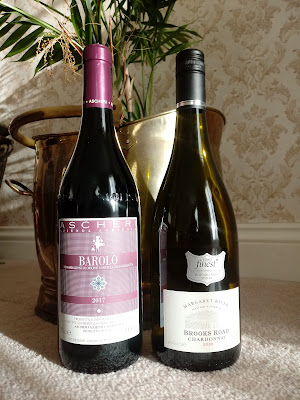
Aristocratic Barolo is Italy's answer to Pinot Noir; from the Piedmont region of North-West Italy, it is made from the Nebbiolo grape and produces a red-fruited, juicy and fresh wine with earthy, hedonistic aromas.

Tesco Finest Brooks Road Chardonnay (£15)

Made from premium Chardonnay grapes grown in Margaret River, one of Australia's most celebrated wine regions.

Dry with complex notes of stone fruits and vanilla oak with an elegant minerality and a classic, balanced lengthy finish.

floral, honeysuckle with white stone fruits and vanilla; melon, white peach and orchard fruits with zesty lime curd, savoury, creamy complexity and cool, minty menthol; saline, mineral and long. Very adept and well-made.

Very Good.

Improves with aeration and will repay some cellaring.

Match with fresh seafood, pasta or grilled fish.

Ascheri Barolo D.O.C.G (£23)

The Nebbiolo grapes, from La Morra, Verduno and Serralunga d'Alba, are harvested in the first half of October and fermented in stainless steel tanks for about 2 weeks. After 6 months in stainless steel tanks, the wine is aged in oak for 22 months, followed by an aging in the bottle of at least 12 months before releasing. 

fragrant and floral with cherries, dried cranberries, red berry fruit and old leather, spice and woodsy sous bois; fresh and supple with ripe, dried red berry fruits, cedar, aromatic black tea tannins and menthol; long and harmonious with firm yet very fine tannins.

Very Good.

Drinks well on first pouring but benefits from aeration and will age.

Match with darker game, such as venison or duck, also lamb shoulder with rosemary.

***

The Ascheri is also reviewed by Paula Goddard who calls it a "top-notch Italian Barolo ... a nice example": Ascheri Barolo 2017 review - WineUncorked: Wine Reviews and Tips

Friday, 7 January 2022

Prosecco Conegliano Valdobbiadene - The OG

Six wines from Conegliano Valdobbiadene DOCG

#1 child returned from university and announced she was interested in learning a bit about wine, so we started with some Prosecco lessons.

Prosecco DOC is the basic stuff, whereas the DOCG region of Conegliano Valdobbiadene is higher up the quality scale.

What is the difference between DOC and DOCG? The extra "G" stands for garantita, as if somehow the DOC classification is not quite as reliable.

In practice, it's not so much the words used as the hierarchy that matters; the DOCG is higher than DOC in the same way that an A** is higher than an A*.

Within the Conegliano Valdobbiadene DOCG classification, there are further distinctions and sub-divisions, but if you only remember one thing, it's this: look for the "G".

Pretty much all Prosecco is made by the Charmat method of fermentation in tank - this is quicker than in-bottle fermentation, meaning that the wine is less expensive to produce (and buy).

Whilst a shorter second fermentation gives less savoury complexity to the wine, the fresher flavours match better with the local cichetti.

Moreover, the second fermentation is only part of the equation, the part that makes the bubbles. Fruit selection and ripeness, blending and the initial vinification all play a part in the overall quality of the final wine.

However, it seems not everyone has gotten the DOCG memo; expat winemaker Jonathan Hesford wondered what there is to learn in a Prosecco lesson, while wine-writer Jamie Goode referred to Prosecco as "cheap plonk", albeit later explaining he was joking and had actually recommended one in his newspaper column.

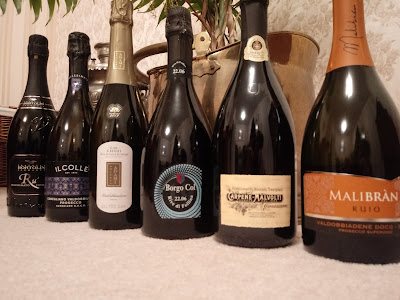
BORGO COL Valdobbiadene Prosecco Superiore DOCG Extra Brut Rive di Follina 2020 (Looking for importer)

a steely rive wine: extra Brut

very small producer, just 9ha biscuity with citrus, white stone fruits and brioche; supple, rounded and elegant with orchard fruits

Good.

ADAMI Valdobbiadene Prosecco Superiore DOCG Extra Brut Rive di Farra di Soligo “Col Credas” 2019 (Astrum Wine Cellars)

extra Brut rive wine

family producer, from a stony, breezy area white flowers with brioche, gingerbread and sea-spray; sappy white stone fruit, conference pear and green apple; fresh and tangy with persistent saline-minerality.

Good.

CARPENÉ MALVOLTI Conegliano Valdobbiadene Prosecco Superiore DOCG Brut Rive di San Pietro di Barbozza 2020

delicate, floral and herbal; green apple and orchard fruits with fresh citrus and some brioche complexity; subtle and sensitive with a gentle mousse and acidity

Good.

These four wines were all non-rive assemblages with a soft broadness

MALIBRAN Conegliano Valdobbiadene Prosecco Superiore DOCG Brut “Ruio” 2020 (Vinhuset Nofra)

from gentle, rolling hills, single-vineyard wine

broad with an almost exotic fruit character, almost peachy roundedness, salty; a classic Conegliano style, plumper and more mouthfilling

IL COLLE Conegliano Valdobbiadene Prosecco Superiore DOCG Brut Millesimato 2020 (Looking for importer)

family company dating back to Venetian traders, organically-farmed and uses a cut-the-cordon method for on-the-vine passito character

orchard fruit and melonskin; plush, broad and peachy with tropical citrussy freshness; aromatic, floral and tropical with pear fruit; clean, precise and very elegant.

Good.

BORTOLIN FRATELLI Valdobbiadene Prosecco Superiore DOCG Extra Dry “Rù” Millesimato 2020

18g/l of residual sugar with fruit from both Conegliano and Valdobbiadene

delicately floral with camomile; white stone fruits and orchard fruit; weighty and saline, fresh and citrussy; finishes dry and mineral

Good.

Will match with slightly richer foods than the lighter, drier wines; think creamy risotto, soft white cheeses or mushroom-and-cream pasta.

Thursday, 11 November 2021

Prosecco - A Deeper Dive into Conegliano Valdobbiadene


A deeper dive into the "rive" of Conegliano Valdobbiadene

The story of Prosecco is, to some extent, that of a country wine that suddenly found itself in the world's spotlight.

The rise and rise of Prosecco has been pretty much universally A Good Thing; consumers have taken to it and increasing demand has allowed the winemakers of the area to experiment, take risks and generally show what the wine can do.

After last year's introduction to Conegliano Valdobbiadene DOCG, this masterclass looked in more detail at the terroir and the rive, the slopes that make some of the top Prosecco wines in the area.

Conegliano Valdobbiadene is a mountainous area of "hogsbacks" in the pre-Alps / Dolomites; the hills run, unusually, east-west giving a north-south aspect. Distinctive, beautiful and ancient, they are a patchwork of bio-cultural heritage that has been recognised by UNESCO.

The UK buys mostly DOC Prosecco, with sales of DOCG making up under 10% by volume; however, that amount is also the top 10% by quality.

Rive wines are an even smaller proportion, meaning that this is a specialist and limited area. However, with export markets growing, and wines that were historically consumed locally finding new audiences abroad, the UK is a key market.

Located in the Veneto region of Italy, between Venice and the Dolomites, this is a rich land where the aristocrats of the Venetian republic lived, bringing the wealth and power of La Serenissima. It is a land rich in history and culture as well as natural wealth.

The rive are the slopes of the region, rising sharply from around 50m to 500m above sea level; there are 43 named rive which vary in size and have stricture regulations, including lower yields. They are cool, bright and breezy with steep terrain.

The constant breezes with cool nights and mornings moderate the temperature, resulting in higher acidity and lower alcohol and endless geological variation.

The wines of Conegliano are from clay soils, giving structure and fruity aromas.

Valdobbiadene's ancient mixed soils give finesse, fruit and florality.


With high rain comes high vigour, so natural growth and plantings are used to maintain the ciglione terraces which are grassed rather than stony, requiring hand-harvesting and needing around 10 times the amount of labour to maintain vs the lower-lying, flatter DOC vineyards where large estates are able to use mechanised processes.

The UNESCO protection of Conegliano Valdobbiadene's hogsback terraces helps to preserve the artisan, small-producer approach against the incursion of Big Money from outside; this will always be a high-cost areas, so the wines are moving away from cellar-door sales to tourists from Austria and northern Italy to competing on a larger stage on quality, rather than on price.

The wines must be minimum 85% Glera, with up to 15% of other varieties allowed; local varieties are increasing, with international varieties declining.

Glyphosate was banned in 2019 further adding to the region's sustainable and artisan credentials..

This being Italy, Dry is in fact the sweetest style. Next comes Extra Dry which is the most common style, with the drier styles of Brut and Extra Brut growing the fastest.

Unlike dosage for Champagne, sweetness levels for Prosecco are set prior to secondary fermentation; the drier styles undergo a longer Charmat-method fermentation and are more food friendly as a result.

Drier styles also require, and are therefore reserved for, top-quality fruit to give more concentration, extract, balance and complexity.

Within the "quality pyramid" of  Prosecco, Cartizze sits at the very top and is Grand Cru-level; the oldest sites date back to the 1600s and it forms a beautiful natural amphitheatre with stony soils, high acidity and higher ripeness.

The wines were presented in flights and the tasting notes are from Sarah Abbott MW.

Flight #1 - steely rive wines: all extra Brut

These wines had more precision; Glera is an aromatic variety and expresses its terroir when handled carefully with high levels of attention to the base wine, using site selection, natural yeasts and clarification methods and lees aging after initial fermentation for extra complexity. In some cases, this aging can be for up to a year after fermentation; this gives texture to the wine rather than the biscuity autolytic character.

BORGO COL Valdobbiadene Prosecco Superiore DOCG Extra Brut Rive di Follina 2020 (Looking for importer)

very small producer, just 9ha, gentle with delicate fruit

ADAMI Valdobbiadene Prosecco Superiore DOCG Extra Brut Rive di Farra di Soligo “Col Credas” 2019 (Astrum Wine Cellars)

bracing with striking acidity, family producer, tangy and uncompromising from a stony, breezy area with delicate stony freshness

BORTOLOTTI Valdobbiadene Prosecco Superiore DOCG Extra Brut Rive di Santo Stefano “Vigna Montagnole” 2019 (Ellis of Richmond)

aged on the fine lees for 4 months, then a very slow, 7-month secondary fermentation; from a steep, tiny vineyard of extreme, rugged slopes; racy and crisp with green apple, a gentle saltiness and pumice minerality

CANEVEL Valdobbiadene Prosecco Superiore DOCG Extra Brut “Terre Del Faè” 2020 (Berkmann Wine Cellars)

from Refrontolo, nicknamed "a postcard from God" for its outstanding beauty; a larger 26ha site where sheep graze in the vineyards for vegetation management and the wines can be served throughout the meal, not just as an aperitif; a long 2nd fermentation with lots of work on the base wine to create texture, reduced clarification to maintain proteins, use of natural yeasts, lower sulphites and higher natural anti-oxidants


All these wines were very elegant, but there was a feeling that their subtlety could prove to be the greatest market challenge, as it could prove too easy simply to overlook their delicacy.

All these Extra Brut wines will match with local foods such as risotto; they open up and gain complexity even as the fizz decreases, and prove popular in the local upmarket on-trade as a food-friendly, fine-dining wine.


Flight #2 - cuvees: all Brut

These wines are all non-rive assemblages with a soft broadness 

CARPENÉ MALVOLTI Conegliano Valdobbiadene Prosecco Superiore DOCG Brut Rive di San Pietro di Barbozza 2020

delicate, floral, herbal and fresh; subtle and sensitive with a gentle mousse and acidity

MALIBRAN Conegliano Valdobbiadene Prosecco Superiore DOCG Brut “Ruio” 2020 (Vinhuset Nofra)

from gentle, rolling hills, a single-vineyard wine, even if not from the rive; broader with an almost exotic fruit character, almost peachy roundedness, salty; a classic Conegliano style, plumper and more mouthfilling

SOMMARIVA Conegliano Valdobbiadene Prosecco Superiore DOCG Brut 2020 (Symposium Wines)

complex, from a lower altitude and drier area; spends just 30 days on the lees for second fermentation; again has Conegliano's characteristic rounder, plusher richness

IL COLLE Conegliano Valdobbiadene Prosecco Superiore DOCG Brut Millesimato 2020 (Looking for importer)

family company dating back to Venetian traders, organically-farmed and uses a cut-the-cordon method for on-the-vine passito character; peachy and aromatic, floral and tropical with pear fruit; 

LE COLTURE Valdobbiadene Prosecco Superiore DOCG Brut “Fagher” 2020 (Corney & Barrow) 

from 45yo vines; archetypal Valdobbiadene; vibrant, floral, aromatic with fine mousse, pretty and juicy with alluring fruit; overall, more refined


Flight #3 - cuvees with higher RS levels

These wines are not from the rive, but are cuvees sourced from within Valdobbiadene; their higher residual sugar content gives them a floral, cherry-blossom / Gardenia character; perfumed and aromatic, they are classy fun

BORTOLIN FRATELLI Valdobbiadene Prosecco Superiore DOCG Extra Dry “Rù” Millesimato 2020

18g/l  of residual sugar with fruit from both Conegliano and Valdobbiadene

RICCARDO Valdobbiadene Prosecco Superiore DOCG Dry Millesimato (Looking for importer)

21.5 g/l with fruit only from Valdobbiadene

Sunday, 7 November 2021

Posh Fizz and Gamey Red for Autumn-Winter

A traditional-method fizz and sophisticated red for autumn

I've said it before, Crisp White and Big Red is a benchmark combination for wines with dinner.

You can go as smart or basic as you like.

These two wines most definitely fit into the smart category and are perfectly suited to autumnal dining and into winter.


Banfi in Montalcino dates back to 1978 when it was founded by the Italian-American Mariani family who saw great potential in the sleepy Tuscan region. The estate is now the largest contiguous vineyard in Italy and includes land in Tuscany and Piedmont. The estate is planted one third to vines, one third to olive groves, fruit trees and other crops and the remaining third is woodland. Banfi - Wines

On arrival / aperitif

Gosset Grand Blanc de Blancs Brut (£55-65 from Petersham Cellars, Plus de Bulles, The Imperial Wine Company, Bon Coeur Fine Wines, Noble Green Wines, The Champagne Company, Weavers of Nottingham, Davy’s Wine Merchants, Champagne One, The Huntsworth Wine Co, Sandhams Wine Merchants, The Whisky Exchange, Wadebridge Wines, The Vineking, Flagship Wines, Harvey Nichols)

Made from 100 percent Chardonnay grapes grown in fifteen villages of the Côte des Blancs (for finesse) and Côte des Noirs (for structure). Each village and terroir brings its own character, complexities and aromas to the wine, resulting in this exceptional cuvée; the minerality comes from chalk soil that was once an ancient seabed containing millions of small-fossilised creatures.

The grapes are hand-picked; the wines are vinified and aged on the lees for a minimum of three years in bottles stored in their deep chalk cellars.

The clear glass bottles, which are still used today for the Blanc de Blancs, were pioneered by Suzanne Gosset (1885-1970) who ran the house following her husband’s death in the 1950s. The glass underlines the purity and brilliance of the wine’s colour but also evokes the mineral quality found on the palate and the wine’s origins in the region’s chalk soil. The box in which the bottle comes as standard, is to avoid lightstrike affecting the flavour of the delicate champagne.

mineral and floral, with white flowers, white pepper, stone fruits and almond; fresh, citrussy and leesy-complex with bruised orchard fruits, white peach and delicate biscuity brioche; savoury and broad, mineral-saline and elegant.

Very Good; improves with some aeration and will age.

Serve as an aperitif or match with smoked salmon canapes, seafood and fish, such as prawns, scallops, dressed crab, oyster. Alternatively, a simple risotto with parmesan shavings, white meat or a young, fruity Comté cheese

With (gamey) mains

Banfi Rosso di Montalcino 2019 (Sangiovese) (Majestic, £19.99 / £16.99 mix six)

A delicious autumnal Tuscan red from the southern slopes of Montalcino, best known for Italy’s finest world-famous Brunello wines.

Rosso di Montalcino is made from the same 100% Sangiovese grapes, but is an earlier release of the wine, thus retaining the varietal characters and flavours of the Sangiovese grape, but usually with softer tannins.

This is a style that is approachable at a younger age, but still has all the hallmarks of a remarkable Sangiovese wine. This exemplary Rosso is perfect when pheasant and game birds are on the menu (from 1st October) and served with a simple roast or a rich casserole dish. It’s also good with medium aged cheeses. 

Vinified in stainless-steel tanks, resulting in a wine that is less astringent and softer in character. It is then aged for 10-12 months in French oak barriques and casks, followed by a further six months in bottle.

Banfi’s winemaker comments that ‘this is a complex wine characterised by great varietal expression. 

blackberry and raspberry fruit with violets, leathery sous bois, aromatic green herbs and sweet vanilla spice; fresh cherries and red fruits with mocha-coffee grounds, tobacco and spice; very fresh, precise, complex and harmonious. 

Improves with aeration, several hours in the decanter is ideal, and demands food.

Good.

Match with darker game such as venison, pheasant or duck.

Monday, 11 October 2021

Four Christmas Wines from Tesco

Four wines for Christmas Day from Tesco

I've long believed that Christmas Day is not a time to be experimenting with new or off-beat wines; you want something reliable and familiar and, if budgets allow, a little superior to what you might normally drink.

Moving up too many price brackets can actually be counter-productive; for where you can simply crack open and enjoy younger, fruiter wines as soon as they are poured, more ambitious bottles may need a little longer in bottle or more aeration to show their best.

Get it even slightly wrong and your showpiece wine can seem underwhelming, your guests less-than-wowed; under-aged reds reds can seem lacking in fruit and a little chewy until they have opened up; whites that need a bit of aeration can seem basic and underwhelming.

These four Tesco wines are all a step up from everyday drinking but, importantly, also show very well on first pouring. They continue to improve with some aeration but certainly don't require an extensive aging and decanting regime to become approachable.

So that's one less thing to worry about this year, then.

There's a lot to like with these four bottles - big-name wines that don't cost silly money and are easy to enjoy.

The extra-nice surprises are how inexpensive the Champagne is, the superb wine-making of the Bordeaux and the amazing value of the dessert wine.

On arrival

Tesco Finest Premier Cru Champagne Brut NV, (£21.00, vegan) 


IWSC 2021 Gold medal winner and IWC Great Value Champion Sparkling.

This multi award-winning Premier Cru Champagne is produced for Tesco by Union Champagne in Avize, from hand-harvested grapes grown in Premier Cru vineyards in the Côte des Blancs, south of Epernay. Aged for 36 months, this extra maturation results in elegant flavours of citrus, green fruits and brioche with a fine mousse.

Perfect as an aperitif or with smoked salmon crostini.

yeasty almondy brioche and bruised apple with delicate florality; citrussy, linear and and mineral with cidery, bruised orchard fruits and a complex, creamy brazil-nut savouriness; fine mousse. Poised, structured and textured.

Very Good and Good Value.


With starters

Tesco Finest Gavi (£8.50, vegetarian) 


IWC 2021 Silver medal winner This dry, elegant wine is made from premium Cortese grapes from the Gavi region in north west Italy. Part of the crop is harvested later, when grapes are riper, lending extra richness and depth to the wine. 

Its juicy white peach and citrus flavours and long smooth finish make it wonderful with food. Serve chilled with oven-baked fish or pasta dishes.

orchard fruits and white peach with delicate florality and a whiff of white pepper; citrussy, sappy and rich with stone fruits, melon some sweet spice and minerality; good underpinnings.

Good.

The Main Event

Tesco Finest Margaux (£22.00)


IWC 2021 Gold medal winner Made for Tesco by the prestigious Château Boyd Cantenac in Bordeaux's iconic Margaux region, using exceptional quality grapes from vines that are an average of 30 years old. It is a bold but well-balanced red that is rich, ripe and vibrant with complex flavours of dark fruits, cherries, spices and oak.

Serve alongside beef or vegetarian wellington.

dark cherries, bramble fruit, morello cherries, plums, spice and some dried green herbs; full, supple and fresh, with plush ripe dark fruits - cherries, plums, cassis, cool mint and a touch of oaky astringency; complex and very long with very fine, perfectly rounded tannins and a savoury, spicy graphite finish.

Very Good.

With Dessert

Tesco Finest Dessert Semillon 11.5% abv, £6.00 (vegetarian) 


IWC 2021 Silver medal winner and IWC 2021 Great Value Sweet Under £12 

This is an award-winning dessert wine from Australia’s De Bortoli family winery.

Made from late-harvested grapes which are left to ripen on the vine until their natural sugars and flavours have grown incredibly rich and intense. The result is a golden hued wine boasting a delicate concentration of citrus, peach and apricot flavours that are simultaneously sumptuous and fresh.

The perfect dessert wine to pair with Christmas pudding or blue cheese.

floral with overripe stone fruits, sweet spice and musky beeswax; sweet and rich with complex buttery roasted peaches and vanilla sugar; fresh, savoury and long.

Good and Good Value.
***

As an alternative to the Semillon, Tesco's Finest Speyside Single Malt Whisky would also be an excellent match with Christmas pudding - or just sip in your favourite armchair with the Bond film or the Queen's Speech.


Monday, 6 September 2021

Three Summer-Holiday Wines from Tesco

Three "summer-holiday" wines from Tesco - classics from France, Italy and Spain

My idea of a perfect summer holiday involves getting in the car and driving to France, Italy or Spain for sunshine, outdoors living and lovely food and wine plus a bit of exploring and cultural history.

Since that was never really a serious option this year, I spent time with he family discovering new parts of our home country, even if they are more famous for their beers, rainy weather and seal rather than sun-kissed beaches, yachts and dusty lavender scents.

However, being unable to drive to sunnier climes doesn't have to mean no foreign-holiday vibes; you just need to be more imaginative about arranging it all from home. And be prepared to eat indoors.

France

The Loire is home to impressive chateaux and is an easy top-over on the way south from Calais.


Tesco Finest Pouilly Fume 2020 (£13)

temperature controlled fermentation for aromatics, followed by 6-12 month fine lees ageing for savoury complexity

aromatic and musky-pungent; fresh gooseberry, melon, white stone fruit and citrussy lime with creamy minerality; intense adept and concentrated.

Very Good.

Match with a goat's chees tart starter, herby pork terrine or white fish in a parsley broth.

Italy

Gavi is made from the Cortese grape in Italy's north west region of Piedmont, a region which includes the city of Turin and the foothills of the alps, where there are truffles and game to be found.

Think of Gavi as akin to an entry-level white Burgundy and you won't go far wrong - a versatile, and food-friendly relatively neutral wine.

Tesco Finest Gavi 2020 (£8.50)

This wine sees some old oak and has a little lees aging for complexity.

floral and citrussy; apples and pears, white stone fruits and sherbetty citrus freshness with good underpinnings and savouriness. Clean, pure and elegant.

Very Good and Good Value.

Match with a range of starters, meaty white fish such as sea bass or roast pork; also lighter game such as guinea fowl or partridge.

Spain

High-altitude oak-aged Tempranillo from Ribera del Duero. Local foods here include roast veal or lamb, roast suckling pig, morcilla (black pudding), roasted meat with wine, ox steak with garlic, chorizo omelette and rabbit.

Tesco Finest Ribera Del Duero, 2019 (£12)

darkly fruited, oaky spice, pencil shavings and florality; inky, intense and concentrated yet very fresh and structured; ripe dark berry fruits, liquorice and sweet vanilla spice; fleshy yet with a muscular core.

Very Good.

Match with char-grilled red meats, roast lamb or grilled portobello mushrooms


*****

Further reviews:

Saturday, 21 August 2021

Last of The Summer Wines - New Zealand, Australia and Italy

Three Summery wines from around the world

The Great British summer is something of mixed and changeable thing even at the best of times. Here are three wines that are fresh enough for all but the hottest of days while also being substantial enough for the sorts of foods we need when the weather is less benign.

If you think you are all done with kiwi Sauvignon, it's time to think again; yes, this  is a Sauvignon Blanc from New Zealand - but not as we know it.

Plus there's a red from the rocky slopes of Tuscany and a Shiraz with its own temperature control label from Australia.

Pyramid Valley North Canterbury Sauvignon +, 2019, (£18.99 Wine Direct Hay Wines TheDrinkShop.com)

2019 Pyramid Valley North Canterbury Sauvignon + is an incredible New Zealand Sauvignon Blanc, but not as we know it. A blend of three different vineyards, organically produced and fermented spontaneously with natural wild yeasts in a combination of tanks, old barrels, and clay amphora and with a touch of skin contact. 

This is top class wine on a par with some of the finest French sauvignons and at a fraction of the price. Beautifully focused with concentrated palate, balanced with salinity and acidity. Vibrant and bursting with flavour of ripe melons and passionfruit, and utterly delicious.

The “+” in this Sauvignon + is for the tiny amount of Riesling and Pinot Gris is added to the blend.

florality, lifted aromatics, green apple, lime zest and spice; ripe stone fruits, melon and fresh pineapple, lemon and lime with creamy brazil nut leesiness, a touch of struck match, salinity and a pebbly minerality. Harmonious and adept; concentrated, complex and very long.

Very Good+.

A versatile food wine match with white meats, such as lighter game, pork and fowl.

Also reviewed by Tom Cannavan: Pyramid Valley, New Zealand - wine-pages

Banfi Col di Sasso 2019, (£13.99 Great Grog Bon Coeur Fine Wines Wine Direct, TheDrinkShop.com)

Banfi Col di Sasso 2019 is a blend of Sangiovese and Cabernet Sauvignon.

Its name translates as the ‘Stony Hill’ because the grapes come from some of the rockiest slopes on the Banfi estate. This wine is one of the best known and loved Banfi labels around the world, and is often referred to as a baby 'Super-Tuscan'.

The Cabernet Sauvignon imparts bold flavour and body, while the Sangiovese adds zesty fruit and structure. 

cherries, tobacco, old leather and spice; fresh, juicy sour cherries, soft red berry fruits, raspberry leaf, graphite and red plums; low tannins and a raspy acidity; savoury, concentrated and long.

Very Good.

Demands food; match with pizza with fresh mozzarella and basil, pasta tossed with a classic Tuscan ragù and Parmigiano Reggiano or griddled chicken, prawns or steak.

Wakefield Estate Shiraz 2019, (£13.99 Robertson Wines Wine Direct North & South Wines)

Wakefield Estate Shiraz 2019 is a multi-award-winning Shiraz straight from the heart of Clare Valley.

Wakefield is one of the most highly esteemed cool-climate producers in Australia and their Estate Shiraz is made from grapes grown on the famous terra rossa soils from the Taylor family’s vineyard where the average vine age is 10 to 30 years.

Wakefield suggests serving this delicious red a few degrees lower in temperature than usual. On the label is a unique, touch activated, temperature-sensitive gauge that indicates when the wine is at the perfect serving temperature. 

elderberry, blackberry and black plum fruit with liquorice and graphite; sweet, ripe juicy black fruits, cassis and porty menthol-eucalyptus with oaky vanilla spice, plentiful rounded tannins, inky texture and extraction; long and savoury with good underpinnings.

Very Good.

Match with red meats, such as with a grilled rib-eye steak.

Monday, 5 July 2021

Three Summer Wines From Virgin Wines

Three summer wines from Virgin Wines

More than halfway through the year and summer has still not yet fully arrived in the UK.

If you dream of rocking up to a friend's for a weekend afternoon of outdoor eating-and-drinking, here are three wines to take with you.

- an Italian pink fizz with style and elegance

- a sophisticated Saffer white

- a fruit-forward, crowd-pleasing, sophisticated easy-drinking Big Red to go with burgers and relish

Solpiantez Spumante Brut Rose Millesimato 2019 (£9.99)

The son of a Tuscan winemaker, Umberto grew up with vines in the blood. His 40-year career in the wine industry has seen him making wine for some of the most famous producers in Italy, as well as specialising in, and lecturing on,

Organic methods of production and, most recently, working as an international consultant to some of the most well known producers in the Veneto, Puglia and beyond. His hallmark is precision, both in terms of varietal expression and balance as well as vineyard typicity.

A blend of Trebbiano, Garganega and Sangiovese.

Delicate red-berry fruits, watermelon, citrus freshness and sea-shell minerality; very textured and linear with a precise, muscular core. Fine mousse and no rough edges.

Good and Good Value

Serve as a crisp aperitif or match with shellfish.

Wildeberg Terroir Sauvignon Blanc 2018 (£16.99)

This wine is made from older vines that cling to Simonsberg in the tiny, mountainous ward of Banhoek within Stellenbosch. Dry grown vines grow thin and weedy on these vertiginous slopes, but produce an excellent crop of grapes. These are then hand-picked, crushed and fermented at the Wildeberg winery. Location, location, location. That is the magic. Difficult soils and a difficult site produce an interesting wine.

Tim Atkin gives this 91pts 

Hand-picked and naturally-fermented Sauvignon Blanc, with only 2926 bottles of this vintage made. A wave of rich tropical, leafy notes on the nose sway to a broad palate of tight lime-leaf, bay and silky texture with a super-bright, naturally acid finish. Delicious with brightly-flavoured seafood dishes, Thai salads, citrus dressings or indeed by the glass on its own!

Aromatic, floral and zesty-pungent with lemongrass, grapefruit, white pepper and some quinine bitterness; full and supple with melon, stone fruit and pineapple plus zippy lemon-and-lime and sweet spices; concentrated and long with very good underpinnings.

Very Good.

Black Flag Winemakers Limestone Coast Shiraz Cabernet 2018  (£12.99)

This bespoke ripper is made from premium parcels of Padthaway and Limestone Coast fruit. The oak is present but far from prominent, beautiful and finely tuned ensuring the sweet red fruits, which first poke their heads up in the aromatics, carry through to the front palate and lead seamlessly into the soft, vanilla infused mid palate.

The final element of this wine is the most intriguing: it has a really strong presence yet remains inviting and warm. There are typical varietal flavours of chocolate and malt, which counters the regional hallmarks of mint and fresh herbs, and a lovely crisp tannin profile.

Lifted super-ripe, juicy plums and dark berry fruit with oaky spice, rubbed sage, sous bois and earthy-mushroominess; juicy cassis, vanilla and morello cherries; full and supple with an inky texture, and a slap of cocoa, leather and liquorice.

Thoroughly enjoyable.

Match with charred meaty or veggie delights from the barbecue. 

Sunday, 6 June 2021

The CWB Soave-Off

A tasting of two Soaves - Tesco vs Private Cellar

Soave - pronounced SWAH-vey and meaning suave - is a region of north east Italy producing white wines. It is just north of Venice in the Veneto region, not far from Verona, where (mostly) Garganega is grown.

Sommelier and all-round charismatic bon viveur Donald Edwards informs me that Soave is grown on volcanic soils, which add to the elegance, precision and linear minerality of the wine.

Soave is Italy's answer to basic white Burgundy; a neutral, medium-bodied, orchard-fruited, lemony white wine with the versatility to accompany a wide range of foods.

Soave was once a best-seller of Italian wines; now eclipsed by the ubiquitous pub white Pinot Grigio, it is making something of a comeback.

Put another way, now is a good time to buy Soave, since quality is ahead of general recognition and therefore pricing.

Tesco Finest Soave Classico Superiore (£7.50, Tesco)

Garganega grown on the Soave Classico hills, partially aged in oak for 10 months.

Rich, ripe pear, white stone fruits and baked apple with citrus, almond blossom, minerality and sweet spices. Elegant and adept.

Thoroughly enjoyable.

Match with spaghetti carbonara or meaty white fish in a creamy sauce.

Soave Gregoris, Antonio Fattori, Italy 2018 (£10.75, Private Cellar)

Costing only a few pounds more, but selected by Private Cellar's MW buyer, this is recognisably from the same region and grape, but just a little bit better in every way.

Melon, lime and white stone fruits with orchard fruits, honeysuckle and pebbly minerality. Textured, elegant and precise.

Good.

Improves with aeration and will repay some cellaring.

A versatile food wine, drink as an aperitif, with light starters, creamy risottos or lean white met such as chicken or fish.

It is also available in magnums for those "we're gonna need a bigger bottle" occasions.